
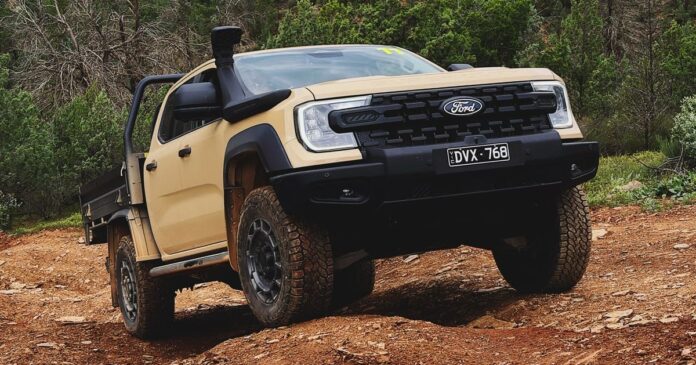
You’d think after claiming the titles of Australia’s favourite 4WD, then Australia’s favourite new vehicle overall, that we had reached peak Ford Ranger.
But accomplishing those impressive feats clearly wasn’t enough for the Blue Oval, which continues to expand and diversify the model range of its top-selling ute nameplate in an attempt to reach seemingly every corner of the market.
The Ford Ranger Super Duty was launched late last year as the latest and most hardcore derivative of the popular homegrown ute, bringing a level of heavy-duty capability previously offered only by the likes of the Toyota LandCruiser 70 Series.
Unlike the Japanese workhorse, however, the Super Duty – like every other Ranger since 2011 – is very much the product of an Australian workforce, since it was conceived, designed, engineered, developed and tested Down Under.
And now, Ford is launching the ‘Pickup’ body style as well as the more premium ‘XLT’ equipment grade, which will be aimed at private/retail buyers who want the increased Gross Vehicle Mass (GVM) and towing capabilities previously only offered by full-size American pickups and the LC70, but with the familiarity and convenience of the regular Ranger’s packaging and footprint.
With just under 1.7 tonnes of payload, while maintaining a GVM of 4.5 tonnes and a GCM (Gross Combined Mass) of 8.0 tonnes, the Ranger Super Duty Pickup range retains the same heavy-duty specs of the cab/chassis variants in the more fashionable dual-cab ute body style – surely, it’s a recipe for even more success.
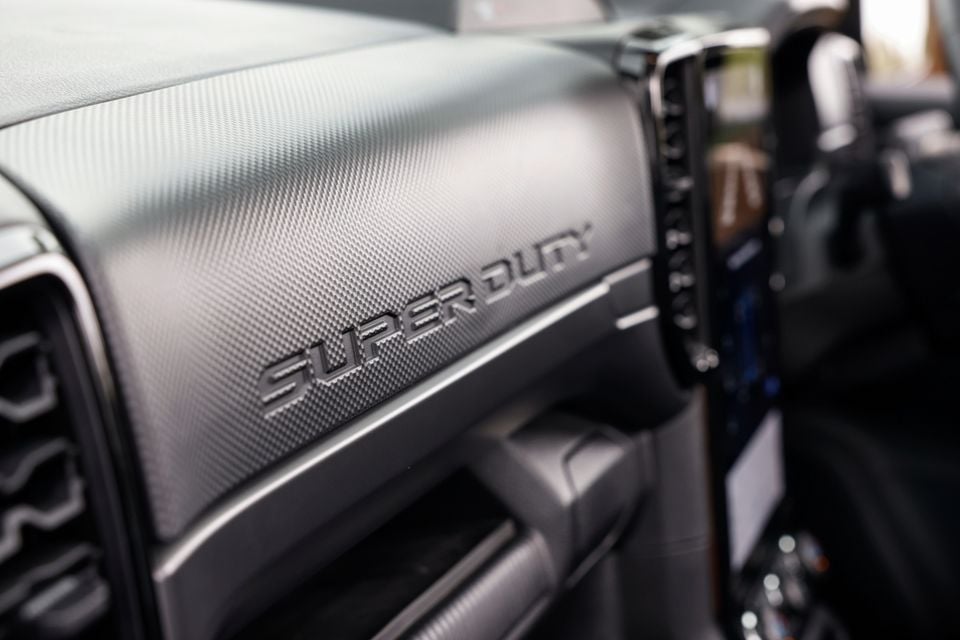
To go with the upgraded 18-inch braking system as well as the beefed-up driveshafts and rear axle (borrowed from the Transit commercial van), the Super Duty’s tub has been reinforced with thicker-gauge steel for the floor panel and two larger, additional cross-members – totalling six, as opposed to four for the standard ute.
While the Super Duty also scores wider tub sheetmetal to wrap around its wider rear wheel track, internal tub dimensions remain the same as the regular Ranger, meaning you can still fit the same tub accessories as you would on non-Super Duty versions of the Blue Oval’s top-selling dual-cab. Even the additional 400W inverter carries over.
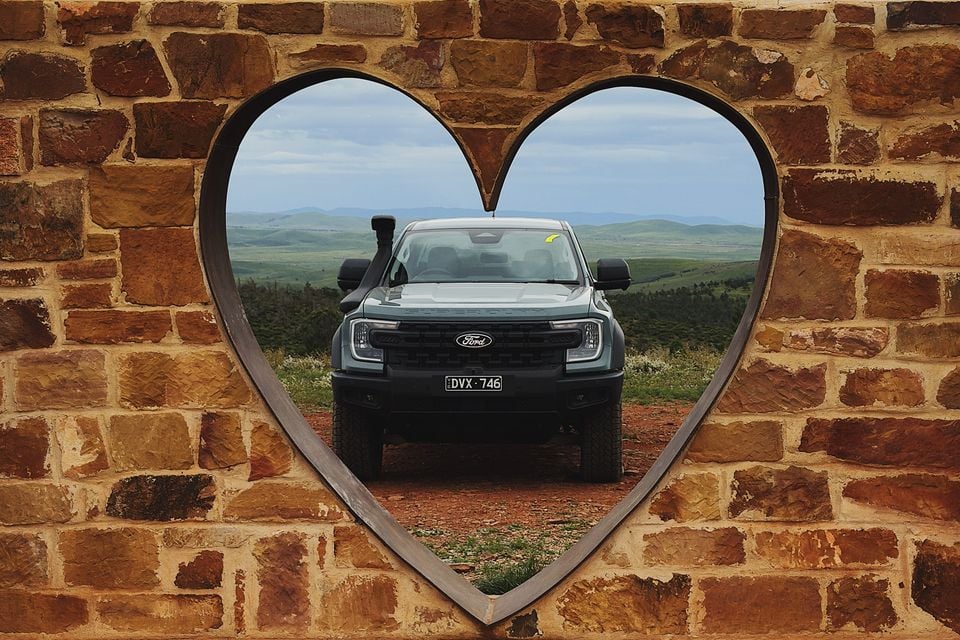
To see if the fancier Super Duty is worth its six-figure on-road price tag, we joined the national media launch in the picturesque Flinders Ranges in South Australia, where we subjected the toughest Ranger ever to a bit of outback touring and some pretty hardcore off-roading.
How much does the Ford Ranger Super Duty cost?
The new XLT versions of the Super Duty add $6000 to the price of equivalent standard models.
|
Model |
Price before on-road costs |
|---|---|
|
2026 Ford Ranger Super Duty Single-Cab/Chassis |
$82,990 |
|
2026 Ford Ranger Super Duty Super-Cab/Chassis |
$86,490 |
|
2026 Ford Ranger Super Duty Double-Cab/Chassis |
$89,990 |
|
2026 Ford Ranger Super Duty Double-Cab Pickup |
$93,990 |
|
2026 Ford Ranger Super Duty XLT Single-Cab/Chassis |
$88,990 |
|
2026 Ford Ranger Super Duty XLT Super-Cab/Chassis |
$92,490 |
|
2026 Ford Ranger Super Duty XLT Double-Cab/Chassis |
$95,990 |
|
2026 Ford Ranger Super Duty XLT Double-Cab Pickup |
$99,990 |
Later this year, Ford will add Single-Cab and Super-Cab versions of the XLT to round out the V6 diesel-powered Super Duty range, as part of the model year 2027 (MY27) lineup.
Find your perfect new car with CarExpert
While $100,000 is a lot of money for any ute, let alone a Ford Ranger, it’s worth considering where the Super Duty’s main rivals sit at.
The LandCruiser 70 Series GXL may be priced $10,000-$15,000 lower at base level, but has a less powerful four-cylinder diesel engine and far lower standard spec, while the Ineos Grenadier Quartermaster dual-cab is positioned as a more premium proposition with a starting price of $105,000 plus ORCs with a six-cylinder petrol or diesel engine.
It’s worth noting that neither the Toyota nor the Ineos can match the Super Duty’s 4500kg braked towing capacity. You need to look to full-size US pickups like Ford’s own F-150, Toyota’s Tundra, the Ram 1500, or the Chevrolet Silverado for that kind of capability.
To see how the Ford Ranger lines up against the competition, check out our comparison tool
What is the Ford Ranger Super Duty like on the inside?
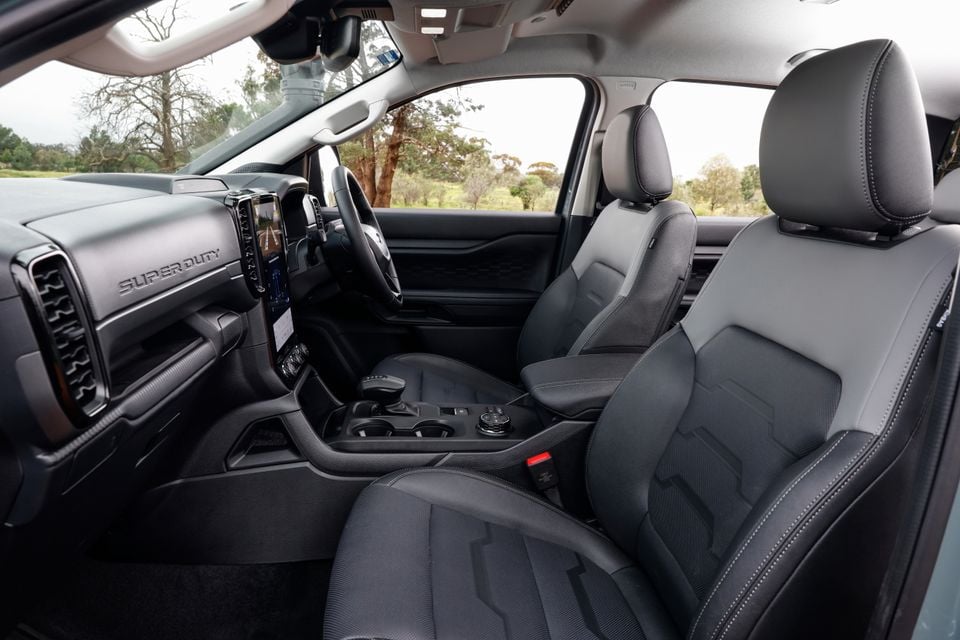
The beauty of the Super Duty is that it’s really no different to a standard Ranger on the inside.
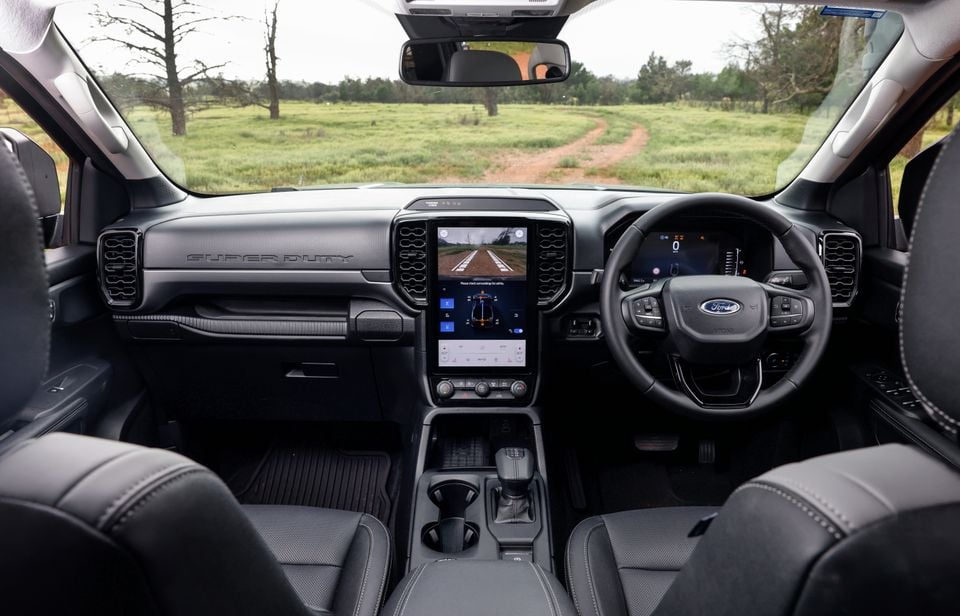
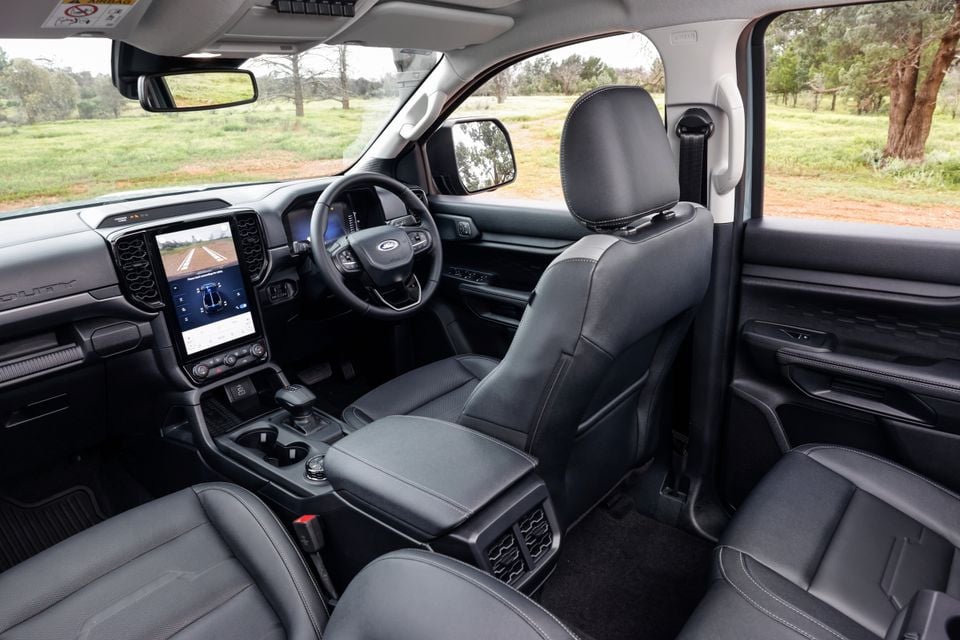
The 8.0-inch digital instrument cluster and 12.0-inch portrait-oriented central infotainment touchscreen are familiar from the standard ute as well as the related Everest off-road SUV, as are niceties like wireless Apple CarPlay and Android Auto, embedded satellite navigation, DAB+ digital radio, and connected services.
Opting for the XLT grade over the standard Super Duty brings low-gloss ‘Magnetite’ metallic accents, leather-accented upholstery, a 10-way power driver’s seat with memory, an eight-way power front passenger seat, heated and ventilated front seats, as well as carpet flooring with all-weather floor mats in the first row.
The heated seats definitely came in handy during our winter-time test in regional South Australia given the fresh morning temperatures. As with the base grade, there’s a built-in electric brake controller for towing, and the overhead console features a bank of six auxiliary switches to wire-in spot lights, beacons, an air compressor, or a fridge – the list goes on…
Other convenience items that are typical Ranger fare include pop-out cupholders integrated into each end of the dashboard, as well as the toothed pair in the centre console. There’s a standard wireless phone charger as well as USB-C ports to keep devices juiced, plus a handy cubby under the front-centre armrest.
However, unlike higher grades of the standard Ranger at similarly lofty price points, the Super Duty XLT doesn’t add any soft-touch or padded trim elements on the dashboard or upper door cards, though the cabin does feel fit-for-purpose and hard-wearing for the intended use case.
We didn’t notice any misaligned trim in our test vehicles, like my colleague Ben did during the initial launch, but in our experience the Ranger and Everest aren’t immune to the odd fit-and-finish mishap, which is something to look out for.
That said, we subjected the Super Duty to plenty of rough-and-tumble conditions while off-roading and touring on high-speed sealed and unsealed roads, and we didn’t note any niggling rattles or squeaks which is a good sign.
Of course, if you’re carting around humans in the second row often, the Double-Cab versions are for you. Like regular versions of the Ranger dual-cab, there’s plenty of space for a couple of burly tradies in the back, as well as ISOFIX and top-tether anchors for child seats if your co-workers are of the newborn kind.
Amenities include directional vents at the rear of the centre console, in addition to power outlets including a 400W inverter with a conventional domestic wall socket, so you can power everything from a drill to a hair dryer – depending on the kind of tools you need.
Further, the rear map pockets and bottle holders in the doors mean everything from worksite documents to colouring books are catered for, as well as Dare iced coffee or baby bottles. The carpeted floor of the XLT mightn’t be as hard wearing as the standard model’s hoseable vinyl flooring, but it adds a degree of comfort and insulation that’s perfect if you’re more All-Duty than Super Duty.
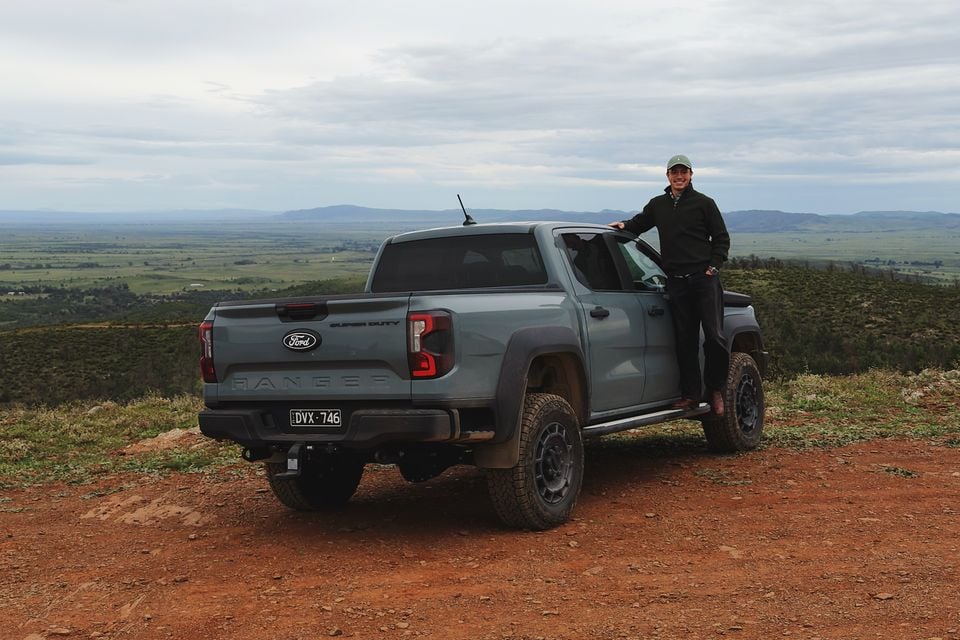
Ford says the ‘Pickup’ Super Duty’s tub is dimensionally identical to the standard Ranger’s, meaning it’s compatible with the same range of accessories like canopies and drawers if you’re wanting to carryover your existing Ranger’s kit. It also carries over the additional 400W inverter for a total of two if you go for the tubbed model.
To account for the enhanced payload and capability of the Super Duty, Ford has enhanced the tub with with thicker-gauge steel on the floor panel and two larger, additional cross-members for a total of six.
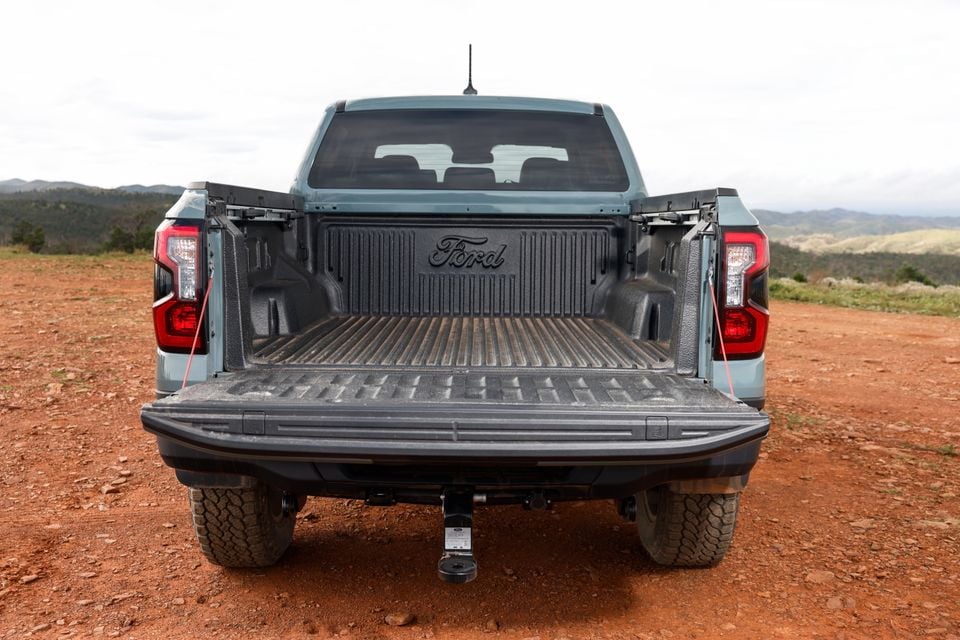
|
Dimensions |
Ford Ranger Super Duty XLT Double-Cab Pickup |
|---|---|
|
Length |
5447mm – Without tongue 5621mm – With tongue |
|
Width |
2197mm – incl. mirrors |
|
Height |
1975mm |
|
Wheelbase |
3270mm |
|
Tub length |
1453mm – at floor 1471mm – at top of tub |
|
Tub width |
1217mm – between wheel-arches 1416mm – at top of tub |
|
Tub depth |
513mm |
To see how the Ford Ranger lines up against the competition, check out our comparison tool
What’s under the bonnet?
All Super Duty vehicles are powered by a version of the Ranger’s 3.0-litre V6 turbo-diesel, tuned to meet N2 heavy-duty vehicle emissions regulations.
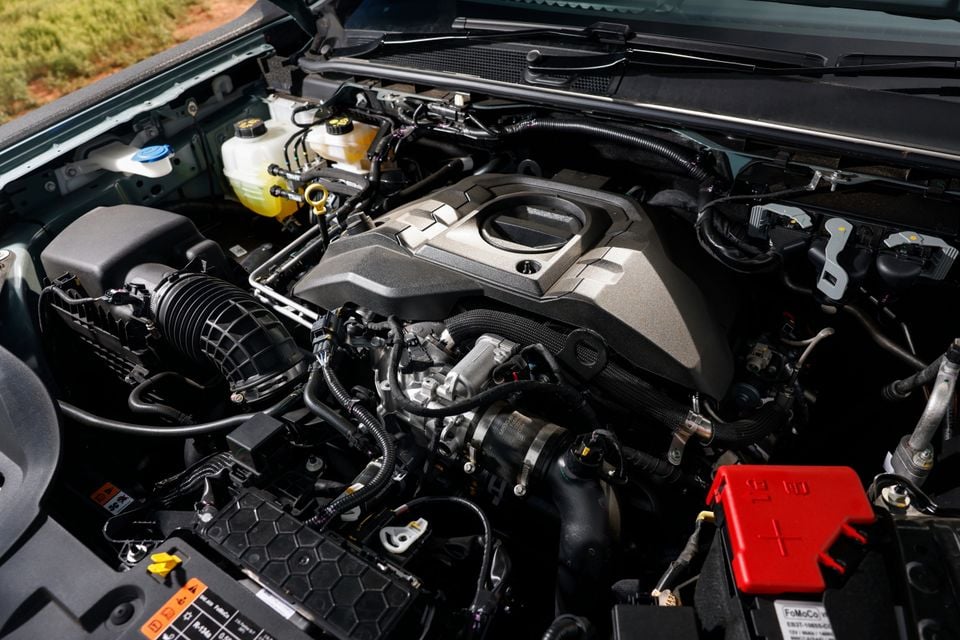
|
Specifications |
Ford Ranger Super Duty XLT Double-Cab Pickup |
|---|---|
|
Engine |
3.0L V6 turbo-diesel |
|
Power |
154kW at 3250rpm |
|
Torque |
600Nm at 1750rpm |
|
Transmission |
10-speed auto |
|
Drive type |
4WD incl. 4A mode |
|
Fuel economy (claimed) |
– |
|
Fuel economy (as tested) |
11.9-13.2L/100km |
|
CO2 emissions (claimed) |
– |
|
Emissions standard |
Euro 6 |
|
Fuel tank |
130L |
|
Weight |
2803kg |
|
Payload |
1697kg |
|
Braked towing capacity |
4500kg |
|
Gross vehicle mass (GVM) |
4500kg |
|
Gross combination mass (GCM) |
8000kg |
As with the standard Super Duty, XLT variants receive a significant 30kW drop in peak power output to 154kW, compared to the 184kW of standard Ranger V6, though the maximum 600Nm torque output remains the same.
The N2 classification as a result of the Super Duty’s 8000kg GCM rating requires AdBlue injection to reduce harmful NOx emissions from the tailpipe, and Ford allows the driver to delay a DPF burn if it’s unsafe or not convenient.
Drive is sent to an automatic four-wheel drive system with 4A mode via a 10-speed automatic transmission, allowing the Super Duty to drive the rear wheels the majority of the time, but send power to the front wheels when a loss of traction is detected, like in wet corners.
There’s no selectable 2H mode, but 4A provides for 4WD on both unsealed and sealed surfaces, unlike some other utes. And the Super Duty is the only Ranger variant other than the Baja-bashing Raptor that gets a locking front differential to go with the standard rear diff lock. Low-range gearing is also standard, naturally.
Hill-descent control and trail turn assist – which can drag an rear inside wheel to help pivot the vehicle around tight turns – can all be accessed via the SYNC infotainment touchscreen, and the former allows the driver to toggle a set speed via the cruise controls on the steering wheel.
You also have the same range of drive and terrain modes as the standard Ranger, meaning everything from Eco and Tow/Haul to Slippery and Rock Crawl.
Our indicated fuel consumption of high-11s into low-13s is more than the standard Ranger V6, but indicates the Super Duty is capable of well over 1000km between refills, courtesy of its massive 130-litre long-range tank.
To see how the Ford Ranger lines up against the competition, check out our comparison tool
How does the Ford Ranger Super Duty drive?
We spent quite a bit of time behind the wheel and in the passenger seat of various Super Duty XLTs, including on-road, off-road, and a bit of everything in between.
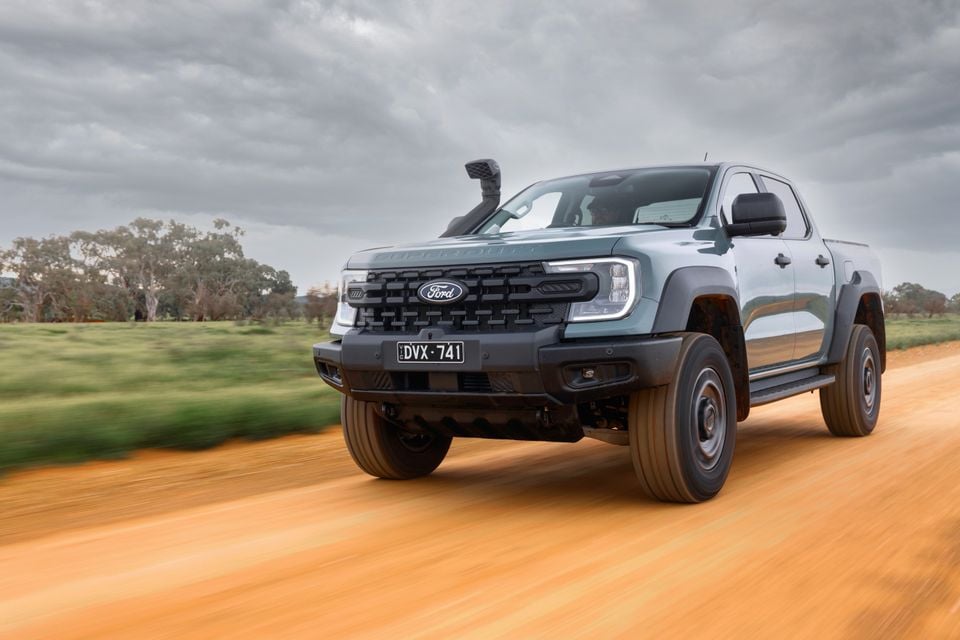
The media launch commenced at Adelaide airport and took us out to the Flinders Ranges on a mix of highways and unsealed roads. And there were a series of off-road trails for us to tackle at the Bendleby Ranges property which also served as our base camp (literally).
Given my limited previous experience with the Ranger Super Duty, I was eager to see if the heavy-duty modifications made to the powertrain and chassis (and the extra weight they add) have been to the detriment of the Ranger’s performance both on- and off-road.
First up was a three-hour, circa-350km transit leg from Adelaide to the Bendleby Ranges near Orroroo in South Australia. Much of this was on dual-lane freeway, 110km/h country highway, and single-lane B-roads.
The added weight of the Super Duty is felt quite quickly. While it’s still smooth and its initial power delivery is just as effortless, the bigger footprint due to the extra track width combines with the now 2.8-tonne kerb mass to make this feel like the weightlifter of the Ranger family.
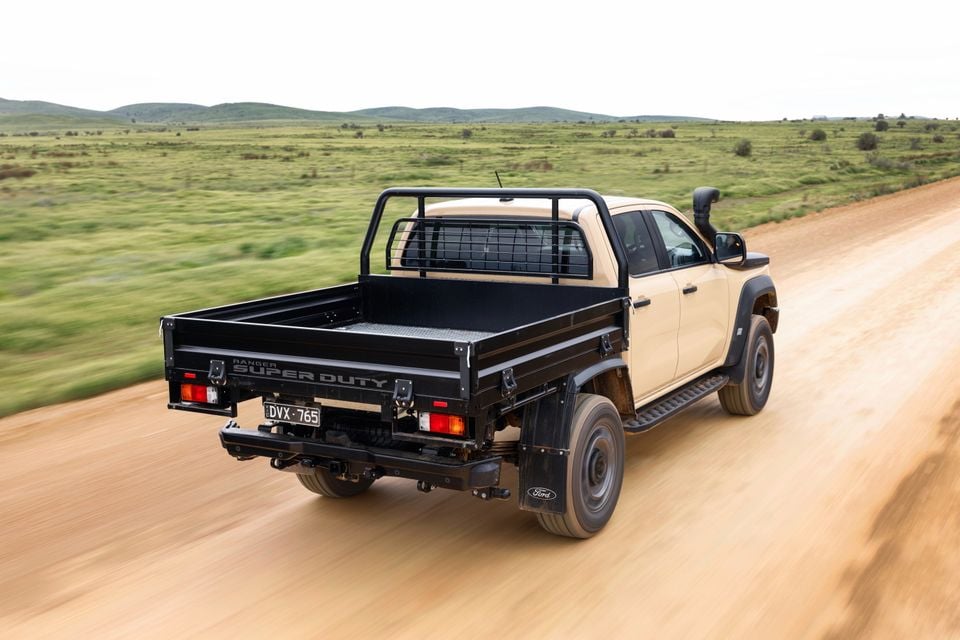
Still, the slick steering and general handling prowess of the standard Ranger carries over to the Super Duty, making it surprisingly wieldy around town, less intimidating to drive than say, an F-150, and both more stable and agile than a 70 Series.
The big-boy feel behind the wheel promotes a more relaxed driving style, and driven with measure the 10-speed auto rarely feels indecisive or off the pace.
For those unfamiliar with the inner workings of Ford’s latest auto, it uses a torque converter for taking off from standstill in first and reverse like a conventional auto, but there are four planetary gear sets to change between the 10 gear ratios, with six clutches employed for said gear changes.
This helps to minimise the risk of the torque converter overheating under heavy-duty loads like towing, while the clutches aren’t subject to high-wear scenarios like initial take-off. Having so many ratios to choose from works in the Ranger’s favour, allowing it to keep the V6 oiler on the boil under acceleration without flaring revs or working overtime.
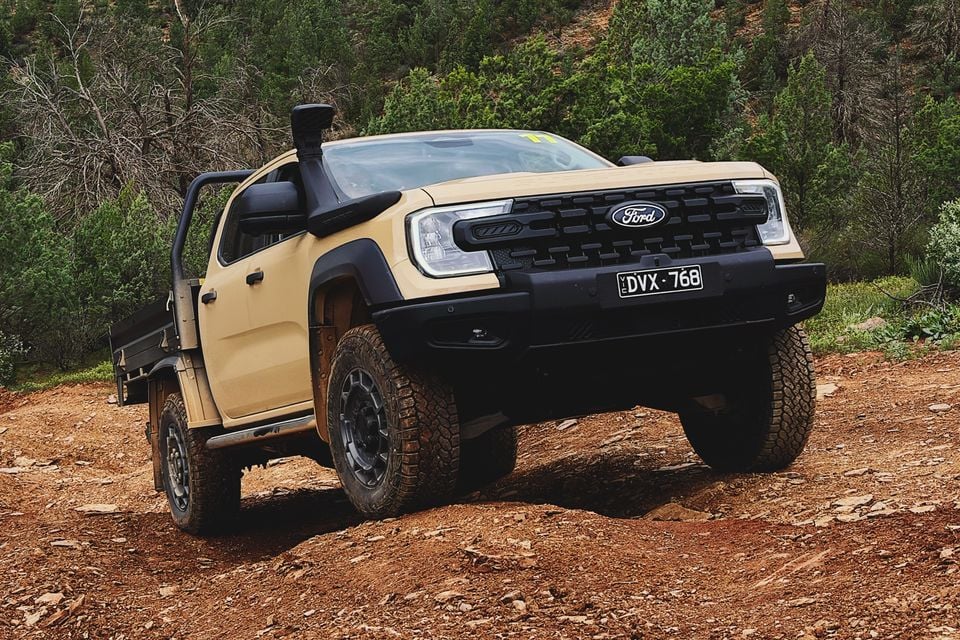
While it’s anything but quick, the 600Nm comes on tap from just 1750rpm and helps the Super Duty make smooth and effortless progress both around town and on the highway, settling into a refined hum around 1800rpm at triple-digit speeds.
Even better, despite the added weight from heavy-duty chassis upgrades, the Super Duty mostly retains the Ranger’s benchmark ride and handling characteristics, even when unladen.
As noted by Mr Zachariah after our initial launch drive, the Super Duty’s stability and composure (particularly at high speeds) is surprisingly good and arguably a match for – if not better than – standard leaf-sprung Rangers when unladen.
This could be due to the added weight and longer two-stage leaf packs at the rear, as well as the wider track. Bump absorption and general isolation of road imperfections was excellent over South Australia’s outback roads, with only sharper, high-frequency hits upsetting the chassis.
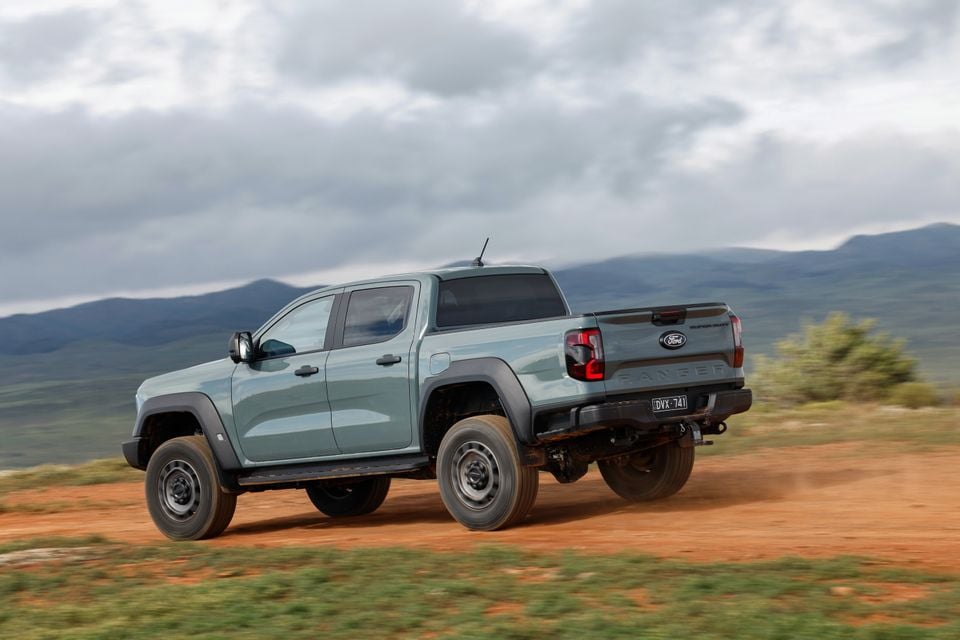
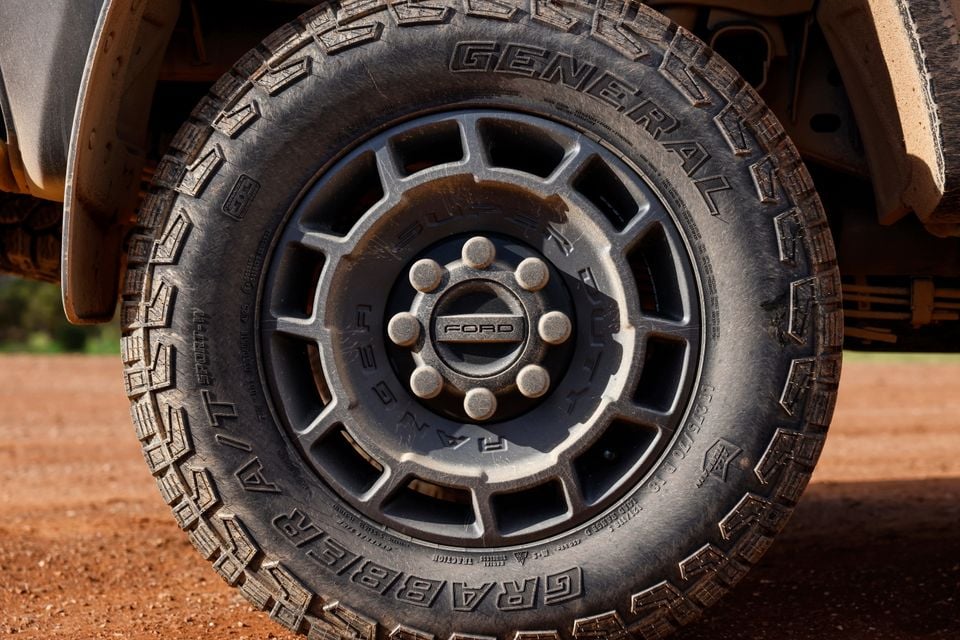
The 33-inch General Grabber A/T rubber is also surprisingly grippy and reasonably quiet in all driving scenarios, Indeed, the Super Duty’s cabin was impressively well insulated from any road noise or tyre roar, and the specialised tyres in conjunction with the superb mechanical grip came into their own when we ventured off the beaten track.
From the 100km/h red-dirt access road into the Bendleby Ranges to the rocky trails of the spectacular regional property, the Super Duty was unfazed by pretty much anything we could throw at it.
Once you’ve figured out how to flick the rotary dial into the desired terrain mode and lock the front diff via the touchscreen – which, on occasion, is a little fiddlier than it should be – the Super Duty seems like it could certainly live up to Ford’s claim that it’s the most capable ever Ranger off-road.
With a lofty 296mm of ground clearance in Double-Cab Pickup guise, or around 60mm more than a Ranger Wildtrak, the Super Duty feels like a Raptor that’s been on a bulk diet of protein shakes and heavy-duty van axles.
From expert reviews to the right deal
CarExpert brings together reviews, research tools and trusted buying support, guiding you from research to delivery with confidence.
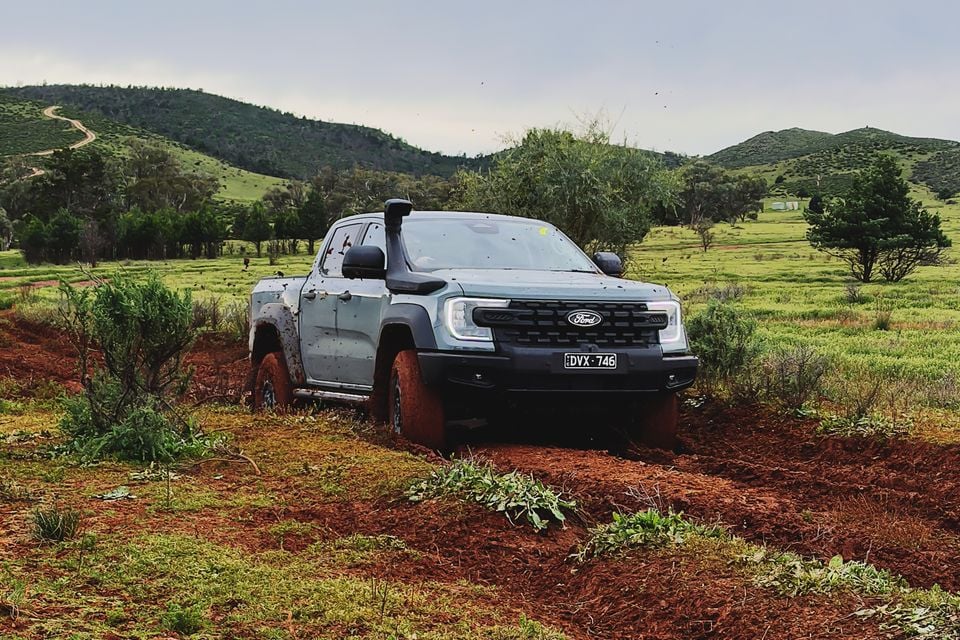
Steep ascents with rocky faces were no match for this heavy-weight, which clobbered up the recently rained-on terrain with ease.
There’s enough wheel articulation that we rarely had a wheel in the air for more than a moment, and I don’t recall hearing a bang or a knock on the underbody bash plates thanks to the generous ground clearance and approach/departure angles – and the dual-cab has the ‘worst’ off-road geometry of the bunch.
While it’s not necessarily any more capable off-road than a 70 Series, or even a Jeep Gladiator with its detachable sway bars, the beauty of the Super Duty compared to its most capable opposition is the ease-of-use that it offers.
Apart from the occasional moment of fiddling around with some of the 4WD and mode controls, which in our opinion could be easily amended with more physical switchgear, it’s simple to extract the best from the Super Duty. Just engage the desired mode and systems with one or two inputs, then off you go.
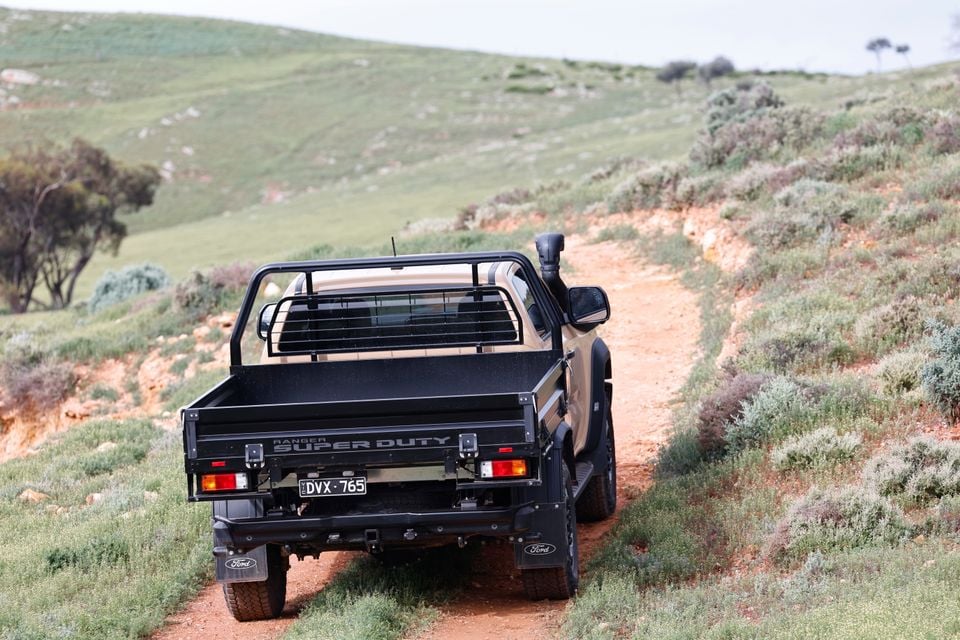
On the return leg from Bendleby Ranges back to Adelaide via the Barossa Valley, the Super Duty had to deal with the same mix of unsealed and sealed roads in reverse, but with the added element of recent heavy rain – which turned the high-speed dirt section into puddles and slush.
Again, the Super Duty was unflappable in its stability and road-holding, ploughing through standing water and corrugations like they were nothing. On the open 110km/h highways between the Flinders Ranges and Barossa Valley, the unladen high-speed ride and refinement was again top-notch.
And when you’re on the paved stuff, the Super Duty also outdoes the LC70 and Grenadier with its expansive suite of driver assists like adaptive cruise control, lane-centring, blind-spot monitoring and surround cameras – all as standard.
Once again, this underlines the heavy-duty ute’s everyday Ranger usability, despite its added Super Duty capability.
|
Off-road dimensions |
Single-Cab/Chassis |
Super-Cab/Chassis |
Double-Cab/Chassis |
Double-Cab Pickup |
|---|---|---|---|---|
|
Track front and rear |
1710mm |
1710mm |
1710mm |
1710mm |
|
Ground clearance |
299mm |
297mm |
295mm |
296mm |
|
Approach angle |
36.3 degrees |
36.2 degrees |
36.1 degrees |
36.6 degrees |
|
Departure angle |
29.3 degrees |
29.0 degrees |
28.6 degrees |
27.8 degrees |
|
Ramp breakover angle |
26.9 degrees |
26.5 degrees |
26.3 degrees |
26.1 degrees |
|
Wading depth |
850mm |
850mm |
850mm |
850mm |
To see how the Ford Ranger lines up against the competition, check out our comparison tool
What do you get?
The introduction of the XLT grade brings the Super Duty trim level count to two, across several body styles.
2026 Ford Ranger Super Duty equipment highlights:
- Automatic LED headlights
- LED front fog lights
- Zone lighting
- Rain-sensing wipers
- Proximity entry with push-button start
- 18-inch steel wheels incl. 8-stud wheel hub
- General Grabber A/T LT 275/70 R18 tyres
- 18-inch spare steel wheel
- Composite side steps
- Onboard scales
- Pro Trailer Back-up Assist
- Integrated trailer brake controller
- 4.5t compatible tow bar and hitch
- 2 x front rated recovery points
- 2 x rear rated recovery points
- Moulded mud guards
- Heavy-duty mount kit
- Trail Control
- Trail Turn Assist
- Hill descent control
- Power-folding, heated exterior mirrors
- Puddle lights
- Selectable drive modes – Eco, Tow/Haul, Slippery, Mud/Ruts, Sand, Rock Crawl
- Cloth upholstery
- Vinyl floors
- 8-way manual driver’s seat
- 4-way manual passenger seat
- Steering wheel height and reach adjustment
- Electric park brake
- Electrochromatic rear-view mirror
- 8.0-inch digital instrument cluster
- 12-inch touchscreen infotainment system
- Wireless Apple CarPlay and Android Auto
- Satellite navigation
- DAB+ digital radio
- 2-speaker sound system – Single-Cab/Chassis
- 6-speaker sound system – Super-Cab, Double-Cab
- Wireless phone charger
- Dual-zone climate control
- Auxiliary switch bank – 6 x switches
- 400W 230V inverter – Rear console
2026 Ford Ranger Super Duty XLT adds:
- 18-inch 8-stud alloy wheels
- Leather-accented seat upholstery
- Front seats with heating, ventilation
- 10-way power driver’s seat incl. memory
- 8-way power passenger seat
- Carpet flooring
- All-weather floor mats, front
To see how the Ford Ranger lines up against the competition, check out our comparison tool
Is the Ford Ranger Super Duty safe?
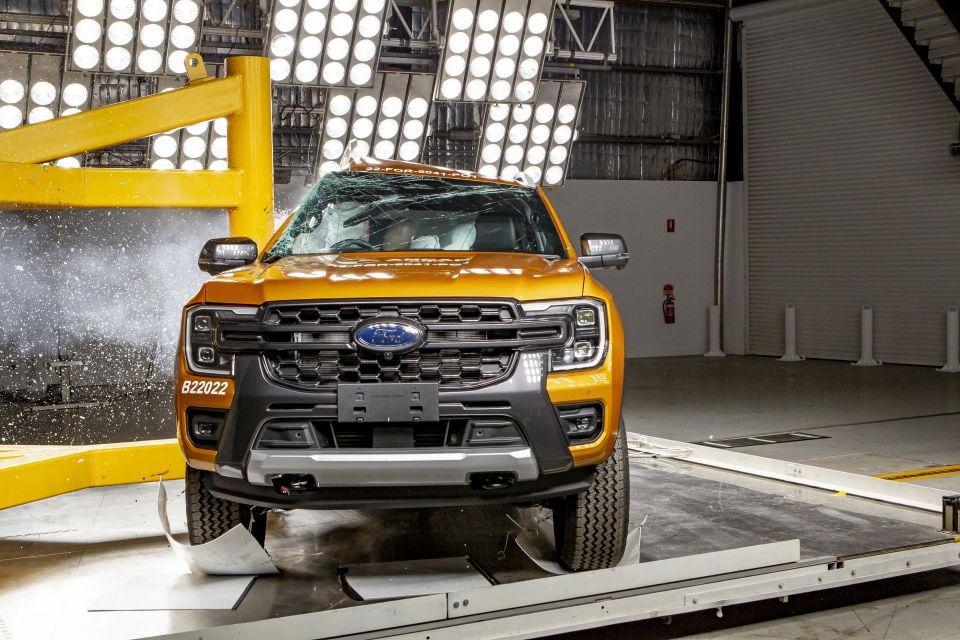
The Super Duty isn’t covered by the standard Ranger’s five-star ANCAP safety rating, but it does feature pretty much the same suite of active and passive safety kit as the wider lineup.
Standard safety equipment includes:
- 9 airbags
- Adaptive cruise control with stop/go
- Autonomous emergency braking
- Blind-spot monitoring incl. trailer coverage
- Evasive Steer Assist
- Lane centring
- Lane-keep assist
- Parking sensors – Front, rear
- Rear cross-traffic assist
- Surround-view cameras
- Traffic sign recognition
- Tyre pressure monitoring
To see how the Ford Ranger lines up against the competition, check out our comparison tool
How much does the Ford Ranger Super Duty cost to run?
The Super Duty is covered by Ford’s five-year, unlimited-kilometre warranty, with up to seven years of roadside assistance – provided the vehicle is serviced annually at a Ford dealership.
|
Servicing and Warranty |
Ford Ranger Super Duty |
|---|---|
|
Warranty |
5 years, unlimited kilometres |
|
Roadside assistance |
Up to 7 years – Conditional |
|
Service intervals |
12 months or 15,000 kilometres |
|
Capped-price servicing |
5 years |
|
Average annual service cost |
$469 |
|
Total capped-price service cost |
$2345 |
Service intervals are 12 months or 15,000km (whichever comes first), with Ford’s capped-price servicing costing $469 a pop for the first five years or 75,000km.
To see how the Ford Ranger lines up against the competition, check out our comparison tool
CarExpert’s Take on the Ford Ranger Super Duty XLT
It’s hard not to be impressed with how much extra capability the Blue Oval has unlocked from the Ranger with some choice modifications and re-engineering, while retaining the core attributes that have made it Australia’s favourite ute and best-selling vehicle overall.
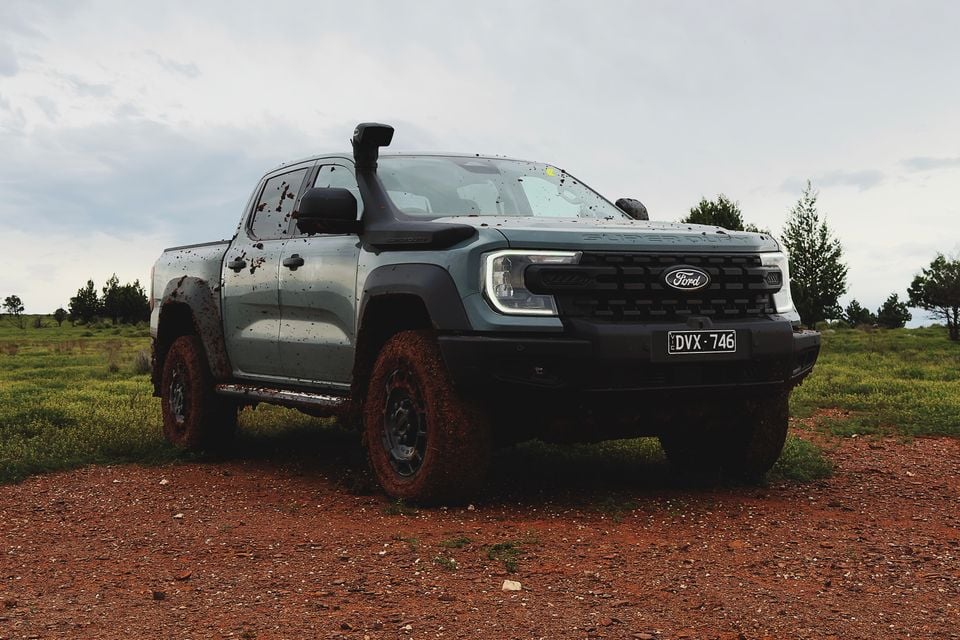
The XLT will no doubt appeal to individuals who are tempted by the Super Duty’s increased load-carrying/hauling and off-road capabilities, but who don’t want to sacrifice too many luxuries. And added bonus is the SD has the look of a Raptor with military-style heavy-duty seasoning.
The fact this ute costs more than $100,000 once it’s in your driveway, yet is heavier and offers 30kW less power than a standard Ranger V6 might attract scoffs at the worksite, but this is a genuine do-it-all ute with the payload and towing capacity of a full-size pickup, wrapped in the more compact packaging of the best and most advanced dual-cab diesel ute on the market.
Aside from its price, the ongoing reliability and longevity of the Ranger Super Duty ha yet to be proven, unlike the comparatively ancient LandCruiser 70 Series, and Ford does have a patchy history with durability and customer relations in Australia.
That said, more than half a million Rangers were delivered in Australia alone between 2015 and 2025, and sales aren’t showing many signs of slowing down, which shows the majority of the buying public isn’t all that phased by the ‘what ifs’, and that fleet customers keep coming back to the nation’s only homegrown ute.
Compared to its more natural heavy-duty rivals, the Ranger Super Duty sets itself apart with the same tech-laden interior and SUV-like on-road manners as the standard version, with full-size pickup-matching towing capability that the LC70 and Grenadier cannot match.
It’s a shame the six-figure spend doesn’t get you the Raptor’s trick Matrix LED headlights or larger in-car displays, but if you think of the Super Duty as the Raptor’s not-quite-identical twin that’s less about jumping over dunes and more about doing actual ute stuff, it makes a lot of sense.
I’ll have mine in Traction Green with a factory canopy, thanks.
CarExpert can save you thousands on a new Ford Ranger. Click here to get a great deal.
Click the images for the full gallery
MORE: Explore the Ford Ranger showroom

