
So many improvements, save one
The Chevy Traverse is the largest unibody SUV in the bowtie’s lineup, just beneath the Tahoe and Suburban. Having been redesigned in 2024, the Traverse has lost its old rent-a-car looks for a more refined, truck-like exterior, as well as a significantly improved cabin that’s bigger than you’d think. Sales in 2025 have been strong, ranking third in the segment behind the Honda Pilot and the Ford Explorer. A V6 is standard on the Pilot and optional on the Explorer, but the Traverse only comes with a turbocharged four-cylinder under the hood. The V6 from the last Traverse has been abandoned.
Amos Kwon
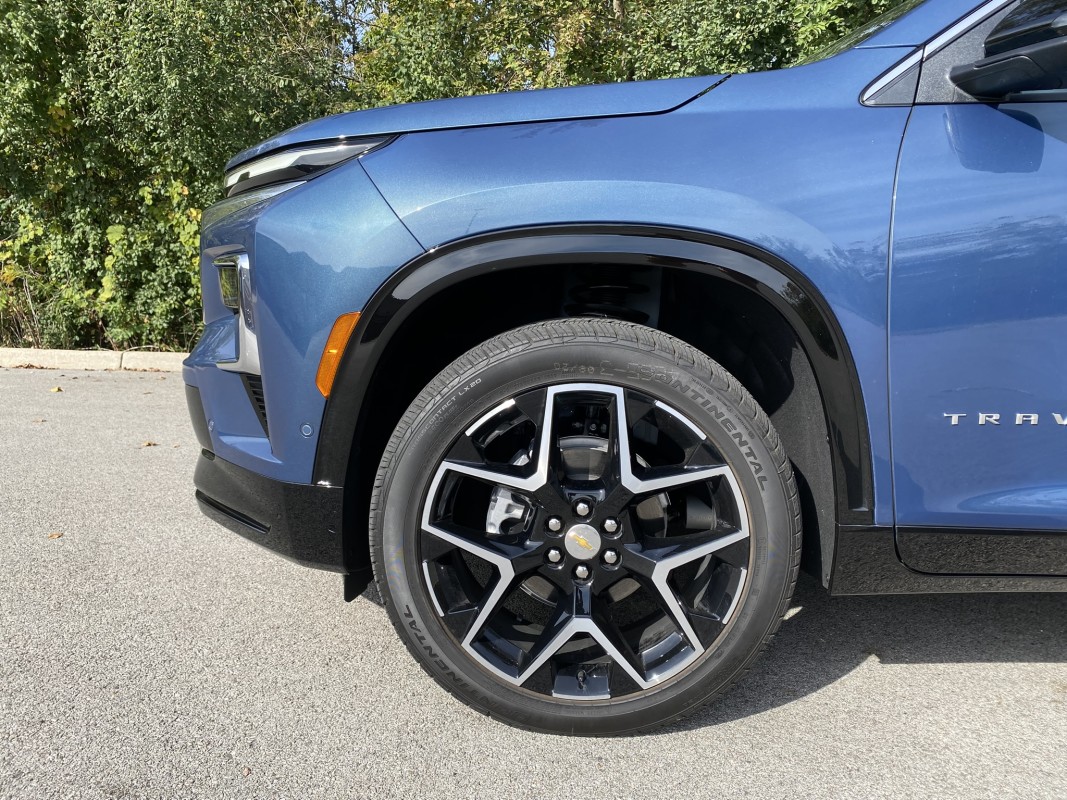
Our High Country AWD tester had a base price of $57,100. It included some great standard features like 22-inch high gloss black aluminum wheels, a power liftgate, outside heated mirrors, a 17-inch infotainment screen with Google Built-In, wireless Apple CarPlay & Android Auto, a Bose 12-speaker premium audio system, active noise cancellation, tri-zone automatic climate control, heated and ventilated front seats, a heated steering wheel, heated rear outboard seats, ambient lighting, 1-touch fold second-row seats, third row power-folding seats, and remote start. The only optional feature was the $1,500 panoramic sunroof with power sunshade.
Our test vehicle’s standard safety features included Adaptive Cruise Control, Forward Collision Alert, High Beam Assist, Enhanced Automatic Emergency Braking, Rear Cross-Traffic Braking, Enhanced Automatic Parking Assist, Blind Zone Steering Assist, Reverse Automatic Braking, and HD Surround Vision. The total price, including the $1,895 destination charge, came to $60,495.
Traversing the realm of style
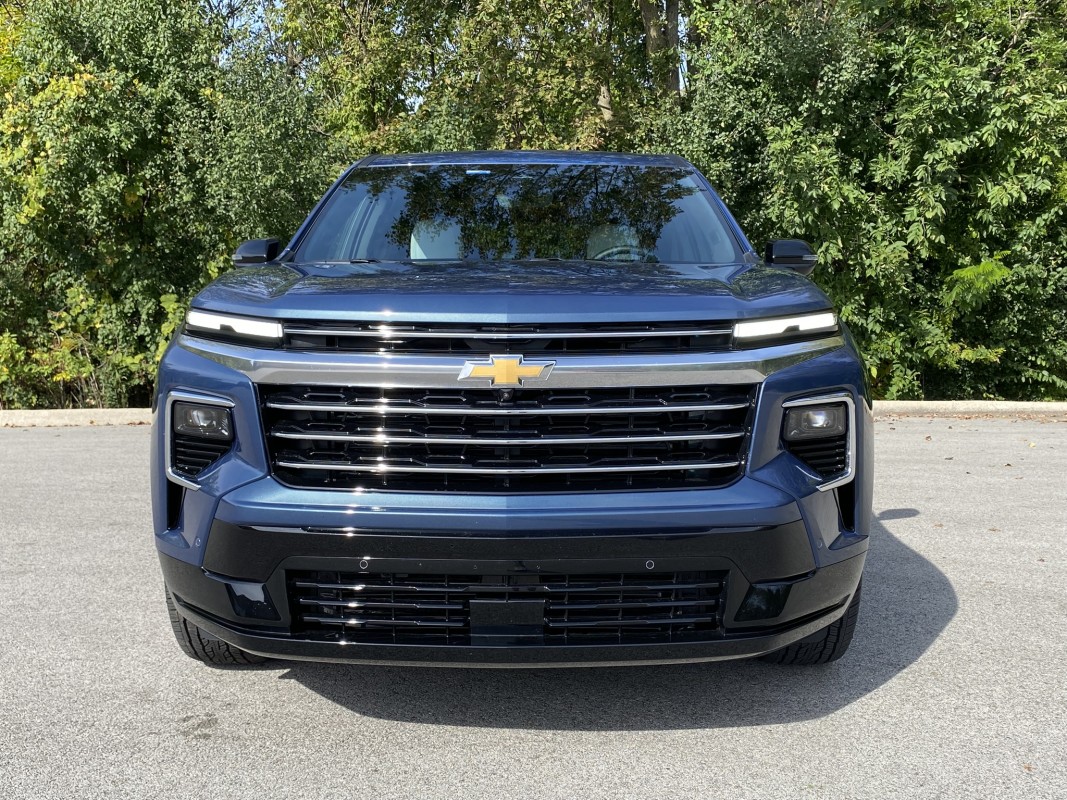
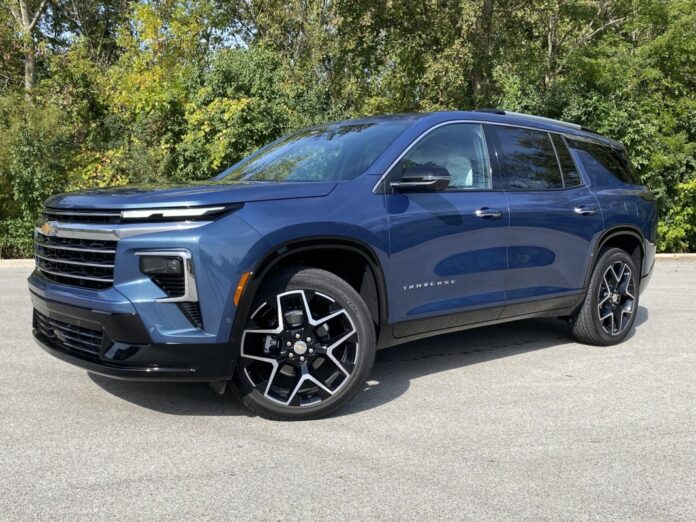
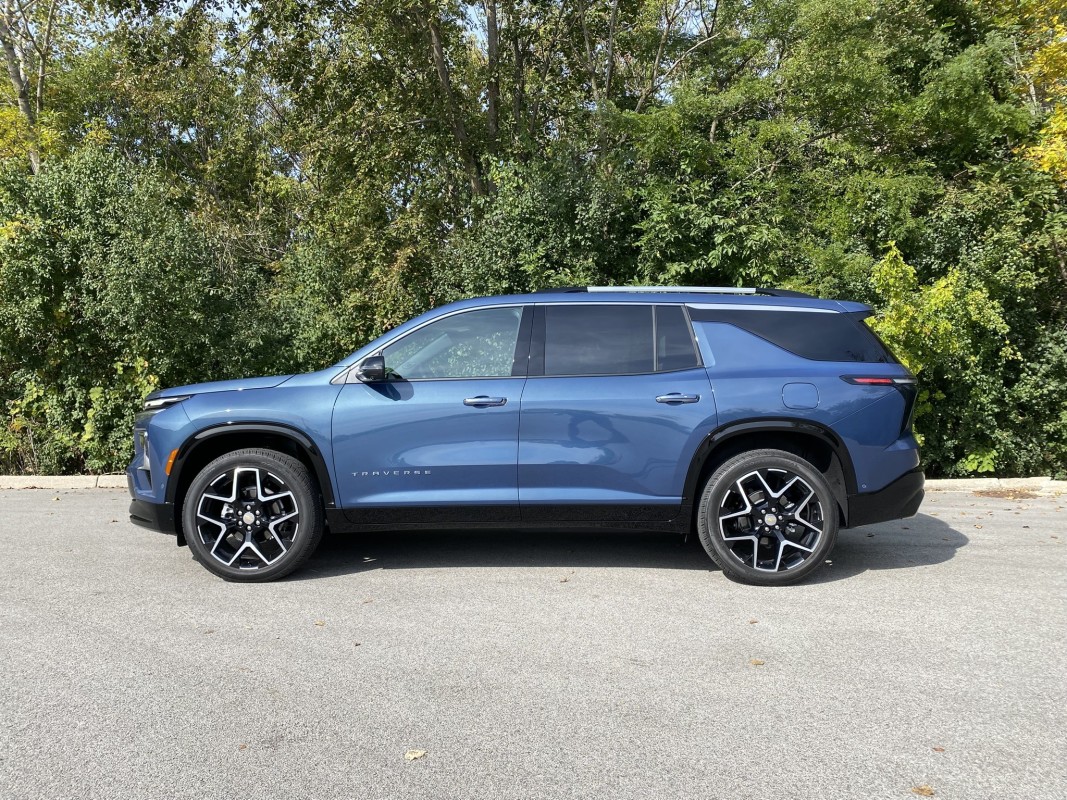
If you look at the Traverse’s first generation, there’s more than just a whiff of rudimentary rental-car styling. The second generation looked more refined but failed to be distinct in the segment. For the third generation, everything changes for the better. The family SUV has more presence thanks to its more upright and truck-ish front fascia, combined with more athleticism in the body. Overhangs have been shortened, and the wheelbase is slightly longer. Aside from the bolder front end, the most noticeable styling element is the reverse shark fin aft of the C-pillar that melds nicely with the floating roof.
View the 2 images of this gallery on the
original article
The rear is well done, featuring some very distinct split-Y taillights that connect via dark trim surrounding the lighting elements. The black bumper, D-pillars, and roof spoiler trim match the fender trim and rocker panels, and the quad square exhaust outlets fit the Traverse High Country’s look well, but the sound coming from them isn’t commensurate with their appearance. More on that later.
Cabin comfort, space, and tech
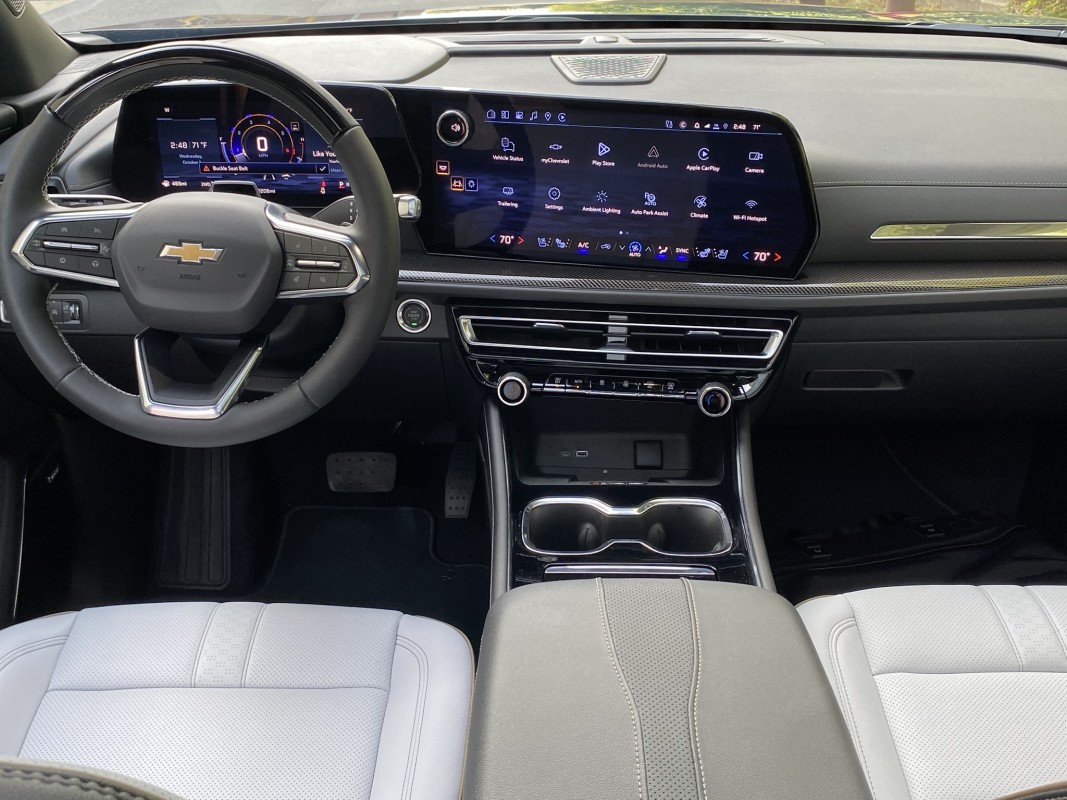
For families, the Traverse makes a strong case with its cavernous interior. It’s almost as big inside as the pricier Tahoe. Standard seating accommodates seven passengers with second-row captain’s chairs, but you can add a passenger with a second-row bench seat in the LT trim. The biggest boost for the third-gen Traverse is the roomy third row. It has 33.5 inches of legroom, and the seating position is better than most, so real-sized adults won’t find their knees pushed up due to a low cushion.
View the 4 images of this gallery on the
original article
Storage is abundant, with oversized bins throughout the cabin, including a large compartment in the center console where the wireless charging deck is located. The two big cupholders are right in front of a deep compartment with a retractable door, and the large open storage space beneath the console is accessible from both sides. I was able to easily fit my daughter’s binder and music books for her piano lessons, and even the door pockets are well-sized. It’s important for a family SUV to have great storage, and the Traverse nails it. Fold all the seats flat, and the Traverse reveals more than 97 cubic feet of cargo room, placing it among the leaders in its class.
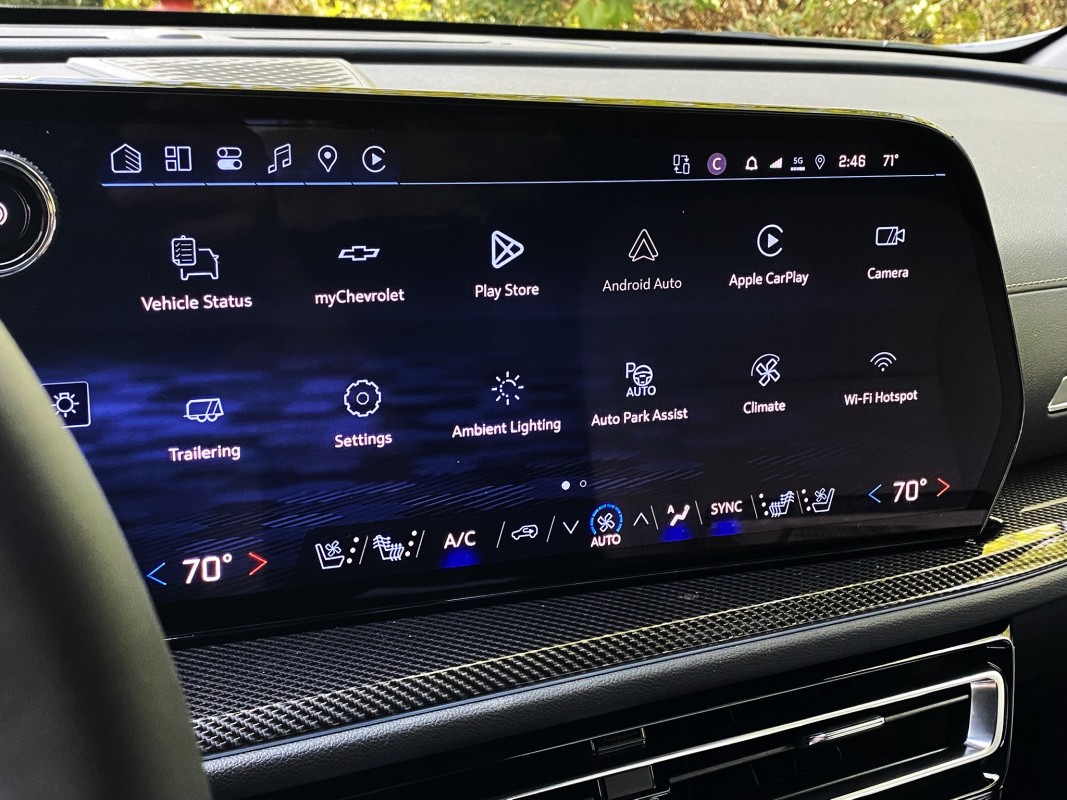
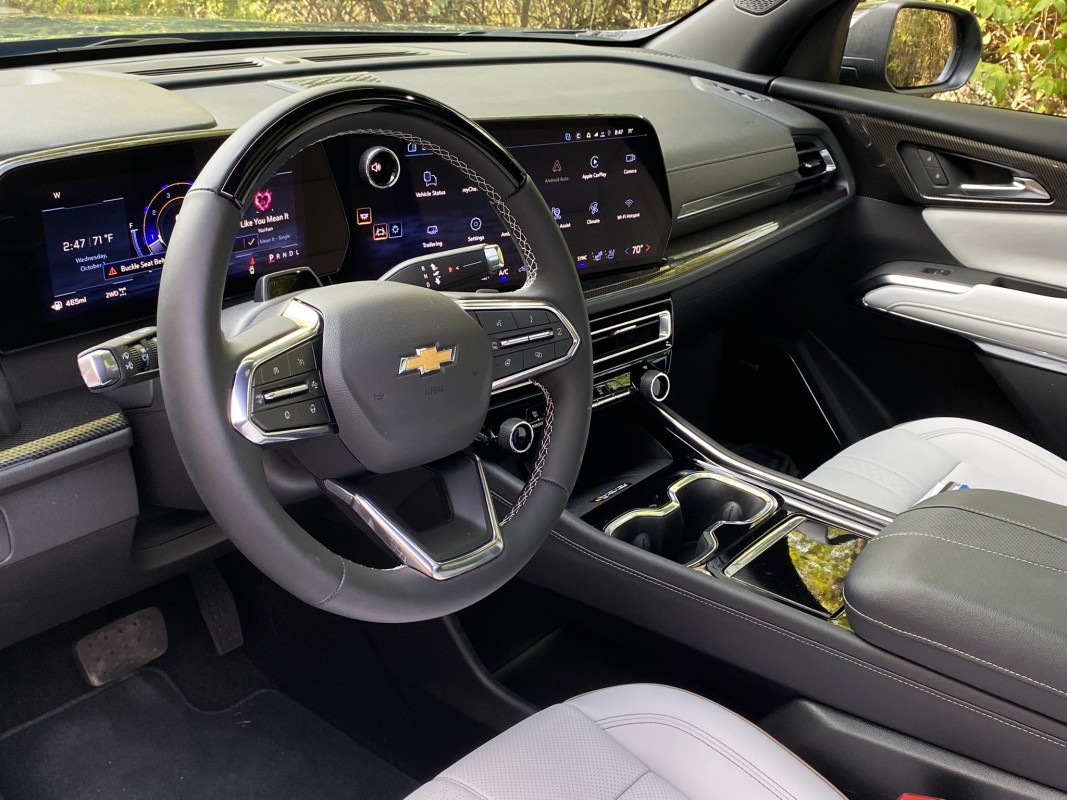
Every Traverse comes equipped with a huge 17.7-inch infotainment touchscreen running Chevrolet’s latest Google-based interface, giving the cabin a modern, high-tech feel. It’s a brilliantly executed screen with quick responses to inputs and an easy menu. The Traverse also gets redundant physical controls for climate, audio, and seat heating/ventilation, so you’re not relegated to using only the screen. The clear line of climate controls on the screen is quite good, though, and it helps that there’s a trim shelf just below it, allowing you to rest your hand while selecting the desired function.
An 11.0-inch digital gauge cluster is also standard, offering multiple layouts so drivers can tailor the display to their preferences. Convenience tech includes a wireless smartphone charging pad and an available onboard Wi-Fi hotspot that keeps passengers connected on the go. Paddle shifters also have audio volume and forward/reverse functions just below them, an added convenience. Overall, the Traverse’s in-car tech and controls score high marks from us.
The driving experience
When it comes to the drive, the Traverse leaves us wanting. Every Traverse is powered exclusively by a turbocharged 2.5-liter four-cylinder engine mated to an eight-speed automatic transmission. The output is 328 horsepower, available with standard front-wheel drive and optional all-wheel drive. This marks a departure from the second-generation Traverse, which featured a naturally aspirated 3.6-liter V6 that delivered more traditional SUV power but less efficiency. The switch is likely the result of stricter emissions and fuel efficiency standards, which is not especially surprising but still disappointing.
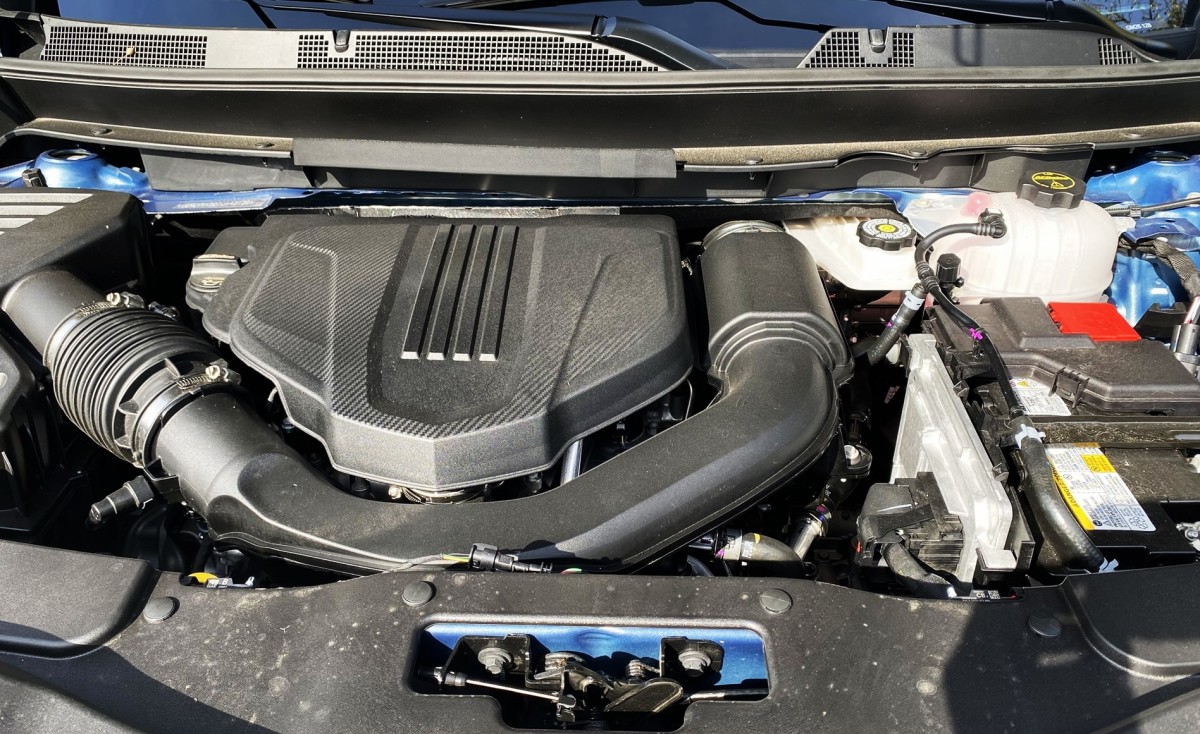
That said, the turbocharged four-cylinder engine still produces more horsepower than the 2023 Traverse’s 3.6-liter V6 engine, which was rated at 310 horsepower. Acceleration is sufficient for everyday driving, but the throttle response lacks urgency. Even under mild acceleration, the turbocharged four-cylinder sounds coarse and unrefined. This feels wrong for a $60k, three-row near-premium SUV. The all-wheel-drive Traverse is also a few tenths of a second slower than the last Traverse in a 0-60 mph sprint.
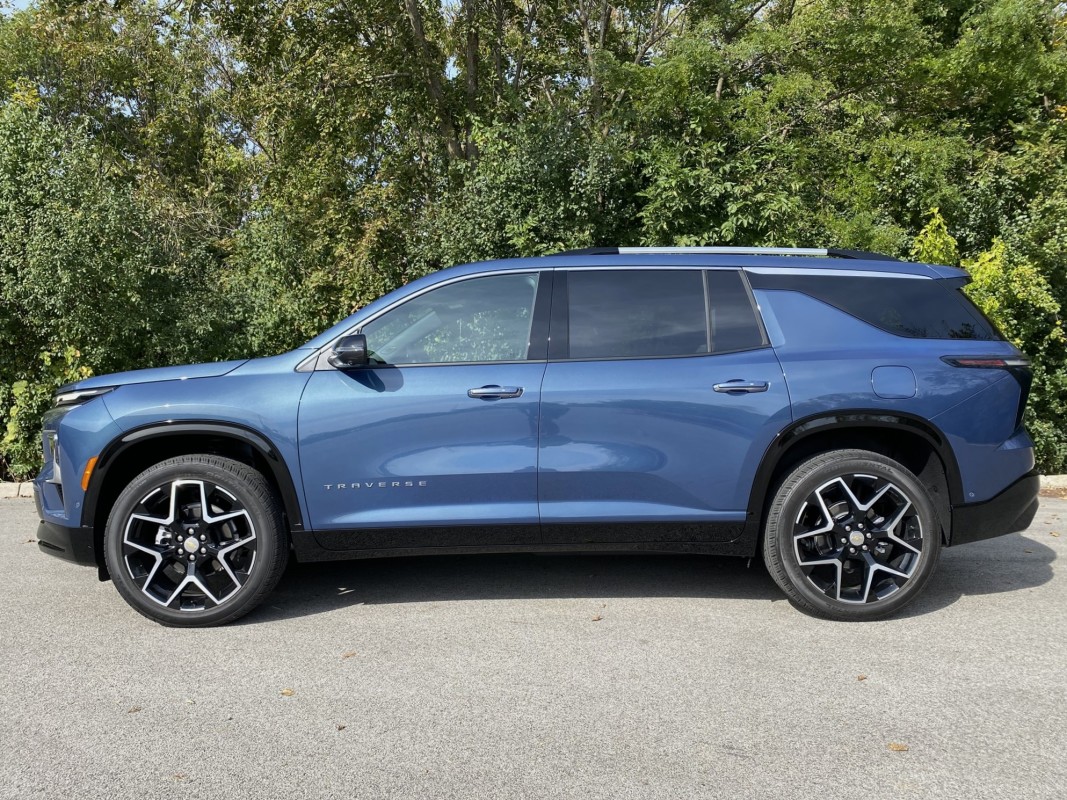
On the road, the current Traverse doesn’t feel especially engaging, with steering and turn-in that come across as slow. It doesn’t feel nearly as sharp as the Mazda CX-90 or the Honda Pilot. That said, its ride quality leans family-friendly, offering comfort and stability on longer drives. The brake pedal has a firm, confidence-inspiring feel, and the suspension decently manages body roll. It’s not an SUV you drive quickly, but it is compliant and comfortable.
Final thoughts
The 2026 Chevrolet Traverse High Country does so much so well. It’s handsome, roomy, supremely comfortable, tech-forward, and well-appointed. There’s a lot to love about it, but the driving experience isn’t one of them. While it offers a great ride and decent road manners, the rough turbo four engine feels out of place in an SUV of this caliber. Most drivers will find the Traverse more than capable in terms of power and performance, but those seeking driving verve and a sonorous engine note will be disappointed.

