
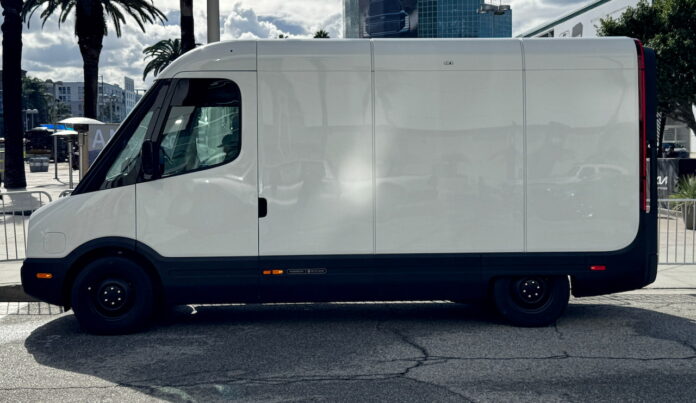
Update: ‘Ford E-Transit with regular model year updates’ and ‘New Rivian EDV 700/900 variants’ added.
Electrification in the automobile industry extends not just to hatchbacks and electric pickup trucks but to commercial vehicles as well. Given that the average delivery van covers less than 160 miles a day, which is well within the reach of current battery technologies, many fleet operators and e-commerce majors are transitioning to electric vans, and here are some expected future options.
1. Tesla Robovan

The Tesla Robovan is a fully autonomous electric passenger van with a streamlined exterior inspired by 1920s-30s art deco trains. It lacks a traditional windshield, instead featuring small front and rear glass panels that may use electrochromic technology.
Luggage compartments are positioned at both ends, and CEO Elon Musk has suggested in a post on X that Tesla may offer an optional solar canopy that expands the roof area threefold.
Inside, the Robovan is designed as a lounge with a flat floor, ambient lighting, large screens at both ends, and seating for up to 20 passengers. The passenger application is expected to be called the Tesla Robus.
Tesla also considers a commercial version for goods transport. The company expects operating costs of 5-10 cents per mile. Its launch is unconfirmed, but the model may not arrive before 2028.
2. Ford E-Transit with model year updates
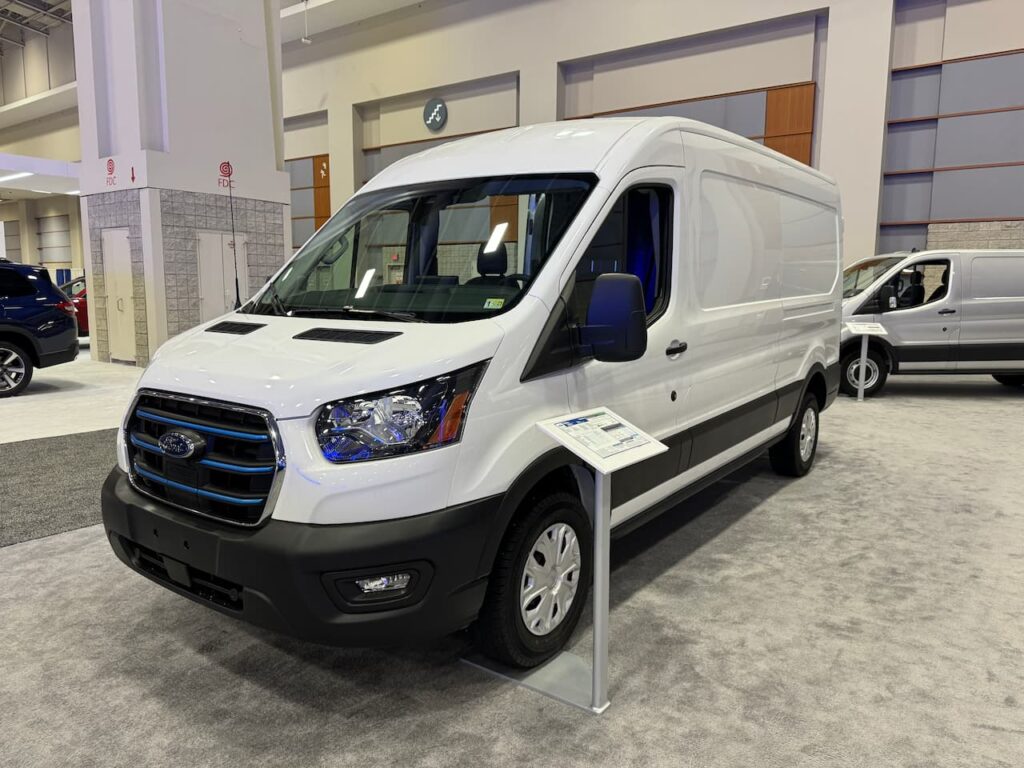
Unlike the Ford F-150 Lightning, the Ford E-Transit is not getting the axe anytime soon. Citing Ian Thibodeau, the Manager of Investor Relations at Ford, a report from Ford Authority says that the electric van will continue to be in production.
In 2029, though, the Blue Oval will replace it with a new “affordable” model that will be available in gas and hybrid variants. And in the meantime, Ford is expected to roll out minor changes with new model years.
With the 2026 model year update, customers can specify the Chassis Cab and Cutaway versions with a 156-inch wheelbase. Ford has also introduced a dual onboard charger option, and made a vapor injection heat pump standard. The 89 kWh battery pack continues to deliver a range of up to 159 miles.
3. GM Electric Van
GM is working with Hyundai on a new electric van, part of a joint program to develop five models for the Americas, announced on August 6, 2025. The companies said that Hyundai is leading the engineering of the van, while GM is focusing on the exterior and interior design to address North American customer needs.
GM has confirmed production will take place in the U.S., beginning in 2028. While Hyundai will oversee technical development, it could also manufacture the vehicle for GM.
4. Hyundai Electric Van

Hyundai plans to launch its own model on the upcoming electric van platform shared with GM to enter the North American LCV market. The company has confirmed that it would be a large van (Class 2 XEV LCV), which should be 6,001-10,000 lbs GVWR range, competing with offerings like the Ford E-Transit and Mercedes eSprinter.
Hyundai Translead already has 29% of the U.S. market for van trailers, and we will start production of electric LCVs as early as 2028. You’ll see us on the road everywhere.
Jose Munoz, President and CEO of Hyundai Motor Company, at Hyundai’s 2025 CEO Investor Day on Sept 18, 2025
Consistent with Hyundai’s current design approach, the van may adopt a more unconventional front and rear to stand apart in the segment. Production will take place alongside the GM model, with output targeted to begin in 2028.
5. Mercedes premium van
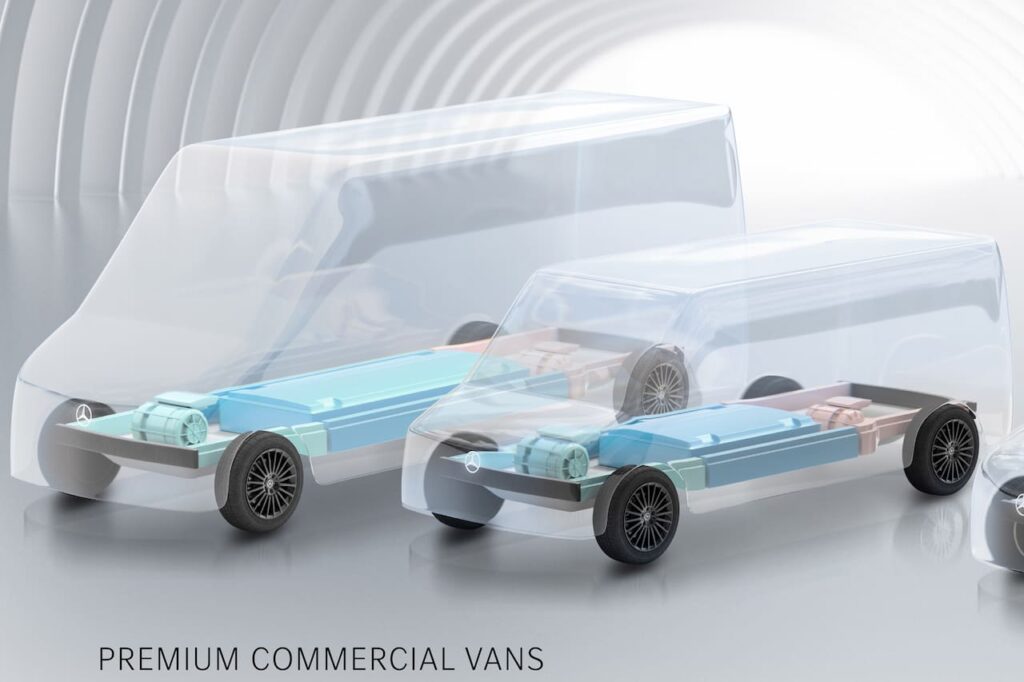
Mercedes-Benz Vans will introduce new all-electric premium models in the mid-size and large segments, built on the dedicated VAN.EA-C (Commercial) platform. Designed from the ground up for EVs, the platform allows multiple configurations and offers more space and efficiency than ICE-based conversions.
The vans will run on MB.OS software and include SAE Level 2 driver assistance at launch, with Level 4 capability planned by 2030. Target customers include courier and parcel delivery services, hospitals, roadside assistance, and other professional operators.
While the rollout of the VAN.EA platform models commences in 2026, we’re awaiting details on the U.S. launch plan for the commercial vans.
6. New Rivian EDV 700/900 variants

Rivian offers two electric vans, namely the EDV 500 and EDV 700, and it is developing new variants of at least one of these models. During the company’s Q4 2025 earnings conference call on February 12, 2026, CEO Robert Scaringe said that an EDV with an AWD layout, and an EDV with a larger battery pack are in the pipeline.
The future configurations will help Rivian secure more orders from Amazon, and the two companies are working together to finalize their requirements, Scaringe added.
Chances are the company will offer the additional configurations to customers other than Amazon as well. The current vans come with a FWD drivetrain layout and deliver a range of up to 161 miles (EDV 500)/160 miles (EDV 700).
7. Slate Cargo Kit
While Slate’s offering is a functional pickup truck, its key differentiator lies in customization. One of the planned kits converts the bed area into a cargo van for last-mile delivery.

The configurator does not list this option yet, but we expect it to be the SUV kit with blanked-out sides and no rear seats, as shown in our rendering (above). The SUV version offers 80.5 cu.ft of interior volume, which we estimate at 60-65 cu.ft in a cargo van configuration.
Cargo Kit: adds van-like covered cargo storage to the pickup, perfect for fleets or small businesses.
Slate Auto’s FAQs section detailing its body styles
The cargo kit application should be well-suited for the 52.7 kWh battery pack with a 150 kW rear motor, delivering an estimated EPA range of about 150 miles, supporting daily routes between logistics centers, regional warehouses, and wholesale supplier hubs.
The Slate truck’s charging is supported through the NACS port, with DC fast charging to 80 percent at 120 kW in under 30 minutes. We should learn details about the cargo kit option in June when final prices are announced for the ‘Blank Slate.’

An automobile engineer by training, I’ve analyzed the global car market since 2005, with a keen focus on EVs since 2008. My journey in online automotive publishing spans 17 years, during which I have reviewed cutting-edge automotive technologies and interviewed leading global CEOs and vehicle developers.

