
According to the University of Pittsburgh, reckless lane changes result in nearly 35,000 Americans suffering injuries annually. Among the factors contributing to this sobering statistic are drivers’ lack of situational awareness and failure to use their mirrors. No matter how it occurs, cutting someone off — causing another motorist to slam on their brakes as you enter their lane — is a recipe for disaster. But as dangerous as this is with other cars, pulling it on a semi truck is even more unconscionable.
A big rig with fully laden trailer typically tips the scales at up to 80,000 pounds legally, and with certain exceptions can haul even more. In fact, with special permissions, the biggest loads a semi truck can tow may go well past the usual limit. But according to insurance company Wawanesa, a truck at the weight limit going 65 mph can take up to 600 feet, or two football fields, to stop. Even though semi truck air brakes can enhance stopping power, getting that much weight to come to a halt takes time.
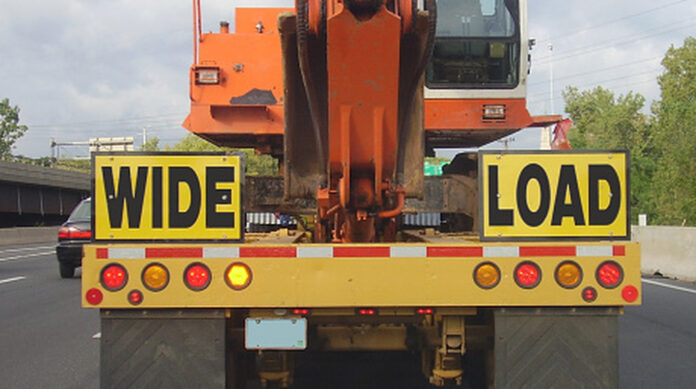
A semi labeled “wide load” describes cargo beyond 8½ feet in width, the normal limit, although the legal figure can vary by state. These loads often require the use of a pilot vehicle out front, and in some cases a following vehicle as well, to tell the trucker about conditions or help with navigating through traffic. As with any car, cutting off the guide car can lead to a crash.
And larger freight can cause a big truck to have even less maneuverability. In addition to placing yourself and the truck driver in peril, you’re also risking other nearby motorists, including the pilot car(s). However, a big rig smashing into a car that’s just cut it off isn’t the only potential danger.
When a truck driver is forced to take evasive action, the load can shift, with potentially deadly results
Semis move around 70% of the goods across the U.S., per FleetNet America. This includes loads with irregular dimensions, such as large industrial materials that must be carefully secured for transport. When drivers of smaller vehicles don’t take extra care around big rigs, it can cause these loads to become unstable, leading to terrifying outcomes.
For example, in 2023, a Tampa driver decided to cut off a semi hauling massive concrete poles. The resulting jolt from the truck driver forcefully applying the brakes sent two of these poles forward through the big rig’s cab and windshield. Fortunately, no one was hurt, but it could have turned out very differently.
Sometimes the cargo on a truck becomes loose even without prompting from a reckless motorist. Take for instance, a 2026 incident in Washington State when a semi on Interstate 90 carrying several large metal sheets shifted, causing the cargo to cut through the rear of the truck’s cab. It demonstrates vividly the amount of weight and force involved, and the need for drivers to be cautious around large trucks and their payload. (Safety also is one of the major reasons why semi trucks are required to weigh in so often as they travel the highways.)
Tips for safely sharing the road with wide load semi-trucks
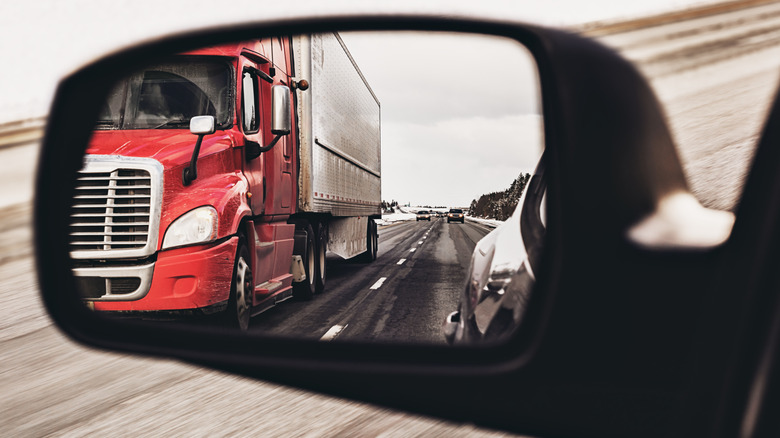
One of the mistakes drivers can make when passing a big rig is neglecting the amount of time it requires. According to the Utah Department of Transportation, a car traveling 70 mph should be at least seven car lengths ahead of a semi before getting over. Essentially, each 10 mph should equal another gap the size of a typical car.
In the case of a wide-load transport with pilot vehicle, it’s also not a great idea to get between a truck and the guide car. Instead, continue well past the front escort, providing ample space before getting over. In addition, once you successfully pass the semi and pilot vehicle, and then change lanes, don’t reduce your speed unless absolutely necessary. While it’s a quick process for a car to accelerate back up to a cruising clip, a heavy truck can take much longer.
Finally, the best habit you can present around a semi in general is to be extremely predictable. This entails doing things like signaling your intent well before you normally would. Try to ensure the truck driver and guide cars are fully aware of your plan to pass.

