
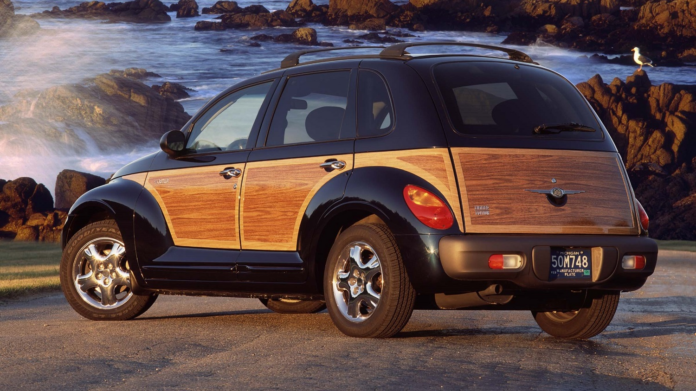
2003 Chrysler PT Cruiser with the Woodgrain Package (Photo courtesy of Stellantis)
2003 Chrysler PT Cruiser with the Woodgrain Package (Photo courtesy of Stellantis)
If you’ve read some of my previous work at The ClassicCars.com Journal, you may have noticed that I have a thing for “Woodys,” vehicles with genuine (or fake) wood paneling on the sides. They have a visual warmth to them and an undeniable old-school flair. That’s why I enjoy writing about vehicles like this 1946 Pontiac, 1947 Chrysler, 1948 Oldsmobile, 1949 Buick, and many other Woodys. As I was thinking about them on the way to the office, I realized that the last Woody (with panels cut from real vinyl trees!) just might be the Chrysler PT Cruiser of the early 2000s. What?!
Woodys might not exist without steel — the same metal that played a major part in their demise. The expanded reach of railroad tracks in the early 20th century led to a need for vehicles that could transport people to and from train stations. Those became known as depot hacks, which were characterized by open bodies with wagon-style wood planks. Changes in construction techniques and features gave way to more lifestyle-focused station wagons. For a time, many Woodys consisted of an automaker’s chassis and a wood body that the customer either made or ordered from an outside firm. Eventually, automakers started offering complete station wagons, although even those had bodies that were made by other companies.
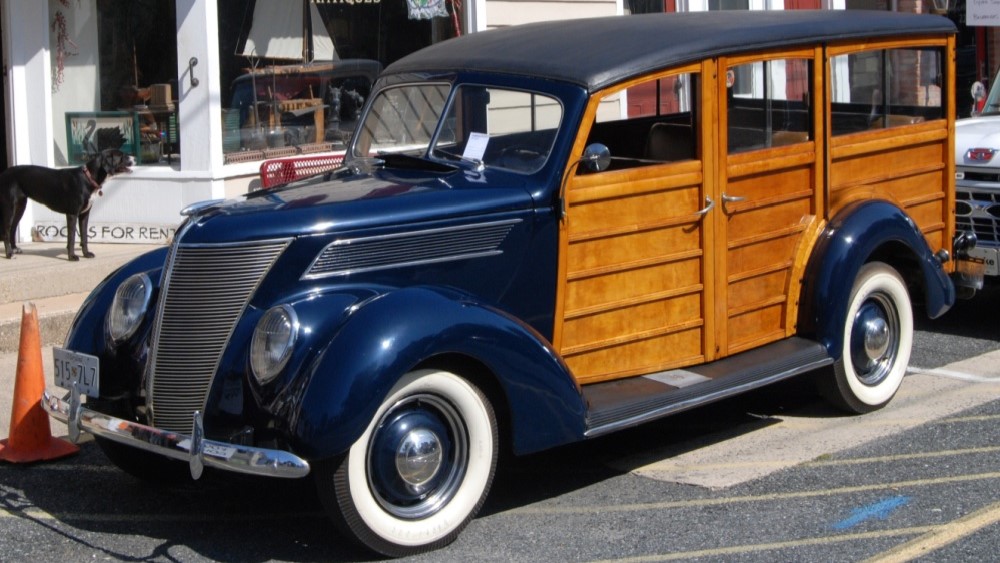
One of the reasons why wood was so popular was that it was easier to use because stamping large steel panels was difficult. After World War II, wood was also in greater supply than steel. Those two limitations turned out to be temporary, but labor-intensive Woodys continued to be produced for several more years. According to Hagerty, “By late 1939, for example, Ford was assembling the 1940 station wagon using 445 board feet of lumber including gum or mahogany for paneling, birch and maple for framing, and basswood for the inner roof slats. Then, the Rouge plant in Dearborn shipped to Iron Mountain 25 boxcars a day containing the required steel parts. The assembly of each wagon required different 167 sizes and shapes of wood, from long stringers to tiny framing blocks. The bodies also required a further 750 different parts, from screws to safety glass.” And let’s not forget the multiple coats of varnish and all the sanding required afterward.
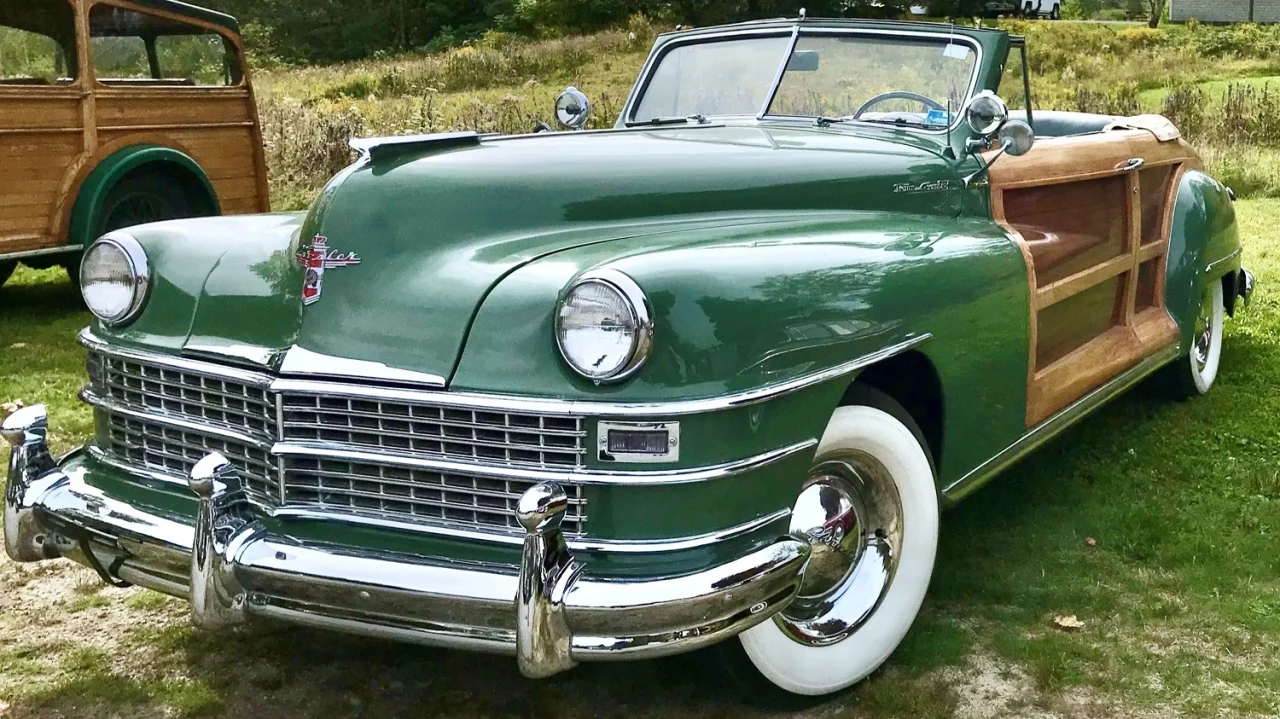
The fundamental materials of Woodys changed over the years. By the late 1940s, wood became more of a framing material for body-color steel panels or Di-Noc vinyl sheeting. The National Woodie Club has an entire page on its site devoted to the different types of Woodys out there. Classic models feature wood as a structural component. Convertibles and sedans such as the Chrysler Town & Country qualify as Woodys, too. Then there are those vehicles with decorative, non-load-bearing wood trim. “Tin” Woodys are “1949 and later station wagons with metal profiles suggesting wood framework and panels although they were actually stamped steel.” Woodys from later decades only have a semblance of wood thanks to vinyl side panels.
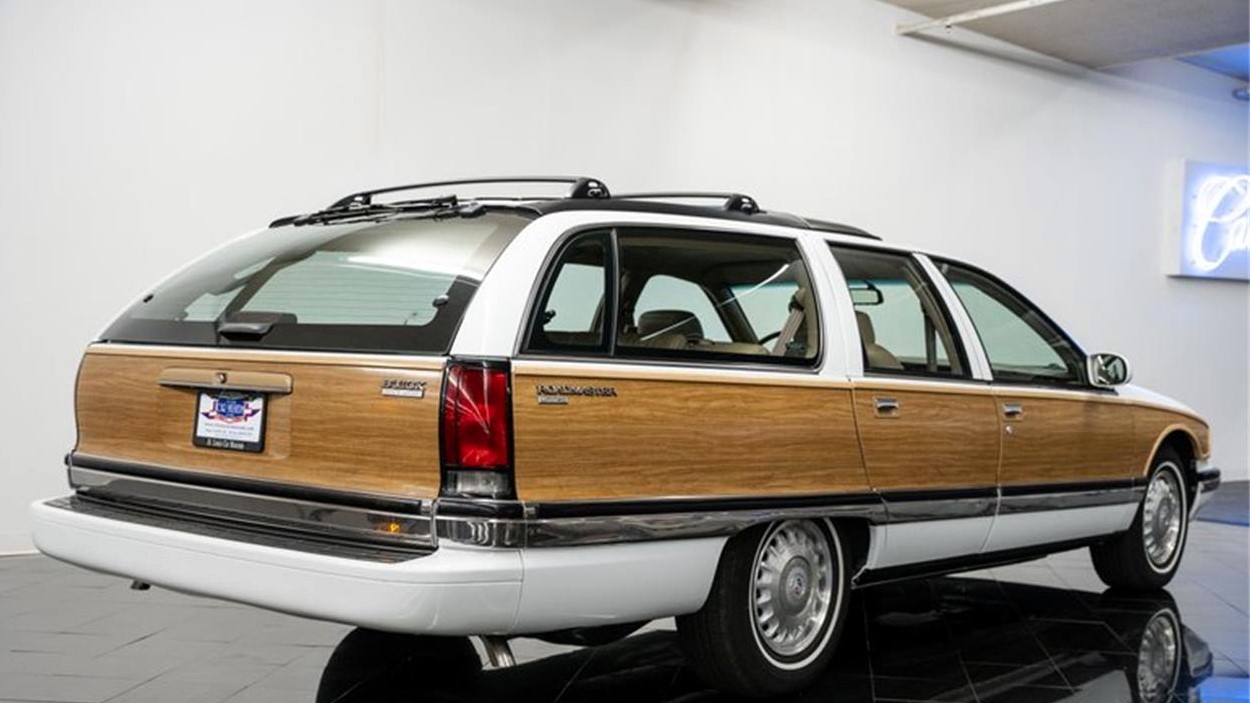
The vinyl-sided Woodys lasted well into the 1980s and 1990s. Jeep rocked that look with the XJ Wagoneer and Cherokee Briarwood, and the SJ Grand Wagoneer, which was discontinued at the end of the 1991 model year. Buick held out even longer, offering the Roadmaster Estate Wagon until 1996.
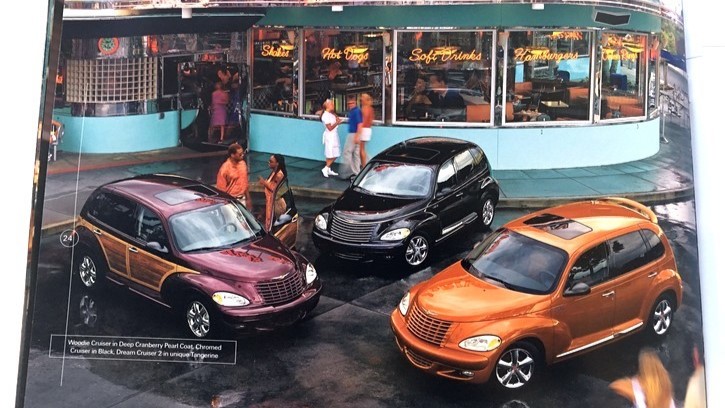
For a while, I thought that was the end of the factory Woody (genuine wood or not). However, the more I thought about it, the more an old memory kept rising up, reminding me that there was an even later model: the Chrysler PT Cruiser. It’s fitting that the model inspired by the Art Deco era (which produced the Chrysler Building) was available with such a retro option. Between the 2002-04 model years, the name for it changed from the Woodgrain Package/Woodgrain Exterior Accents to the Woodie Cruiser/Woodie Package to the Woodgrain Accent Group. One thing that stayed the same was its two-tone faux-wood exterior accents — appropriate in the age of automotive retrofuturism that spawned the S197 Ford Mustang, final Ford Thunderbird, reborn Dodge Challenger, and fifth-generation Chevrolet Camaro.
It seems that at least one Ford dealer offered a Woody look on the Flex, but that wasn’t a factory option. As such, it looks as if the 2002-04 Chrysler PT Cruiser is the end of the line for Woodys. Is there a later Woody that I have missed? Post it in the Comments section below.

