


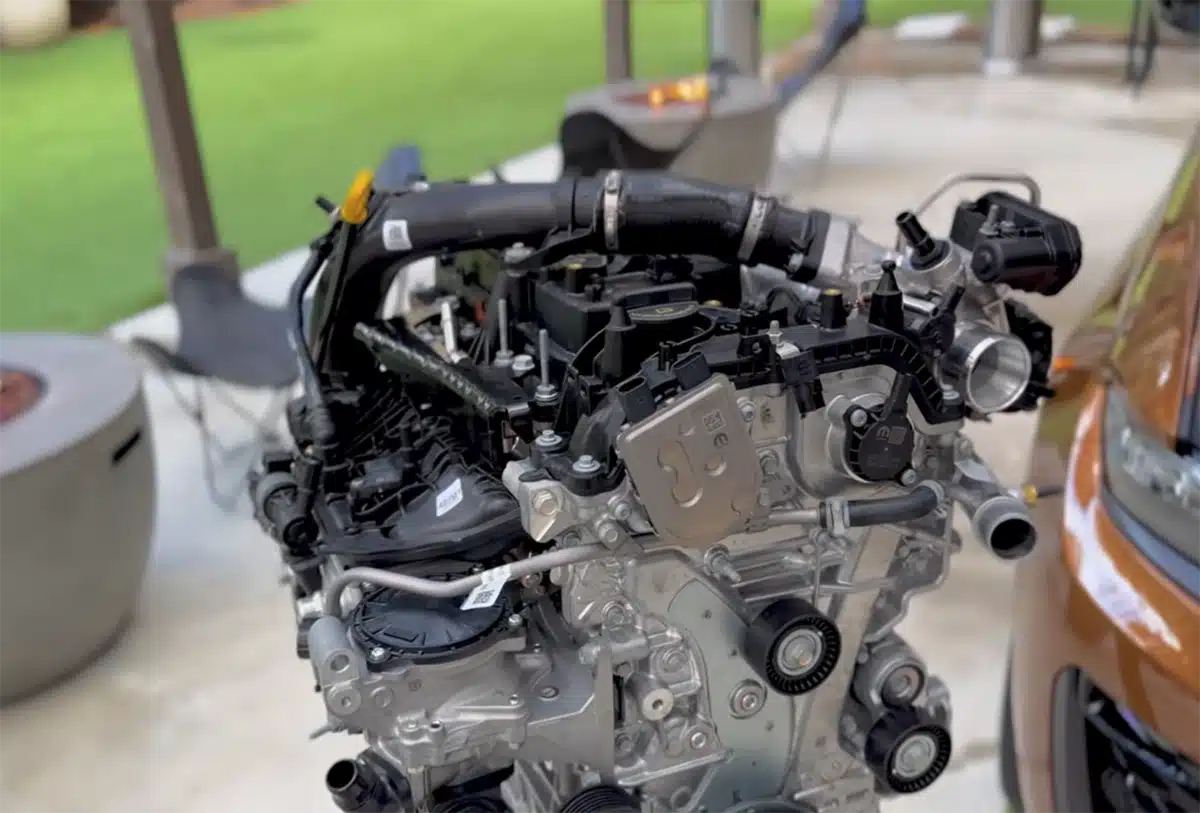
A brand-new turbocharged four-cylinder engine with F1 tech in a Jeep Grand Cherokee already has people talking, especially as shoppers start asking whether there are Jeep Hurricane 4 engine problems to worry about.
For decades, Grand Cherokee buyers have known the formula: smooth V6 power, V8 attitude if you wanted it, and a nameplate that carried a lot of family-hauler and trail-capable credibility. Now Jeep is asking some buyers to consider something very different: a 2.0-liter turbocharged four-cylinder called the Hurricane 4 Turbo.
That naturally raises a big question.
Is this new Turbulent Jet Ignition Hurricane 4 engine already a flop?
Based on what we found, the honest answer is: It is too early to say. There are reasons to watch it closely. There are also reasons not to jump straight to panic mode.
Here is what we know so far.
The Hurricane 4 is not just “a smaller engine.”

The easy reaction is to say Jeep replaced a proven V6 with a tiny turbo four-cylinder and called it progress. That concern is understandable, especially from buyers who tow, take long road trips or keep vehicles well past the warranty period.
But in our interview with Jeep Hurricane 4 Chief Engineer Ashish Dubet, he made it clear Jeep did not simply take an existing 2.0-liter engine and crank up the boost.
More importantly, Dubet said durability was baked into the design from the beginning. He said engineers accounted for pressure, heat and long-term fatigue when developing the engine. In other words, Jeep knew people would question whether a turbo four-cylinder could handle Grand Cherokee duty, and the company says it designed the engine around that concern.
The new Hurricane 4 Turbo makes 324 horsepower and 332 pound-feet of torque, which is more than the outgoing 3.6-liter Pentastar V6. It also keeps the Grand Cherokee’s 6,200-pound towing capability.
The headline technology is Turbulent Jet Ignition. Dubet explained it simply: a regular spark plug works more like a lighter, while this system works more like a blowtorch. The goal is to burn the fuel mixture faster and more completely, helping power, fuel economy and emissions.
None of that proves the engine will be trouble-free after years of ownership. Real-world miles will decide that. But it does show this is not just a smaller engine thrown into a big SUV and left to figure things out.
What we found in the NHTSA documents

We searched NHTSA records and found several Stellantis communications related to the 2026 Jeep Grand Cherokee.
Some of them sound concerning at first glance. One communication discusses a possible loss of engine oil pressure, a no-crank or no-start condition, and says engineering is investigating an issue where the oil pump may fail and cause engine damage.
Another communication discusses a malfunction indicator light, rough running, and misfire codes. That document says spark plug damage can cause cylinder misfire and subsequent engine failure, and that engineering is investigating conditions where spark plug damage may occur.
Those are not nothing.
But they are also not the same thing as a recall, a stop-sale, or proof that this engine is failing in large numbers. These are technical communications meant to help dealers diagnose issues when certain symptoms show up. They do not tell us how many vehicles are affected, whether these are isolated cases, or whether the issue is limited to a specific production batch, part supplier, assembly process or calibration.
There was also a February communication about red-colored engine oil. That one sounds scary, but the explanation is much less dramatic. Stellantis says the red color is from dye used during engine plant testing, and that it does not affect engine performance unless there are other symptoms such as coolant in the crankcase or an active check engine light.
So, yes, there are things to watch. But based on the documents alone, there is not enough evidence to call the Hurricane 4 a failure, or to say there is a widespread pattern of Jeep Hurricane 4 engine problems.
Skepticism and what owners and forums are saying so far

The skepticism around this engine is not hard to understand.
A Grand Cherokee is a family SUV, a road-trip vehicle, and, for some owners, a tow vehicle. So when buyers hear “2.0-liter turbo four-cylinder,” many wonder whether that engine will hold up after years of heat, boost, towing, and daily use.
That does not mean the engine is bad. It just means Jeep has to earn trust with real-world miles.
We checked Reddit, Google search results, and our own forum posts. So far, we are seeing plenty of concern and debate, but not a clear pattern of widespread owner complaints.
A lot of the criticism is based on distrust of small turbo engines, concern over Stellantis’ reliability, or frustration that the old V6 and V8 choices are fading away. Those concerns are fair, but they are not the same thing as proof that this engine is failing.
When did buyers start receiving them?

The Hurricane 4 Grand Cherokee is still very new in the real world. Jeep announced the engine for the 2026 Grand Cherokee in late October 2025, and reports indicate the refreshed Grand Cherokee had started shipping to dealers in early January 2026.
That means the oldest customer-owned examples are likely only a few months old.
That is not enough time to judge long-term durability.
A new engine can feel great in a media drive. It can also look great on a spec sheet. But reliability is proven by thousands of owners using it every day, in heat, cold, traffic, towing, short trips, road trips, and neglected maintenance situations.
We are not there yet.
What owners should watch for
For current or future owners, the best advice is simple: pay attention, document symptoms and do not ignore warning signs.
Watch for:
- Check engine light
- Rough running
- Misfire codes
- Hard starting or no-start condition
- Oil pressure warnings
- Unusual engine noise
- Sudden loss of power
- Oil level changes
- Coolant contamination in the oil
- Repeat dealer visits for the same symptom
If any of those happen, get the vehicle checked while it is under warranty and keep records of every visit.
Also, follow the maintenance schedule closely. Your specific maintenance schedule can be found in the owner’s manual. With a small turbocharged engine, oil quality and oil change intervals matter. This is not the kind of engine where owners should stretch maintenance and hope for the best.
Is the Hurricane 4 a flop?

Not based on what we can prove right now. There are early technical communications worth watching, but the available evidence does not yet show widespread Jeep Hurricane 4 engine problems.
There are early technical communications worth watching. There is plenty of skepticism from buyers and enthusiasts. There are also valid questions about long-term durability, especially because this is a new high-output turbo engine using advanced combustion technology in a large SUV.
But at this point, we have not found enough public evidence to say the Hurricane 4 is a widespread failure.
The more accurate conclusion is this: Jeep’s new Hurricane 4 Turbo is promising on paper, stronger than expected on the road, and still too new to judge for long-term reliability.
For cautious buyers, waiting a model year is not a bad strategy. For shoppers who want the latest powertrain and plan to stay under warranty, the early performance numbers make a compelling case.
But calling it a flop today?
That seems premature.
The post Is Jeep’s New Hurricane 4 Engine Already a Flop? Here’s What We Actually Know appeared first on Pickup Truck +SUV Talk.
