
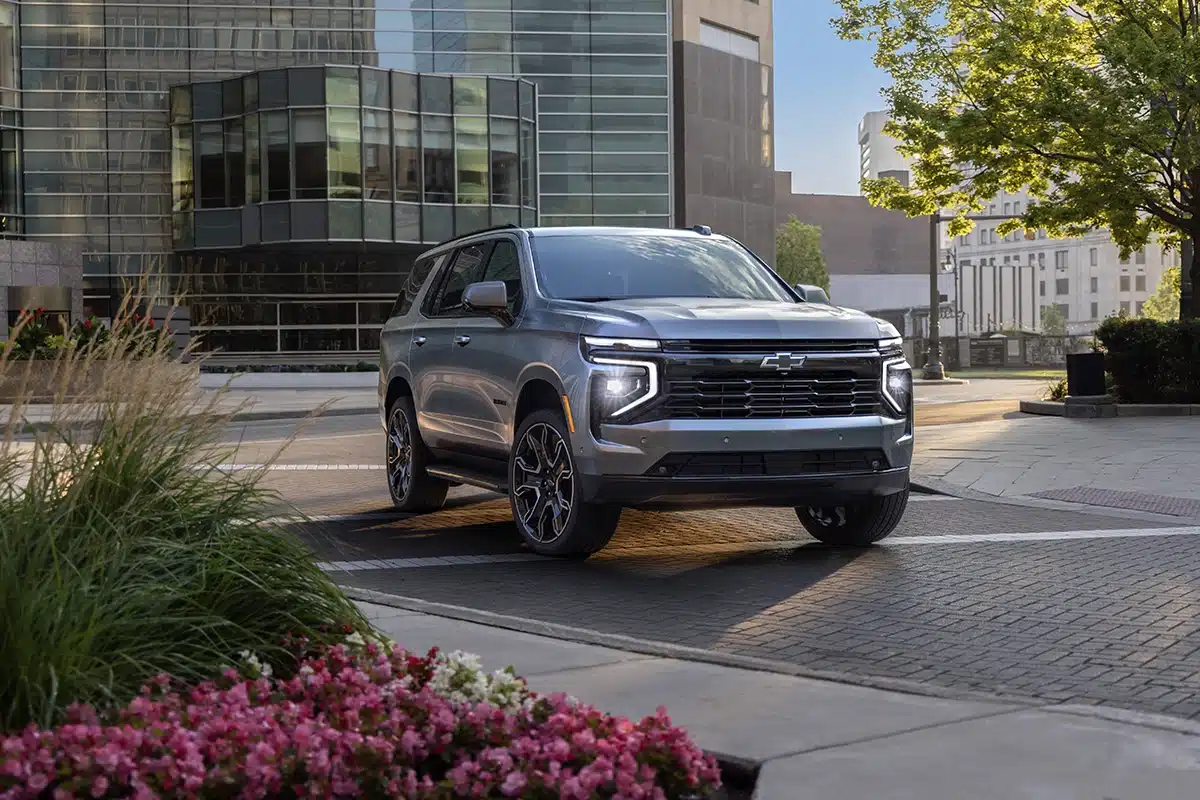
A reader asks why GM’s 5.7-liter and 6.6-liter V8 engines aren’t coming immediately to the GMC Yukon. It is a fair question.
A reader recently reached out with a big question:
“The catastrophic failures of the GM 5.3 and 6.2 are too much for me to overlook because of the safety issue. They don’t have a fix. They are putting the new 5.7 and 6.6 into the pickups. Why are they not putting those engines in the Yukon?”
While it may seem ridiculous for GM to wait to put these new engines in every vehicle in their lineup, the reasons are complex and actually make sense when you look at all the information — whether you like it or not.
GM Learned Its Lesson and is Launching New Powertrains in Trucks First
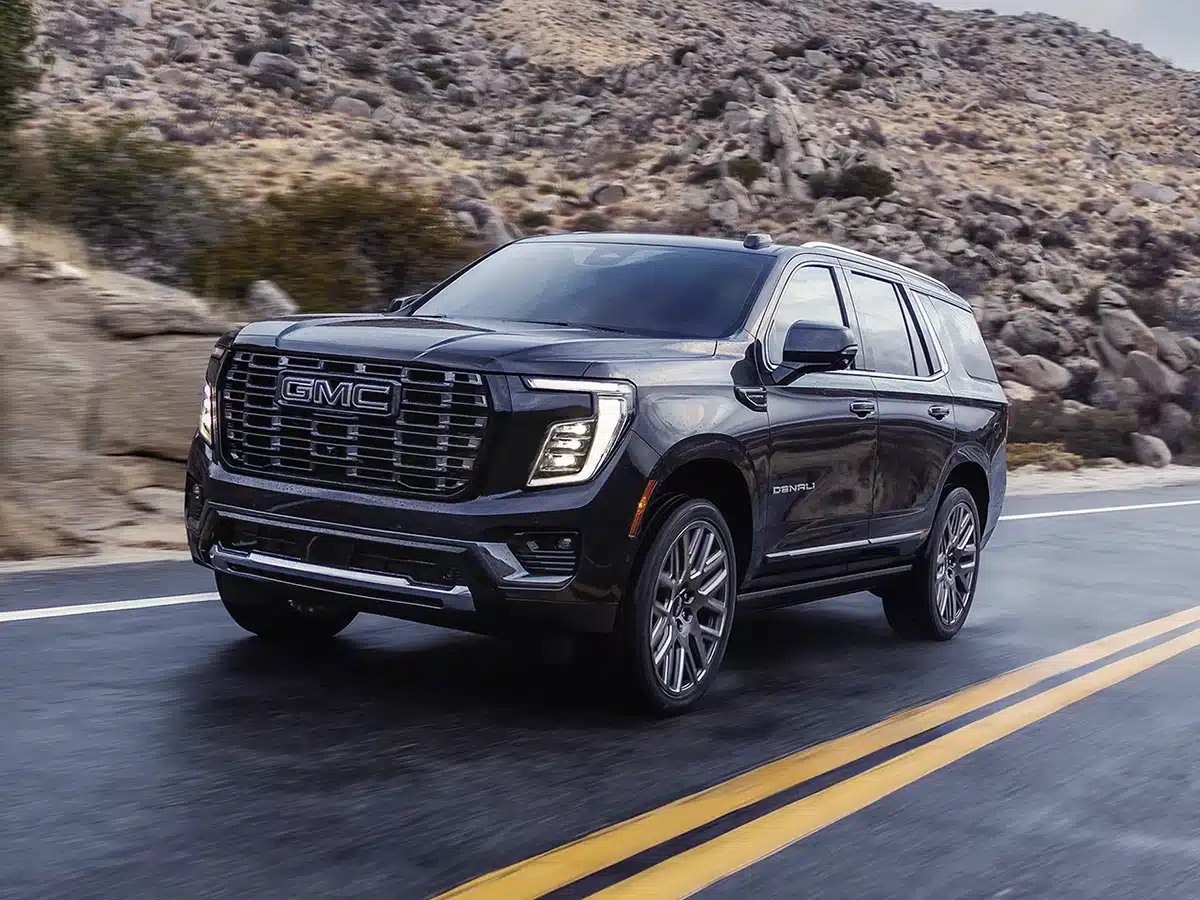
Looking back at GM’s recent product launches, full-size trucks have often served as the first application for new powertrains versus launching them in the full-size SUVs.
A recent example is the 3.0-liter Duramax diesel. GM introduced the diesel in the Chevrolet Silverado 1500 and GMC Sierra 1500 before eventually expanding availability to the Chevrolet Tahoe, Suburban, GMC Yukon, and Cadillac Escalade.
Another example is in 2014. The EcoTec3 V8 engines launched in the 2014 Silverado before reaching the redesigned Tahoe and Yukon for 2015. Those engines debuted with Direct injection, Variable valve timing, Active Fuel Management, and new electrical systems.
This isn’t necessarily because GM doesn’t want the engines in the SUVs. Instead, trucks frequently become the first step in validating a new powertrain before it spreads throughout the entire full-size lineup.
Note: this also applies to many other new technologies like GM’s SuperCruise, larger infotainment screens, towing technologies, etc…
Why New GM 5.7L and 6.6L V8 Engines Will Take Longer to Reach Tahoe and Yukon
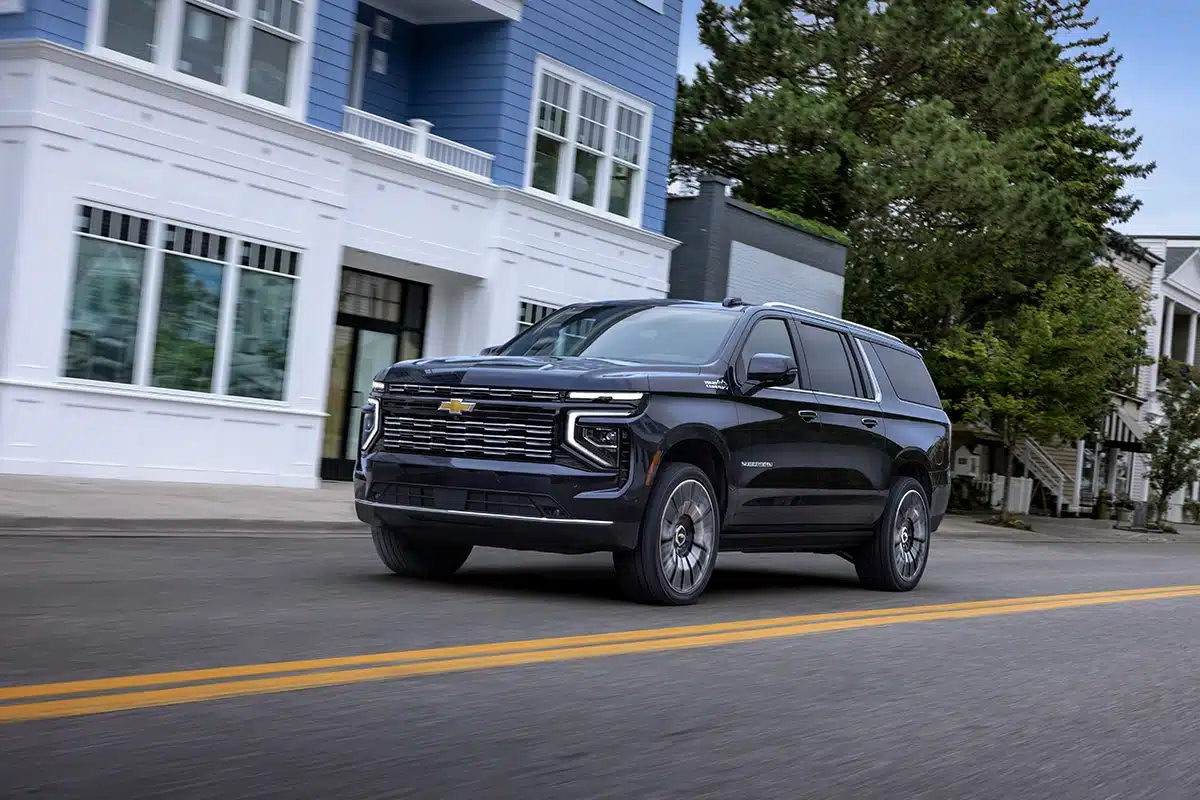
A notable exception to the above is 2007, when GM launched new engines across many truck and SUV models at roughly the same time.
Back then, vehicles were far less complex. Plus, GM’s management was all about trucks and SUVs ignorant of the changing market and the coming economic collapse.
Arguably, GM’s current management doesn’t want to make massive same-year investments that played a role into forcing them into getting a government bailout in December 2008 before filing for Chapter 11 bankruptcy in June 2009. Far better to spread out those investments over multiple years while making profits to repay the development costs.
Plus, modern trucks and SUVs require engineers far more time to validate:
- 10-speed transmission calibrations
- Multiple drive modes
- Advanced towing systems
- Automatic emergency braking
- Adaptive cruise control
- Emissions controls
- Infotainment integration
- Dozens of electronic control modules
Even if the engine itself is ready, every one of those systems must work correctly together.
A recent example comes from Ram’s decision to bring back the 5.7-liter Hemi V8. While Ram already had the engine and transmission available, engineers still spent months validating the powertrain within the updated Ram 1500 architecture. That work included winter testing in New Zealand to ensure the engine, transmission, and software systems all functioned correctly together as I reported on in this video.
Back to the list of items above. You may say, “I don’t want any of that crap in my truck or SUV!” That’s fine. Several of those items above are now federally mandated safety items. Also relevant is that people (and I know this will be shocking to hear, especially with the high-cost of new vehicles and gas prices) are still buying them at a rapid pace! The majority of buyers tell me and the automakers that they want those items listed above and, well, majority rules.
The lesson is simple: having an engine and transmission available does not mean it can immediately be installed across an entire vehicle lineup.
What GM Hasn’t Revealed About Its New V8 Trucks Yet
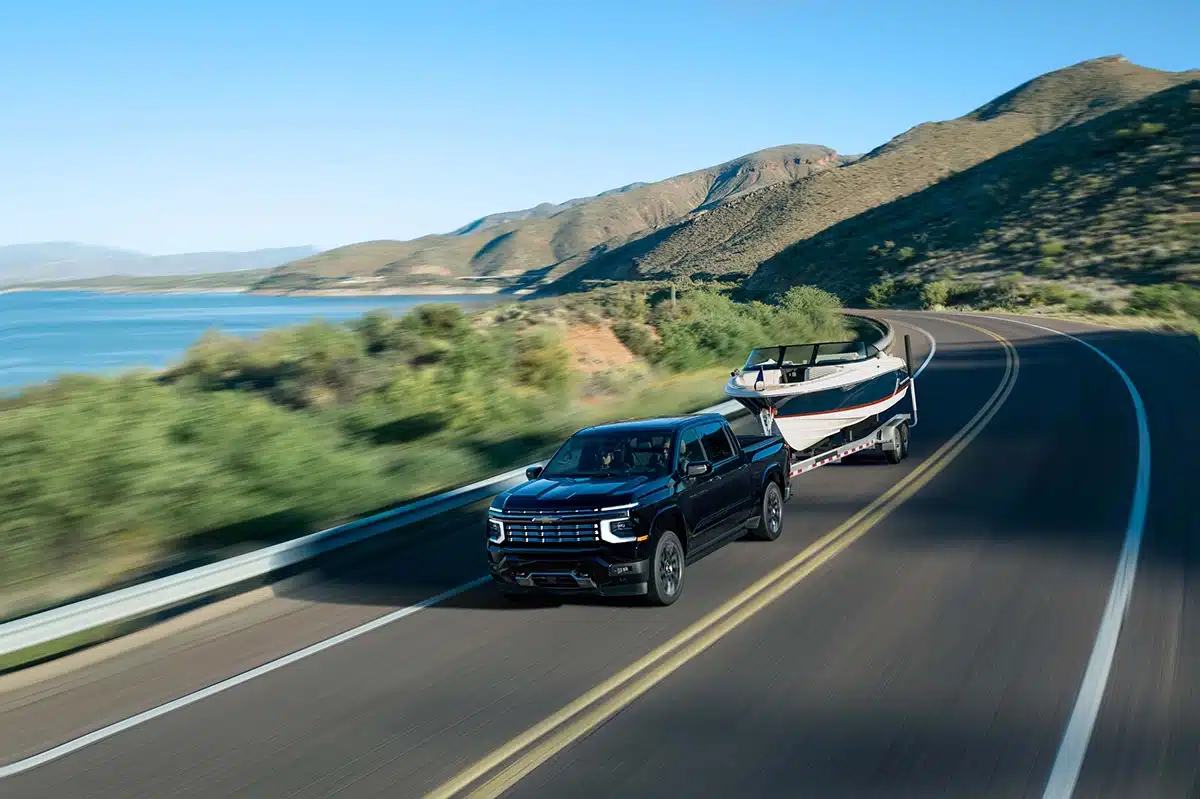
Another important factor is that GM hasn’t released every engineering detail about its next-generation Silverado platform.
While we’ve learned that GM has two new engine displacements – 5.7-liter and 6.6-liter V8 engines – what else do we really know? Not much. No numbers are available yet, even for things like horsepower or torque. There may even be significant updates behind the scenes involving software, electrical architecture, emissions systems, cooling strategies, towing calibrations, or other vehicle systems.
If that’s the case, GM may be following a deliberate rollout strategy by launching the engines in Silverado first before expanding them to Tahoe, Suburban, Yukon, and Escalade models later.
Until GM officially outlines its long-term powertrain plans, any timeline for SUV adoption remains speculation. It is likely, with supplier contracts likely coming to an end for parts for the existing engines that the full-size SUVs will get these new engines in the very near future. It is just a matter of time.
Does GM Have a Fix for 5.3L and 6.2L V8 Engine Problems?
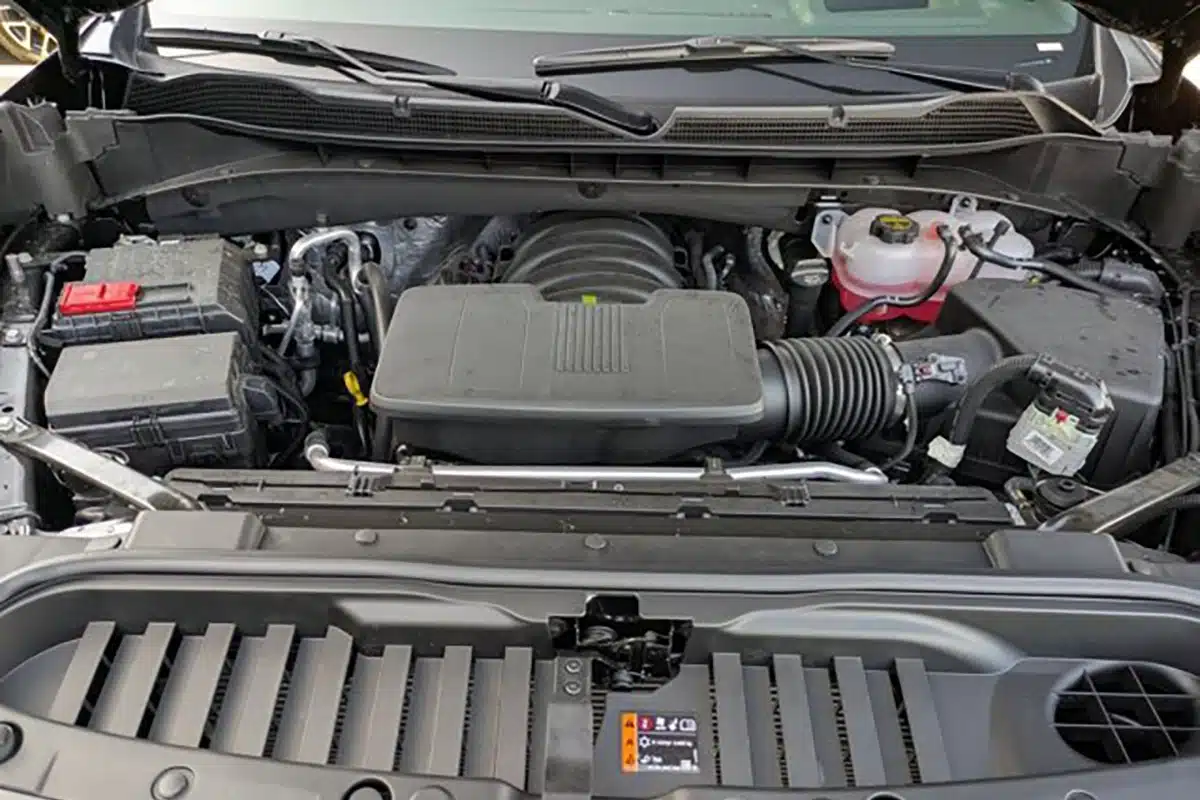
Another point often raised by readers is the belief that GM “doesn’t have a fix” for its current engine problems.
That statement needs some context.
For the 6.2-liter V8 recall, GM has already announced a remedy and dealer repair procedure. Owners may disagree with the solution or remain skeptical of long-term durability, but it is inaccurate to say GM has no fix at all.
The 5.3-liter V8 lifter issue is a separate discussion entirely.
One of the most persistent myths online is that every lifter failure is directly caused by Active Fuel Management (AFM) or Dynamic Fuel Management (DFM). While cylinder deactivation is frequently blamed, the reality is more complicated. Numerous examples exist of lifter failures occurring in applications without cylinder deactivation systems, which is why many technicians and engine builders argue the issue cannot be blamed solely on AFM or DFM.
And this is where social media often creates a distorted picture.
Yes, lifter failures happen. When they happen, they are expensive, frustrating and absolutely deserve attention. Nobody is disputing that.
However, social media tends to turn every failure into evidence that every engine is doomed.
GM sells hundreds of thousands of full-size trucks every year. In fact, Chevy Silverado and GMC Sierra sales combined routinely exceed several hundred thousand units annually. If lifter failures were occurring at the rates often implied online, dealership service departments would be overwhelmed and parking lots would be packed with disabled trucks awaiting repairs.
I’ve spoken with many of the largest GM dealerships in the country about lifter failure and the answers range from not a big deal to “we get a few from time to time.” Some dealerships seem to get a dozen at a time then nothing for a while. I know it sucks to hear and I’m the world’s biggest jerk to say it, but when you sell hundreds of thousands each year, a dozen in for repair doesn’t raise my eyebrows much.
When I talk with my friends or random people about their trucks (yup, I’m that guy) most times they haven’t heard of the issue at all. This leads me to believe many owners simply drive their trucks blissfully unaware of any problems at all. Ignorance truly is bliss.
I also wonder why GM gets so much hate over cylinder deactivation when Ram has had their cylinder deactivation system in the 5.7-liter V8 Hemi for much longer, and now Ford’s 5.0-liter V8 has cylinder deactivation as well. I mean, if the idea of cylinder deactivation, by itself, was flawed, why does every full-size truck and even some heavy-duty V8 engines come with the system?
The truth is a part can fail. It has happened. It will likely continue to happen in some cases.
And what about the new 5.7-liter and 6.6-liter V8 engines? Based on patent filings and information we’ve reported, those engines are expected to continue using cylinder deactivation technology. Some of those engines will eventually fail. That’s simply the reality of manufacturing. Every engine, regardless of brand, has a field failure rate. The question isn’t whether failures will occur, but how often they’ll occur. Right now, nobody knows the field failure rate of GM’s new V8 engines because they haven’t accumulated enough real-world miles in customer vehicles. Until hundreds of thousands of trucks are on the road for several years, any claims about the long-term reliability of these engines are speculation.
The post Why GM’s New 5.7L and 6.6L V8 Engines Aren’t Going Into Tahoe and Yukon… Yet appeared first on Pickup Truck +SUV Talk.
