
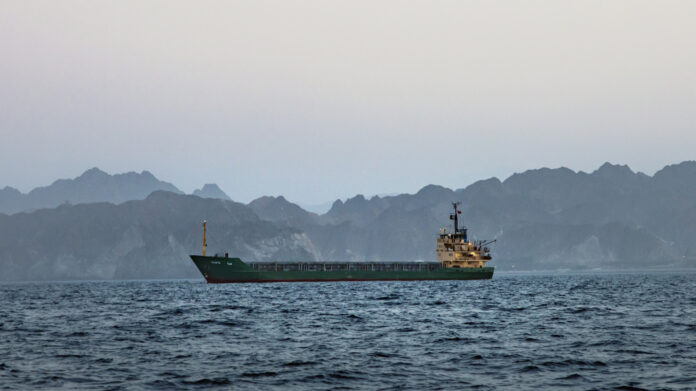
Republicans starting yet another war in the Middle East was always destined to make oil, and therefore gas, more expensive. Especially once Iran took control of the Strait of Hormuz. But with a temporary deal in place to negotiate an end to the war, the International Energy Agency actually predicted we’d see a global oil surplus in 2027. Now that the temporary ceasefire has — entirely predictably — fallen apart, Reuters reports the IEA is having second thoughts about forecasting that oil surplus next year.
When Iran took control of the Strait of Hormuz, the effective closure reduced supply by about 14 million barrels per day “during the peak of the largest oil supply crisis in history.” In June, though, the agreement to talk about eventually agreeing on a future peace deal increased supply by about 4.1 million bpd. That brought oil prices down significantly, even though that boost to crude oil entering the global supply was still 9.4 million bpd lower than it was before Republicans insisted on starting this stupid war.
Overall, the IEA predicted we’d see global oil production fall by about 3.7 million bpd in 2026, with an extra 7.5 million bpd being added next year, the forecast suggested supply would exceed demand by 4.62 million bpd. “Much lower oil prices are also incentivising growth in oil use, as is a brightening economic outlook,” the IEA wrote in a recent report. The only problem is, in order for that to happen, the IEA needs the U.S. to make this whole “peace deal” thing a reality. Otherwise, goodbye oil surplus.
The largest oil supply crisis in history
As the IEA wrote in its latest report, “An escalation in hostilities on 7-8 July, however, clouds the outlook and could upend the forecast that sees the market flipping to a surplus next year.” Of course, any “escalation in hostilities” involves plenty of other far worse things too, such as mass suffering and death, but yeah, it will probably disrupt global oil supply, too. If you want to use that oil to make your gas or diesel car go, however, we’re going to need refineries to catch up.
According to the IEA, while crude oil bounced back quickly, “refinery activity and product supplies have been much slower to respond.” The report also says that “Gulf exports of refined products and LPG in June remained less than half their pre-war levels, compared with crude flows that reached nearly three-quarters of their February rates.” Repairing damaged refineries and bringing them back online will take time, though. And as the IEA concludes, there’s only one way forward:
While the global oil market balance looks set to swing back to surplus towards the end of the year, the forecast hinges on the assumption that tanker flows through the Strait will gradually recover, allowing producers to restart fields and refiners in the Middle East and elsewhere to resume product shipments. Renewed exchanges of fire in the Gulf this week highlight the risks of not reaching a lasting peace agreement, which is a must for the normalisation in oil markets.
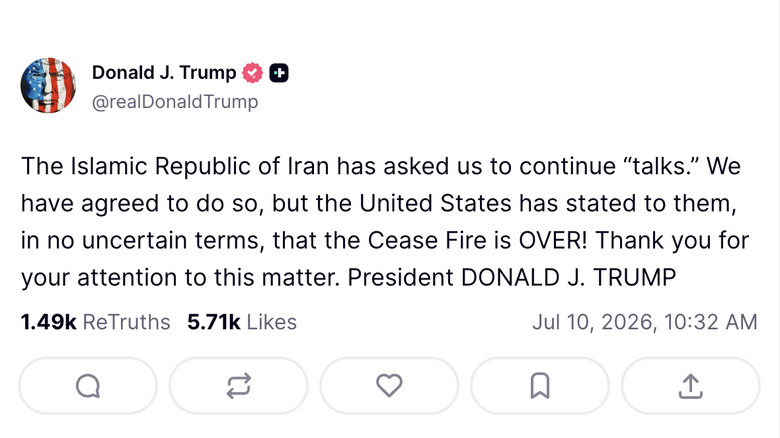
Thankfully, President Trump remains committed to negotiating the peace deal the global oil market says is so necessary. At 10:32 this morning, he wrote on Truth Social, “The Islamic Republic of Iran has asked us to continue ‘talks.’ We have agreed to do so, but the United States has stated to them, in no uncertain terms, that the Cease Fire is OVER! Thank you for your attention to this matter. President DONALD J. TRUMP.” So whatever happens after the markets close should be interesting. We’ll probably wrap the whole thing up before markets open on Monday, though. That’s how wars work, right?

