
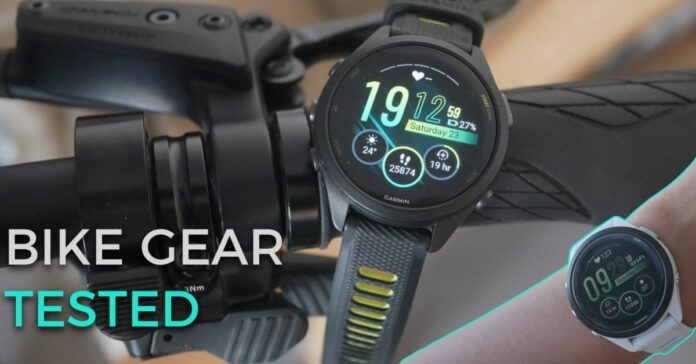
I’m not usually the kind of person who gets excited about wearing a watch. But I am apparently the kind of person who paces around my living room at a quarter to midnight because a tiny computer on my wrist informed me I was 200 steps short of today’s goal.
So here we are, with the story of how I got a Garmin watch to better analyze my bike riding (and my running), and ended up learning to love that cute little bully that now lives on my wrist.
The more I’ve gotten into riding and general fitness, the more I’ve heard about Garmin watches and their almost cult-like following.
Garmin watches are widely considered to be the go-to option for us recreational athletes who take ourselves a bit too seriously. Compared to the usual suspects, there are endless memes on social media about how Apple Watches and Fitbits give their owners an encouraging high-five after exercise, while a Garmin watch will shame you for having the audacity to sit down on the couch after a 30 km (18 mi) ride – which is a slight exaggeration, but one that the Garmin community seems to proudly wear. And yet people keep coming back, unable to get enough of it.
The masochist in me had to know why.
Curiosity won out over me, and I fell deep into the Garmin rabbit hole, spending more evenings than I care to admit researching small differences between the many, many models.
A few weeks later, I emerged from that mountain of research with a shiny black Garmin Forerunner 265S on my wrist.
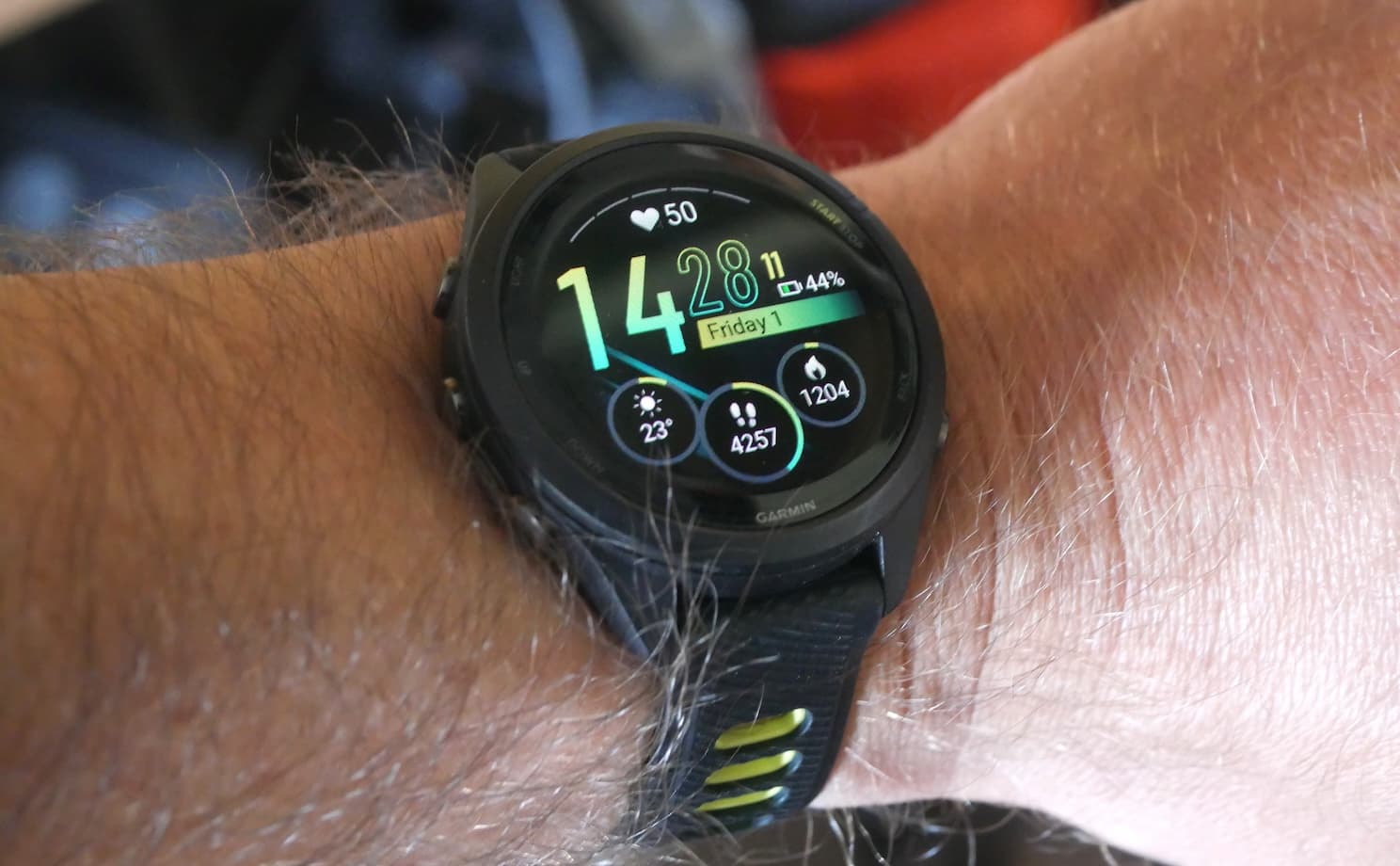
My new Garmin would soon replace the Fitbit Inspire 2 fitness watch I had happily worn for over four years.
Well, eventually it did. But not immediately.
Some eagle-eyed viewers of my e-bike review videos might have noted that I had a new Garmin on one wrist and my old Fitbit on the other for a few weeks as I weaned myself off the crutch of familiarity and dangled on the precipice of the unknown.
Hey, a four-year relationship is hard to end in one night. That little rubber watch might as well have been a proverbial box of my ex’s stuff.
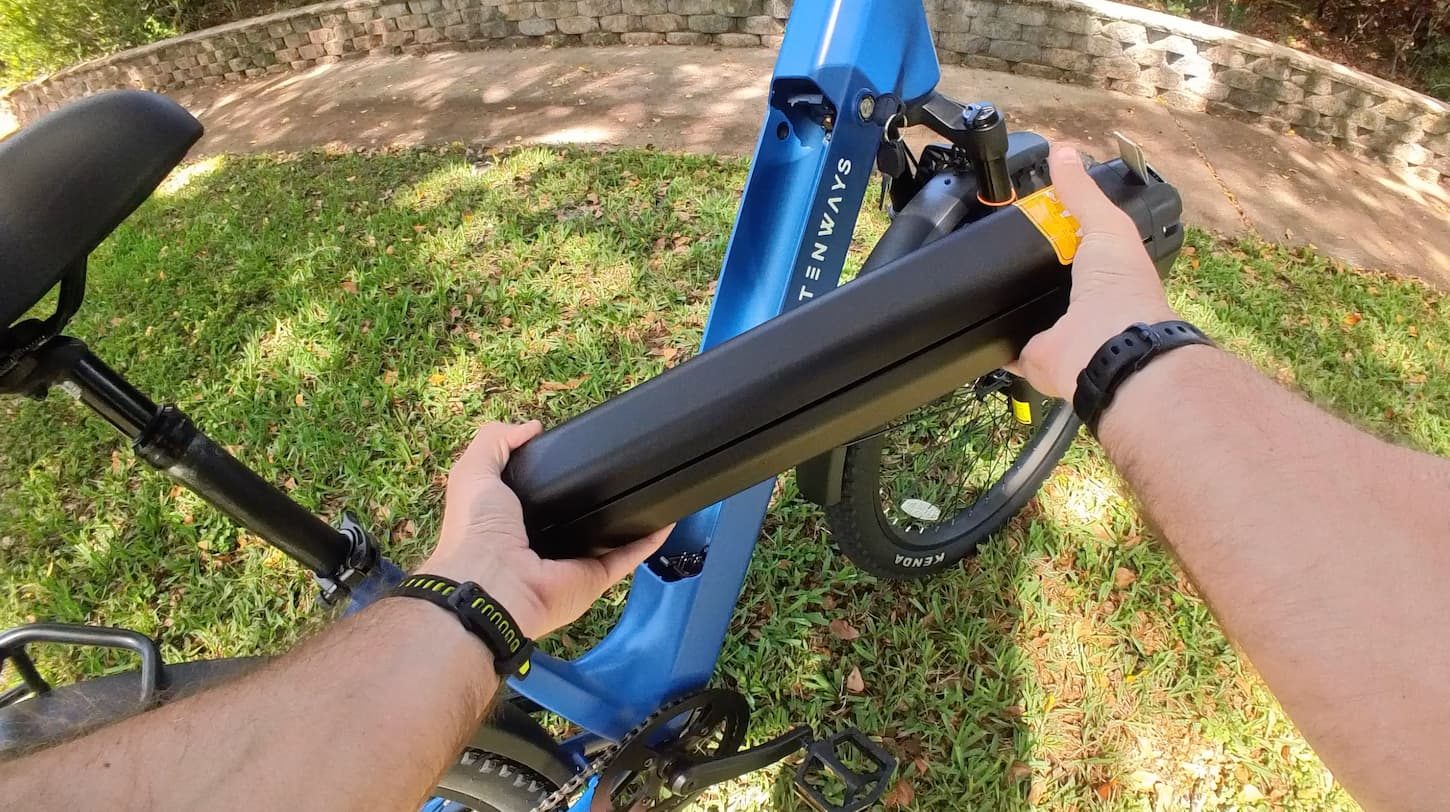
The Fitbit had been reliable and simple, and I liked it, but I had eventually outgrown it. I wanted deeper fitness analytics, better cycling data, more running insights, more functionality sitting on my wrist, and something that could keep up with a lifestyle that somehow oscillates between e-bike reviews, long runs, yoga classes, tennis matches, and the occasional attempt to avoid falling off a slackline.
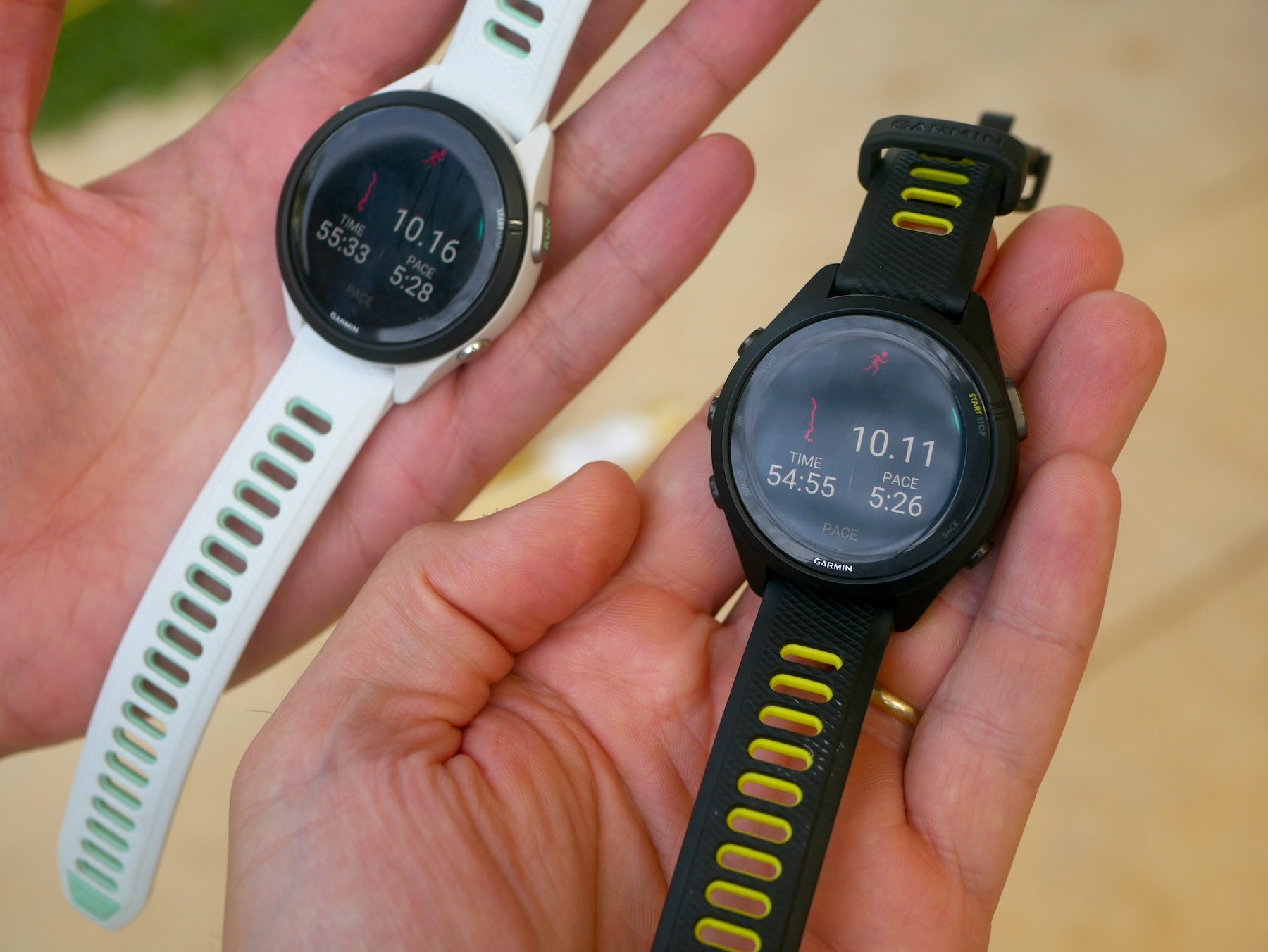
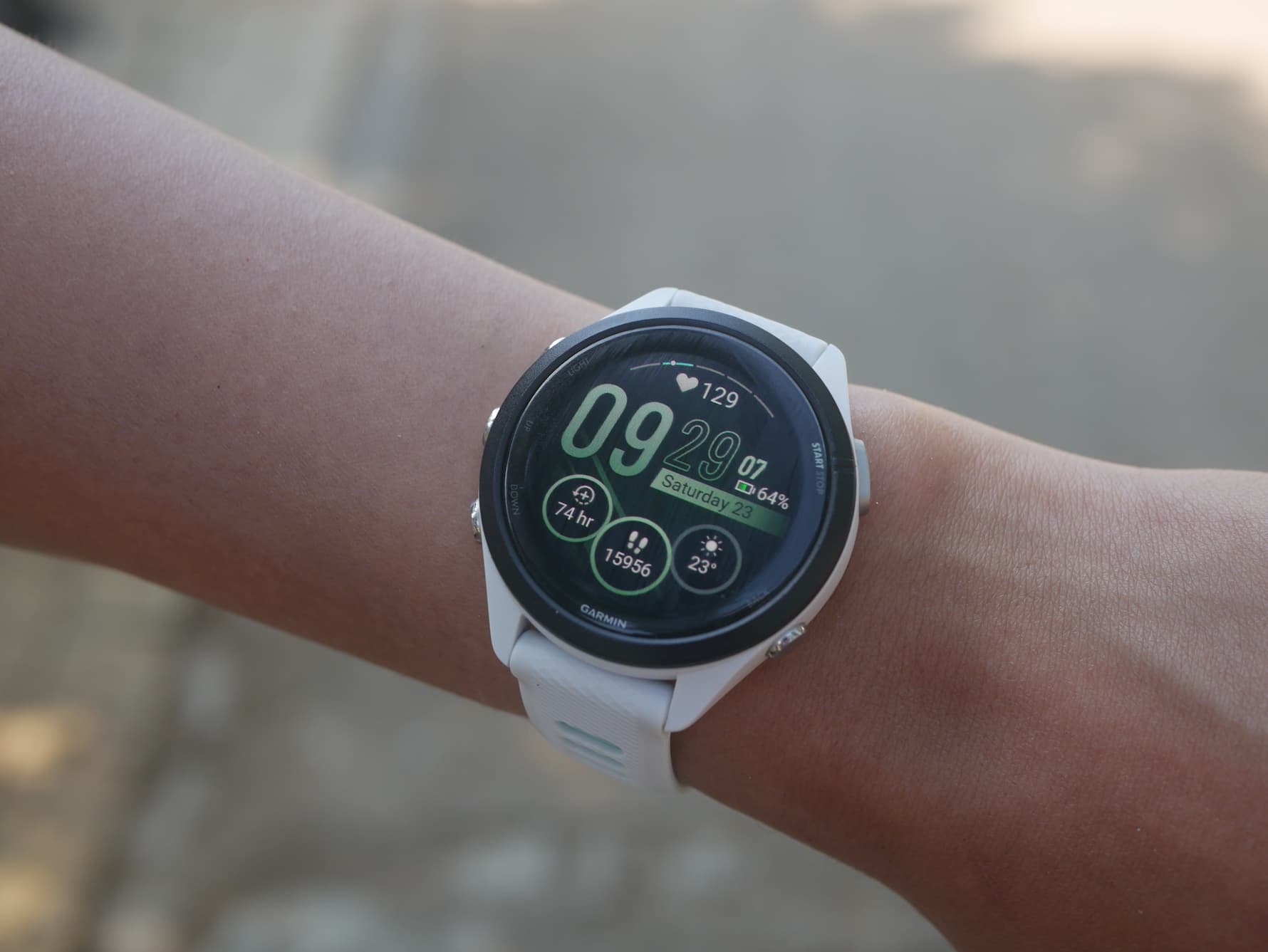
But I wasn’t diving in alone. I managed to convince my always-up-for-a-challenge running partner, Rotem, to take the plunge with me. In true pony-tailed runner girlie fashion, she ended up with a matching white Garmin Forerunner 265S.
Perfect, now we could compare and contrast.
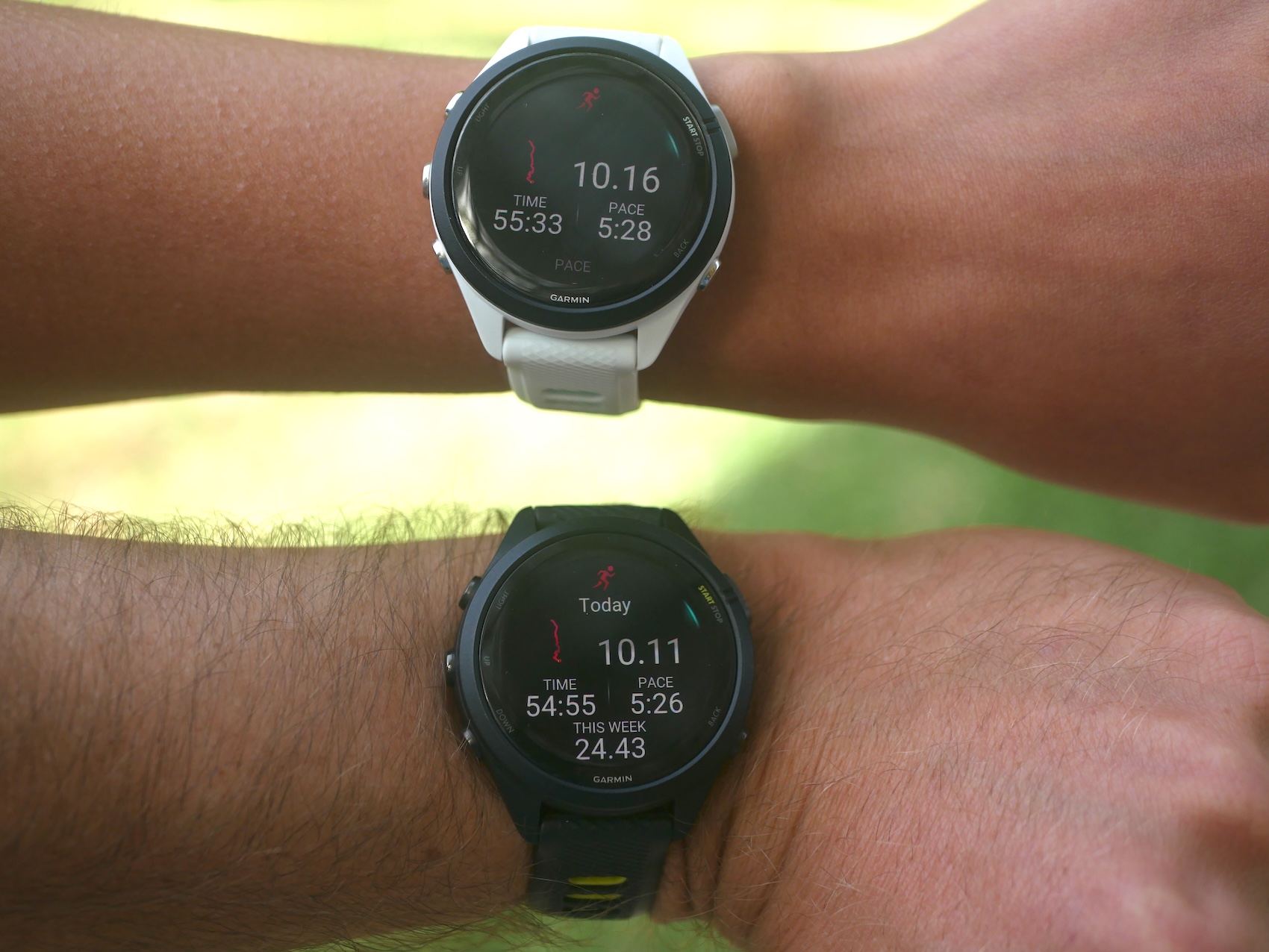
We’re both runners and cyclists, though I’ll admit that she’s probably better than I am at the former, while I think I can still beat her at the latter. I’m still chasing her half-marathon, though let the record show (below) that I beat her by around one second in our last 10K race.
Plus, getting a woman’s view gave me some interesting perspective on this review.
For example, I never would have known how well the women’s health features such as the cycle tracker works (she reports that it’s quite a convenient feature), among other useful tidbits.
Despite my very fortunate inability to track a good period (hey ladies, we didn’t tell you to eat that apple!), I was still able to use many of the watch’s countless built-in functions. In fact, I’m a few months in and am still constantly learning about new ones, from guided living room workouts to seeing my tennis heat maps after a solid match.
But what I was perhaps most interested in was what the watch could tell me about my riding, and especially my e-biking.
In the electric bicycle industry, we’ve long heard the tired refrain that e-bikes don’t provide exercise, despite the mountain of scientific studies pointing to the contrary.
But why just listen to scientists and peer-reviewed studies when I could listen to… myself?
After all, that’s the whole point of that little black box on my wrist! Well, that and the shaming it gives me when I don’t go to bed early enough.
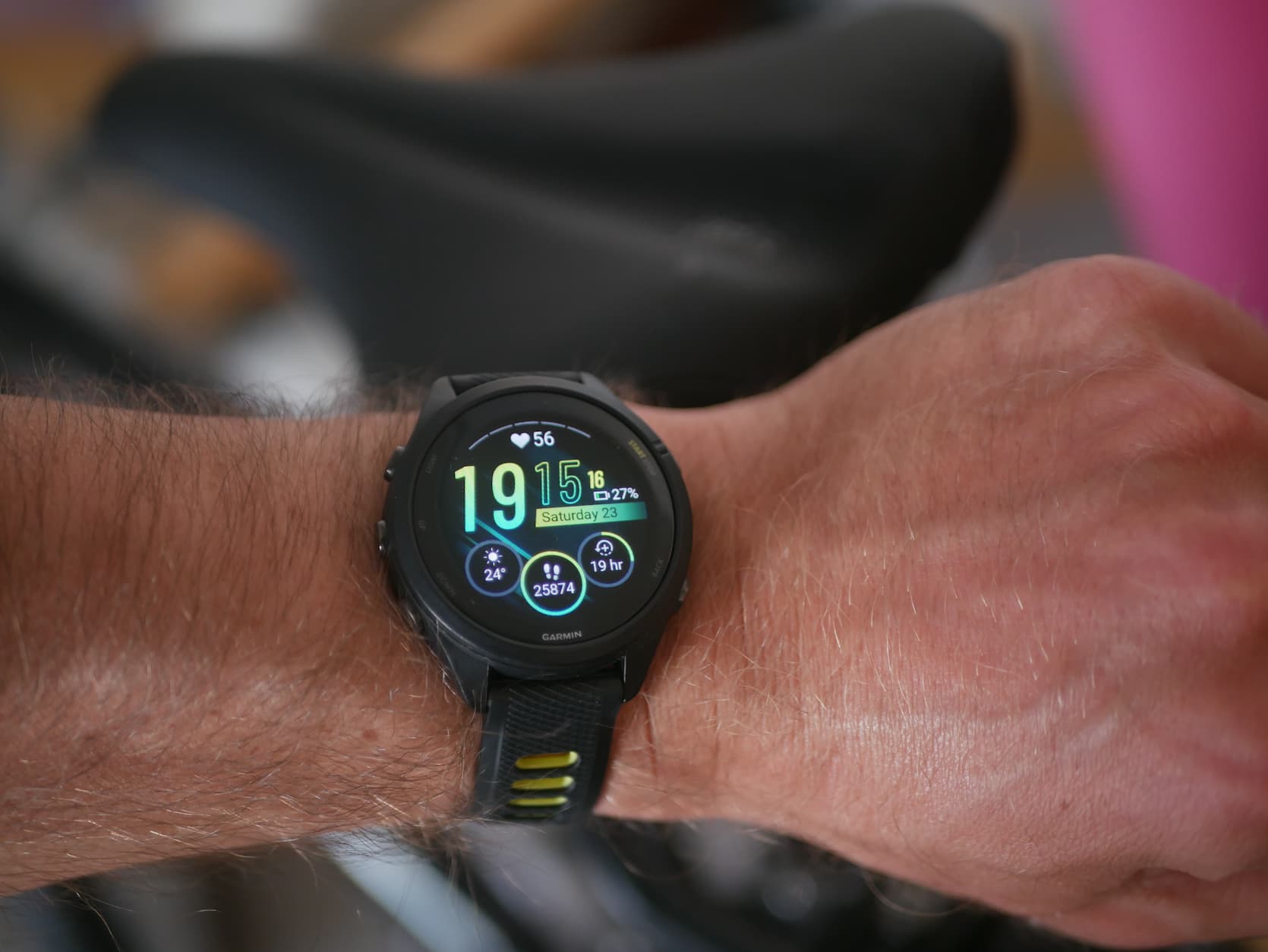
The watch that made me pedal harder
As an e-bike journalist, I spend a lot of time riding.
And I’ll readily admit that because you’ve got that extra electric boost, it’s easy to tell yourself that you’re not really exercising that hard. But my Garmin calls that bluff.
I almost always ride in the bike’s lowest power level anyway, but now I can actually see what’s happening inside my body. When it comes to my heart rate, one of the simplest ways to accurately gauge exercise load, I could immediately watch the results in real time.
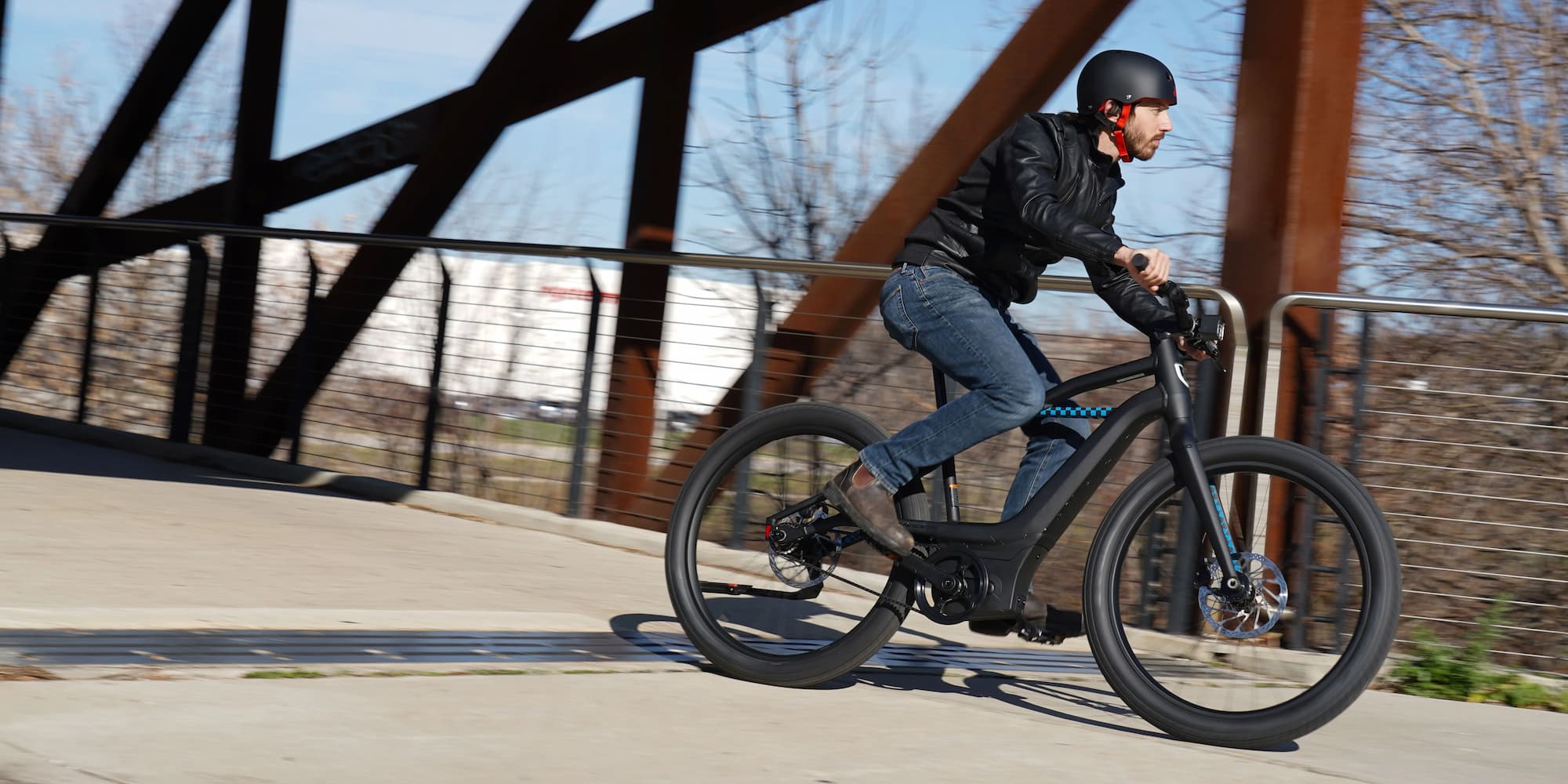
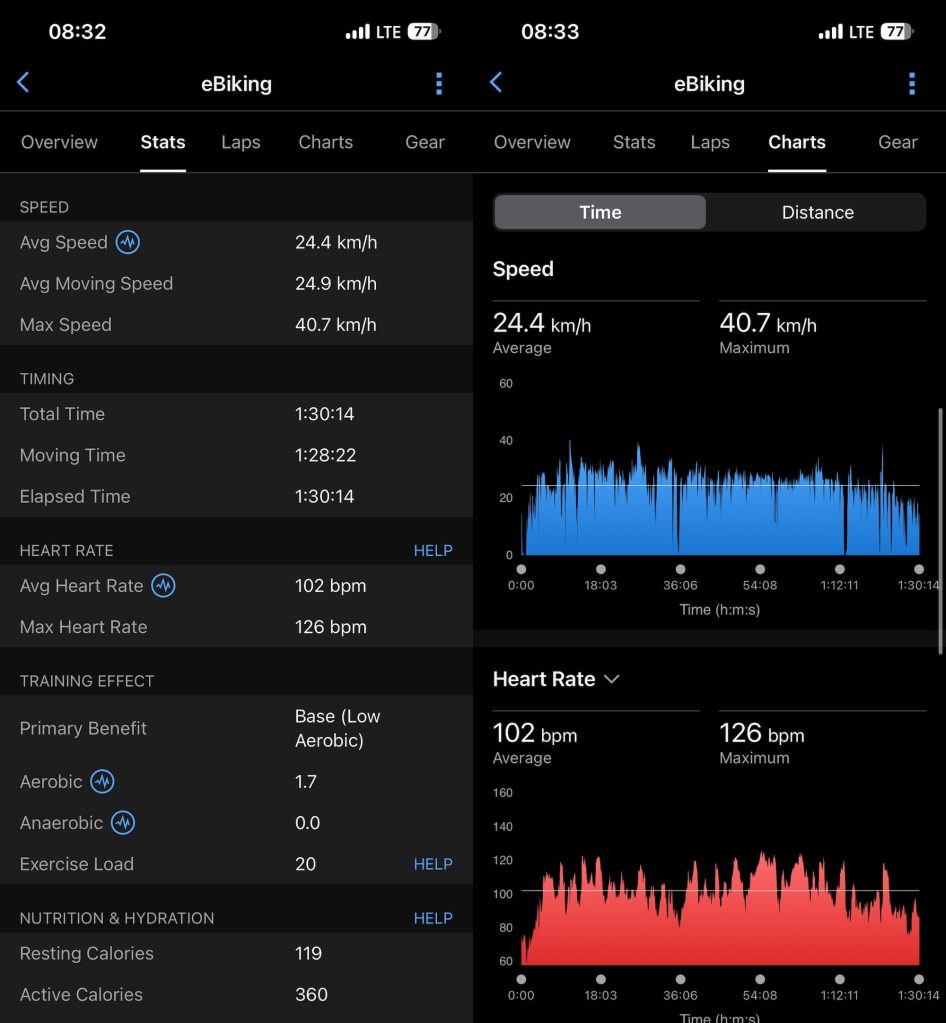
My relaxed e-bike rides generally keep me around 85-90 beats per minute (bpm), with harder efforts pushing into the 120s. My average over a long ride will often land in the low 100s.
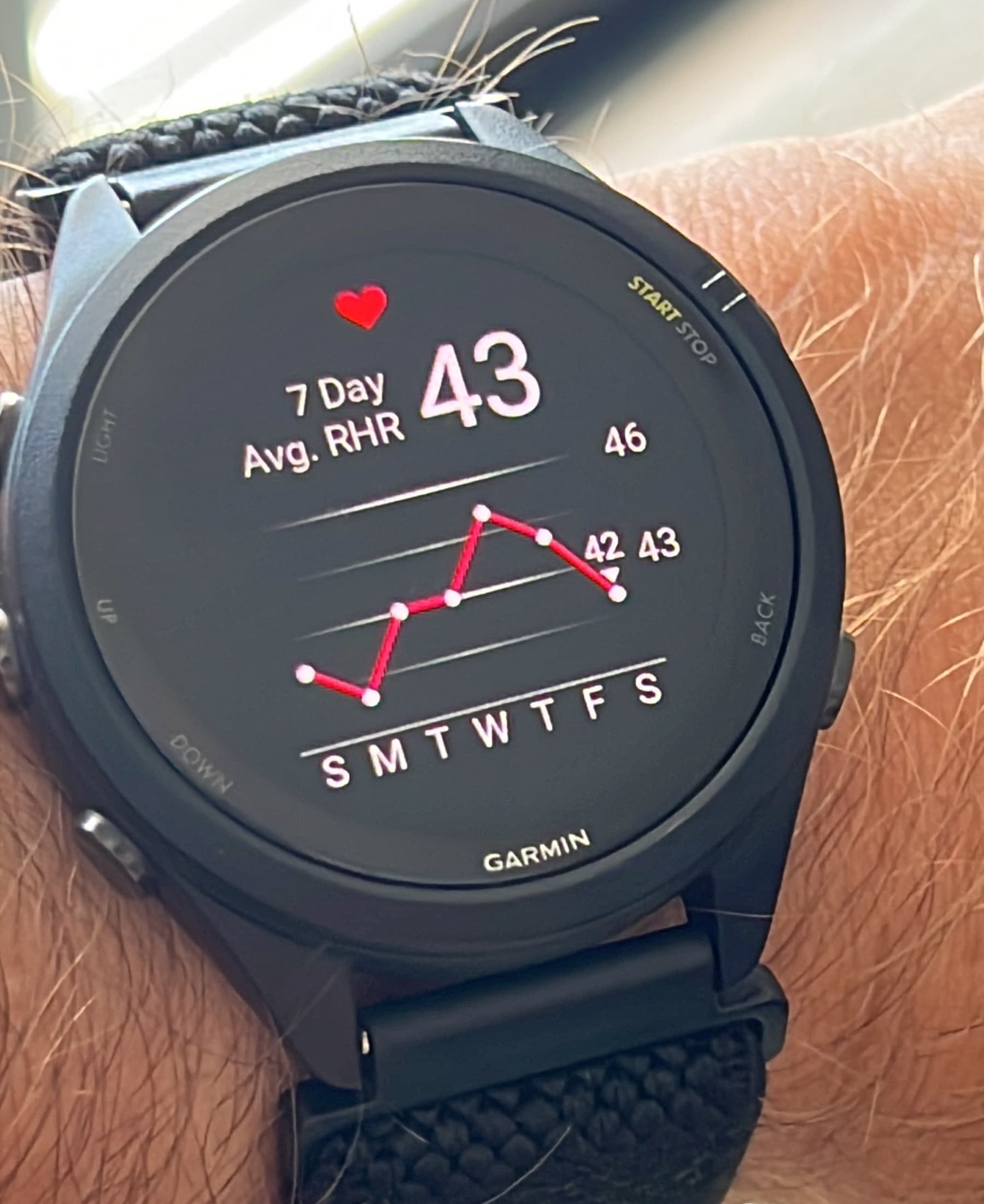
With a resting heart rate of 43 (eh-oh!), that’s a great Zone 1 to Zone 2 workout for me, and I can see that my non-electric gravel bike pushes me even a bit higher for an even better workout.
That data on my e-bike rides was fascinating to me. Instead of wondering whether my rides “counted” as exercise, I suddenly had proof that they absolutely do. A spirited ride on my e-bike was similar to a light jogging session for me. In fact, in terms of cardio, it was equivalent to those elusive Zone 2 training sessions that are so hard to master.
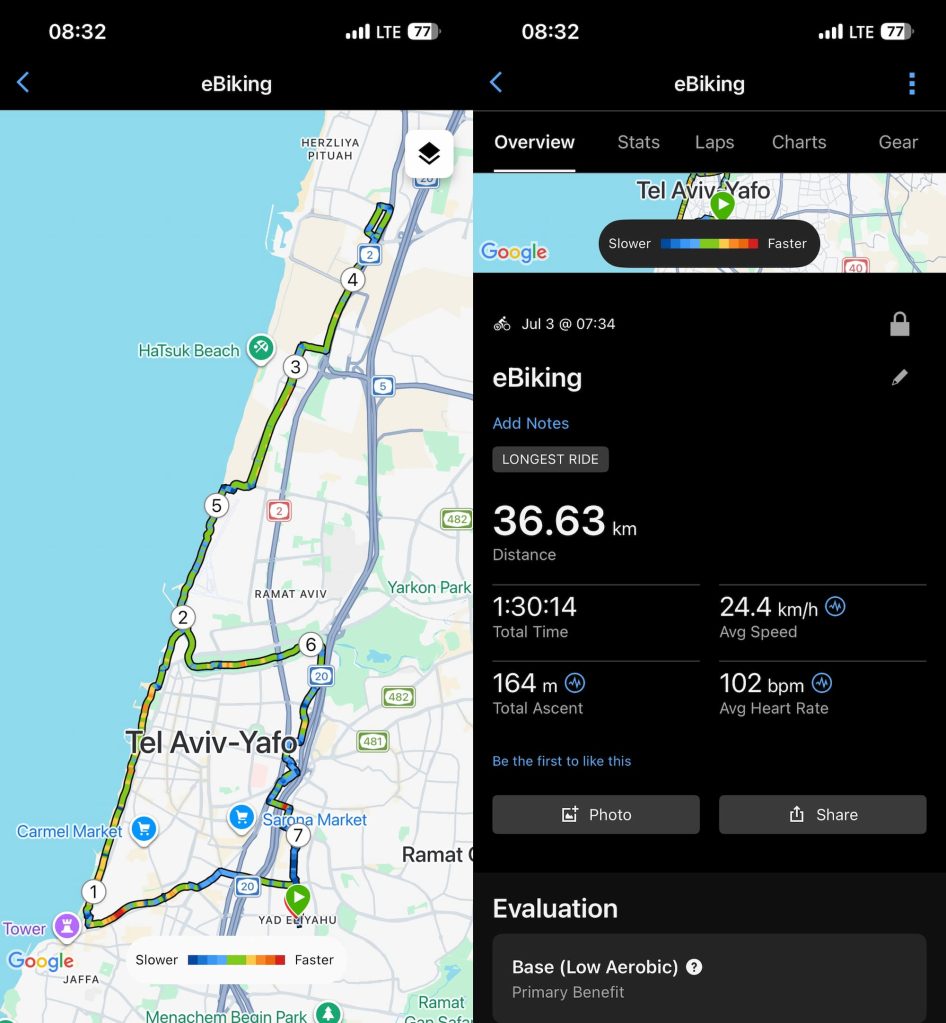
Don’t believe me? I’ve got the data to prove it. Check out the stats from my last 36.6 km (22.7 mi) e-bike ride, below.
Even better than just knowing I was getting a workout, the watch somehow encouraged me to ride a little farther or push a little harder. It wasn’t actively saying “ride longer” to me, but the effect was likely because I was getting the joy of instant gratification through immediate feedback.
There’s something oddly satisfying about glancing down at your wrist and thinking, “Yep… this ride is actually pushing me.”
It was almost like gamification, if the game was just enjoying nerding out on the data from my rides – right there on my wrist in full technicolor – or more accurately, in full AMOLED touchscreen display.
When it comes to exercise, the reward for good behavior used to take months to arrive, mostly in the form of better fitness. But now it’s rewarded instantly with colorful graphs.
Apparently, that’s all my simple monkey brain needed to want to keep going further.
More than just another ride tracker
If you like to use Strava (or other fitness tracking social media-style apps), then you’ll also appreciate this. I set my watch so that after each activity, everything uploads automatically to Strava.
That social aspect is a great addition to the data-heavy tracking features, since you can keep tabs on your friends’ efforts and also get peer-pressured into keeping up with their progress.
Rotem and I have a friendly rivalry that’s somewhere between motivational and crushing, depending on which side of the win you fall on that week.
She’ll post a new 5K PR from her Garmin watch. A week later, I’ll have to go and shave enough time off mine just so I can send her a screenshot of me besting her.
The social aspect is a big part of sticking with fitness, and integrating the technology into it helps supercharge the effect. Sharing wins and encouraging friendly competition is just another way to make long rides or grueling runs more interesting and fun.
Without Garmin quietly syncing everything in the background, I probably wouldn’t have bothered to run extra hard that day to remain competitive. But here we are, with technology immediately resulting in me exercising better and harder than I would have otherwise.
And while I’m going on about the technology, let’s talk maps. I also really love the ride maps. I’m constantly exploring new neighborhoods and parks while testing e-bikes, and sometimes I’ll see a cool new area for riding or a lovely, shaded running path, but might not remember exactly how I got there once I’m back.
Now I simply open Garmin’s app, and there’s the exact route that I took.
Future me thanks present me surprisingly often in these cases.
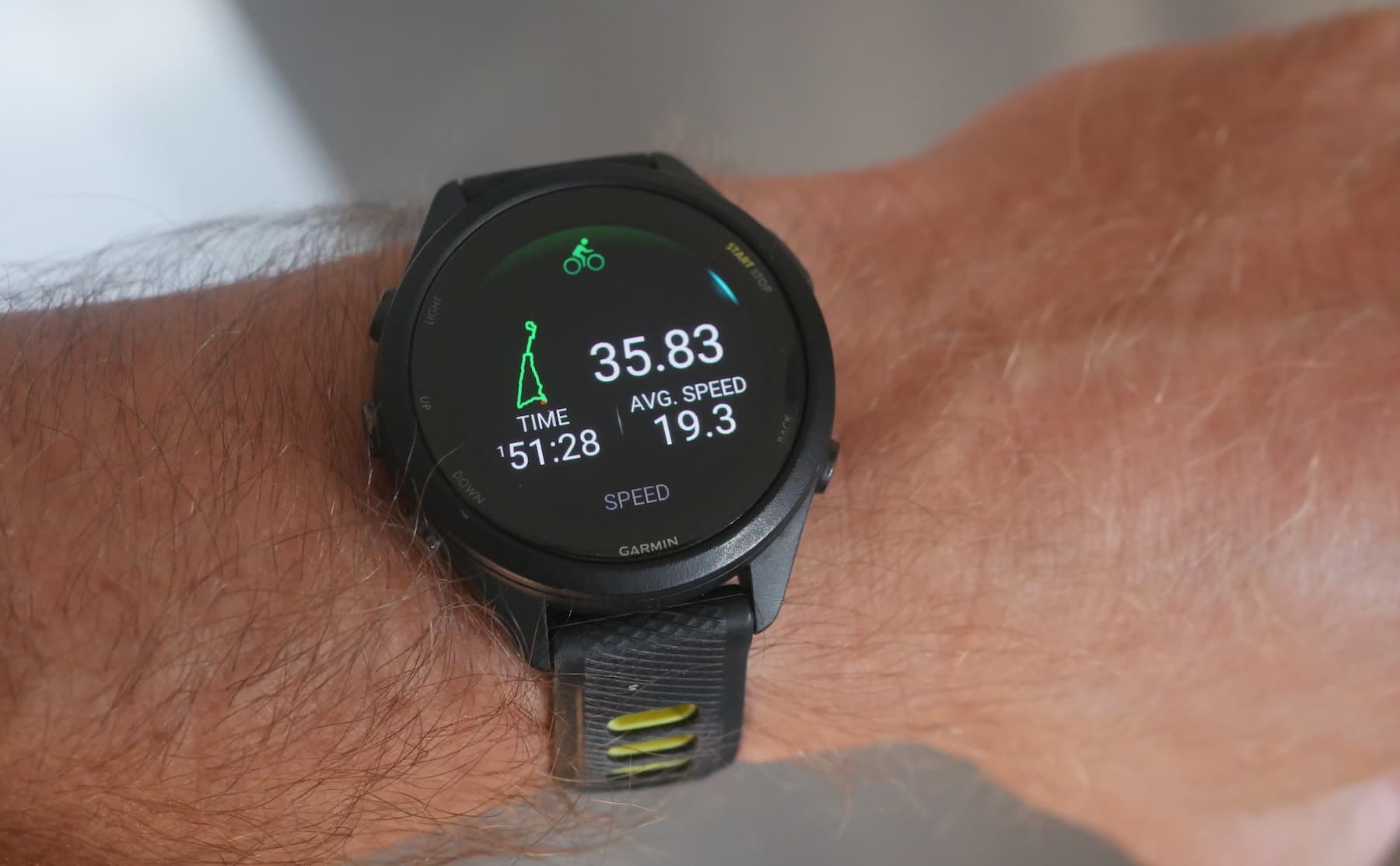
And now that I think about it, I’m starting to realize that I also sometimes choose my leisure ride routes based on how they’ll look on the map. “I can’t take the same route back home,” I think to myself. “That will be a boring line. Let’s make a triangle instead!”
Garmin accidentally made me a better runner
While I love being able to compare my e-biking data, especially putting it next to my pedal biking data, that’s only part of the story for how I use my watch. Running is where the Forerunner also really flexes its muscles.
Rotem and I usually knock out one long run every weekend, often around 13 to 17 km (8 to 10 miles).
Now, the data afterward has become part of the fun.
We’re pretty evenly matched overall, though we each have our strengths. I’m naturally a bit faster of a runner, and yet she can increase mileage at the drop of a hat while somehow managing to avoid all the little injuries that seem magnetically attracted to me. I’m still trying to figure out how to Freaky Friday that situation.
But one statistic I do enjoy bringing up annoyingly often is heart rate. Next to her adrenalized hummingbird heart, my ticker seems to beat around six times a day. There are times where I frankly don’t understand how she’s still alive as her heart goes faster than a gerbil on a greased wheel.
But since we have the data, let’s talk numbers. My Garmin tells me that my average heart rate on our long runs usually sits at around 135 bpm. Hers is often around 180. I’ll good naturedly rib her about it from time to time, but the fact that during our last 10K race she could still chat while her HR grazed 200 shows that she somehow isn’t as close to death as her graphs would have me believe.
Sure, heart rate is highly individual, and women often run at higher heart rates than men. Or at least that’s what she says to cope. Hey, whatever helps your sleep score at night, kid. I’ll take a victory anywhere I can get one.
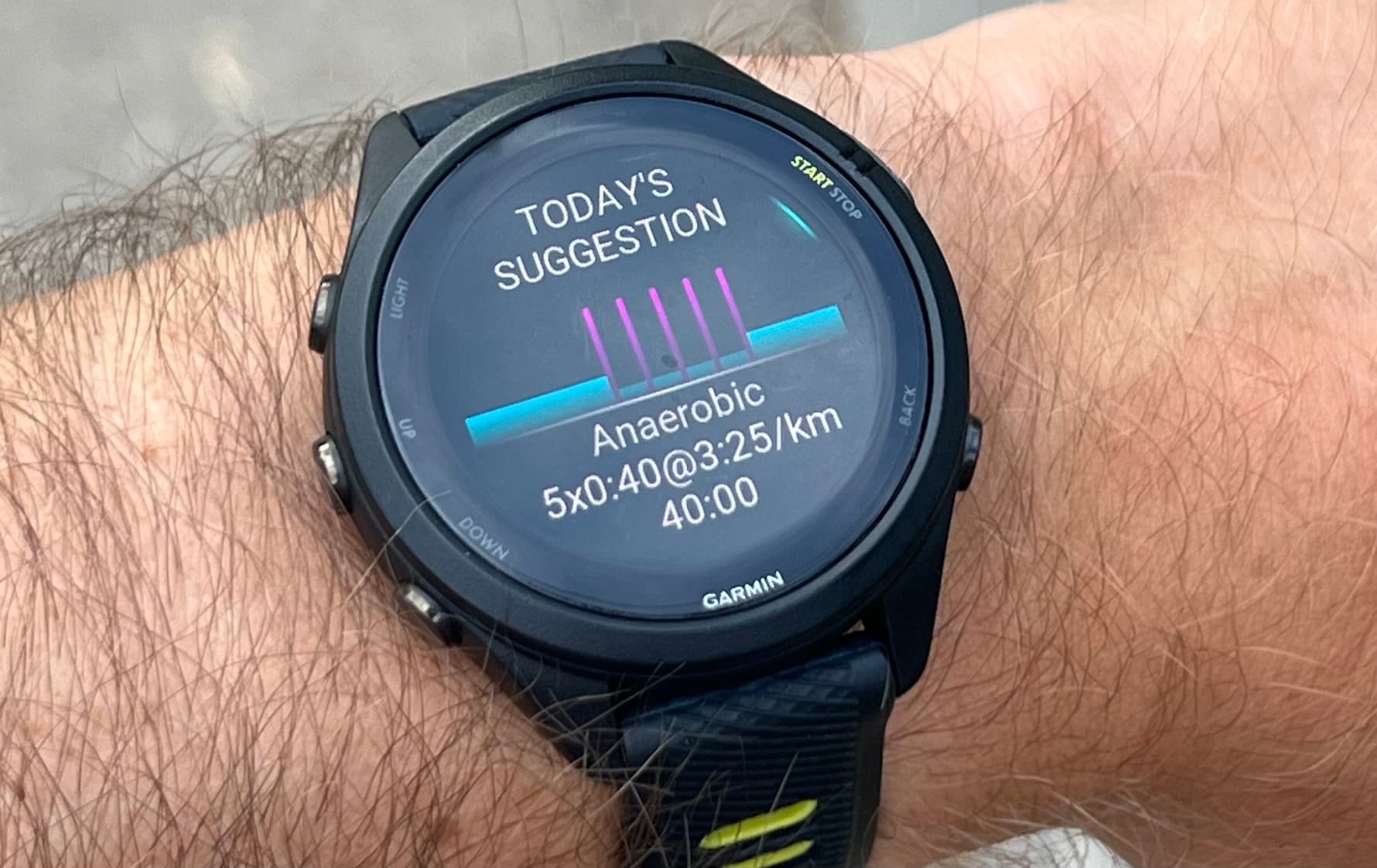
The Garmin’s suggested workouts are also surprisingly useful, especially when I’m willing to let the watch boss me around instead of inventing my own plan. It also keeps me honest with Training Readiness and Recovery Time.
The recovery time might actually be one feature I didn’t realize I’d appreciate so much.
I’m notoriously bad at resting. If left unsupervised, I’ll happily stack a hard run, a tennis match, a long bike ride, and then wonder why my Achilles tendons get grumpy at me.
Seeing Garmin recommend 36-40 hours of recovery after an extra-long run is often the gentle reminder I need to stop trying to outsmart basic physiology. And when it tells me I only need 8 hours or so after a long bike ride, I feel even better about going on a run the next day.
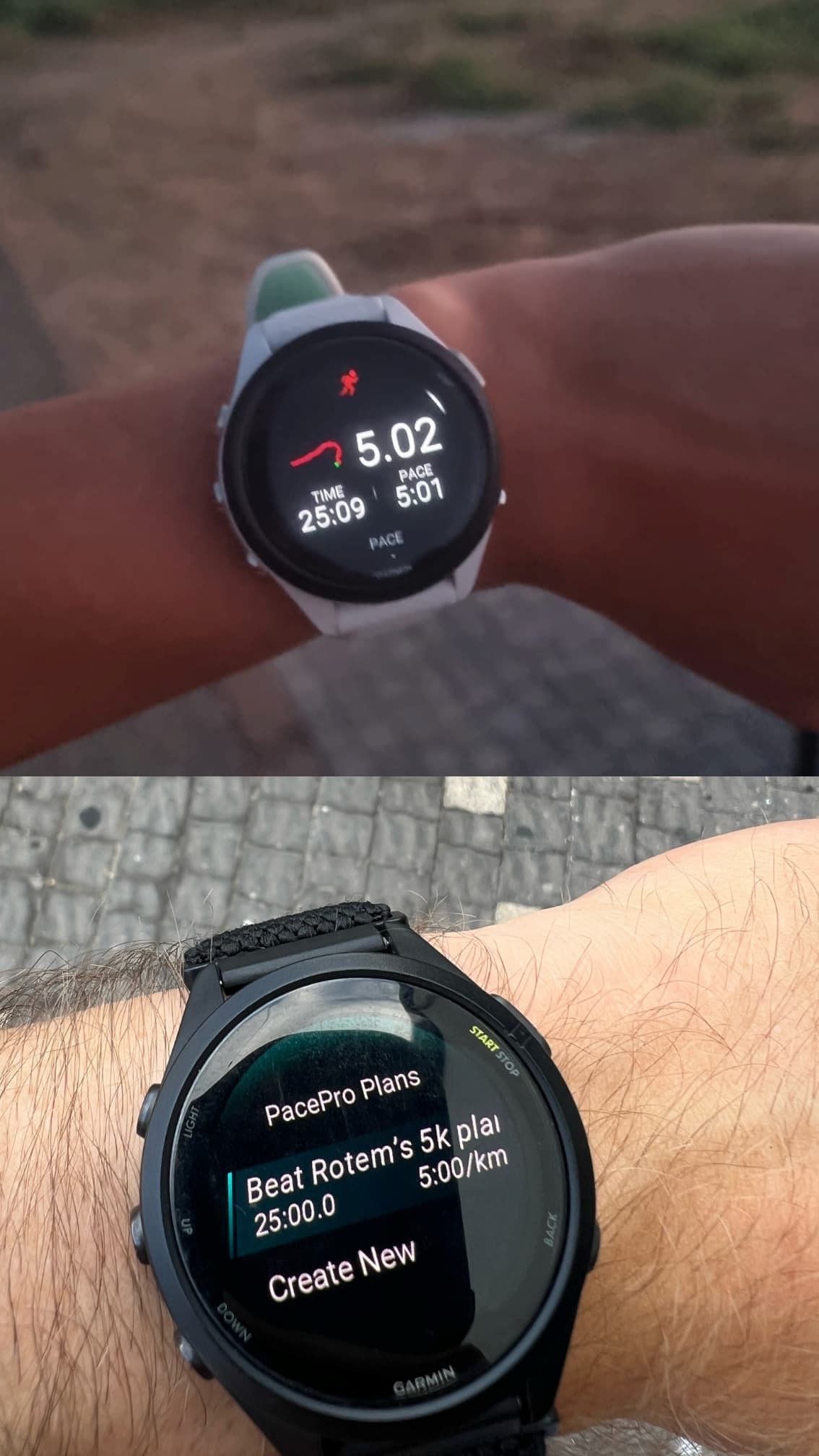
I also love how you can create custom workouts or let the watch coach you to meet certain paces or goals.
When Rotem sent me a picture one evening of her post-run Garmin showing her pace coming within 1 second of hitting a 25-minute 5k, I programmed a workout into my watch with a reverse split that would get me that missing second. Then after running it and letting it it auto-upload to Strava, I sat back and waited to watch her turn green with envy.
Again, it’s that friendly competitiveness that helps with the gamification of fitness, and the technology here simply makes it easier and more accessible than ever.
It’s a sweet feeling – almost as sweet as uploading the result of that sub-25-minute 5k and waiting for the response.
It’s also just… a really good smartwatch
The fitness stuff gets all the headlines, but I use the smartwatch features constantly.
Finding my perpetually misplaced phone has become a daily ritual, with two taps activating my phone’s find-me beep. Spoiler alert: it’s almost always swimming in the sheets or lost in my desk mess.
Seeing texts and notifications on my wrist also means I don’t have to dig my phone out of my pocket to see if a message is worth answering immediately. And when I want some peace and quiet from the notifications, I can hit Do Not Disturb with a single button.
Setting an alarm right on your wrist also makes for a more gentle way to wake up, like someone nudging your arm instead of a loud alarm blaring in your ear.
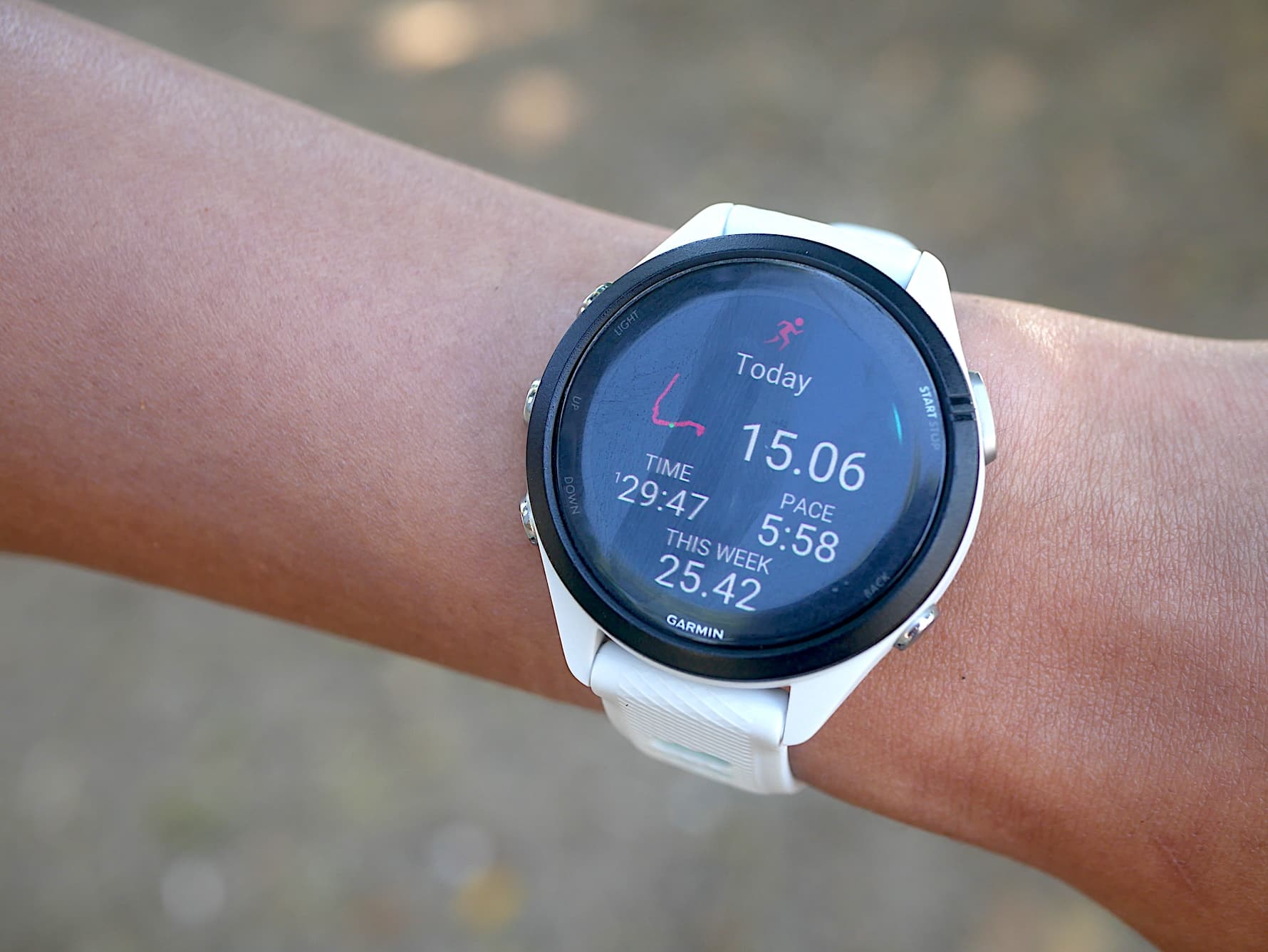
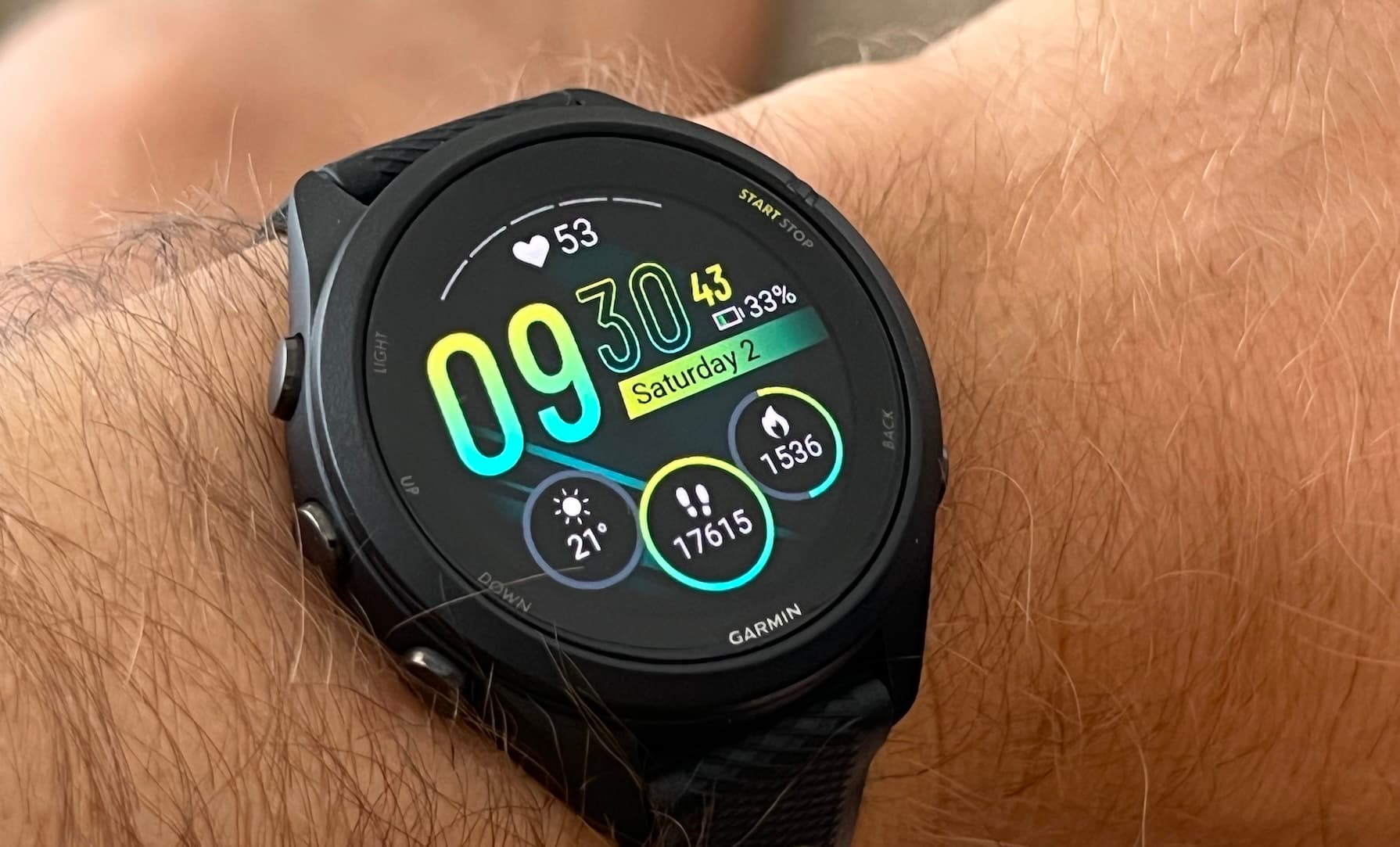
The AMOLED display is gorgeous, bright enough to read in full sunshine, and the gesture wake works about 98% of the time, turning on the screen only when I lift my wrist to look at it. Every now and then, it needs an exaggerated second wrist flick that probably makes me look like I’m trying to cast a spell at Hogwarts, but that’s a small price to pay every once in a while to keep the battery life high.
Speaking of, battery life has also been excellent.
I usually record roughly one GPS activity per day on average, from biking to running to tennis, and still only charge my watch about once a week. If I’m pushing it to almost 0%, I can stretch it close to ten days before needing a recharge.
I chose the smaller 42mm Forerunner 265S instead of the regular 265 that has the larger screen, mostly because I preferred the small size of the 265S – and my wife appreciates not getting jabbed in the small of her back by a giant watch every time we cuddle. But the other benefit of the ‘S’ model is that the smaller screen means longer battery life.
But one note on charging: Garmin uses an annoying proprietary charging socket, so I recommend snagging a spare cable so you don’t lose the only one you have and find yourself unable to charge. I actually got a 4-pack of charger adapters on Amazon for cheap, and they’re great as spares. They turn any USB-C cable into a Garmin charger. As awesome as the watch is, that annoying charger connection is a mood killer. It’s easily the worst thing about it.
In fact, on the topic of third-party accessories, we both got screen protectors to add as insurance, and we chose alternative bands and swapped them in to find ones we liked best. The stock band is fine, but customizing the watch is fun too.
Rotem wanted to make hers look a bit cuter, like a lifestyle watch, and I wanted a bit more utility. I eventually landed on a slightly elastic watch band that I prefer since it’s easy to slip on and off, but also stays tight against the skin for the best heart rate and sleep tracking. Not that it seems to help me get my sleep score above the 80s, oooof.
Sleep, streaks, and tiny victories
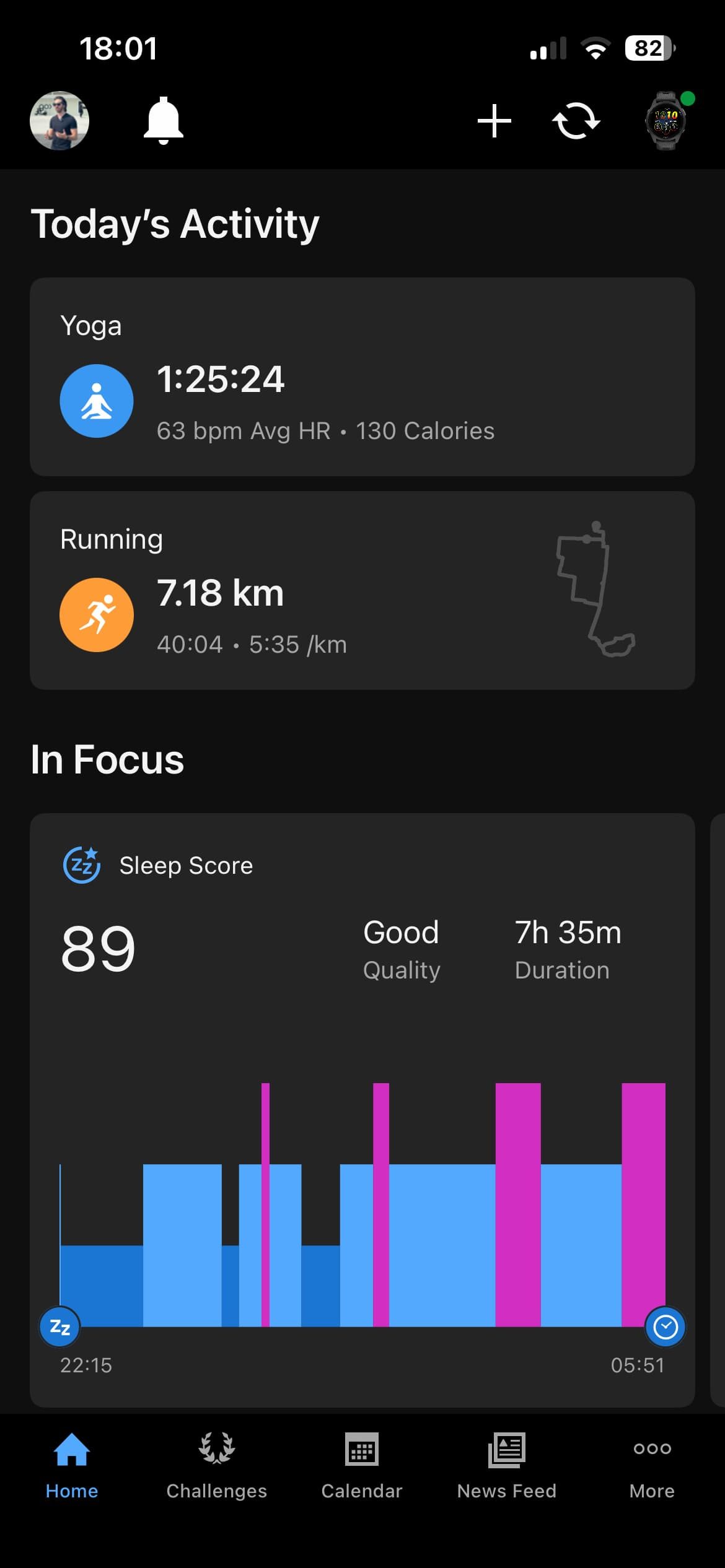
One thing I didn’t expect was how much I’d care about sleep tracking.
Every morning starts with Garmin’s Morning Report, ready upon me waking up.
I don’t know why, but it’s fun scrolling through the screens showing me how I slept, how my heart rate variability scored for the night, a quick weather report, etc.
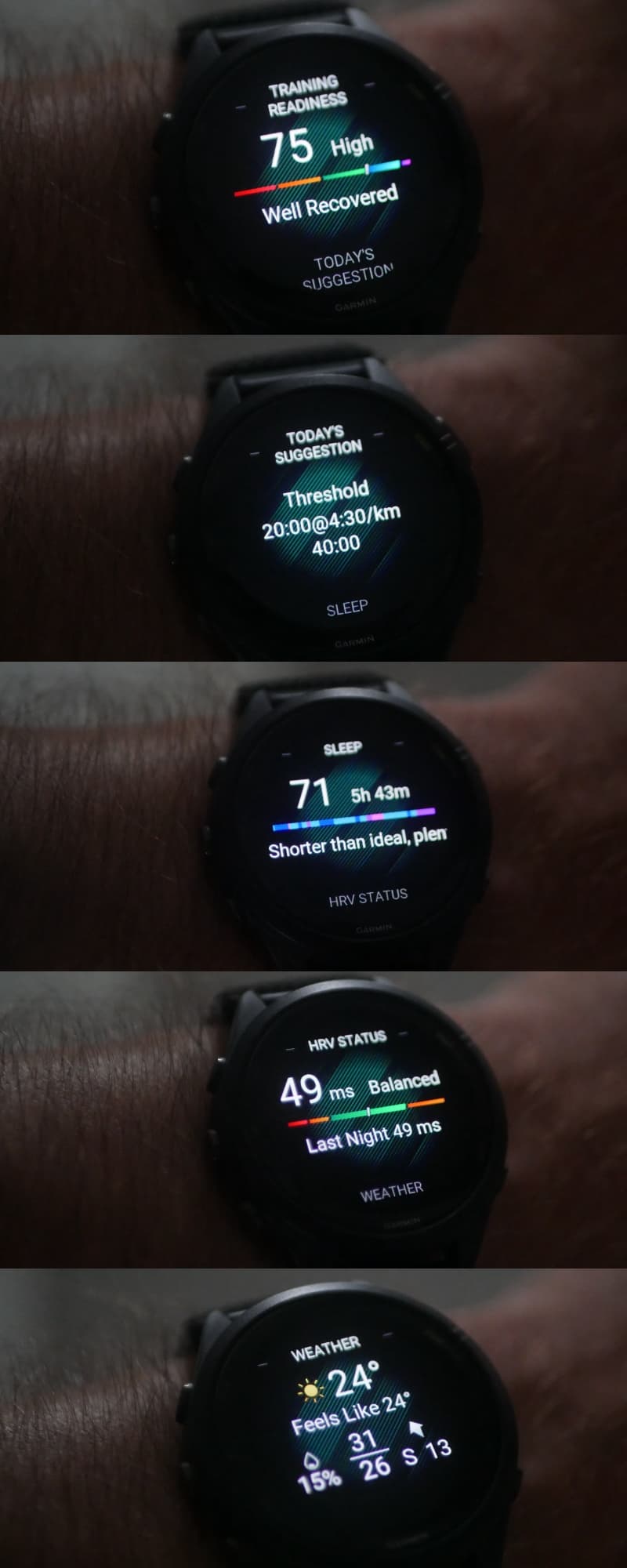
But perhaps the most important metric of all, and the overarching question each morning: Did I finally match Rotem’s elusive perfect 100 sleep score that she achieved exactly once?
No. I never do. Not that I’m bitter or anything.
Okay, maybe a little.
But to be fair, the watch has genuinely nudged me toward building better habits. I think more about getting to bed earlier, limiting light before sleep, and making recovery a priority because now I can actually see the effects.
And yes, also because I’m still aiming for that perfect sleep score. I can’t let her beat me on another metric… not again!
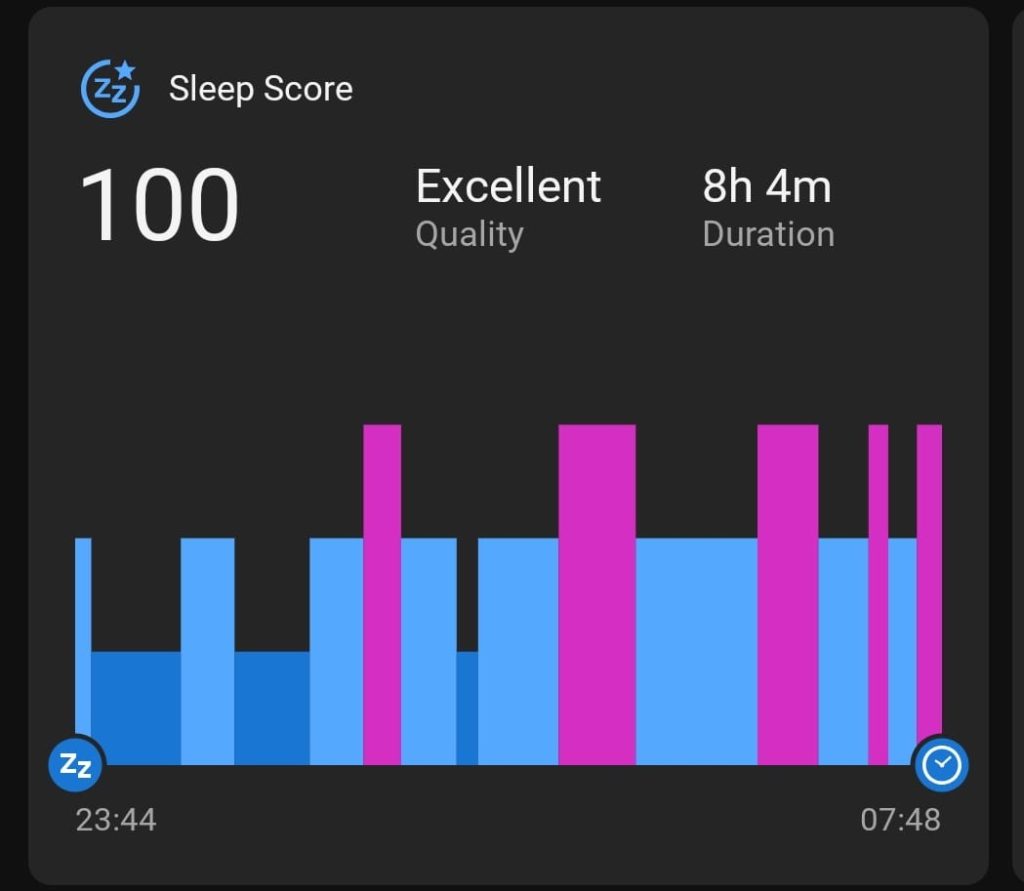
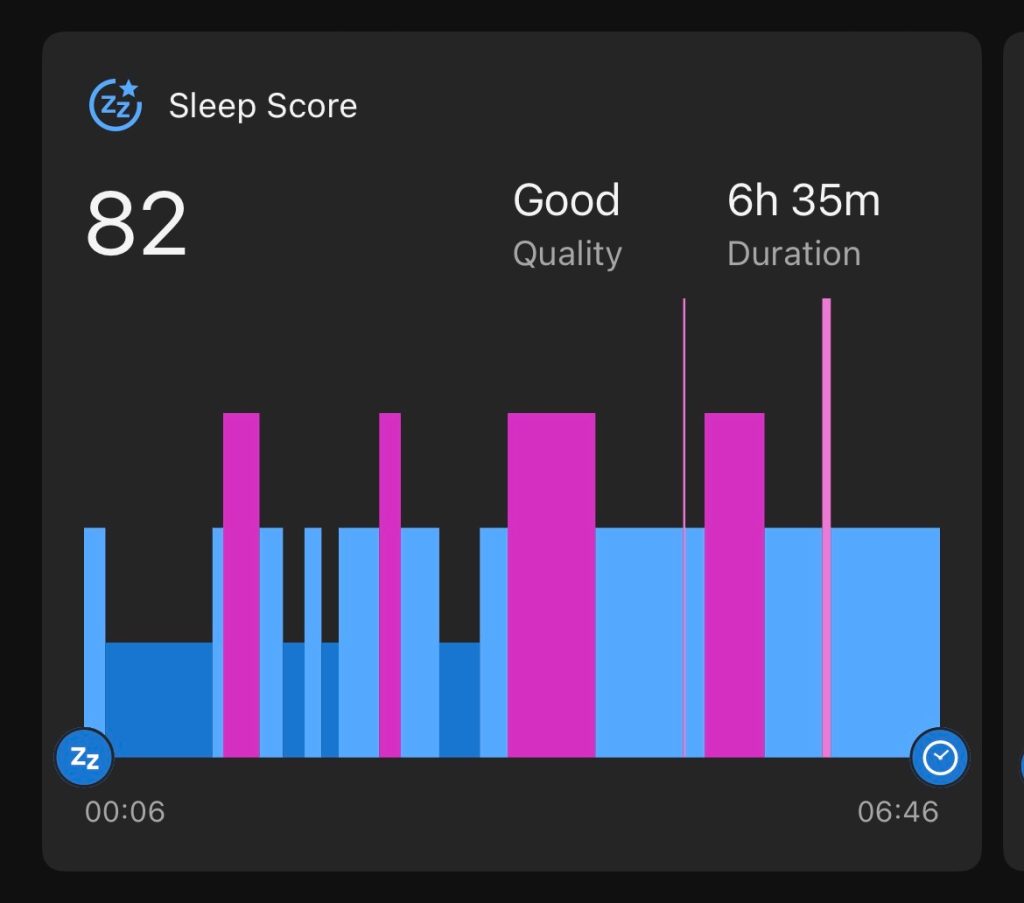
As much as I enjoy the sleep tracking and as accurate as I’ve found it to be, Rotem says that hers can be a bit hit or miss. It can be highly accurate, to the point that if she wakes in the night from a particularly crazy dream, she can actually see that the timing corresponds with the next day’s graph of when she was in REM sleep. But she also says that a few times the watch reported less sleep than she actually got, and she had to manually update the falling asleep time, as it was an hour after her actual drifting off.
I haven’t noted that myself, but to each his or her own.
Streaks are also a neat way to keep up your goals. I’m currently on a 56-day streak of hitting 10,000 daily steps, which is both fun and frustrating because now I feel so much pressure to avoid ruining my streak.
Several of those evening walks I took were not because I needed exercise, but rather just to hit the goal each day. Hey, my body is happy and healthy either way. Little does it know that the reason it is healthier comes down to how stubborn I am, not wanting to lose to… myself.
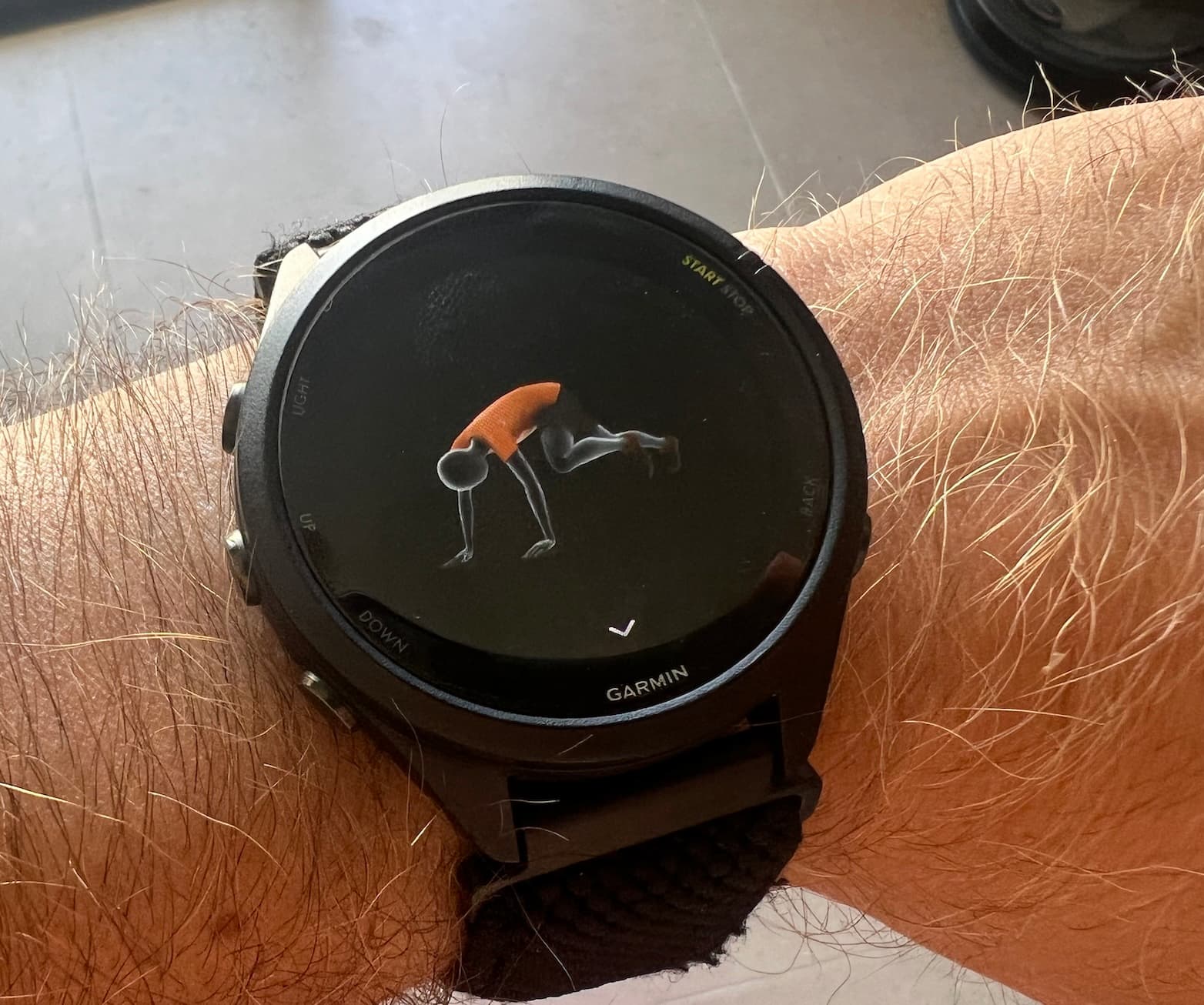
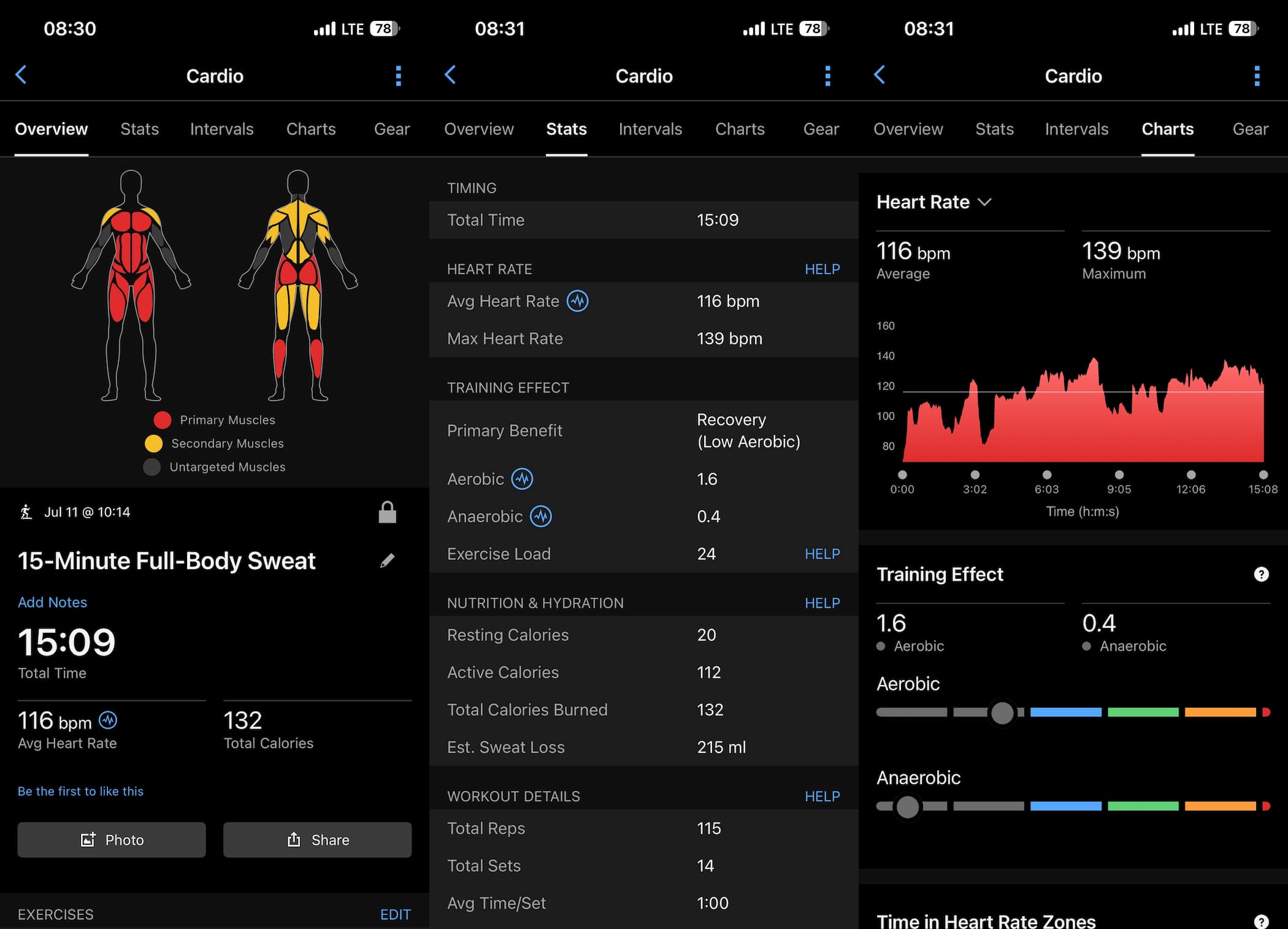
And if you’re looking to burn off some end-of-the-day energy before bed, the watch has plenty of good activities and workouts you can do right from your wrist.
There’s even a little figure that shows you how to perform the exercises!
What are the downsides?
As much as we both enjoy the watch, there are still some downsides.
I mentioned the annoying charger, and then there’s the high price. This Forerunner 265S model was $449, though it’s a mid-tier model, so you can get both lower- and higher-spec versions at correspondingly lower and higher prices. There are also refurbs that can save you $100.
But beyond those two things, I’d say that the only other issue for me is, somewhat counterintuitively, that Garmin may have gone slightly overboard.
There are almost too many features.
Sometimes I find myself scrolling through race predictors, body battery, VO₂ Max, training status, fitness age, stress metrics, and about seventeen other graphs, wondering, “Where was that one screen again?” It’s almost information overload. There are a ton of features, but I don’t use all of them.
Once Rotem wanted to check one of my stats and I couldn’t find it for her, so she just scrolled my watch for me. I felt like my mom getting taught to use her phone.
Fortunately, there’s a decent amount of customization that can be done on the watch to remove from the menus many of the things you don’t actually use yourself, or download and add features that don’t come in the default settings. And of course, the upside is that there’s an incredible amount of depth if you want to dive super deep.
However, the amount of depth means that you’ll probably spend the first few weeks discovering features you didn’t even know existed and wading through long menus trying to remember where that one feature resides. In fact, we’ve both had our watches for over two months now and Rotem still surprises me with a “Did you try that ____ feature yet?” every now and again.
Final thoughts
I originally thought this review would mostly be about a watch and how I use it for my riding and daily life.
Instead, the biggest surprise has been how much the Garmin changed my relationship with being active and moving. I’ve always been an active guy, and I like keeping busy, not just mentally, but physically. Now though, I have numbers and graphs encouraging my active habits, helping me better understand and strengthen them.
Whether I’m on an e-bike or a traditional bicycle, I pay more attention to how my body responds. I ride more intentionally. I recover more intelligently. I push harder when I should and – perhaps more importantly – back off when I shouldn’t.
I also have an idea for a future experiment that I’m oddly excited about: riding identical routes on an e-bike and a traditional bike to directly compare heart rate, effort, calories, and recovery. The Forerunner is practically begging for that comparison.
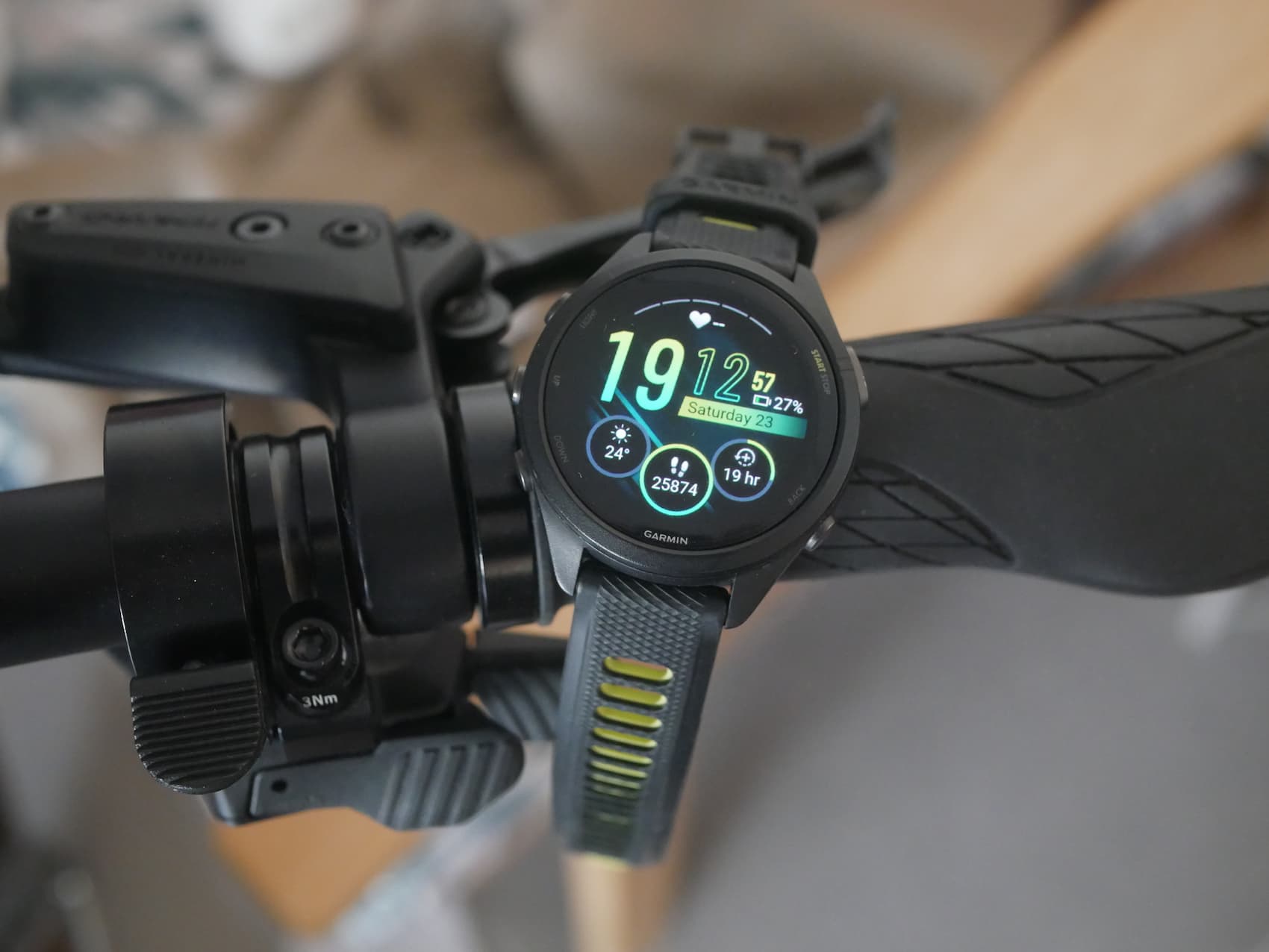
At the end of the day, the Garmin Forerunner 265S certainly didn’t magically make me fitter. It just made fitness more fun. It let me see my results in real time and enjoy them immediately. And sharing those results with someone going through the same thing added both companionship and rivalry, further adding to the fun. And the frustration. But mostly the fun.
And sometimes, that’s exactly the motivation we need to toss on our shoes or swing a leg over a bike, then head out the door to go see where the road leads.


FTC: We use income earning auto affiliate links. More.

