
Major technological disruptions tend to come in waves, and it’s rare for the companies that lead the first waves to be at the forefront of subsequent waves (anybody remember Blackberry? MySpace? Yahoo?).
Few companies have so completely dominated the first wave of a tech tsunami as Tesla, which produced the first EV that the media could describe without using the word “granola” (the Roadster); the first EV that could be considered a mass-market vehicle (Model S); and an EV that became the world’s best-selling car (Model Y). Along the way, the company built a charging network that remains the industry’s gold standard, and built a tidy little business selling stationary storage.
Times change. The number of available EV models has grown from a handful to hundreds, the center of gravity of the EV industry has shifted from the US to China, and the company that I once called “an innovation factory” has shifted its attention to other things.
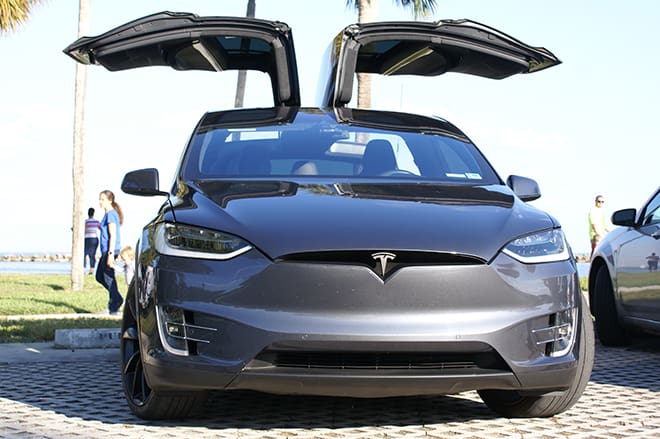
Tesla’s mercurial manager announced during the company’s Q4 2025 earnings call that the Model S and Model X will be discontinued by the middle of this year.
The announcement was widely expected. Tesla’s third-gen vehicles, Models 3 and Y, eclipsed their parents some time ago. Indeed, this was always part of the company’s plan. Public perceptions of Tesla and its divisive director have changed drastically since the firm’s founding, but there’s no denying that the strategy worked wonderfully, nor is there any dishonor in pulling the plug on Models S and X, which launched in 2012 and 2015, respectively.
In fact, some may wonder why the two venerable vehicles lasted as long as they did. As Electrek put it, “Tesla stopped caring about these vehicles years ago.” As Tesla’s cheeky chieftain himself put it back in 2019, his company was still making these “niche” vehicles more for “sentimental reasons than anything else.”
Tesla stopped breaking out sales figures for Models S and X in 2023, lumping them into an “other models” category with Cybertruck and the Tesla Semi. Of course, EV pundits made educated guesses at the declining numbers. Electrek estimates that Model S/X deliveries were “likely in the 30,000 range for all of 2025.” By contrast, Tesla sold 357,000 units of Model Y in the US alone in 2025, by Cox Automotive’s estimate.
The auto industry expects models to be “refreshed” from time to time (or cancelled to make way for new models). In 2025, Tesla launched an “update” to Models S and X that consisted of a new paint color, a few new features that Models 3 and Y already had, and a $5,000 price increase.
Tesla’s Fremont, California factory has the capacity to produce 100,000 units of Model S/X annually—it would seem that the line has been running at a fraction of that for some years now. The company’s bellicose boss says that this factory space will be repurposed to build Optimus robots.
Yeah, sure, but are there any new cars on the way? On the earnings call, the firm’s polarizing premier reaffirmed that the steering wheel-free Cybercab and a new Roadster supercar are still in the pipeline.
Sources: Electrek, The Verge, TechCrunch, InsideEVs, Teslarati

