
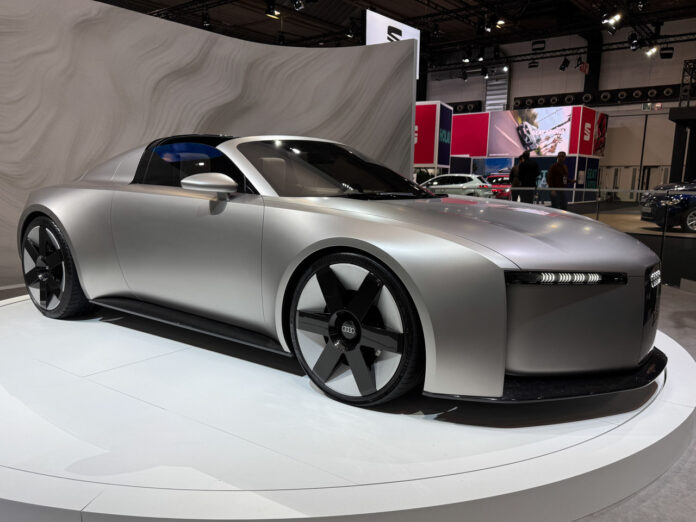
Audi unveiled the Concept C in Milan on September 2, 2025, as an all-electric, open-top, two-seat sports car that previews a new brand-wide design language.
We had a chance to get up close with the Audi show car, which is serving as an early look at future production models and a wider shift in how Ingolstadt plans exterior and interior design.
Dimensions, layout, and roof concept


The Concept C measures 178.0 in. long (4,520 mm), 77.6 in. wide (1,970 mm), and 50.6 in. tall (1,285 mm), with a 101.1-in. wheelbase (2,568 mm). It has a gross weight of 3,726 lb (1,690 kg), a rear-wheel-drive layout, and uses an electrically operated retractable hardtop.
Audi says the car’s proportions come from a central-battery layout. Refreshingly, the C is not another cab-forward design. The cabin sits far back on the body, and the roof uses two elements so the car keeps a single-piece, monolithic profile when closed while still offering an open-top experience when retracted.


A majority of the Concept C’s design and styling is expected to translate to production, riding on the same vehicle architecture as the upcoming Porsche 718 Boxster EV.
New front-end identity and lighting signature


The Concept C’s front design is built around a “vertical frame,” which is a nod to the Auto Union Type C race car and a past A6 generation. I noticed that the rings integrate into this upright graphic and the frame is like the glue that holds the front-end together.
The new four-element signature features horizontally arranged elements in each headlamp and rear lamp. Audi confirms this signature will carry into future models as a day-and-night identifier. At the rear, clean surfaces are paired with horizontal slats.
Interior layout and HMI


Audi has applied the same reduction-focused approach inside. The cabin uses architectural surfaces and geometric forms, with the driver at the center. A 10.4-inch foldable infotainment screen is designed to surface information only when needed.
I spotted anodized aluminum physical controls on the center console. Audi describes a deliberate haptic feel through the switches and rotary elements, including what it calls an “Audi click.” Like Volkswagen, I hope Audi protects the tactile feel of operating physical controls at least for HVAC and multimedia functions in future models.


Also See: 2025/2026 Farewell: I chase one of the final unsold new Audi Q8 e-trons
Indirect ambient lighting with natural hues and natural interior fabrics sum up the interior features of the Concept C.

An automobile engineer by training, I’ve analyzed the global car market since 2005, with a keen focus on EVs since 2008. My journey in online automotive publishing spans 17 years, during which I have reviewed cutting-edge automotive technologies and interviewed leading global CEOs and vehicle developers.

