
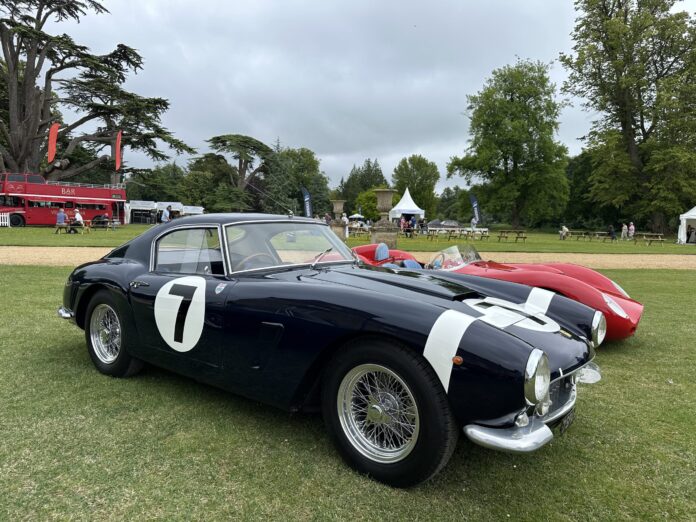
This was the first-ever holding of the Concours des Légendes event at a historic UK stately home that I’d never visited. I love these old, historic, beautiful buildings. At £65 for an adult, it is a significant entrance fee, but this show was different from the many other shows in the UK.
“This car show is different”, I hear you say. Well, not only were there cars on display as part of a concours, but there was also VIP parking for notable cars of interest and talks by classic car show legends like Wayne Carini, Ed China, Land Speed record holders, and car collectors like Nick Mason. It was great to hear from those people live.
It was a relatively small car show, with not a lot of cars on display – circa 100 cars in the concours. As always, you can see all of our photos that we took on the day on our Facebook album here (192 pictures).
Beyond the Concours: The Full Experience
Concours des Légendes wasn’t just about cars on display. It was about an auction and talks from car-related people, and Wilton House was open to the public for the only time during the year. So, it was well worth the visit. It is very different from your normal car show. I will definitely be looking to make this an annual visit; next year I will be taking my son or daughter, maybe both, as my son loves the cars and my daughter loves the old buildings and architecture.
Here is a walk around (below) Concours des Légendes and some of the grounds to give you a flavour of what it was all about.
I hope you enjoyed the video. Do give it a like, subscribe to our YouTube channel, and follow us on our social media channels. We are on X, Instagram, Facebook, TikTok, and YouTube, of course. Also, do remember to sign up to our newsletter so you’re notified of competitions that we’re running throughout the year; you could’ve entered our Wilton House Concours des Légendes competition and had a chance to win a pair of tickets to this wonderful event.
I will do a top 10 cars from the day from my viewpoint; however, I’ve highlighted below (in no particular order) 1 to 3 cars from most of the Concours classes that I really liked.
FERRARI GREATS
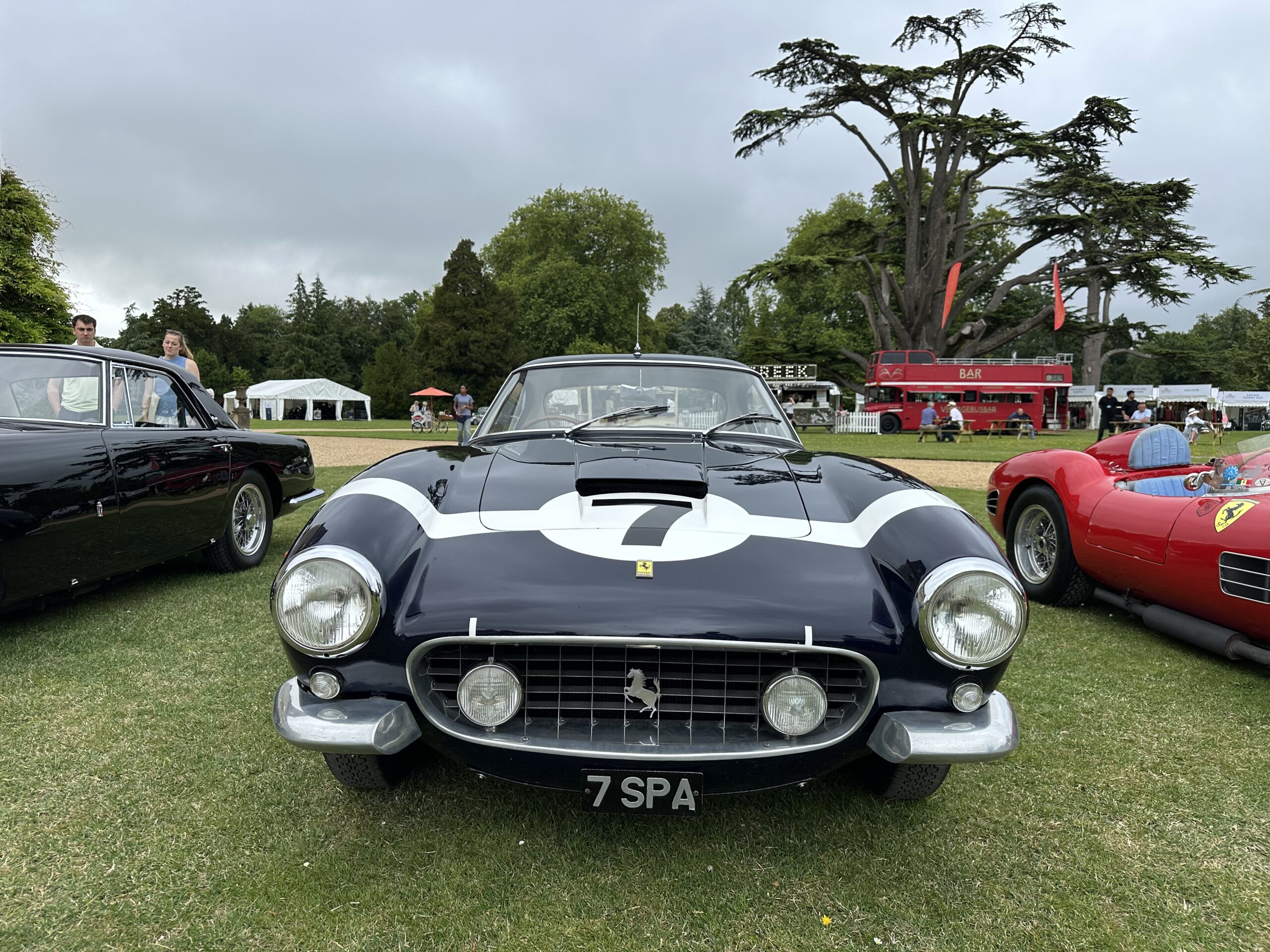
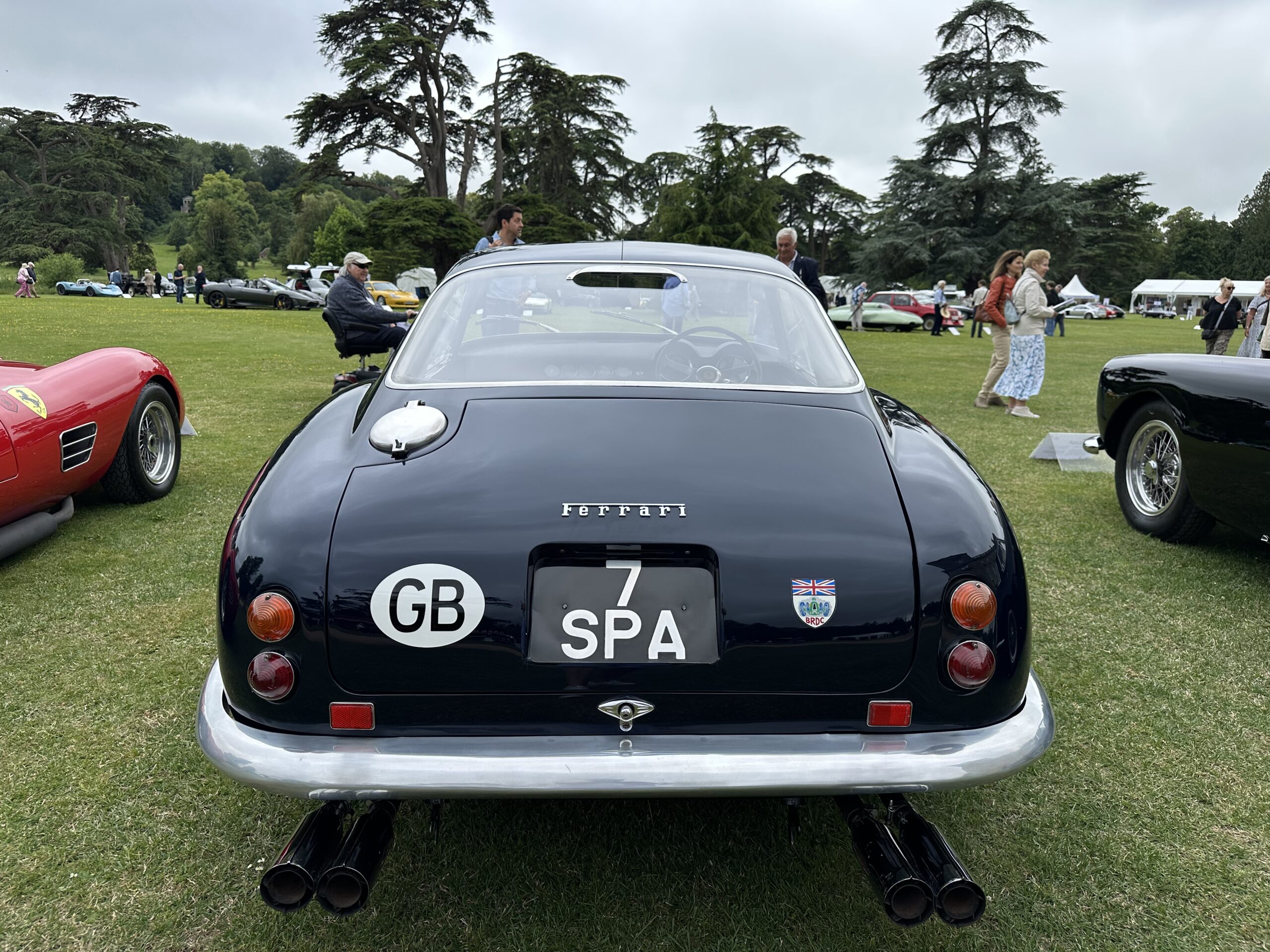
1960 Ferrari 250 GT SWB, Ex-Stirling Moss
Renowned British privateer Rob Walker commissioned this car, chassis 2119GT, a 1960 Ferrari 250 GT SWB, for Stirling Moss to race in the RAC Tourist Trophy at Goodwood.
Finished in Walker’s famous dark blue with a white nose stripe and Competizione-spec aluminium bodywork, the car left Maranello on 11 August 1960 – although it very nearly never made the race. Moss had broken both legs and crushed three vertebrae when his Lotus 18 suffered a failure at the Belgian Grand Prix in June. Miraculously, he recovered in time, won the TT outright, and went on to take further victories at Brands Hatch and the Nassau Speed Week.
Former Formula One team principal Ross Brawn now owns the car, and it remains one of the most valuable and historically significant Ferraris in private hands.

.
1958 Ferrari Fantuzzi Dino Spyder
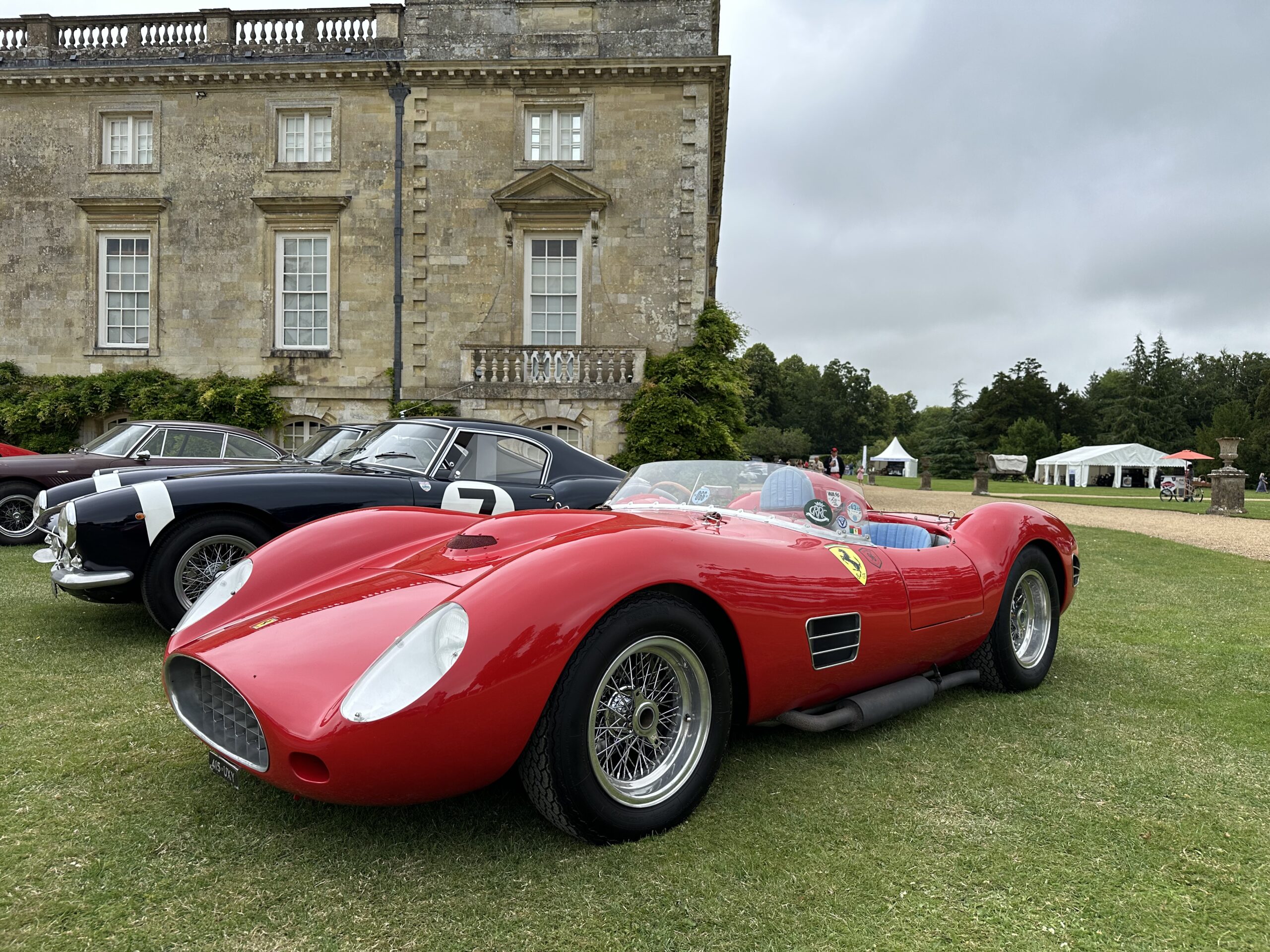
Experts believe this car left the factory with a V12 engine. During the restoration of its current Dino 246 V6 engine, restorers discovered that the wiring loom included provisions for dual magnetos, supporting the theory that the car originally ran a V12.
Ferrari provided information to Elias Ella at specialists Autofficina of Epsom confirming that the factory drew two engines from its production line in 1968 and supplied them to the Race Department. Experts identified one of these as the engine currently in the Fantuzzi.

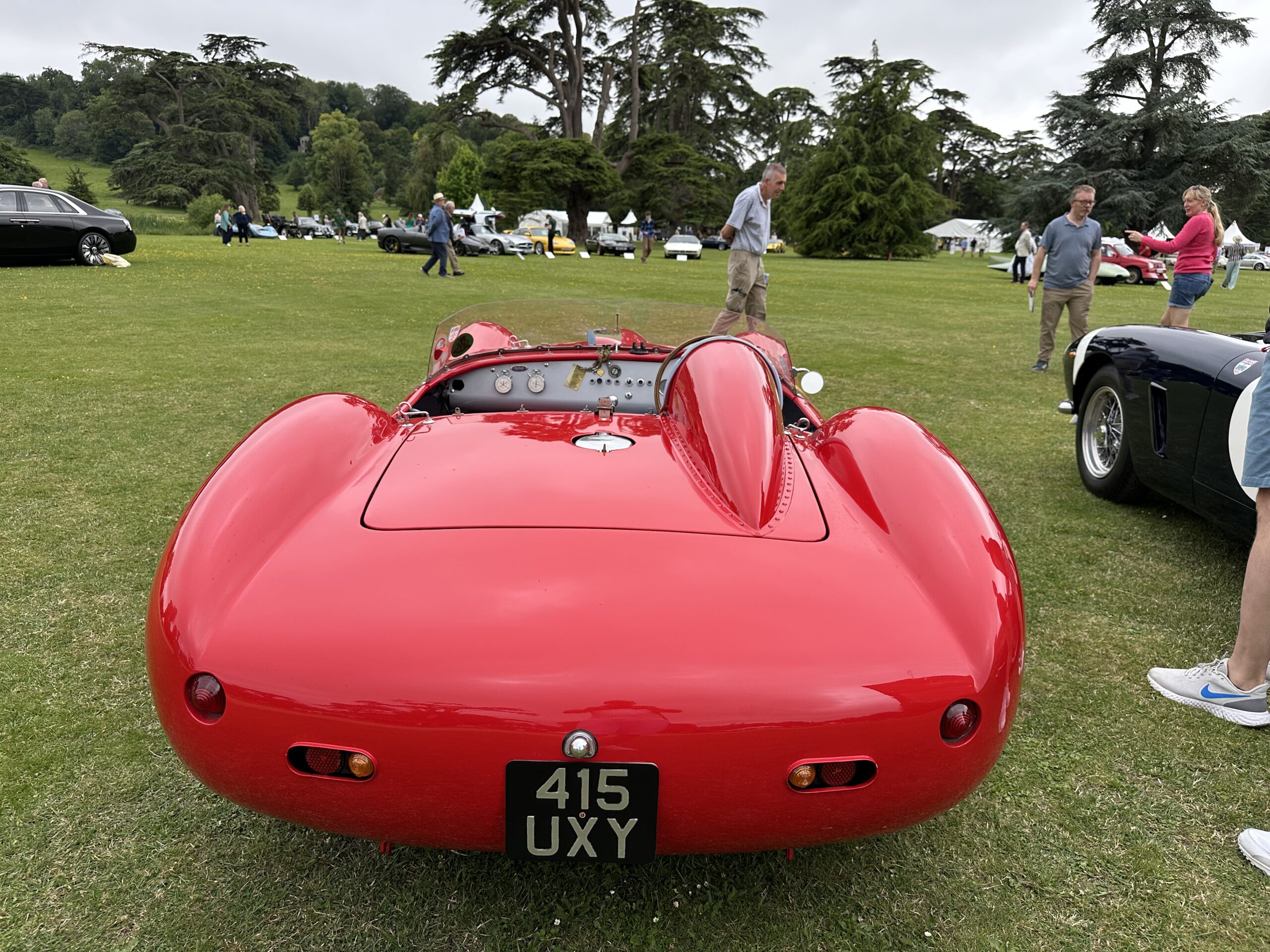
Elias concluded that the factory replaced the original V12 race engine with a Dino 246 engine before selling the car.
The current owner has owned the car for 20 years and has had the engine and gearbox rebuilt and the seat cloth replaced.

.
1995 Ferrari 512 TR
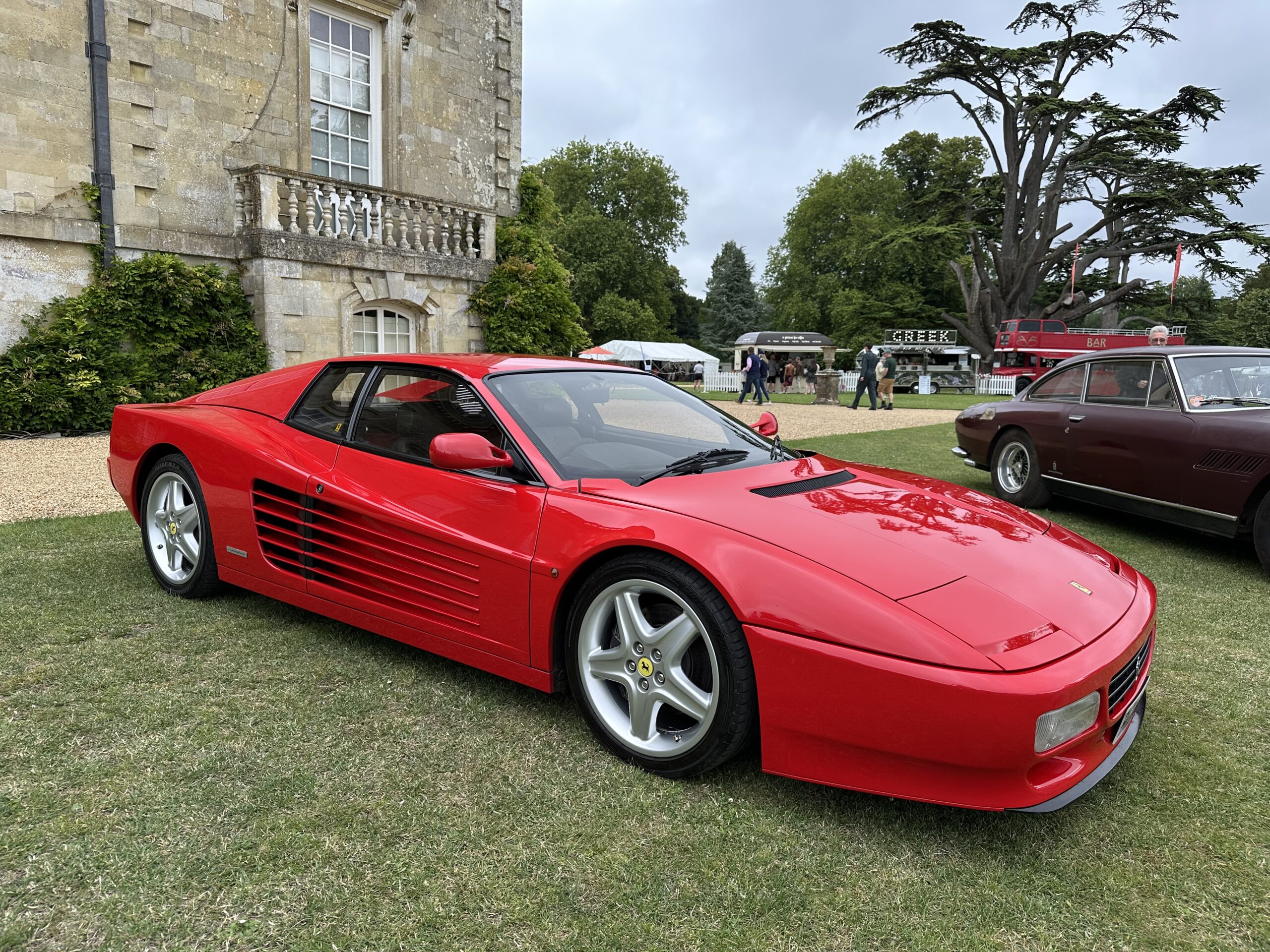
When Ferrari launched the Testarossa in 1984, some viewed the mid-mounted 12-cylinder two-seater as a huge departure for Maranello; others saw it as a return to the spirit of its greatest GTs rather than judging it solely as a sports car.
The 512 TR you see here was an evolution of the Testarossa and was in production from 1991 to 1994, with the 4.9-litre engine and gearbox mounted lower to improve the handling, a lighter clutch, revised transmission, plus styling tweaks both inside and out. All this combined to make it a very different proposition to its predecessor on the road.
Long considered the ultimate expression of the Testarossa and with only 2261 examples manufactured, the 512 TR is highly collectable today, capable of commanding double the price of the model from which it evolved.
.
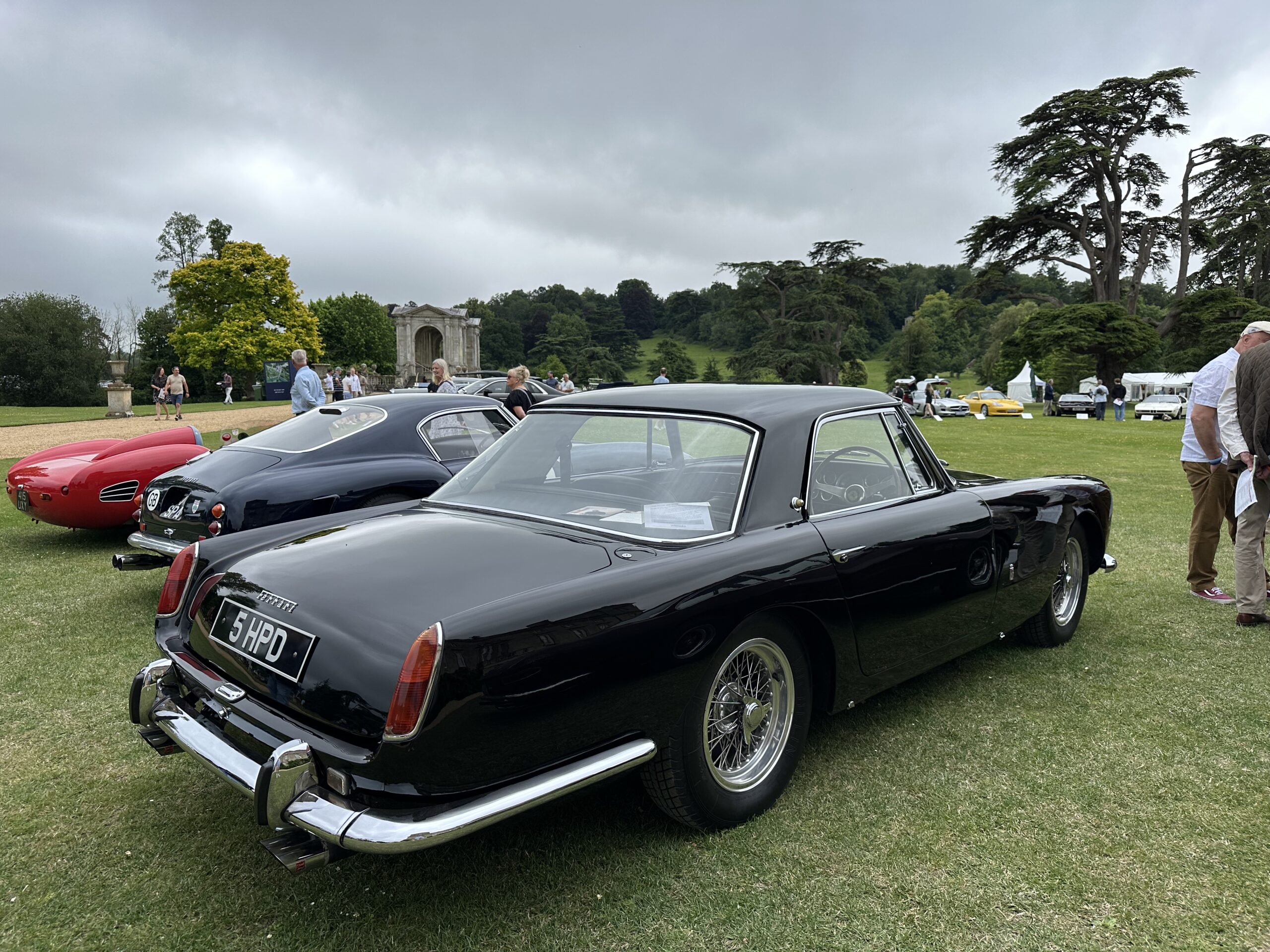
1958 Ferrari 250 GT, Ex-Mike Hawthorn

This 1958 Ferrari 250 GT Pininfarina Coupé displayed at the Concours des Légendes, chassis 1083, is the first Ferrari road car ever sold in the UK.
After winning the 1958 Formula 1 World Championship with Ferrari, Mike Hawthorn struck a deal with Enzo Ferrari to import road cars to Britain through his Tourist Trophy Garage in Farnham – becoming the country’s first official Ferrari dealer. The first two cars he imported were a pair of 250 GT Pininfarina Coupés, priced at £6500 each.
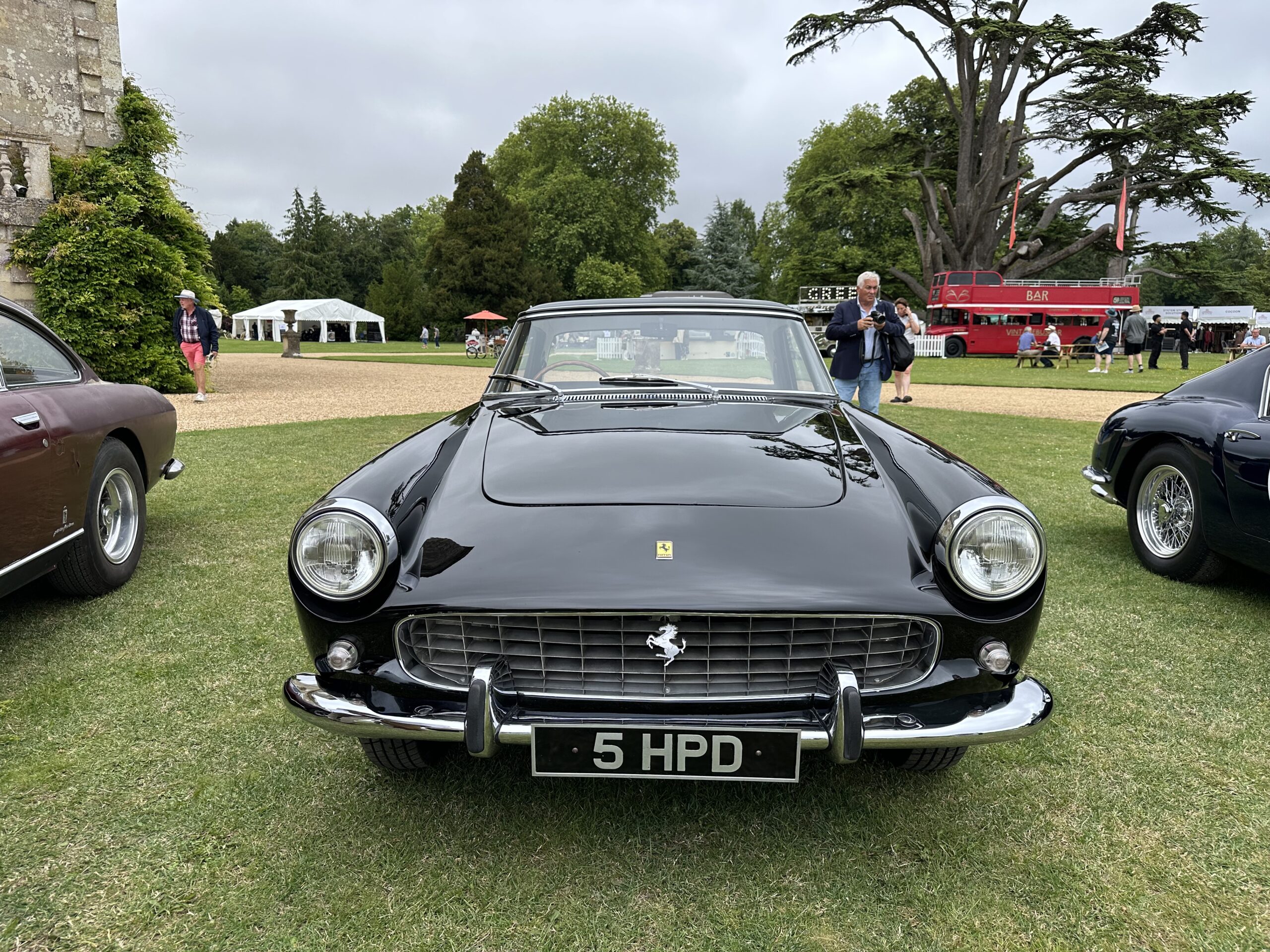
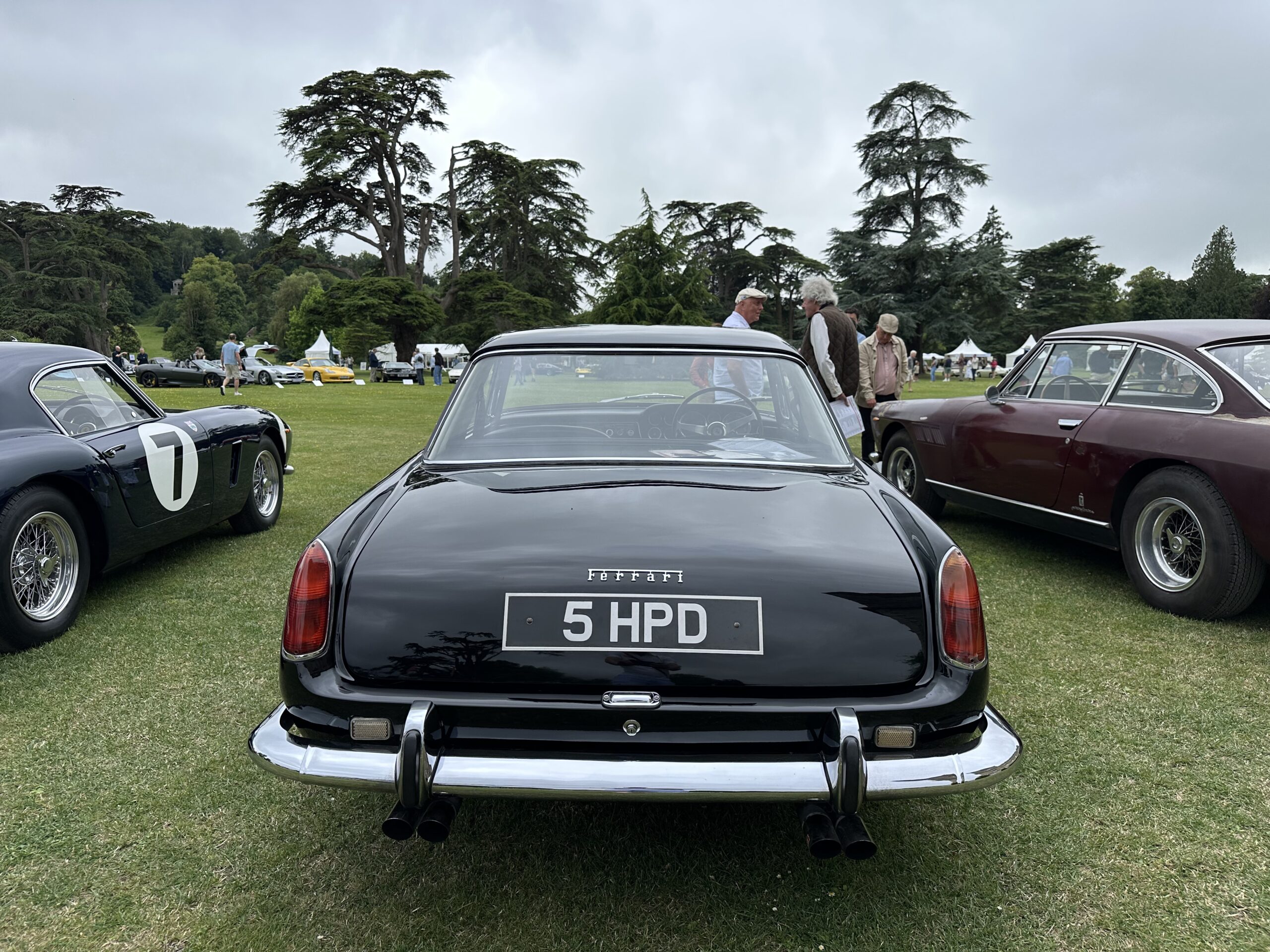
Hawthorn exhibited both cars at the London Motor Show, and chassis 1083 was sold to Major Desmond Fitzgerald.
A road accident tragically killed him just months after he retired from racing, aged 29. The Haynes Motor Museum in Somerset displays the car.
.
PRE-WAR WONDERS
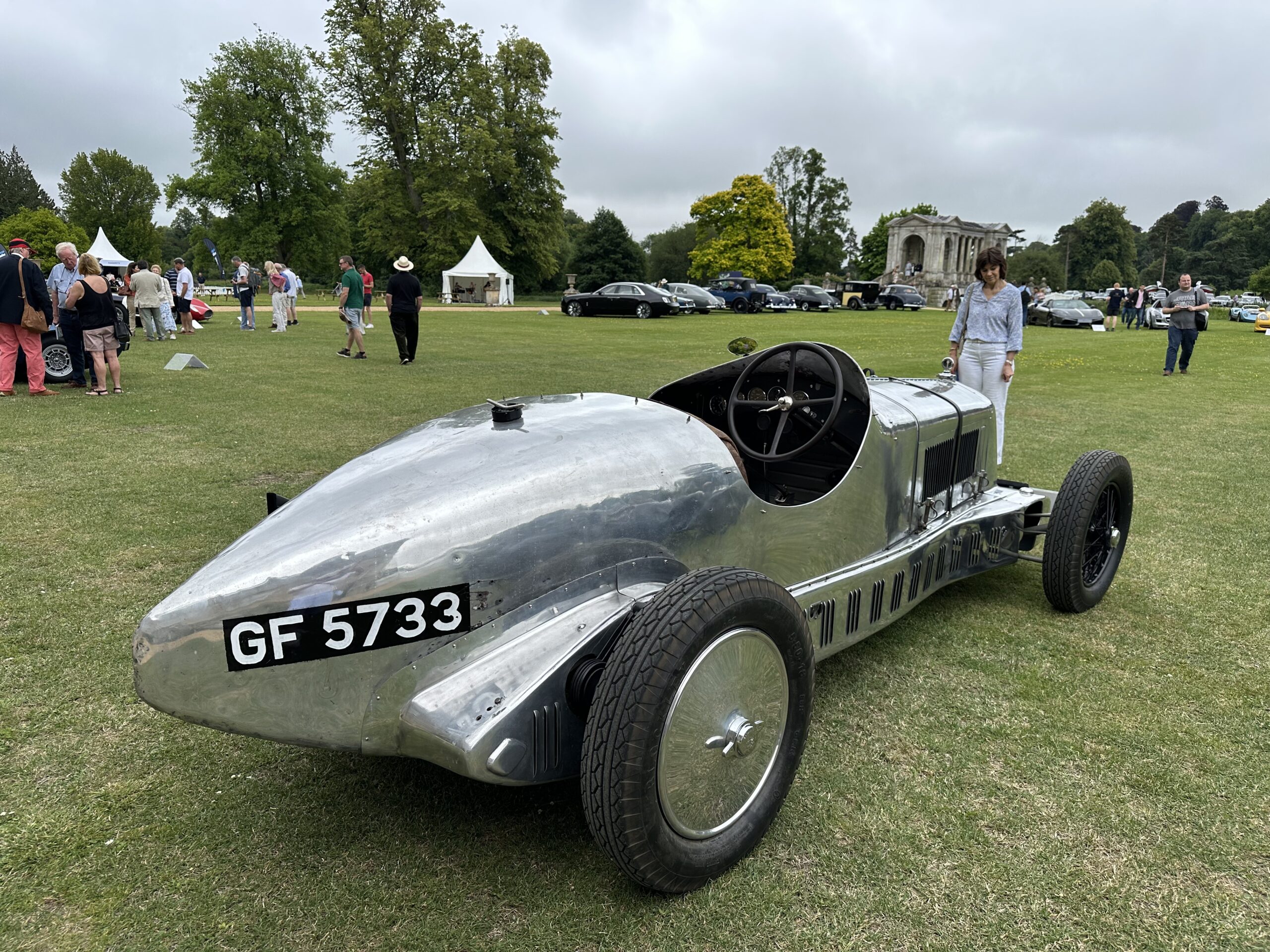
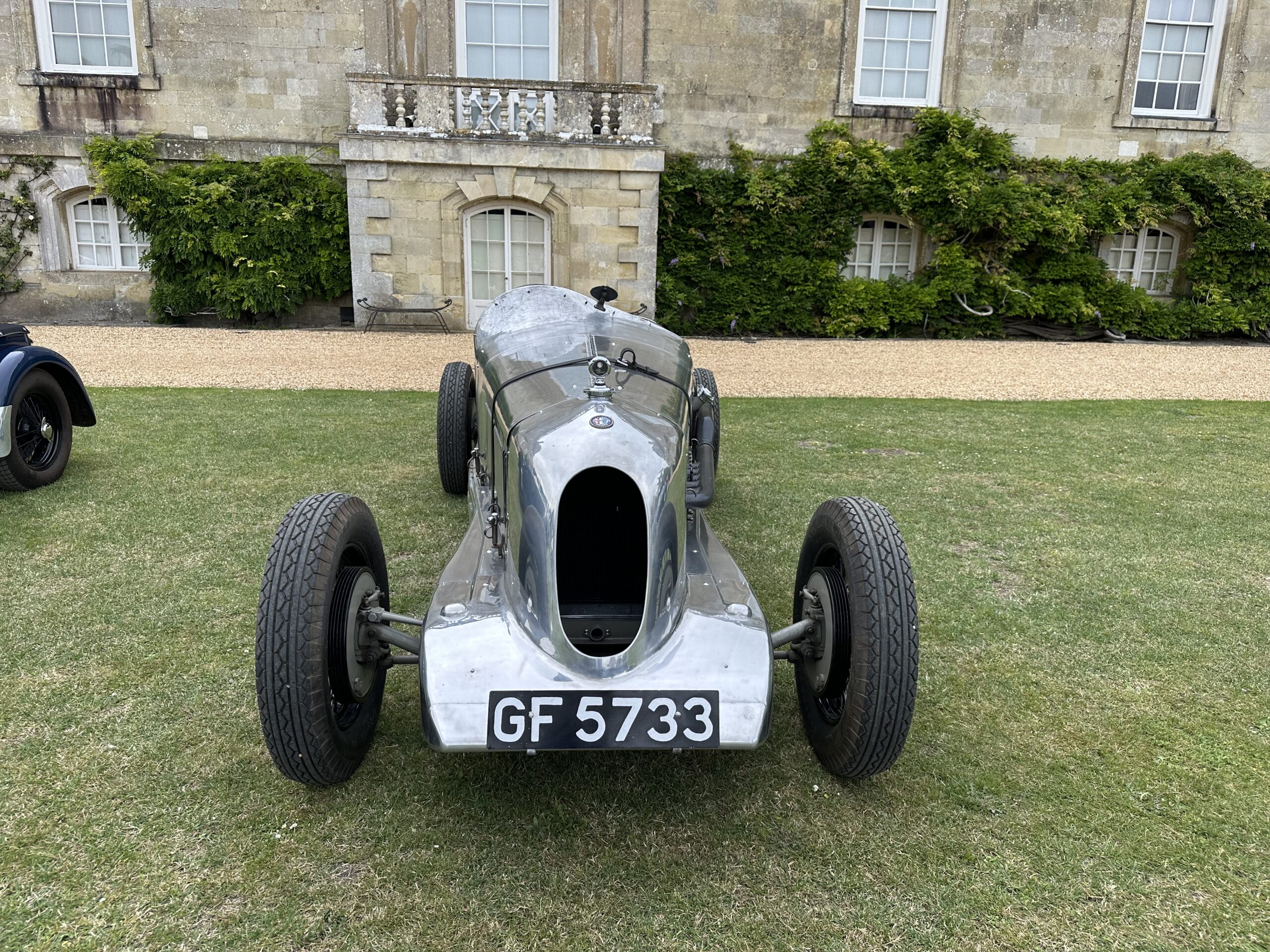
1930 Alfa Romeo 6C 1750 Testa Fissa
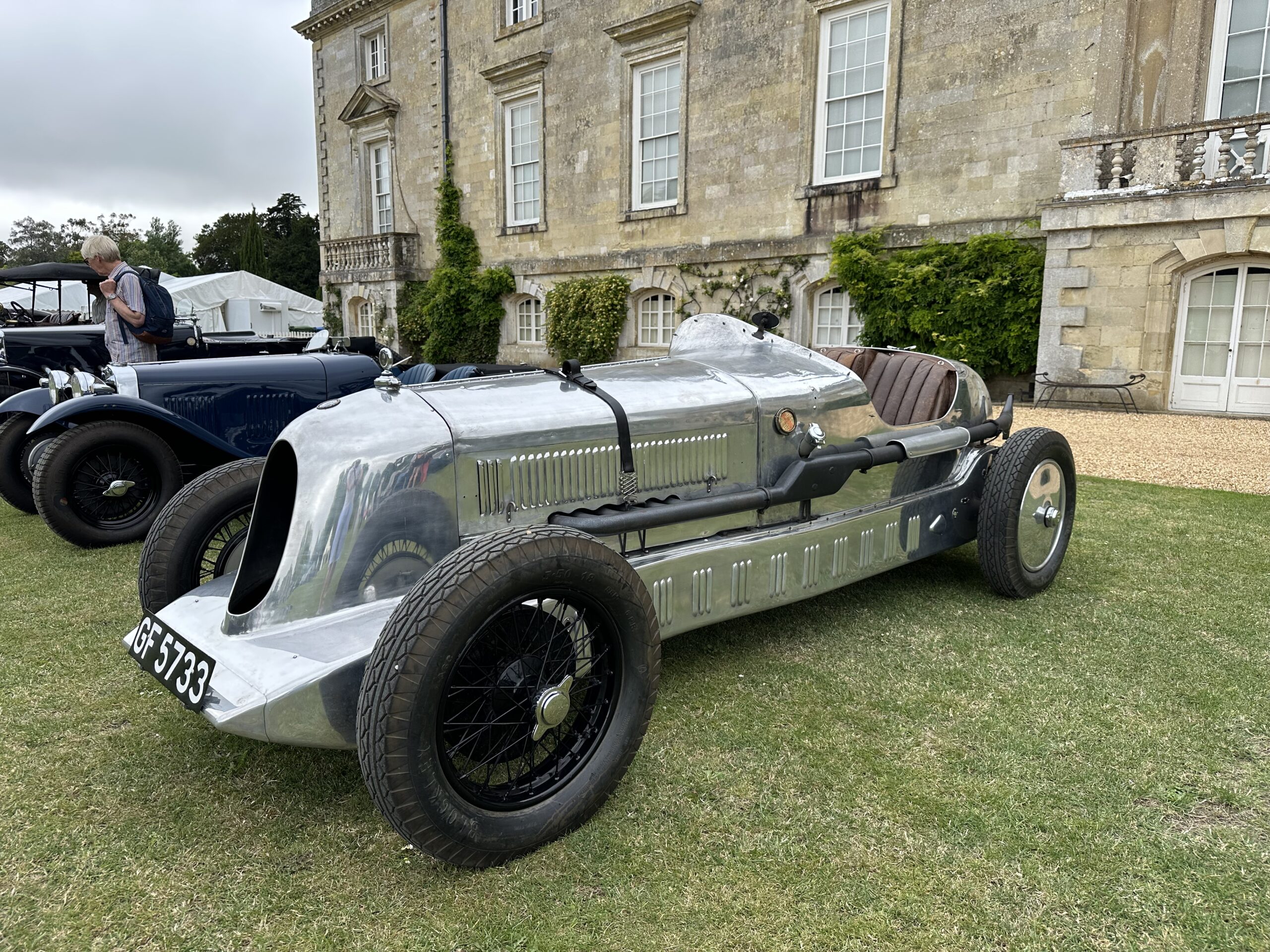
Testa Fissa? It means ‘fixed head’ in Italian, yet rather than suggesting a car has a roof, this ‘fixed head’ denotes an Alfa Romeo works racer with cylinder head and block all of a piece.
British racing driver Sir Ronald Stewart bought this iconic 1930 Alfa 6C 1750 new. Land Speed Record hero Captain George Eyston – who held the title three times – reputedly designed its special aerodynamic racing body, which Leadbetter coachworks built.
The sleek Alfa Romeo raced and broke records with great success at Brooklands before moving abroad. During its time overseas, the car became separated from its body. Remarkably, the body survived intact, allowing experts to reunite it with this historically significant racing car many years later.
.
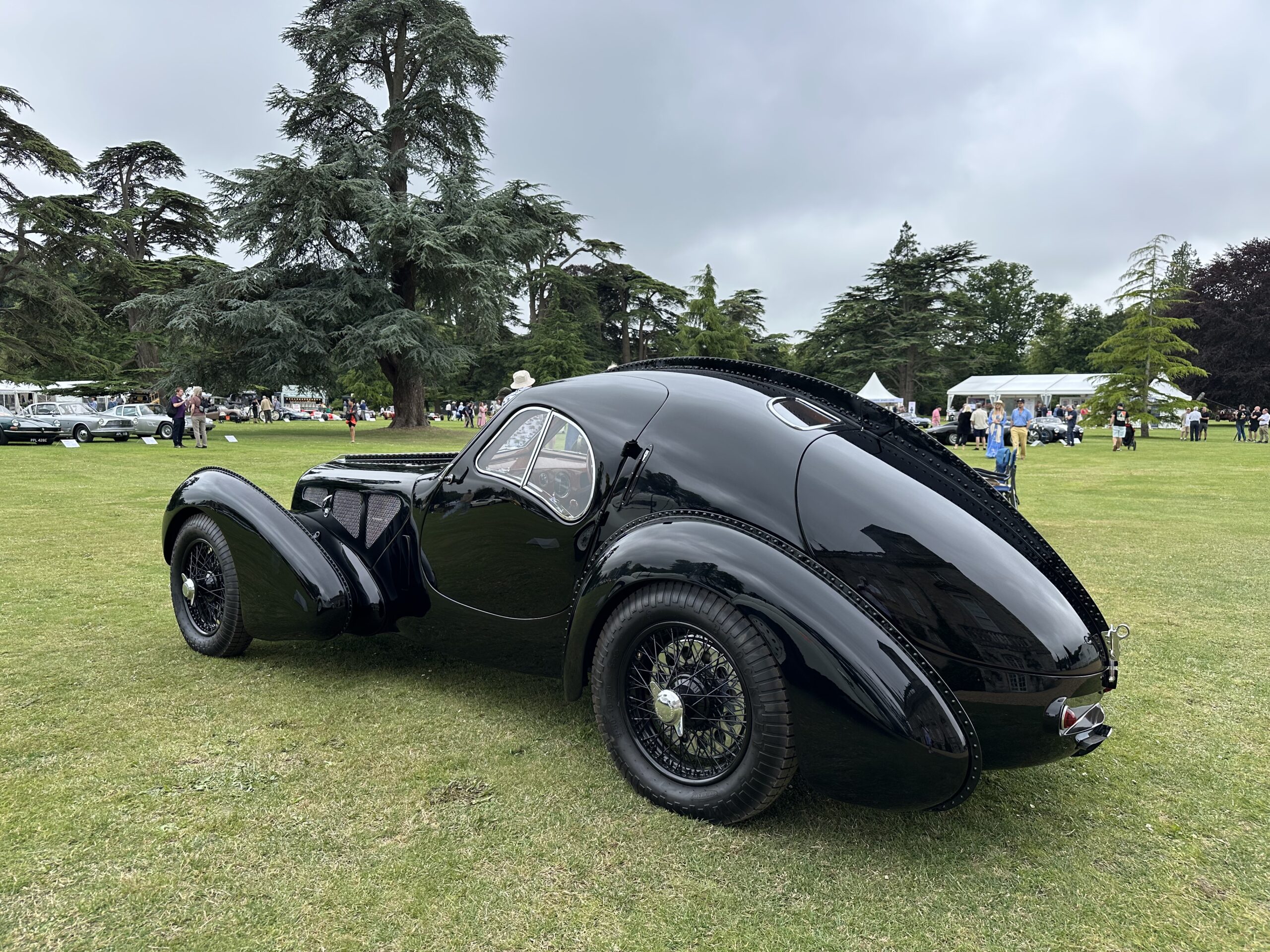
1937 Delahaye 135
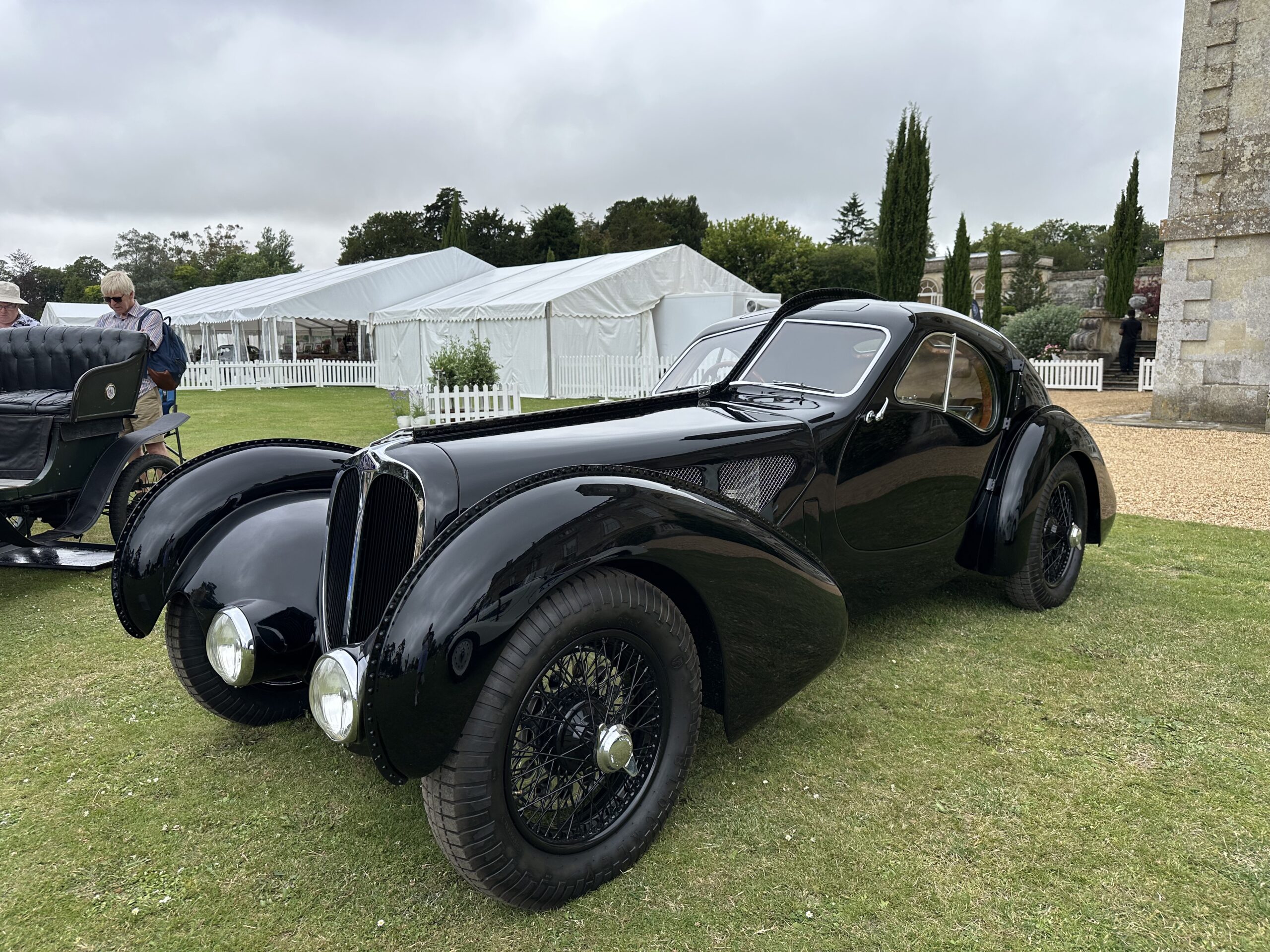
Owned since the early 1990s by a prominent antiques and art dealer and car collector, this rare beauty has been subject to over 3000 hours of restoration over five years at an eye-watering sum with no expense spared.
The Delahaye 135 was one of the most prestigious ranges of pre-war cars, combining grand touring comfort with extravagant looks and sporting capabilities.
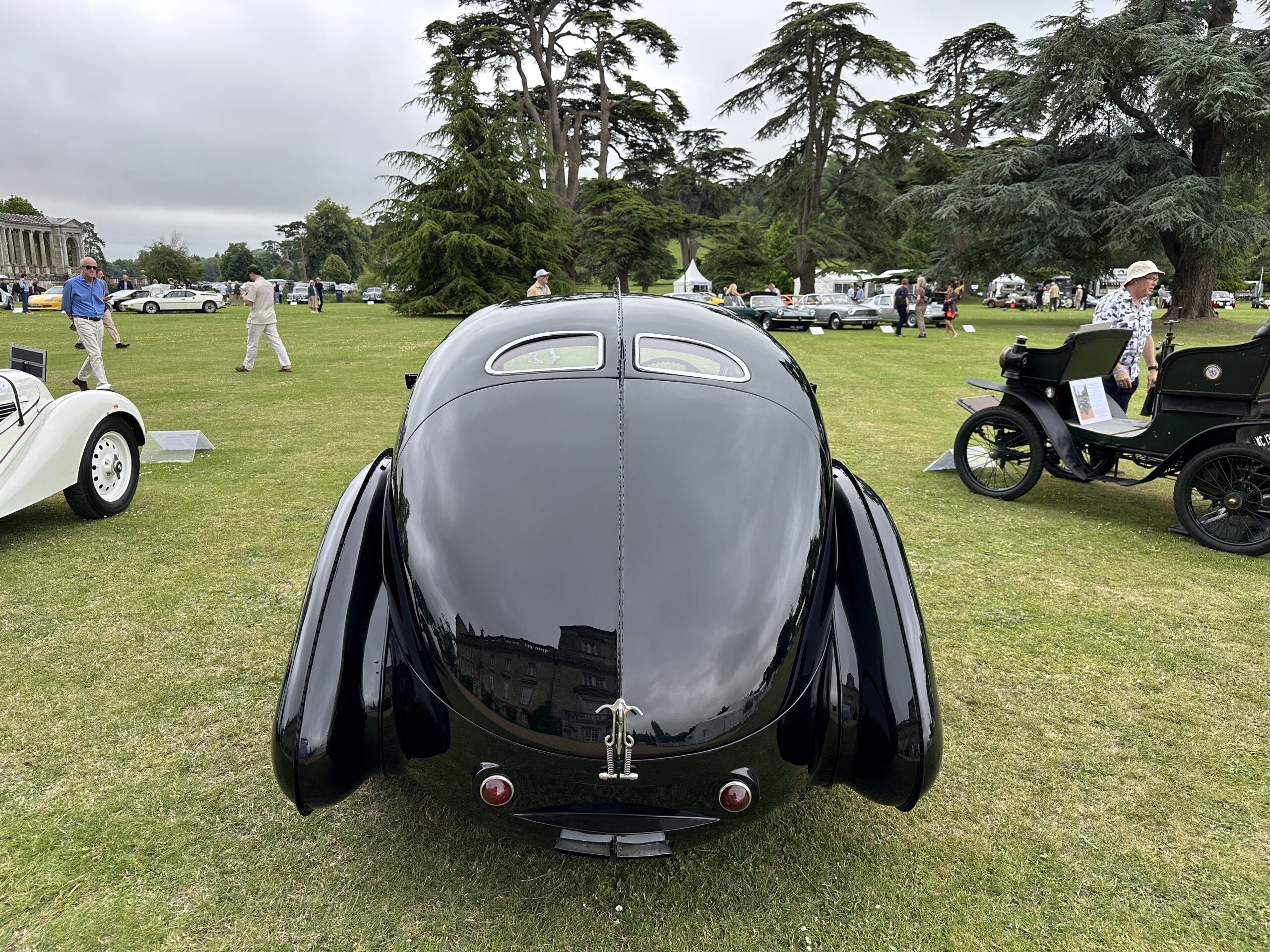

As was traditional in those times, the manufacturer frequently sold a rolling chassis that a customer could then have clothed in bodywork of their own choosing from a wide range of coachbuilders. This resulted in a sensational selection of body styles, including this unique one-off with its sublime riveted aerolithe-style aluminium body.
Currently in concours condition, the car is now ready to be driven and toured, and Concours des Légendes offers one of the last chances to see it before its owner adds serious miles.
.
1938 BMW 328 Frazer Nash

The BMW 328, with its sizzling 2-litre six-cylinder engine, lightweight body, and tubular chassis, was one of the most accomplished of pre-war sports cars, one that had fantastic success in all forms of competition. In fact, it was the car in which one of the most glittering of all motorsport careers was kicked off when a young Stirling Moss entered a 328 in a Harrow Car Club Trial in 1947.
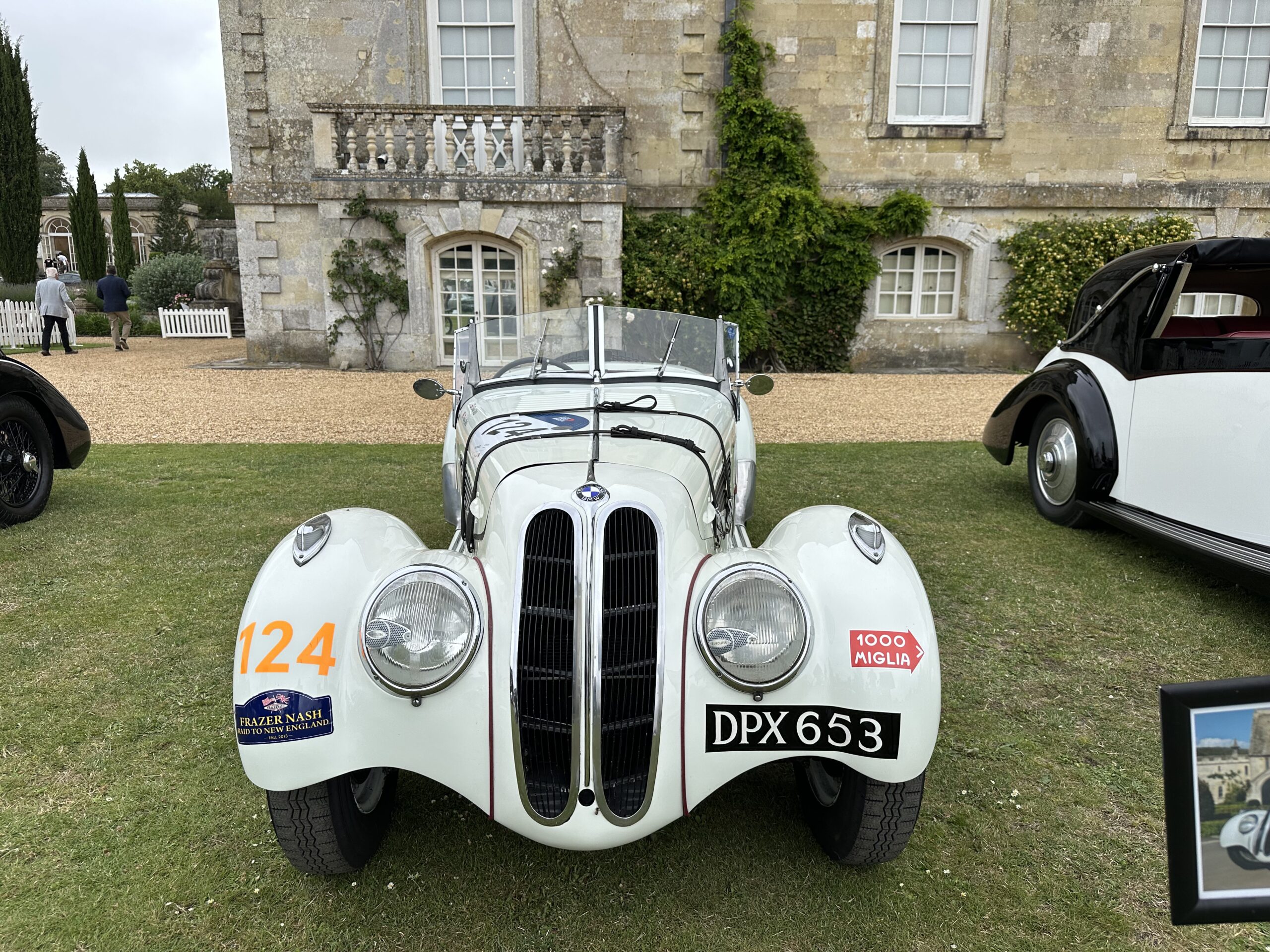

Like that car, this specific example qualifies as a BMW Frazer Nash because British motor manufacturer AFN (for Archie Frazer Nash) became the UK importer for BMW in 1934. AFN branded the fewer than 50 328s sold in the UK with both companies’ names.
Every BMW 328 is special, but this one is extra special, having been in the same family for over 50 years and is still regularly raced and rallied, most recently on the 2025 Mille Miglia.
.
THE TERRY SMITH COLLECTION
1955 Jaguar D-Type
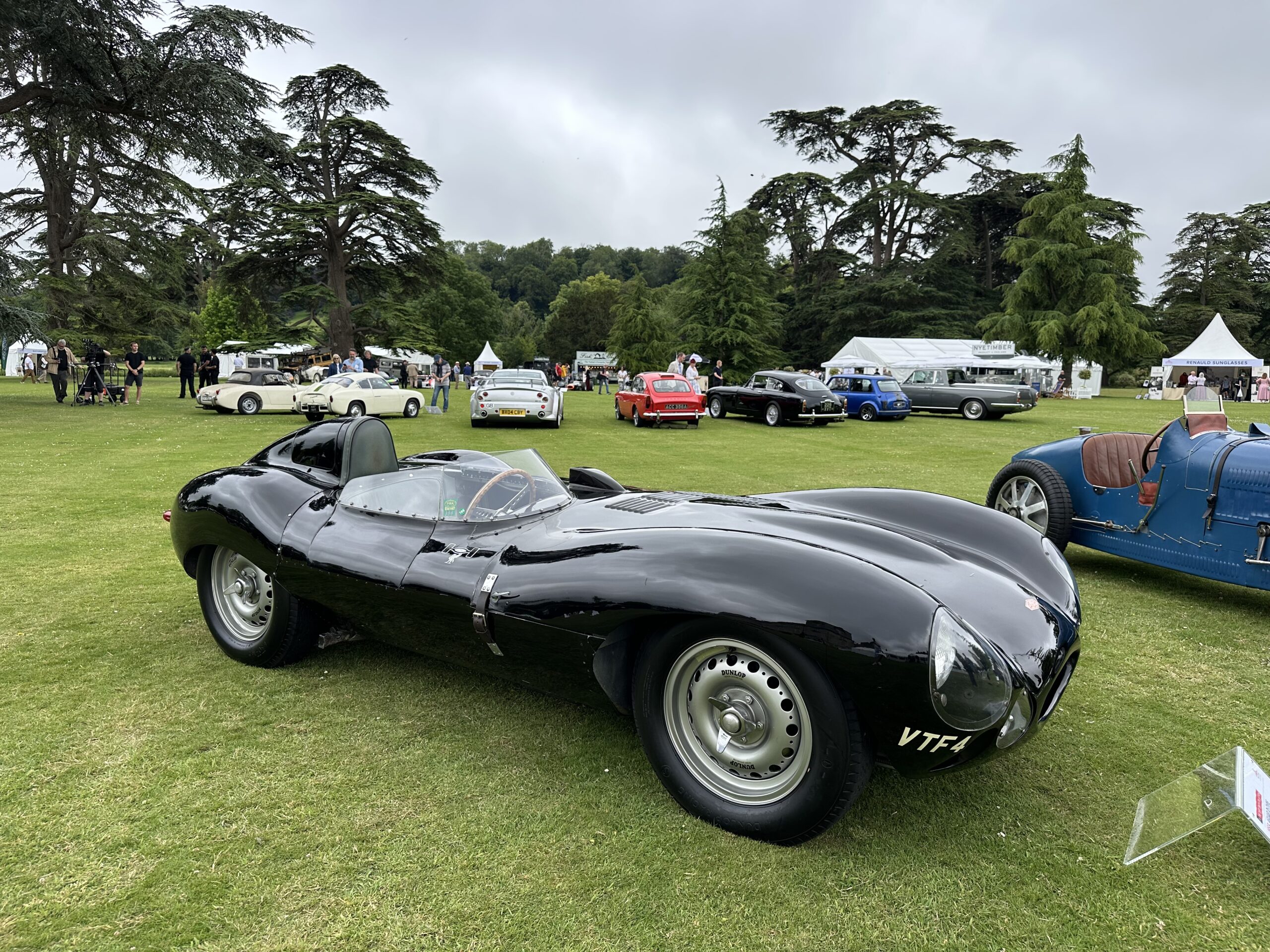
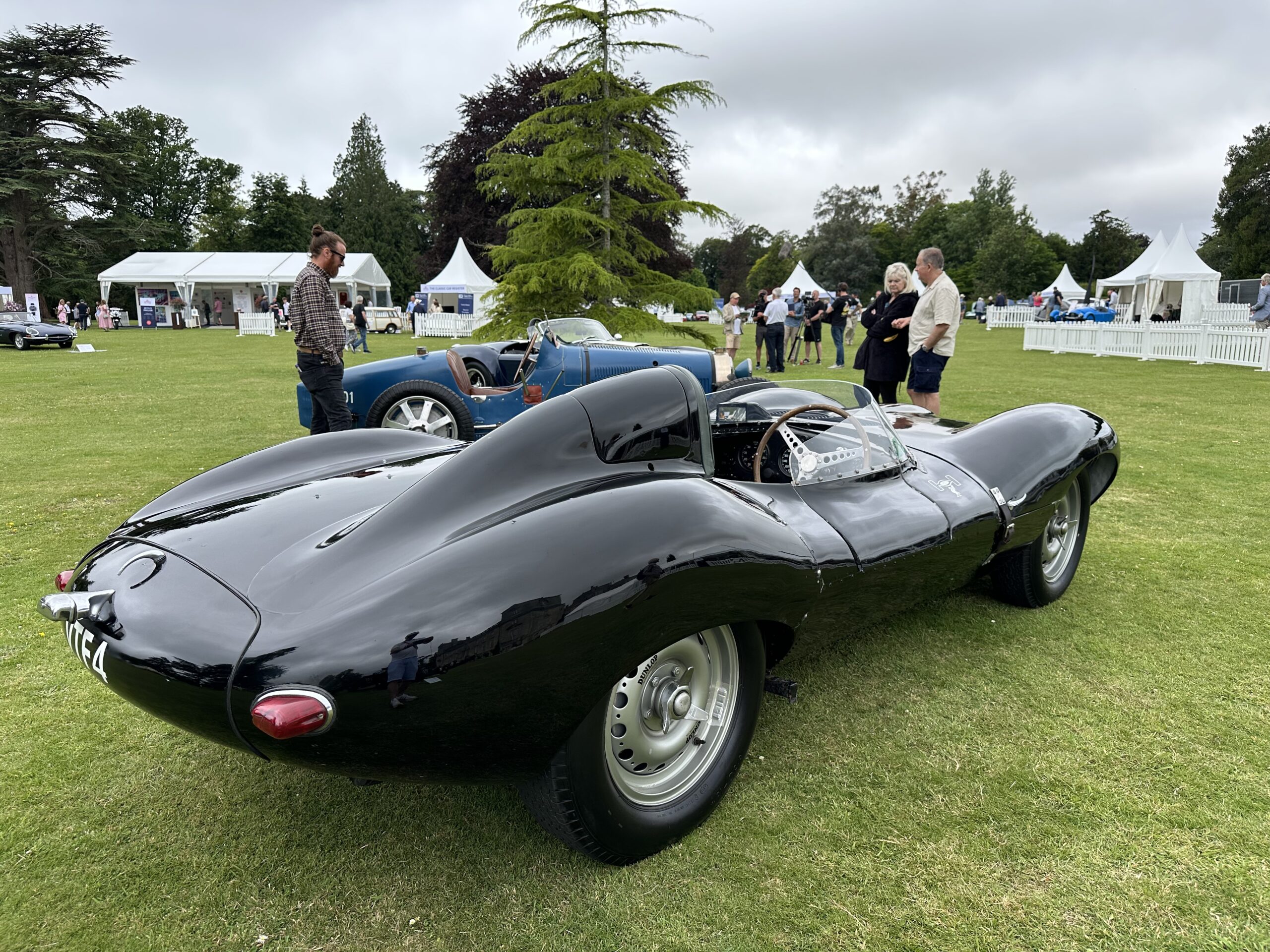
The Jaguar D-Type is one of the most iconic racing cars in motorsport history. Designed to challenge Ferrari at the 24 Hours of Le Mans, it achieved exactly that, winning the race three consecutive times in 1955, 1956, and 1957.
This example, chassis number XKD509, is particularly significant as the first production D-type. Originally delivered to Albert R. Lou Brero Sr. raced it extensively on the American west coast, often competing against Carroll Shelby. The team initially finished the car in British Racing Green but later repainted it white with blue ‘wasp’ stripes to improve visibility during night racing at Sebring.
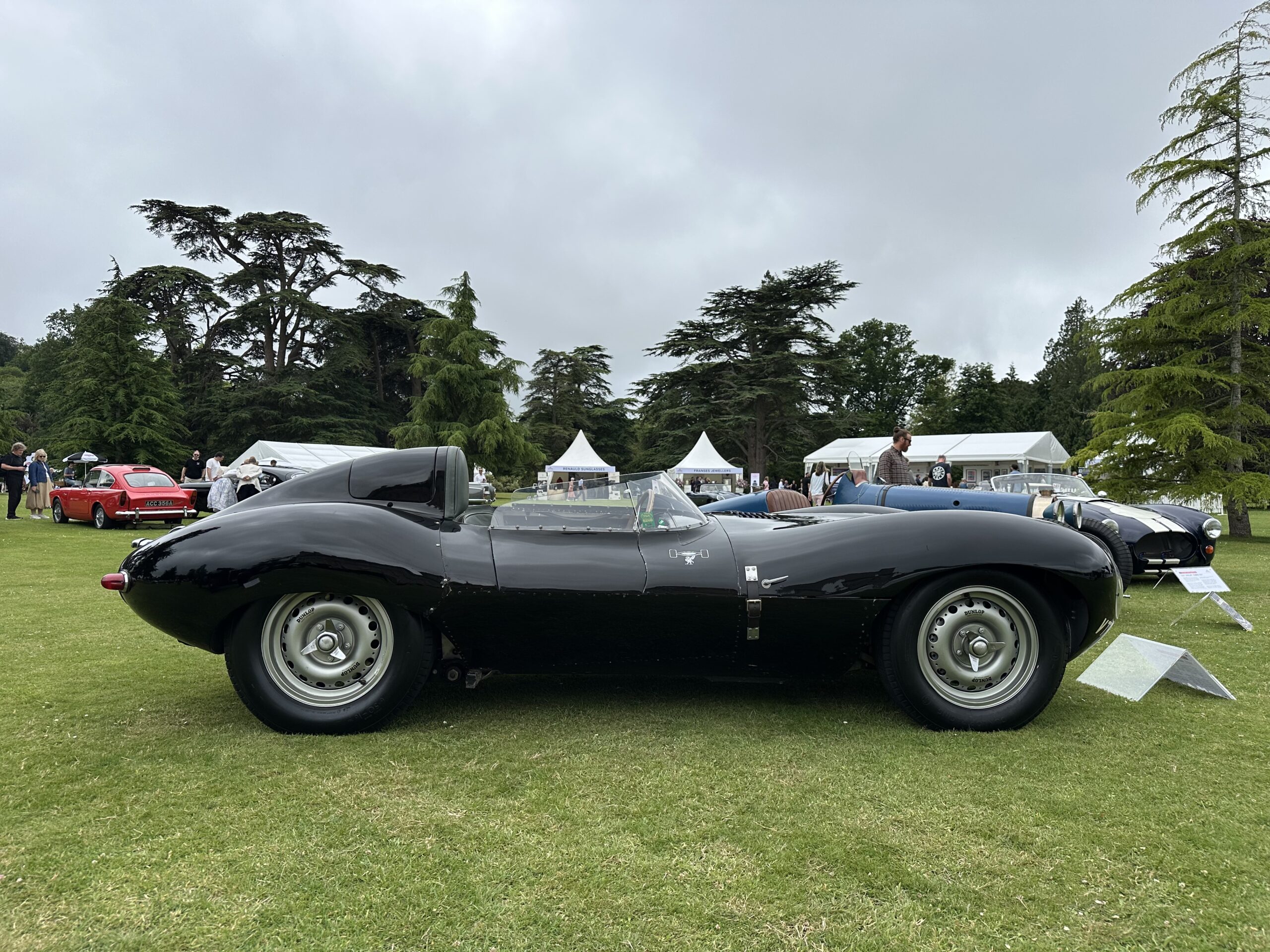

It returned to the UK in 1974, where new owner Nigel Moores painted it black, a finish it retains today, complete with period ‘Speed Merchant’ decals.
Now part of the Terry Smith Collection, the D-Type won the Preservation Class at Salon Privé, reflecting its exceptional originality.
.
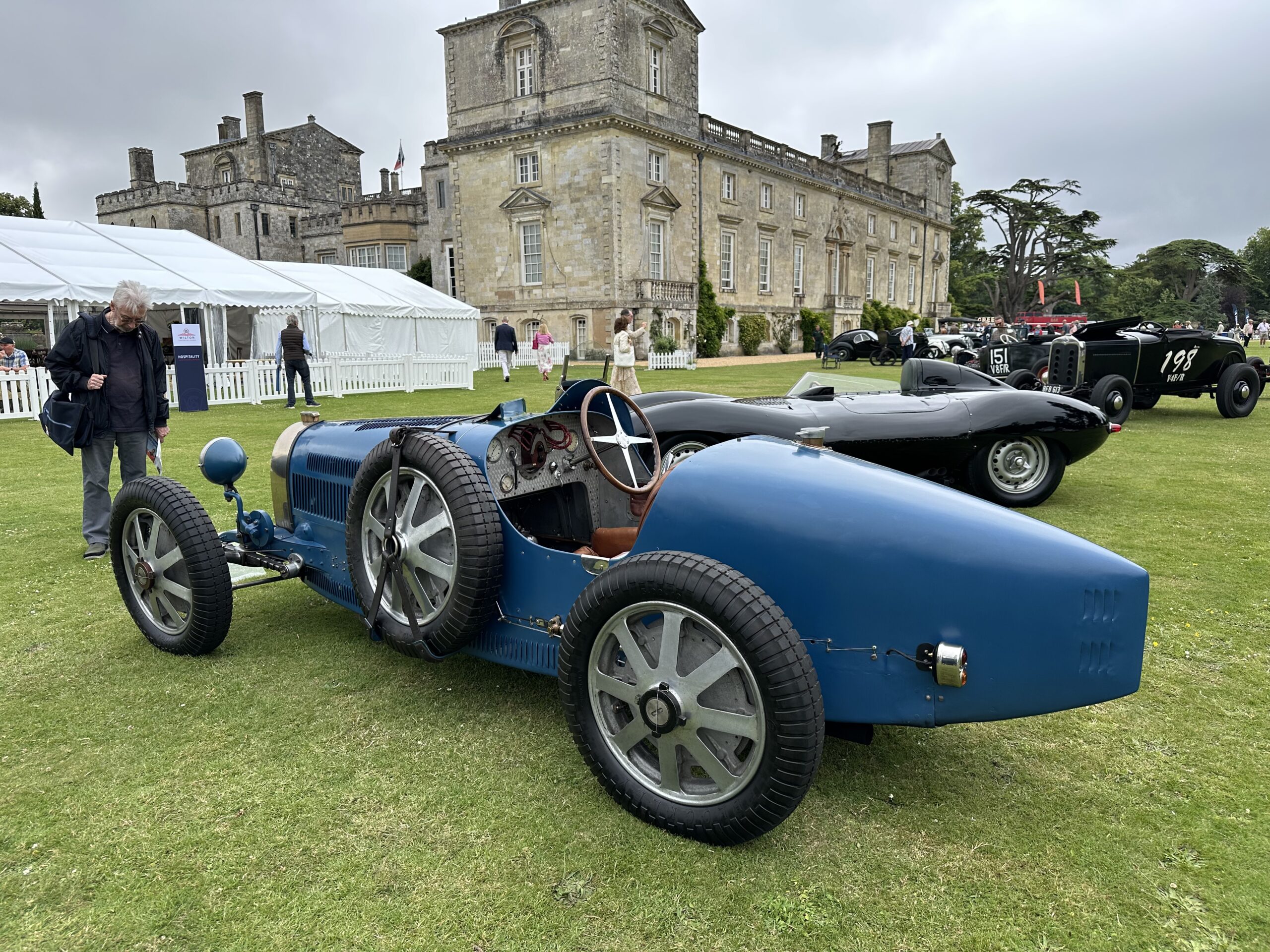
1928 Bugatti Type 35C
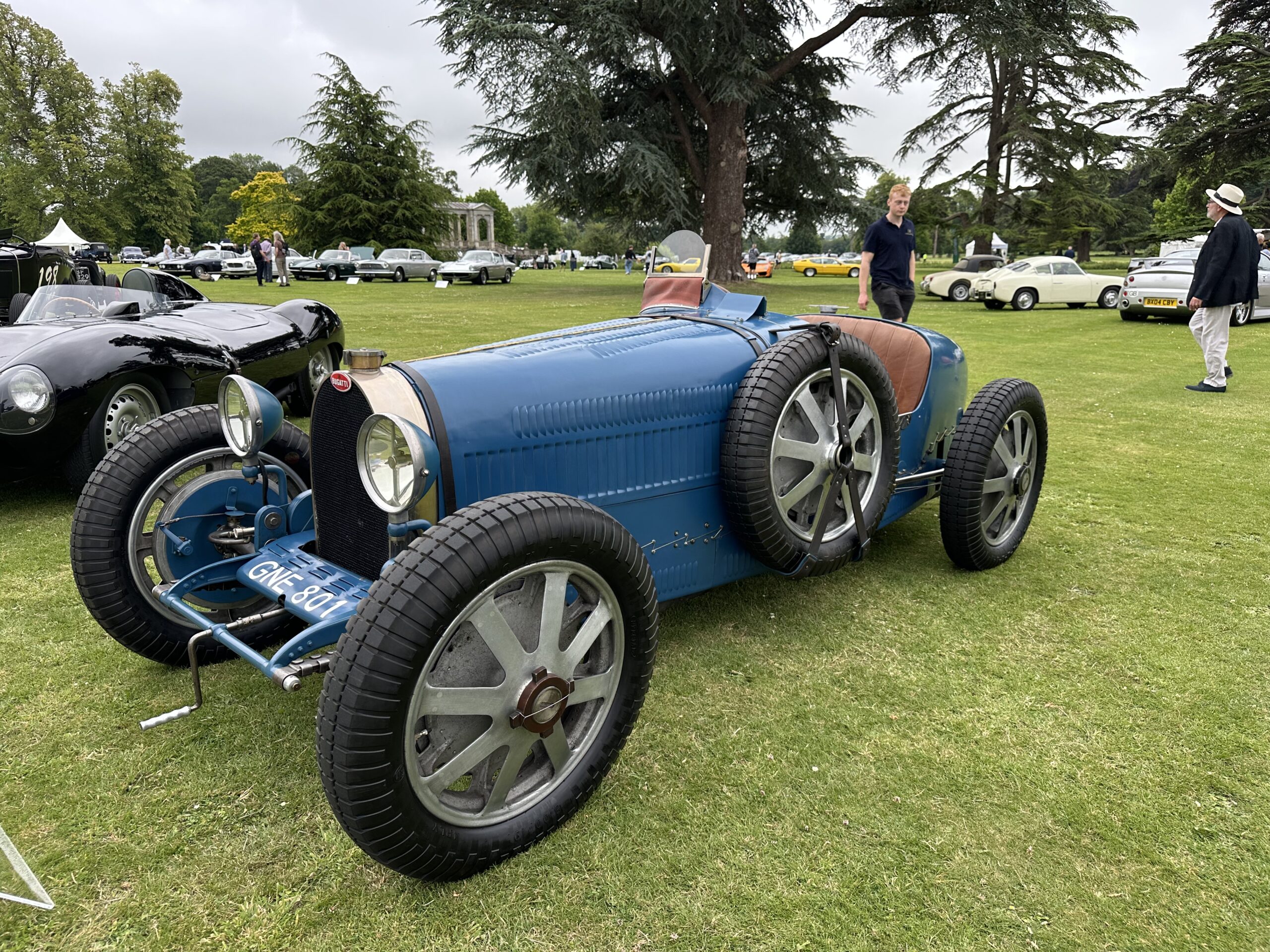
The Bugatti Type 35 won more than 1000 races, secured the 1926 Grand Prix World Championship, and set 47 records. At its peak, the model averaged 14 race wins per week. Bugatti also dominated the Targa Florio, winning it five consecutive times from 1925 to 1929. In 1926, Bugatti introduced the Type 35C, featuring a supercharger that boosted the engine’s output to 128bhp.
This example was delivered new to Turin in 1928. The owner drove it across Europe for business – an extraordinary thought today.
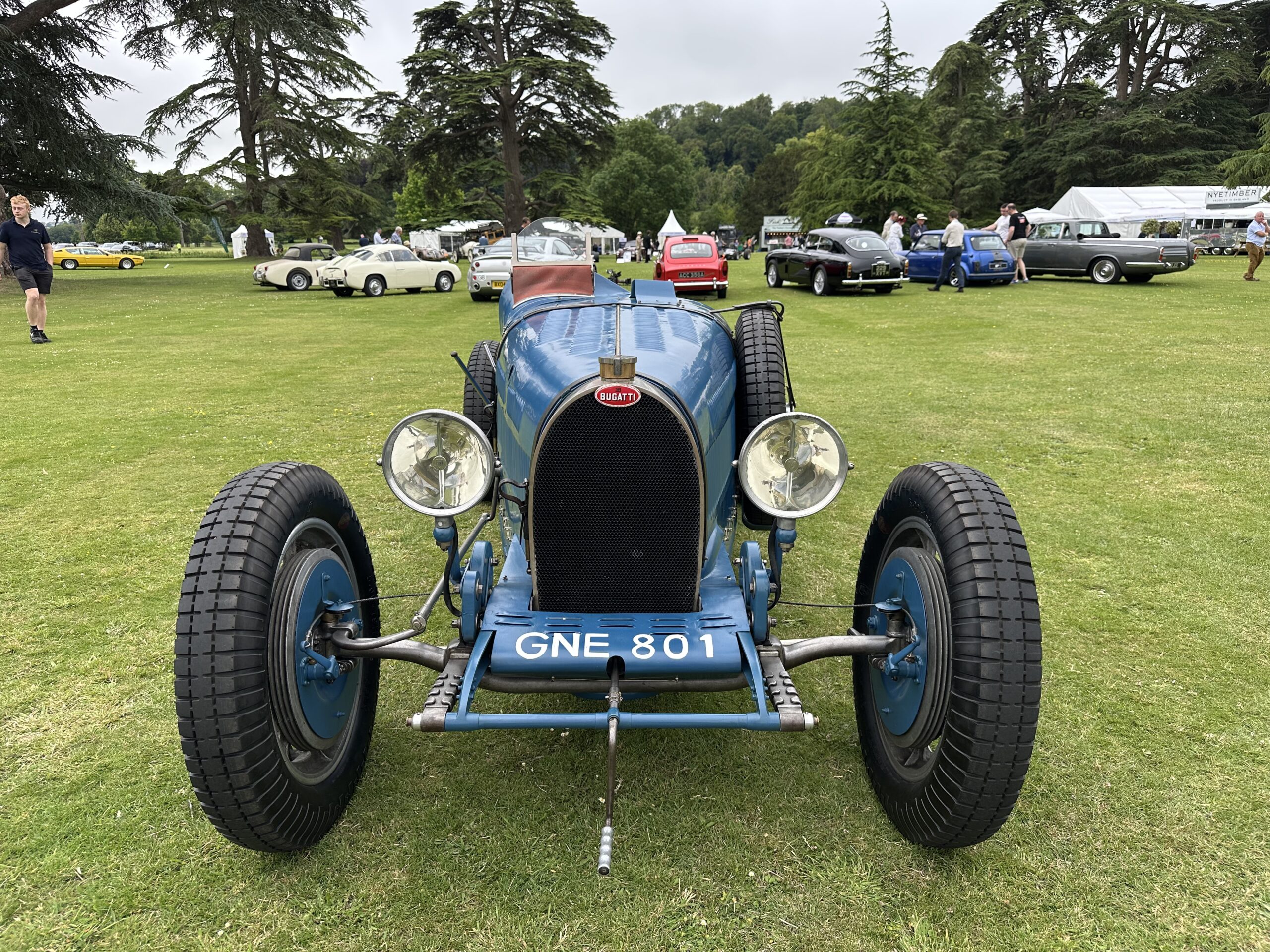

It later passed through several Italian owners before Jack Lemon Burton purchased it in 1938 and brought it to the UK.
In 1946, Alan Haworth acquired the car. Registered as GNE 801 and nicknamed ‘Genie’, he raced it at Prescott Hill Climb from 1950 to 1963, setting numerous records. In 2021, it underwent a complete nut-and-bolt restoration, including a return to its original Bugatti blue.
.
THE RACERS
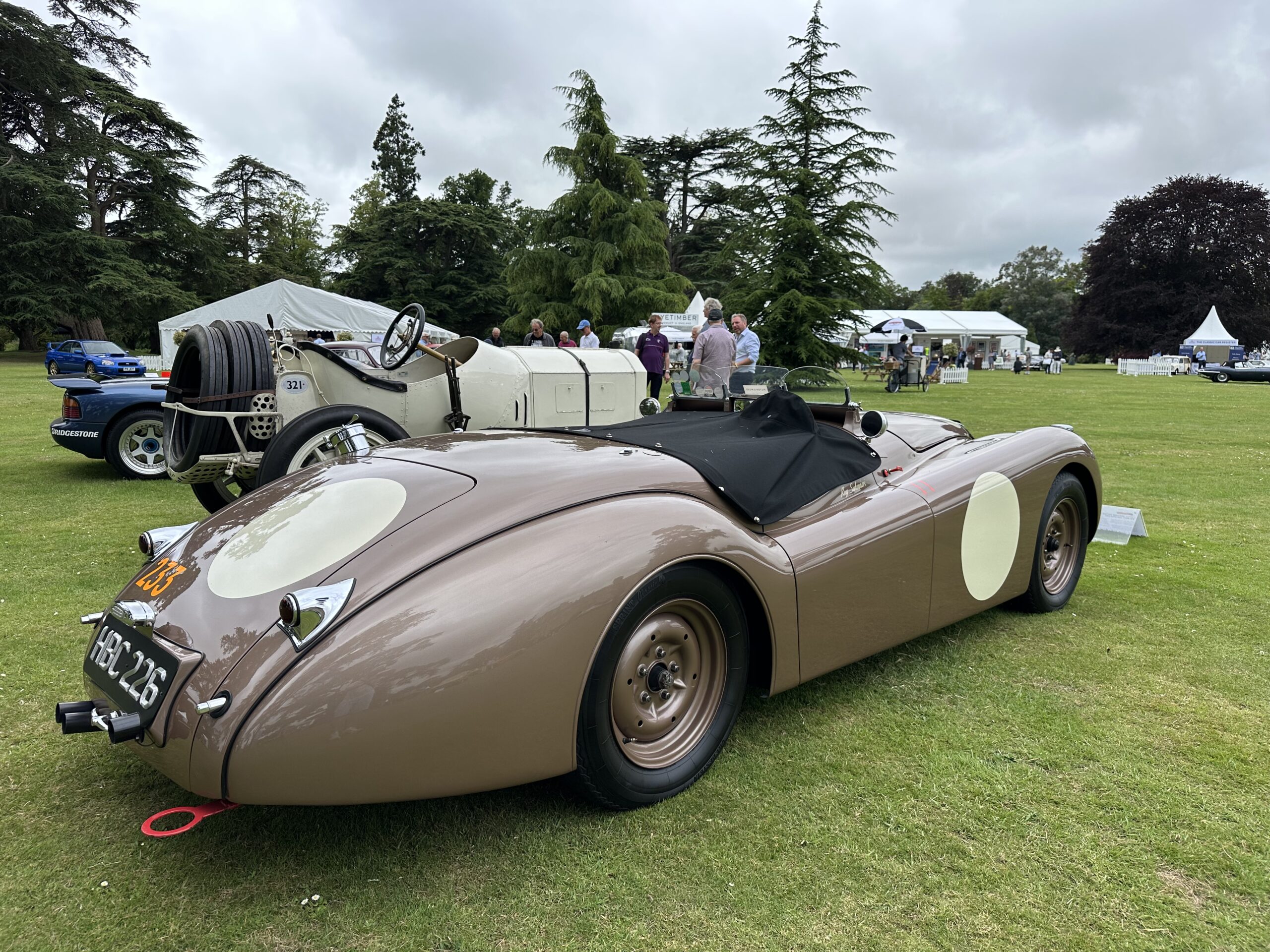
1950 Jaguar XK120 Competition, Ex-Roy Salvadori
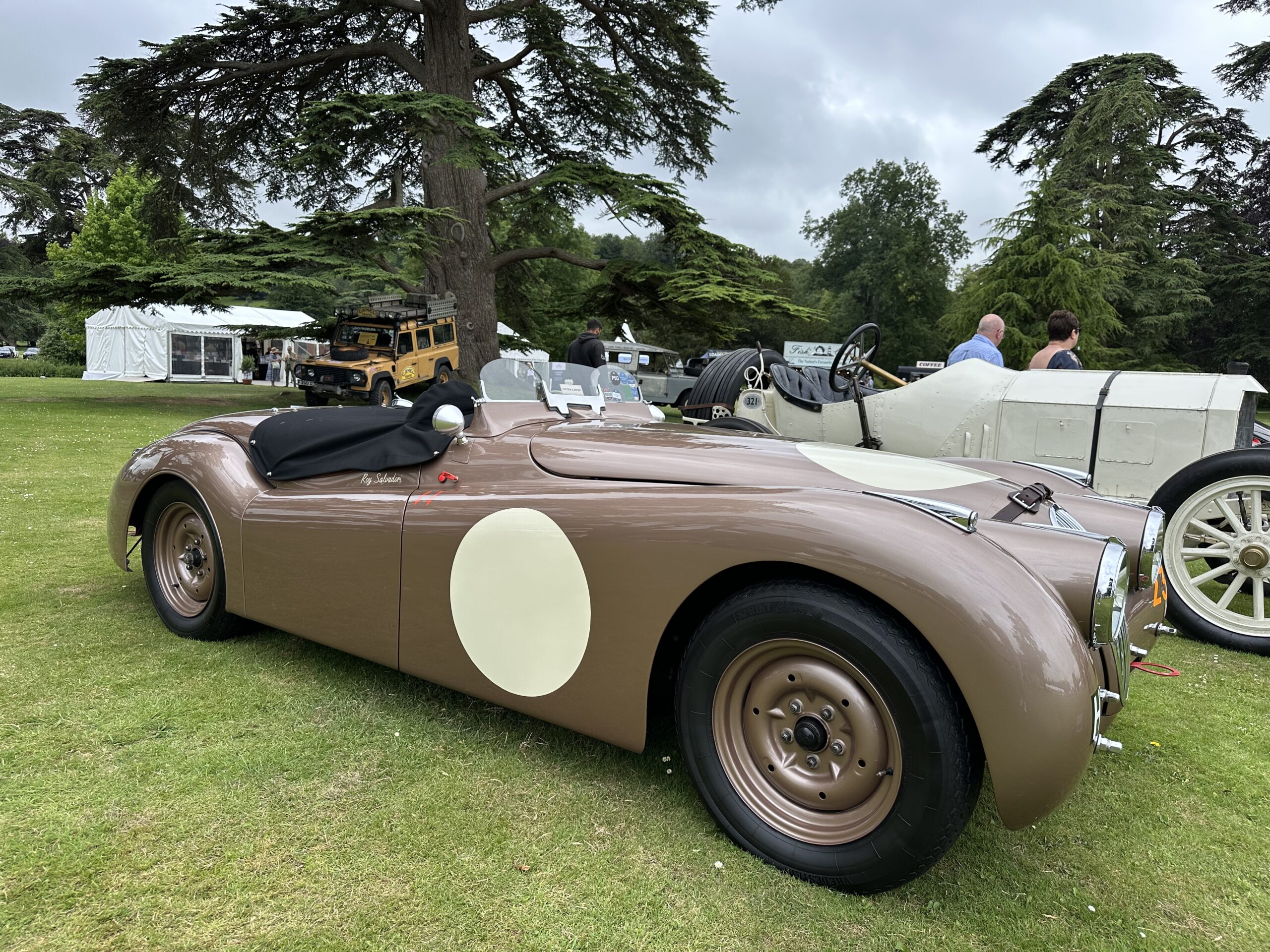
In 1951, ‘HBC’ was owned by none other than future Formula 1 racer and Le Mans winner, Roy Salvadori. A young car dealer at the time, Salvadori had a life-threatening crash at Silverstone in a Frazer Nash.
After a miraculous recovery, he continued to race HBC, with a win at Goodwood and several podiums. It was then traded with a Jaguar SS100 by Peter Blond, who needed a faster car to start his racing career.
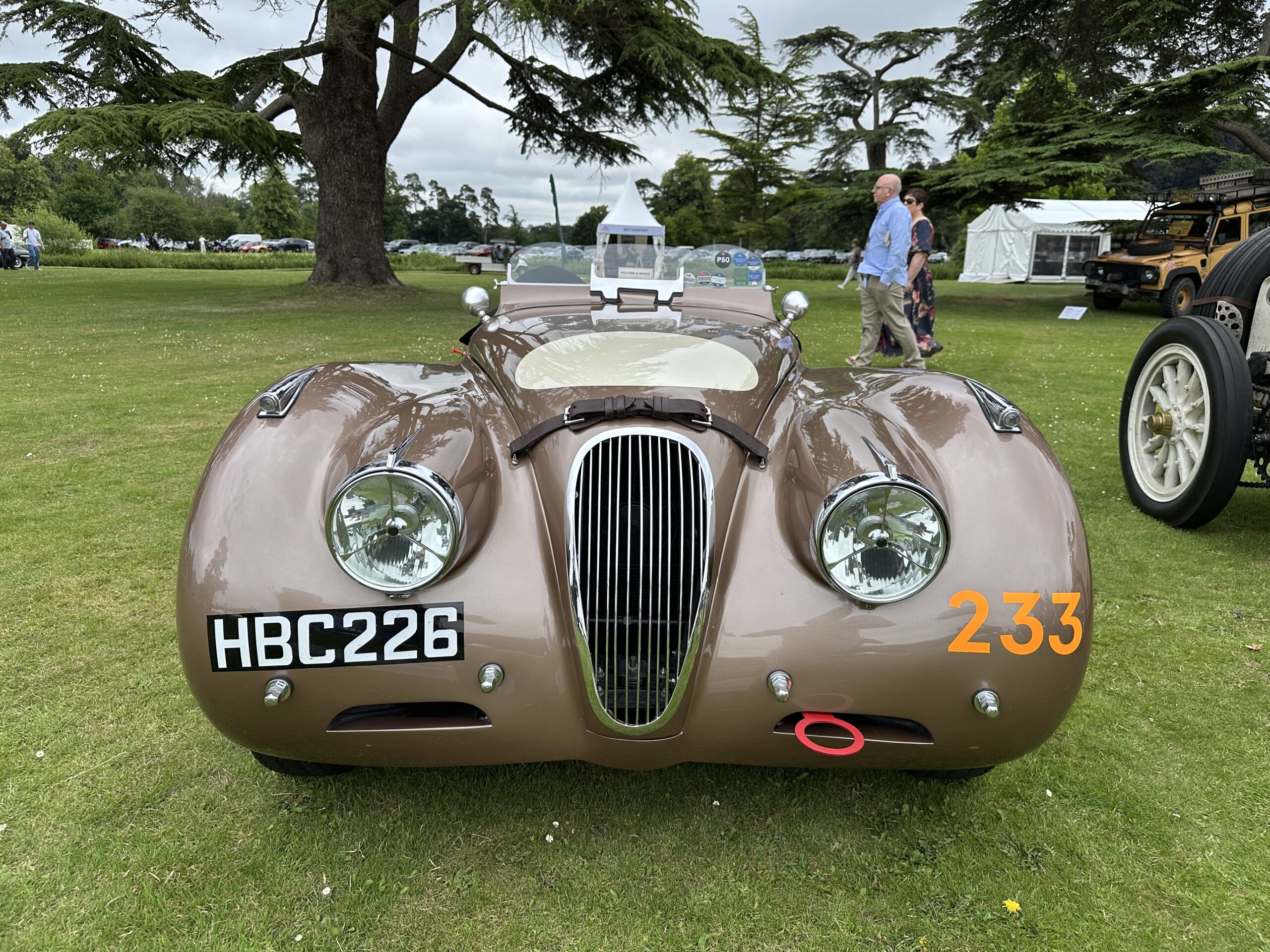

By 1968, ‘HBC’ was sold by Lakeview Motors, this time as salvage. Little is known about the car’s history until it was purchased for restoration by JD Classics in 2009. Since then, it has raced at Le Mans Classic in the Mille Miglia. It’s here today thanks to Hilton & Moss.
.
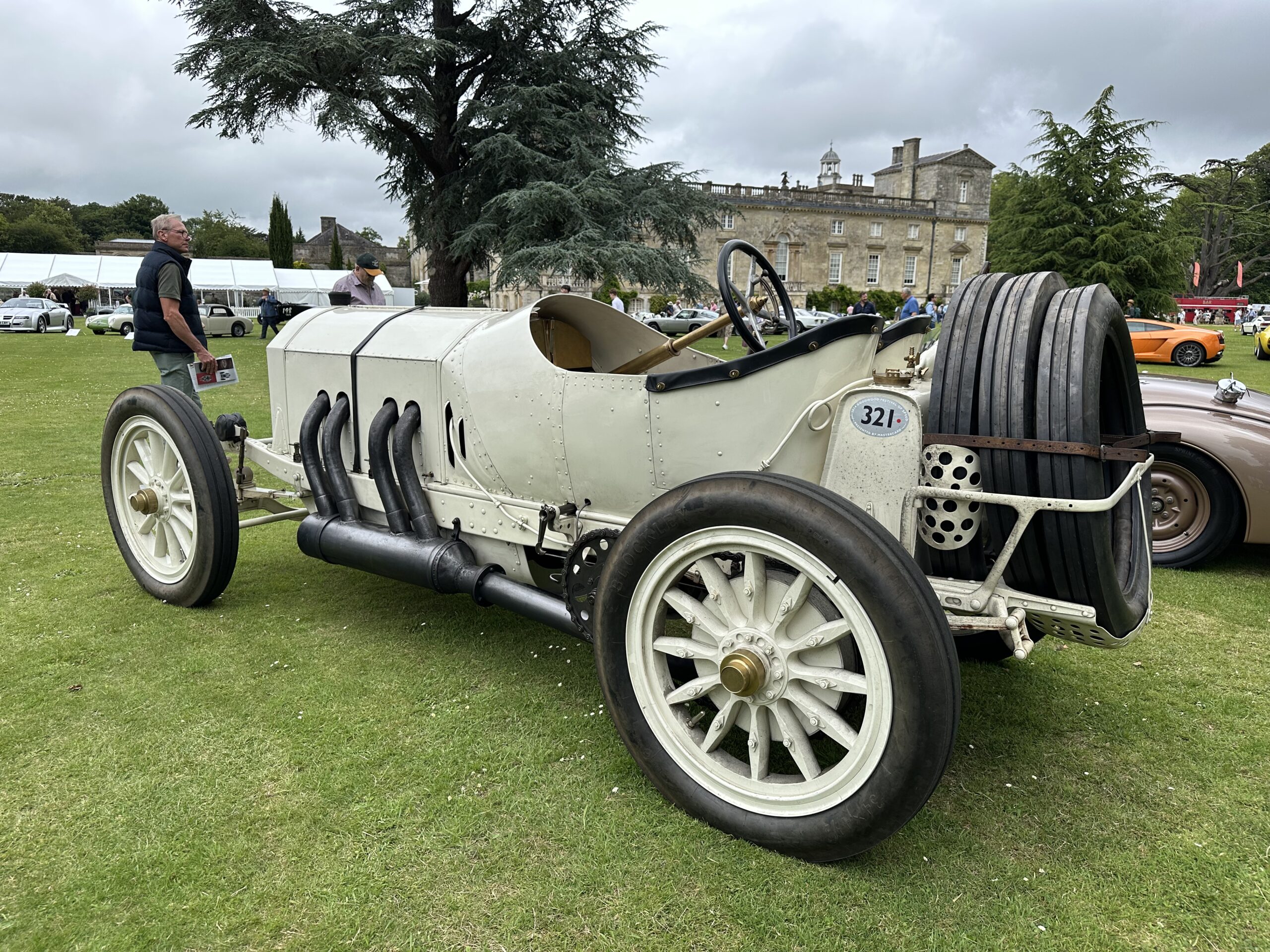
1908 Mercedes Grand Prix
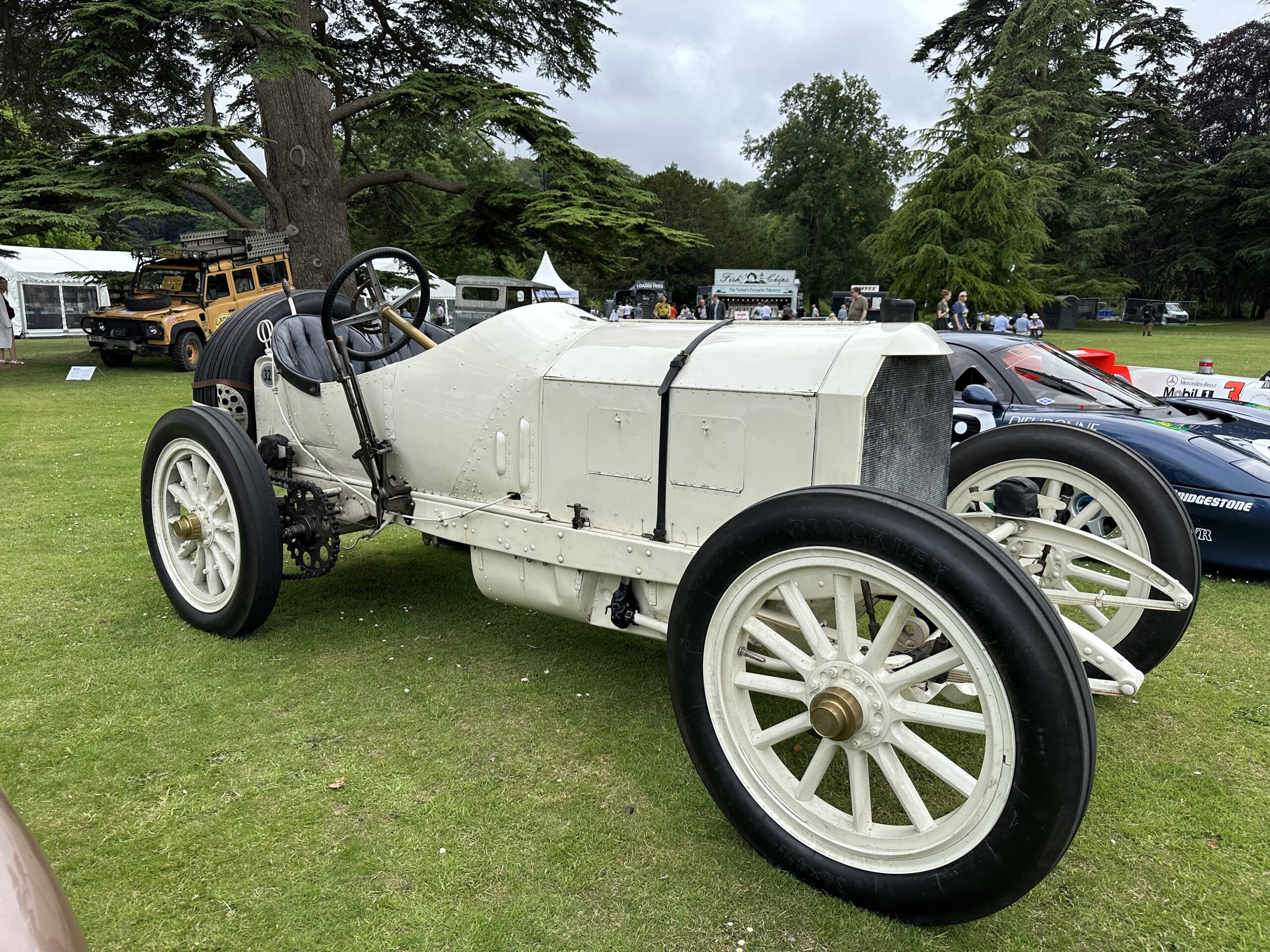
This Mercedes Grand Prix car, famously and fabulously driven at Goodwood and elsewhere by Ben Collings, is a historically significant 150-horsepower, 109mph racing machine – and it was once owned by the Earl of Pembroke’s great-grandfather.
With dual-chain drive and riding on wooden artillery wheels, it is one of the first true titans of motoring.
The Benz took part in the inaugural French Grand Prix on 7 July 1908, which started in Dieppe, with drivers powering around 10 laps of a perilous 47.8-mile road circuit.
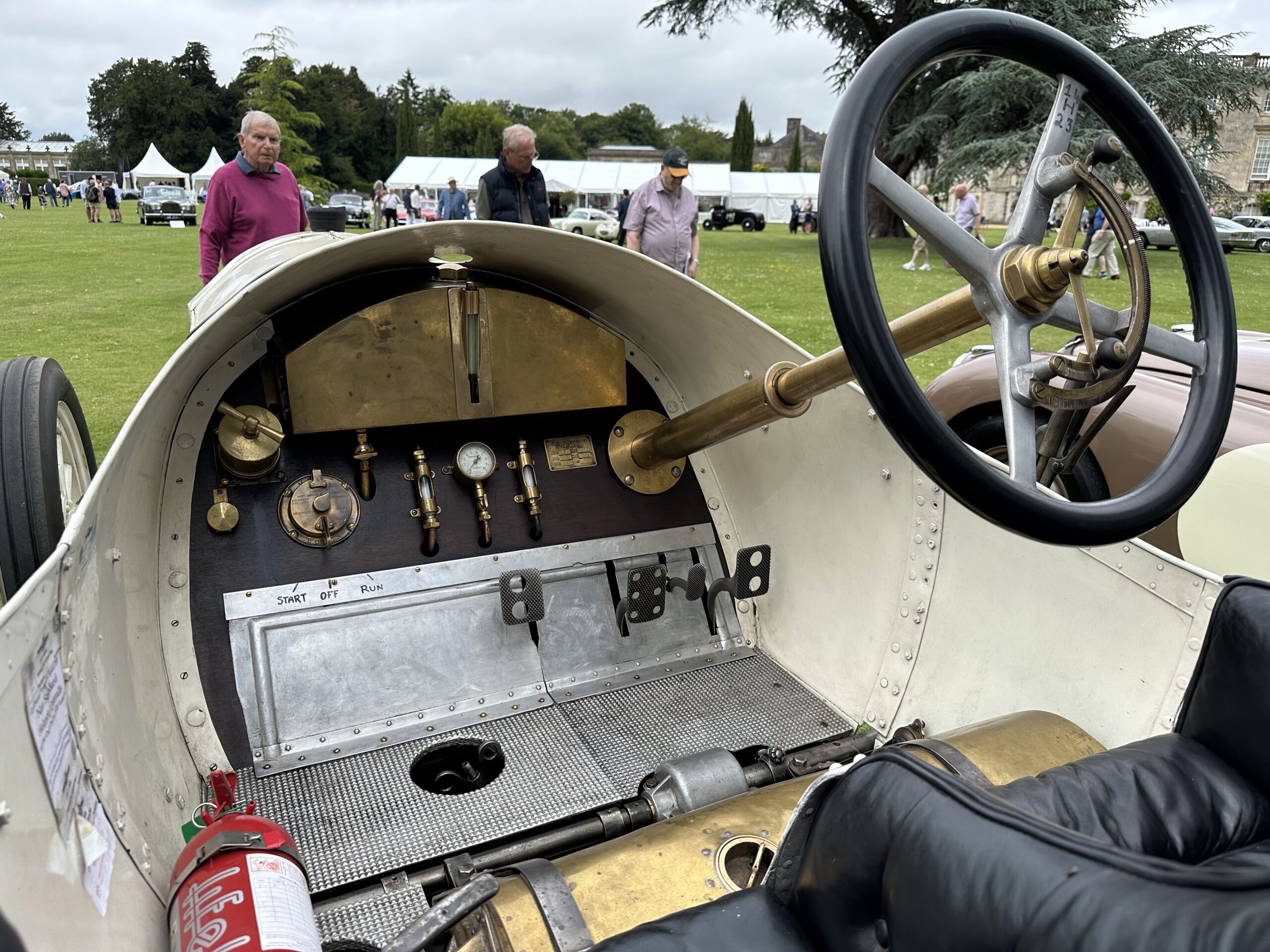
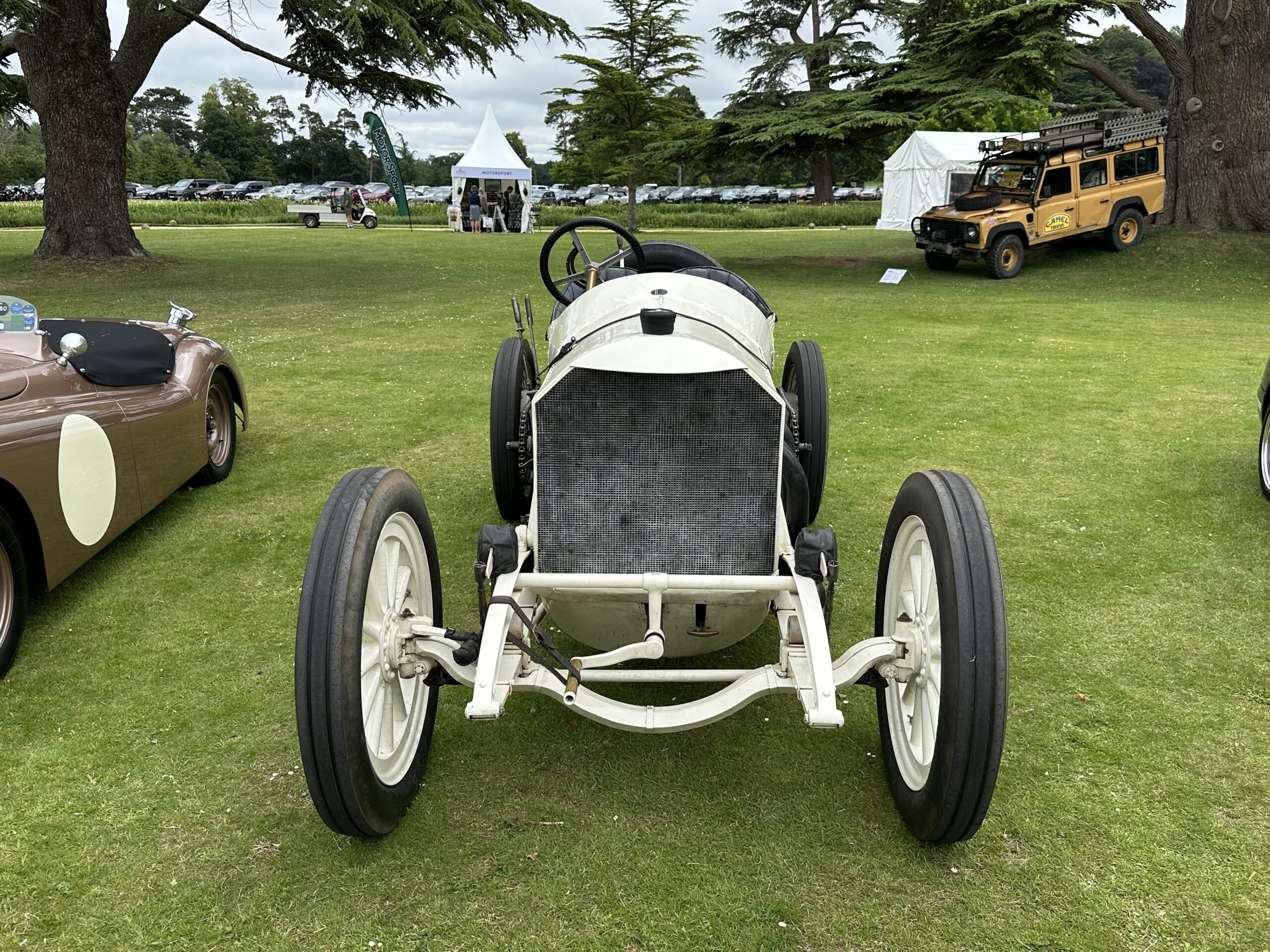
In 1909, 21-year-old Arthur Wignall Tate – the Earl of Pembroke’s great-grandfather – acquired the 1908 Grand Prix Mercedes from F.R. Fry of the Fry chocolate family.
He drove it to Brooklands, Southport Sands, and Shelsley Walsh, raced it, and drove it home again. He kept it for ten years before selling it to America after the Great War.
.
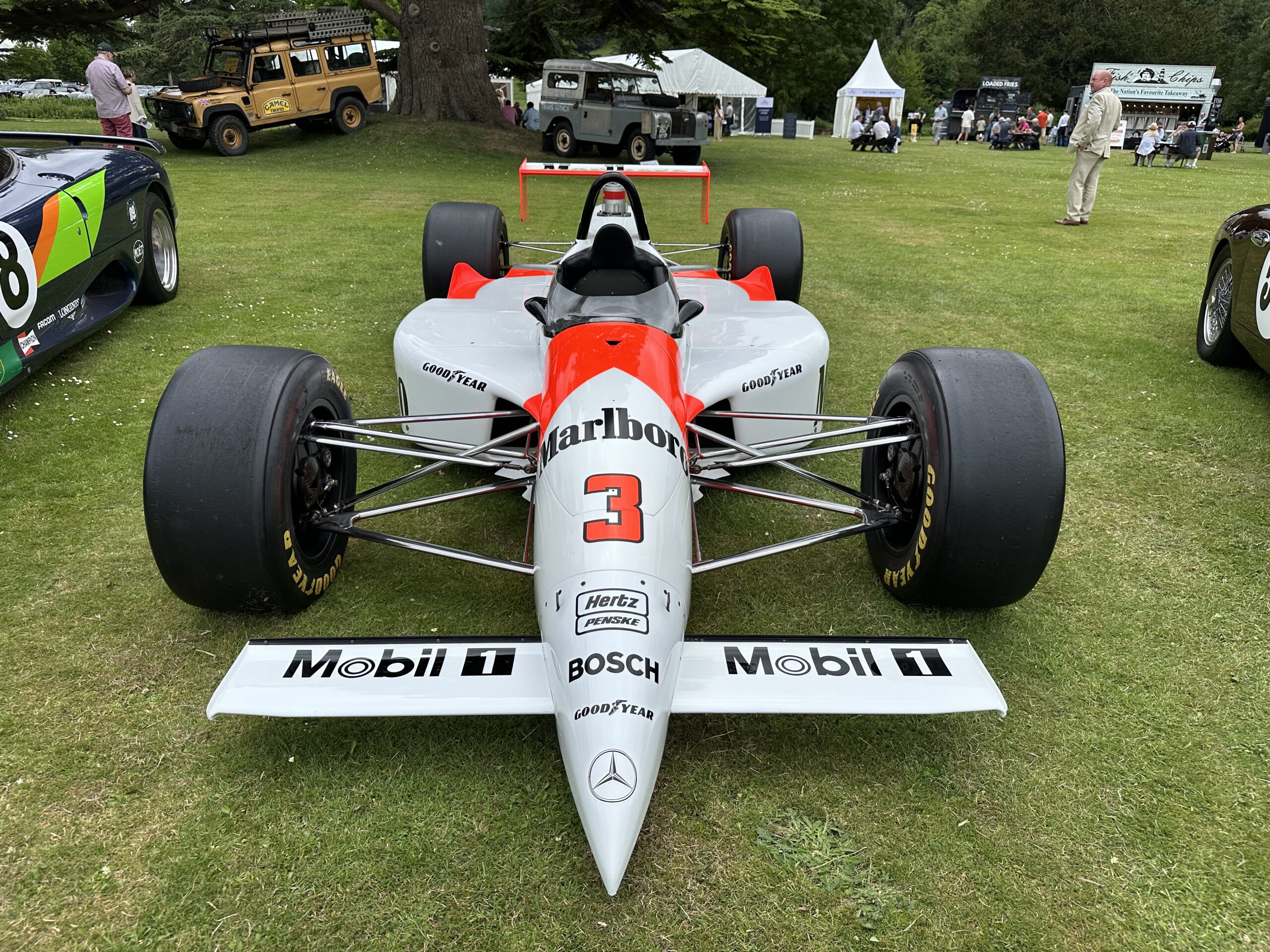
1994 Penske PC-23 ‘Pushrod’ Indycar
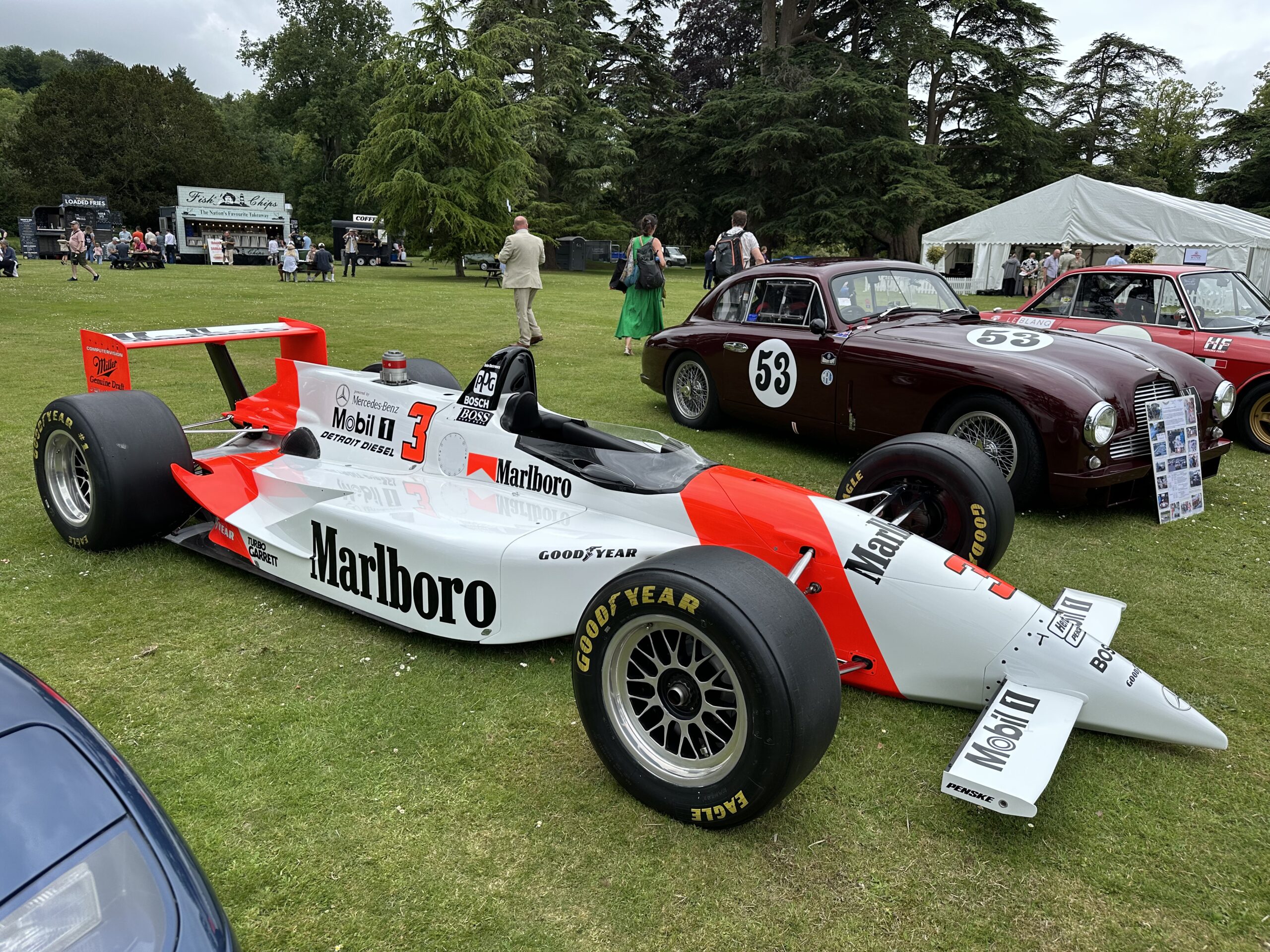
Roger ‘the captain’ Penske’s long and illustrious career in motorsport started with racing long before he founded one of the most successful race teams in history, clocking up 20 wins in the Indy 500.
Nigel Bennett designed the PC23, which swept all competition during the 1994 US season. Enthusiasts best remember it for winning at Indy with a supposedly outdated ‘pushrod’ engine. By taking advantage of capacity and induction breaks, this powerhouse produced over 1000bhp.
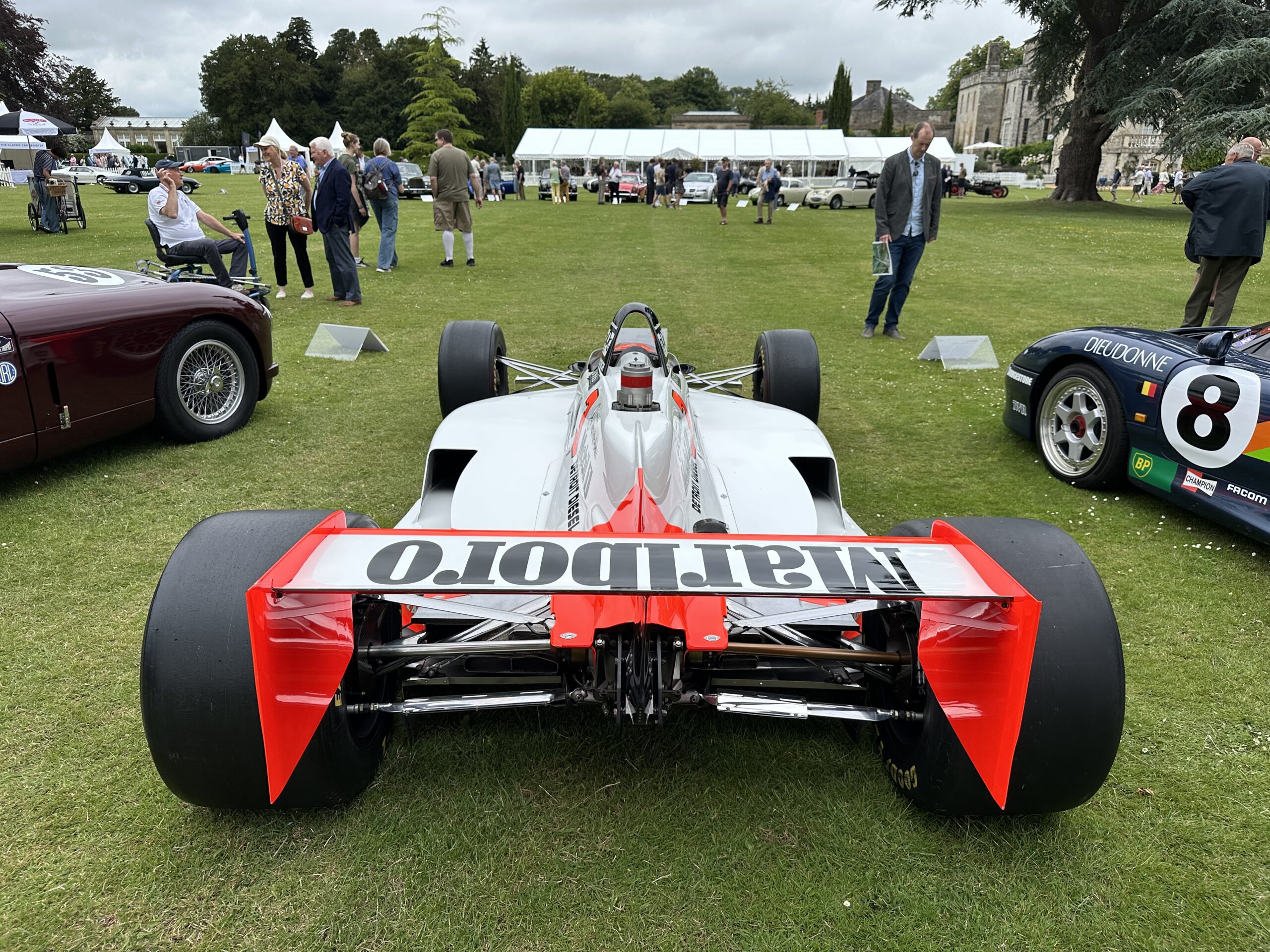

Despite weight distribution and handling issues, Al Unser Jr and Emerson Fittipaldi lapped the rest of the field before the latter crashed, leaving Unser to win. This car is chassis 1 and took part in every race of the 1994 season, scoring a memorable win at Long Beach in the hands of Al Unser Jr.

.
CELEBRATING LAMBORGHINI
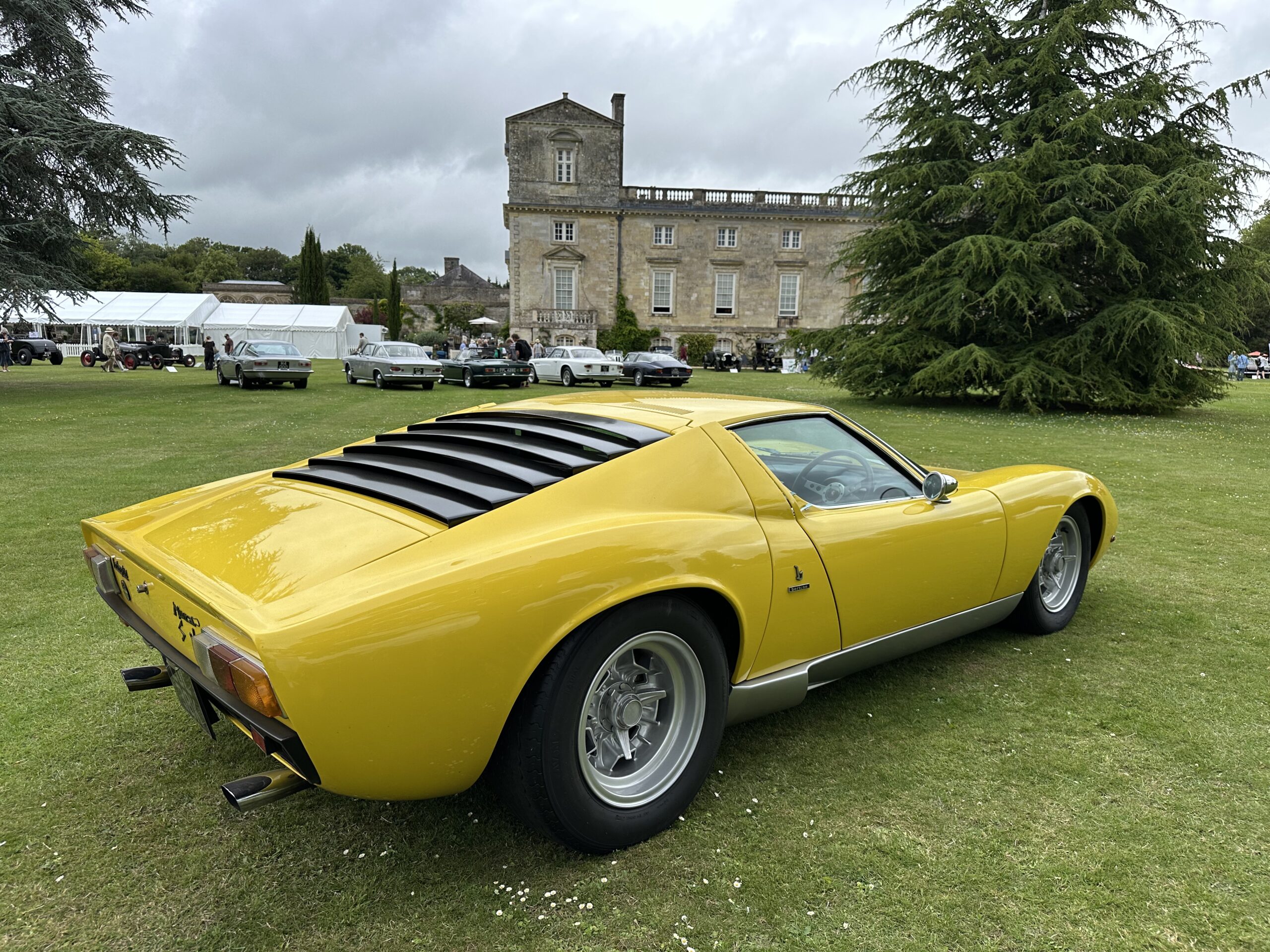
1972 Lamborghini Miura SV, Ex-Rod Stewart

The Miura SV was the world’s fastest production car when launched, but its arrival coincided with the announcement of its Countach successor. As such, only 150 SVs had been made when production ceased at the end of 1972.
This rare, right-hand-drive SV, the 701st of 765 Miuras produced, was completed on May 31, 1972 and delivered new to singer Rod Stewart. He ordered air conditioning, unusual at the time, and a Philips radio/cassette player with a recording function.

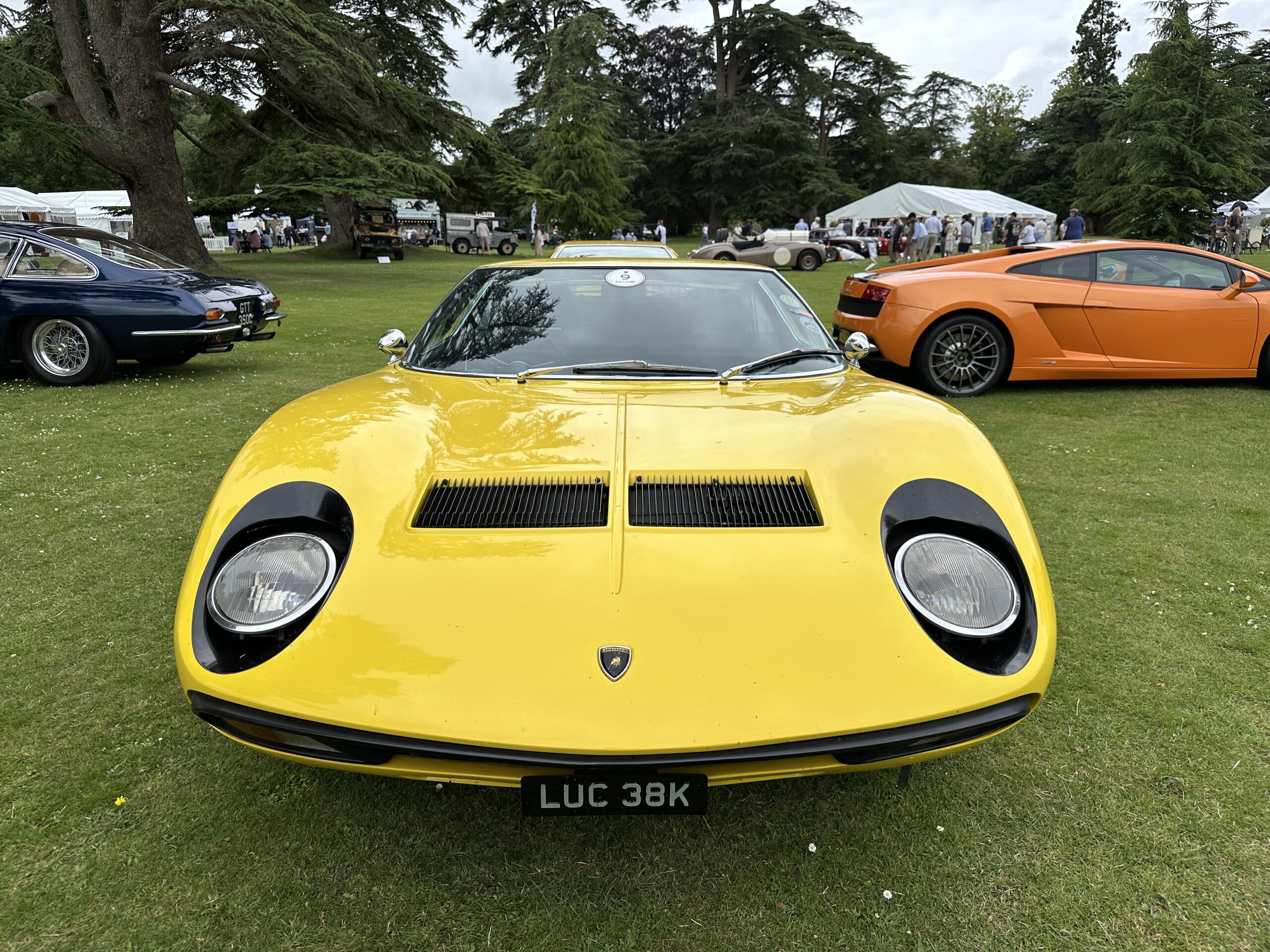
It remained in Stewart’s ownership until 1985, then passed to its second guardian, Mark Walker of Essex, who re-registered it as ‘LUC 38K’. It is now owned by Niall Holden, founder of the popular Winchester Auto Barn venue.
.
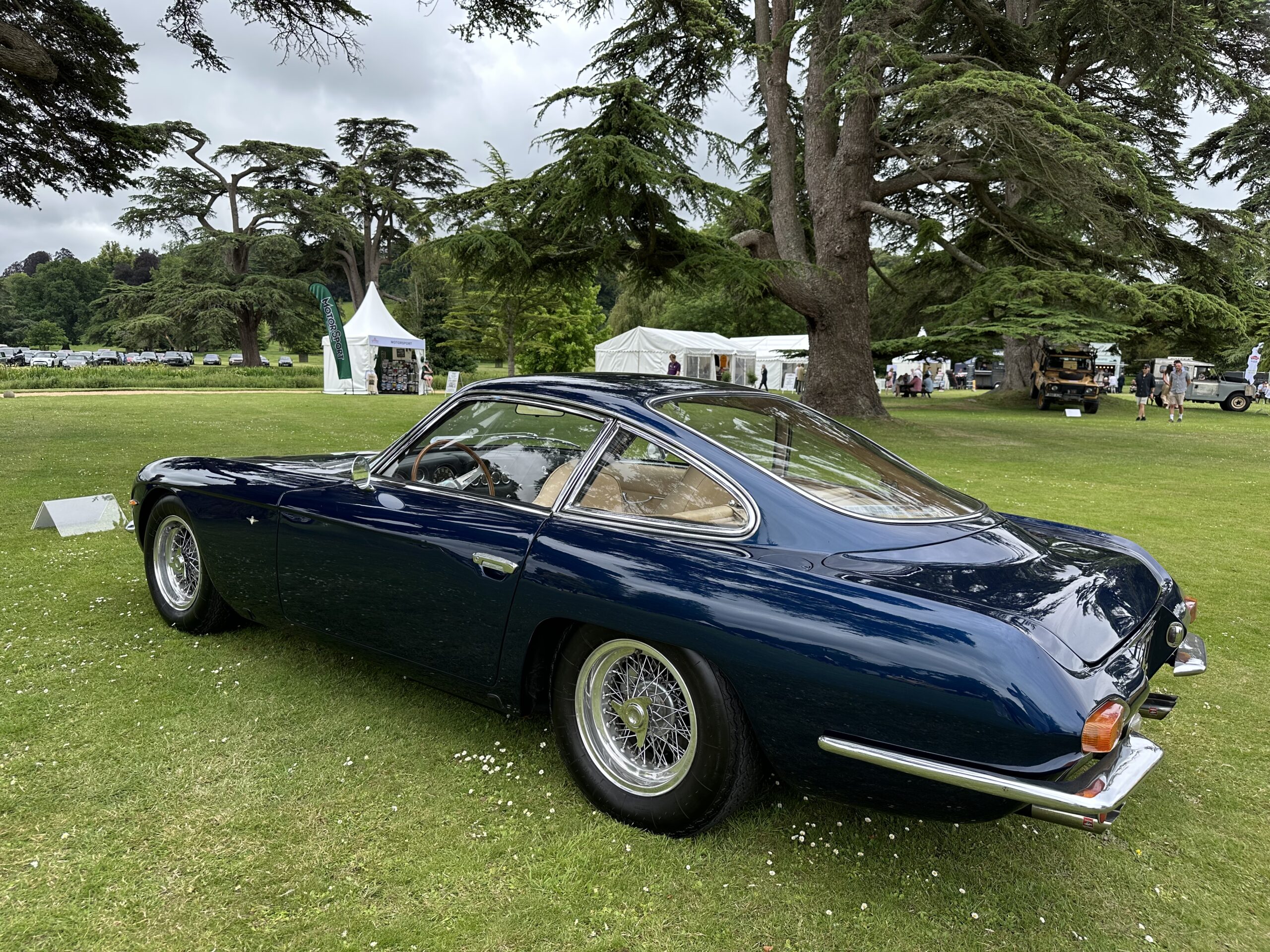
Lamborghini 350 GT
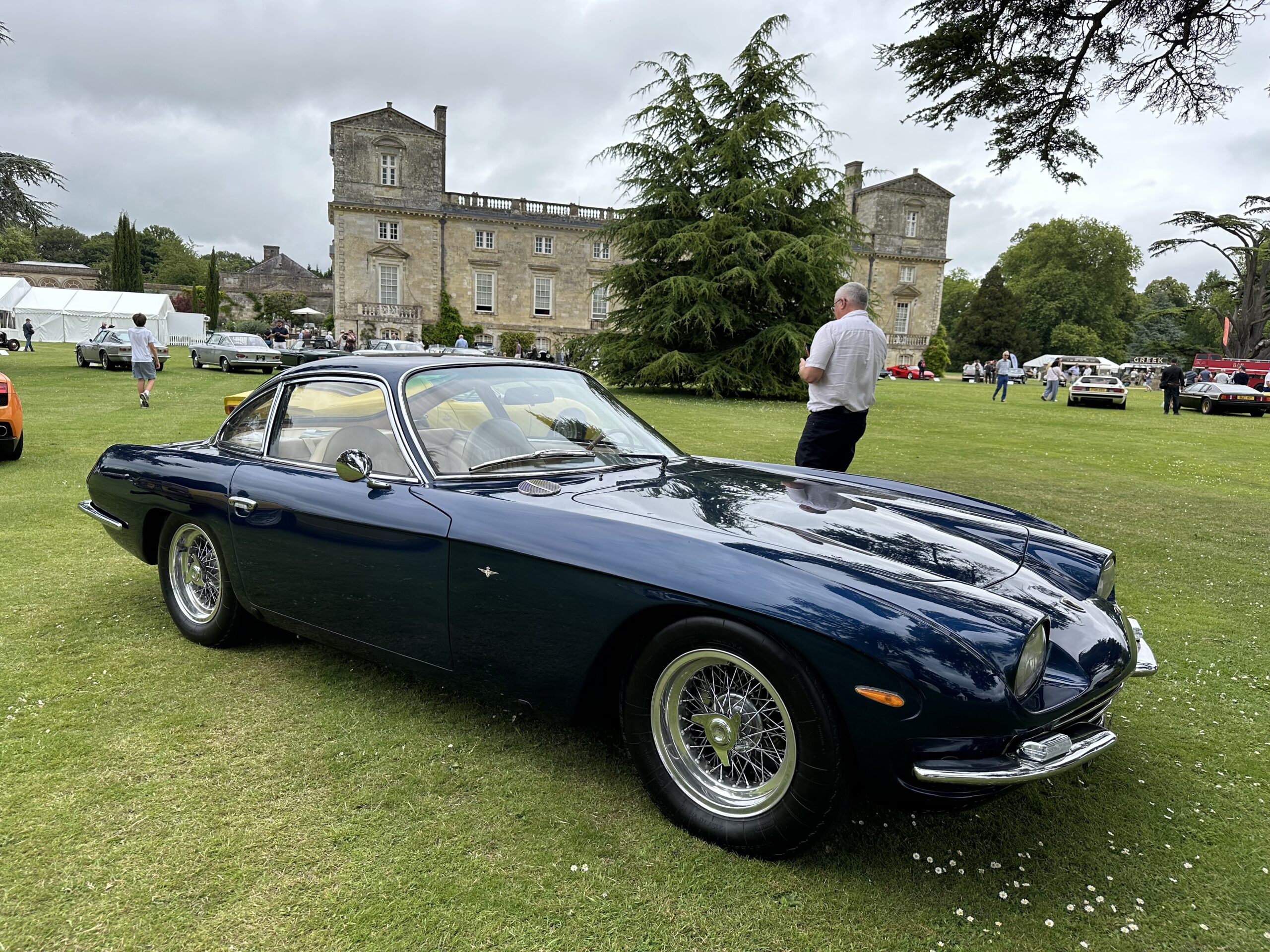
This model displayed at the Concours des Légendes is the one that started Ferruccio Lamborghini from tractor and agricultural machinery maker to Ferrari-rivalling GT manufacturer and soon to be Ferrari-surpassing supercar builder.
He was not the first industrialist to have a spat with Enzo Ferrari, of course, and not even the only one to set up his own car company as a result, but of those, Lamborghini has been by far the most successful and enduring.

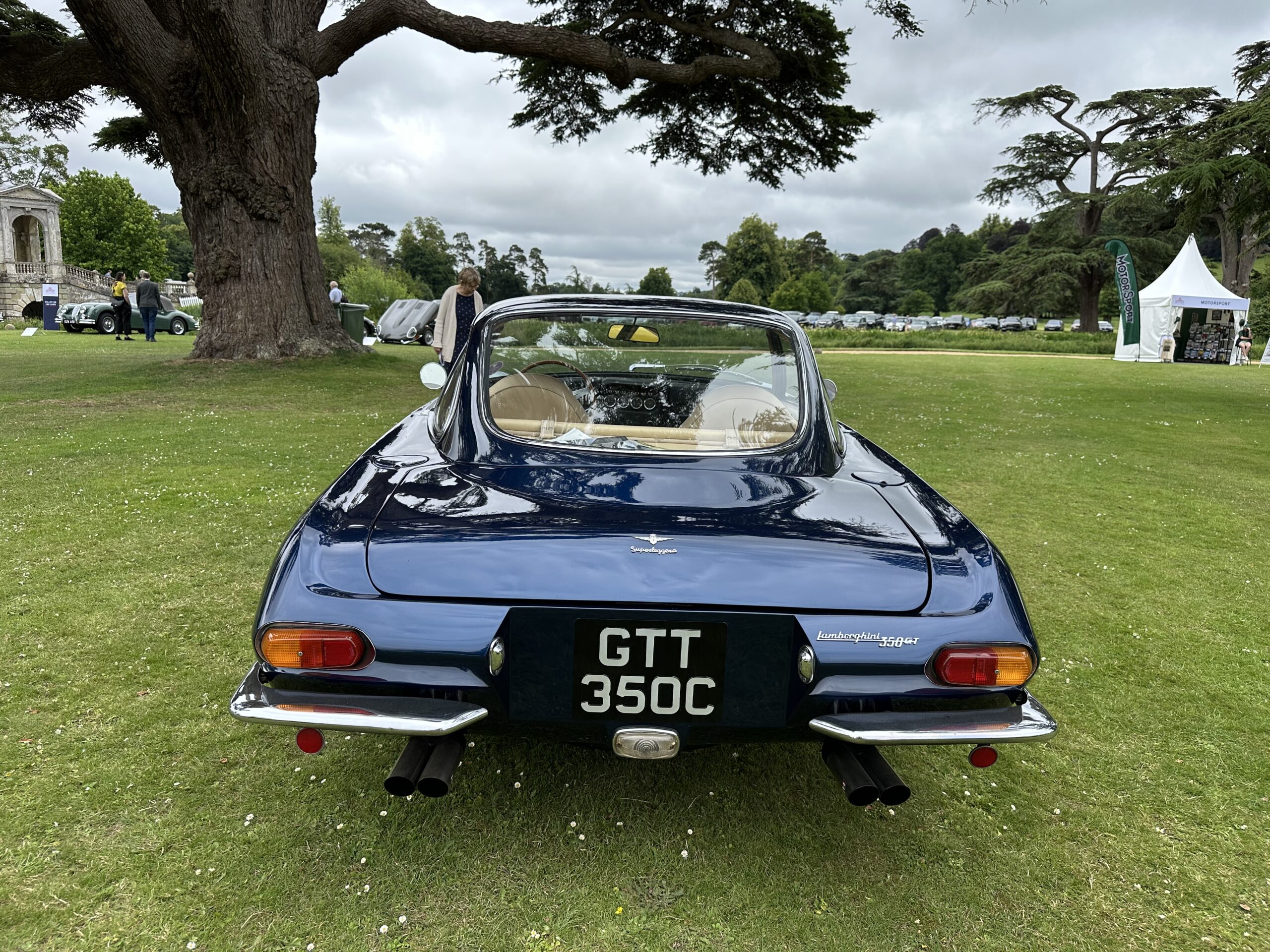
The 350 GT debuted in 1964 after the GTV’s appearance at the previous year’s Turin Motor Show. Giotto Bizzarrini’s jewel-like 3,464cc V12 sat at its heart, propelling the car from 0-62mph in under seven seconds. Meanwhile, Touring Superleggera wrapped the mechanical package in a purposeful and elegant body, creating one of the most significant grand tourers of its era.
Over three years, just 120 examples of the 350 GT were built, before that morphed into the slightly larger-engined 400 GT.
.
2009 Lamborghini Gallardo LP550-2 Valentino Balboni
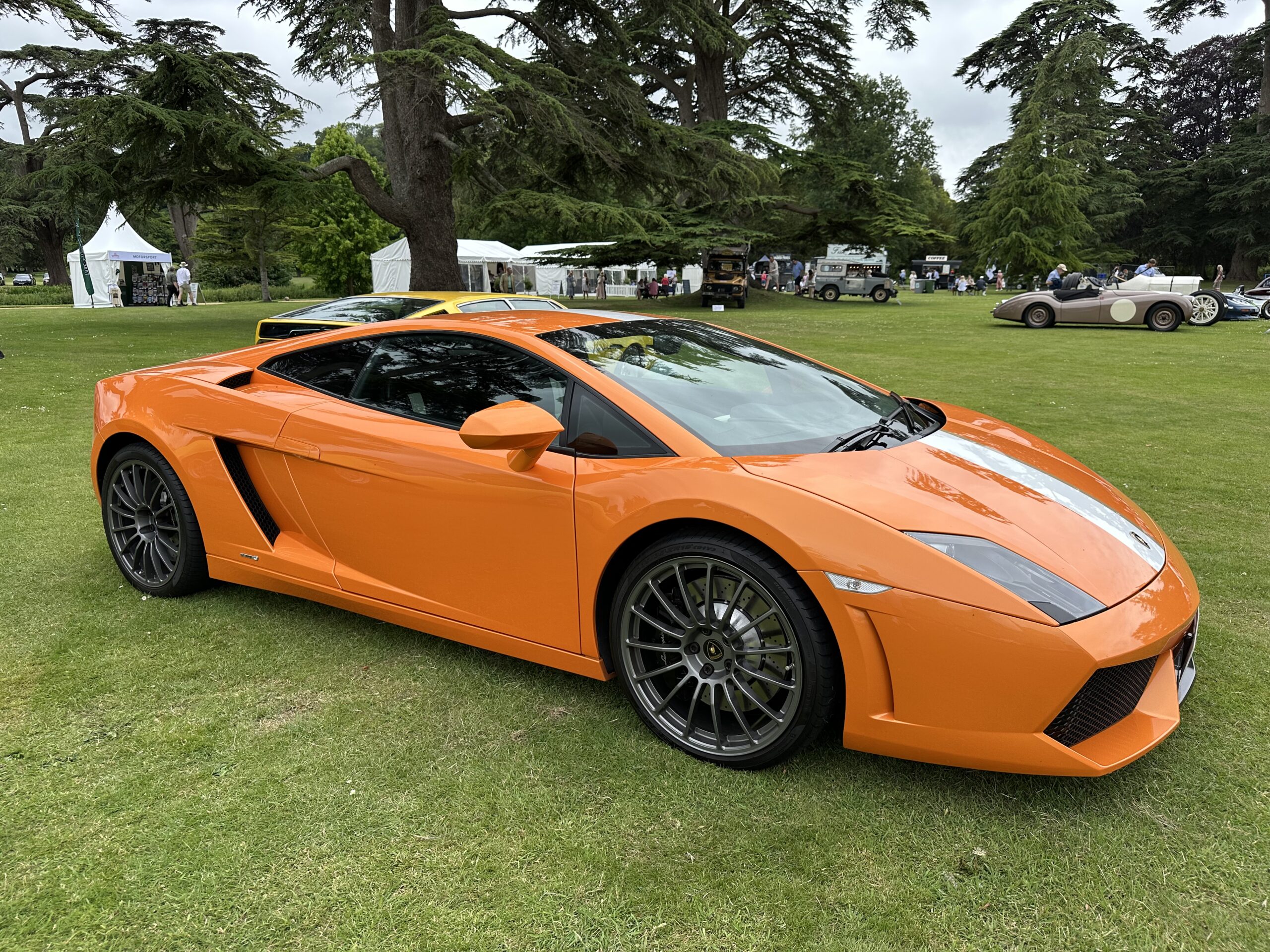
Lamborghini built the 2009 Gallardo LP550-2 Valentino Balboni to honour its legendary test driver. The marque limited it to just 250 units worldwide, and it became the first rear-wheel-drive Lamborghini since the Diablo.
Balboni personally test-drove nearly every Lamborghini from the 1970s onwards and consulted heavily on the setup of this car. It was tailored for controlled oversteer.


The Balboni is identifiable by a distinctive white-and-gold stripe running the entire length of its body, paying homage to 1970s sports cars.
To accommodate the RWD configuration, Lamborghini recalibrated the springs, dampers, anti-roll bars, and tyres, and added a bespoke limited-slip differential.

.
SIXTIES GRAND TOURERS
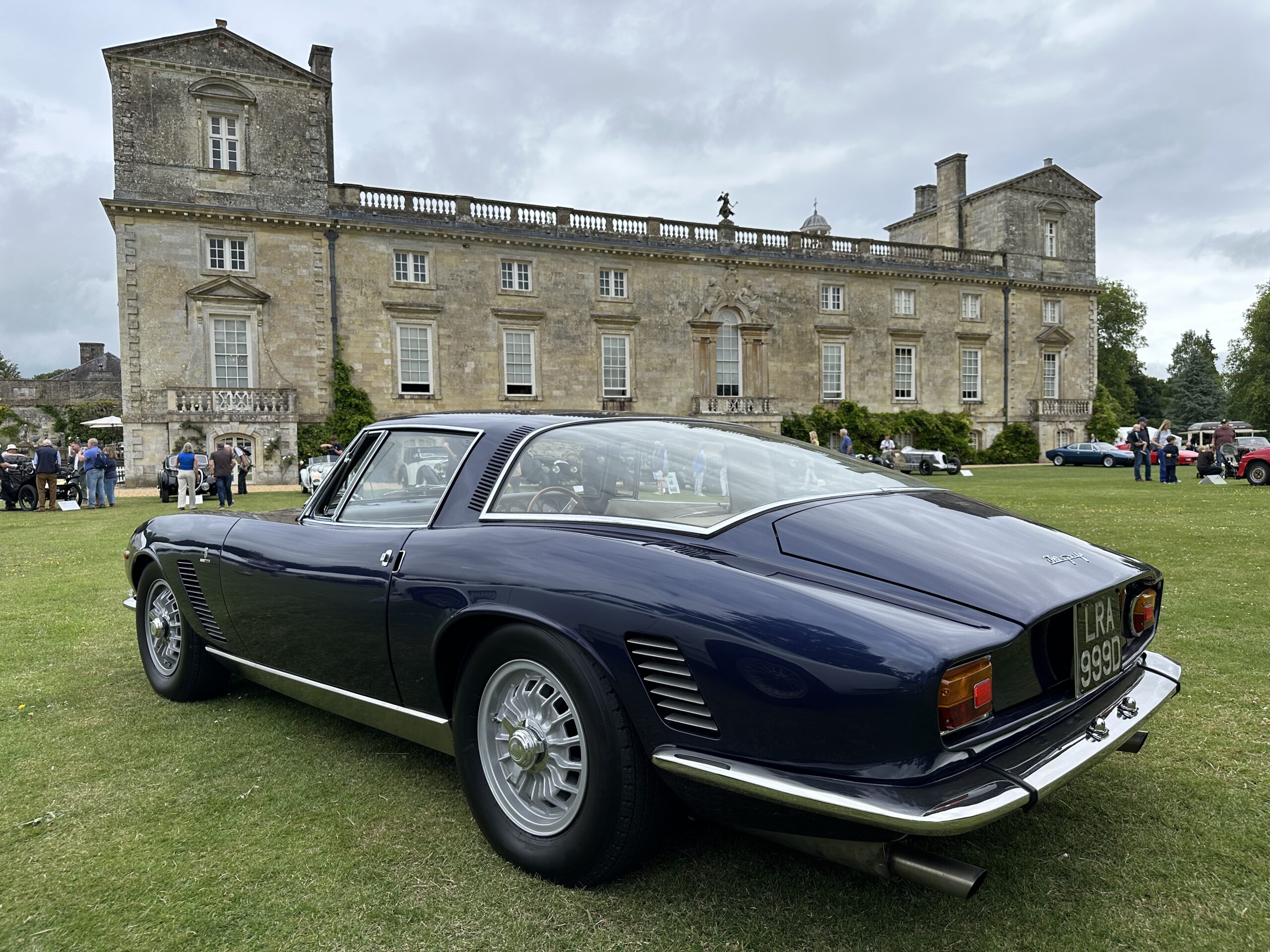
1966 ISO Grifo GL350
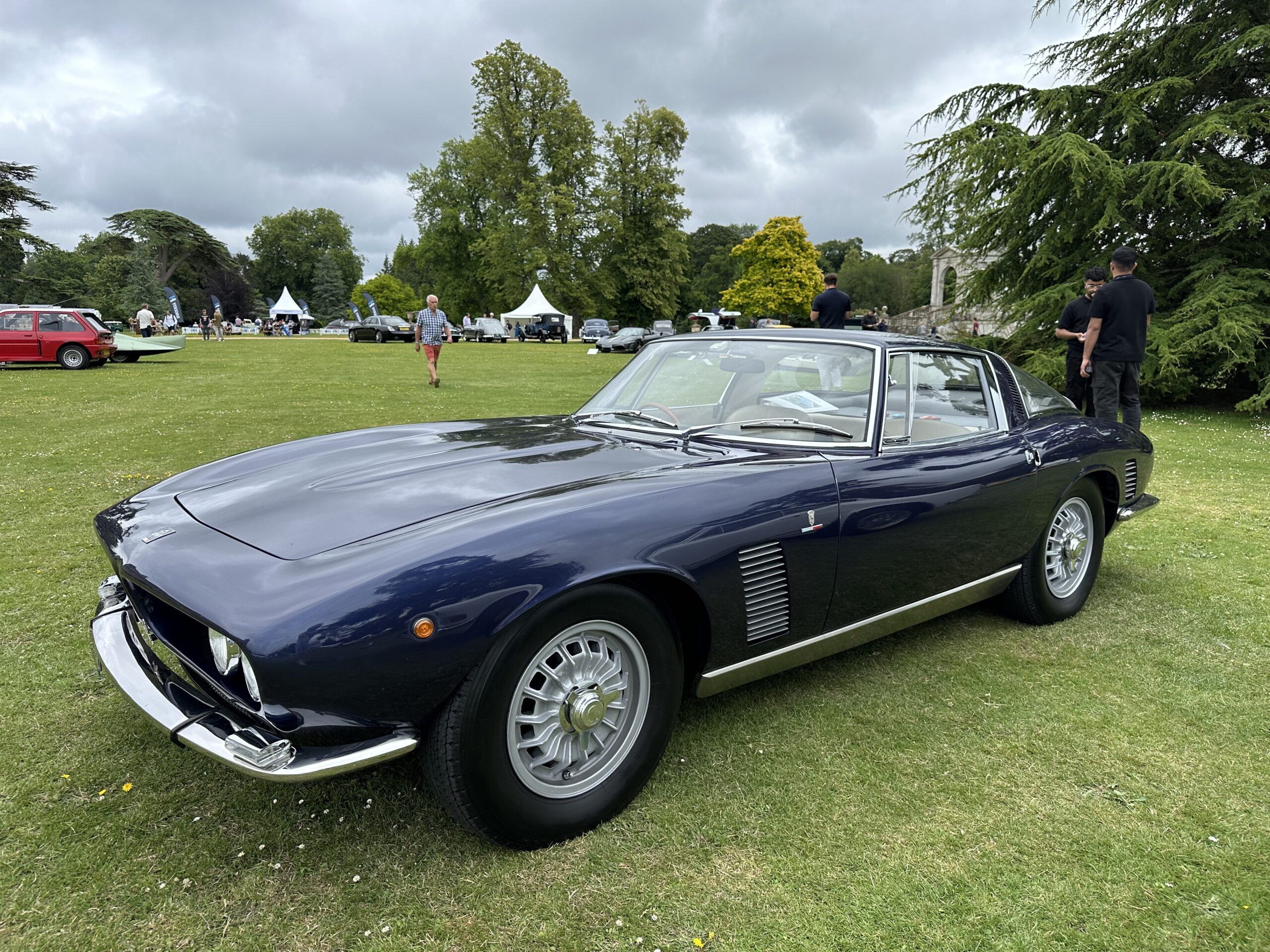
Iso Grifo #049/D was completed on June 10, 1966 and arrived in the UK five days later, to be delivered to Eton Motors. The build sheet has a crossed-out annotation stating (in Italian), “Wooden steering wheel, front safety belts, foglamps. Fit: radio, antenna and turntable supplied by the customer.” There is actually no room to fit a turntable in a Grifo, and nowhere to mount fog lamps.
It was built with a 300bhp V8 engine and four-speed gearbox, but was upgraded to a 350bhp and five-speed within a short time.
In 1979, the Grifo was acquired as a non-runner by Bill Dick, Concorde pilot and collector of eclectic cars.


The current owner purchased the Grifo from him in much the same condition, seven years later. The owners completed the restoration in 2023, 37 years after the project began. They now drive the Grifo whenever possible and recently embarked on a 2,000-mile pilgrimage to the factory in Bresso, Milan, where it was built, to celebrate the Grifo’s 60th anniversary.
.
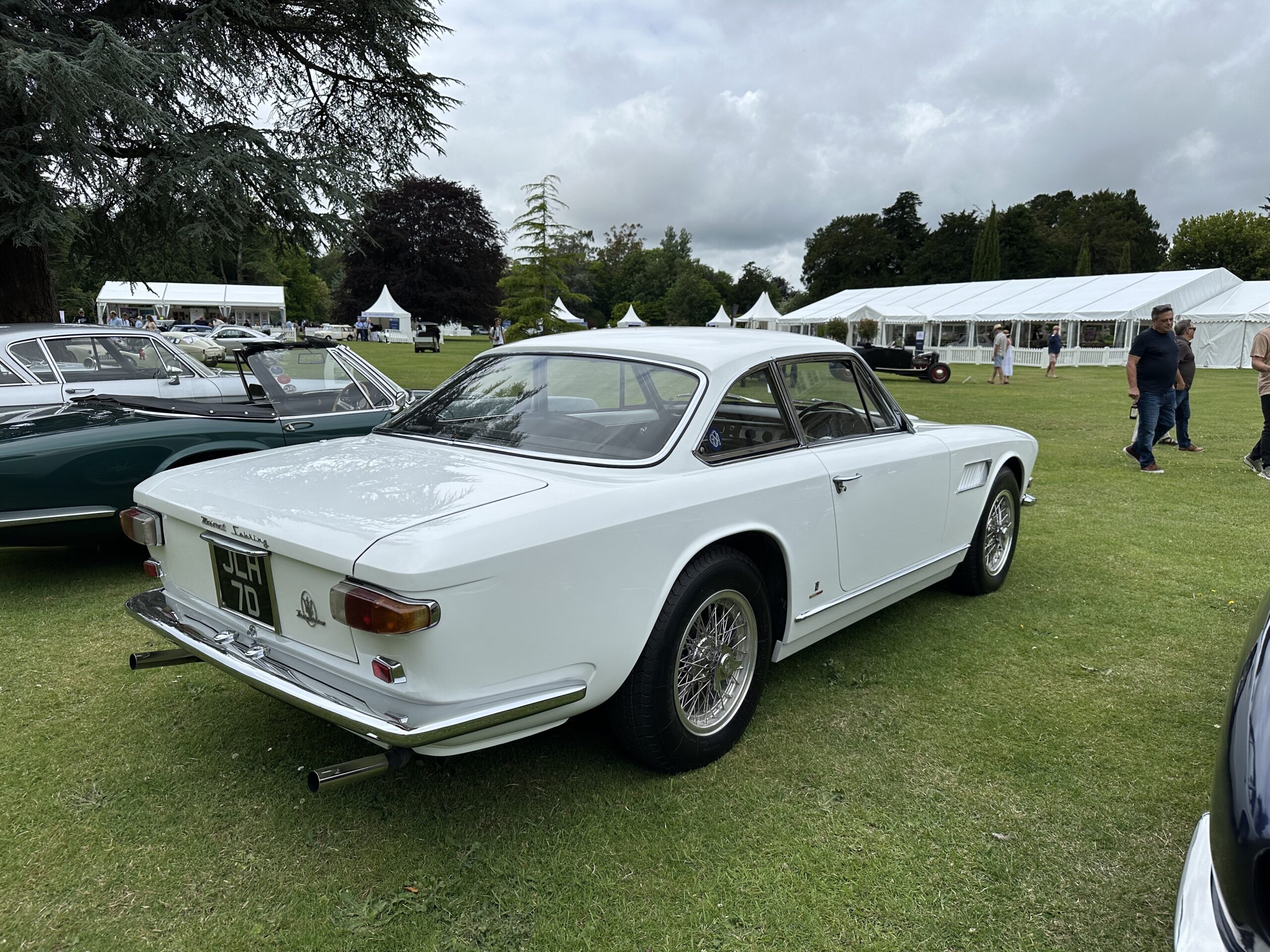
1965 Maserati Sebring

Its owner collected this beautiful Vignale-styled 1965 Maserati Sebring – penned by the prolific Giovanni Michelotti – from the paint shop on Thursday afternoon and drove it straight to Concours des Légendes.
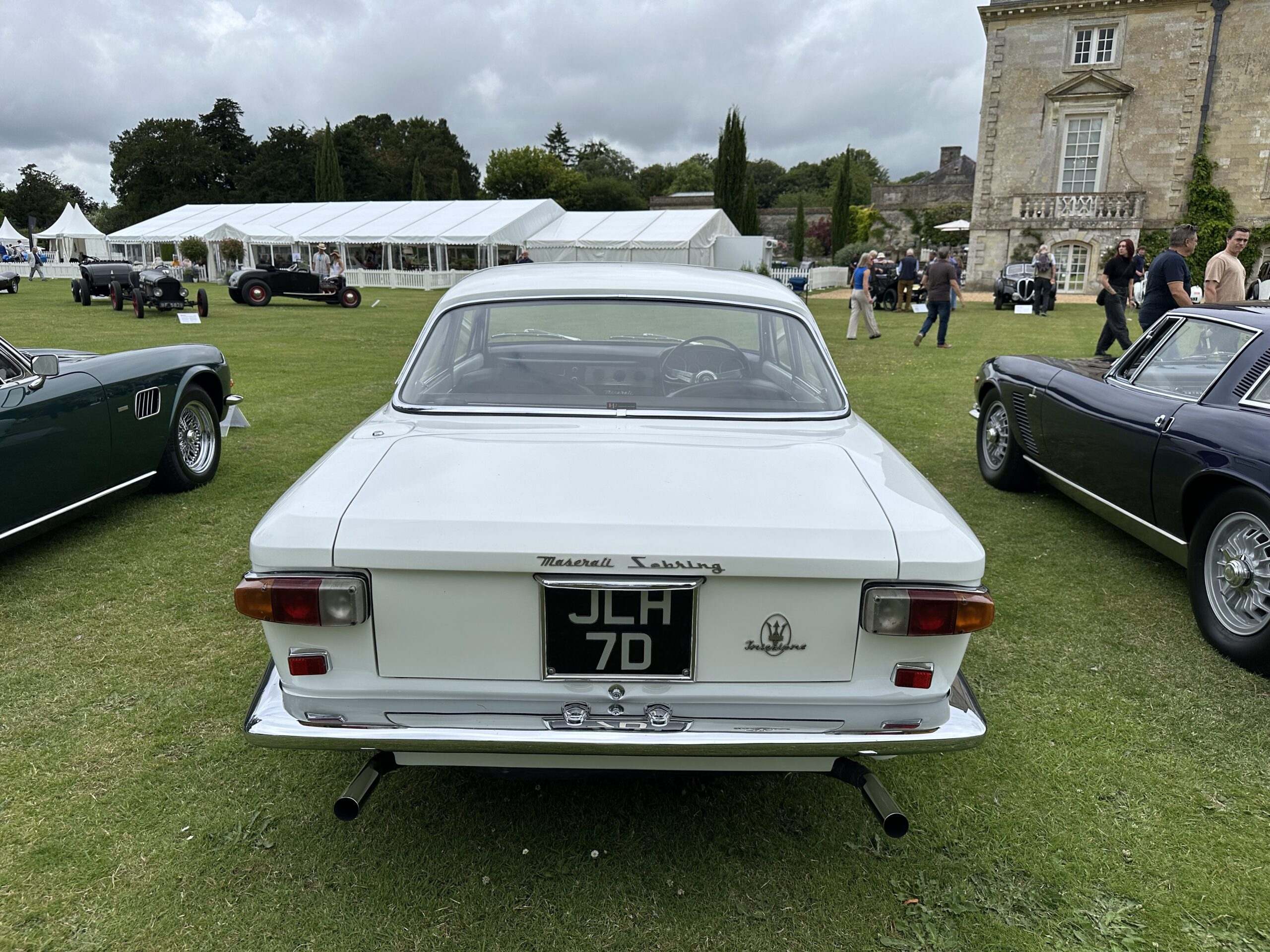
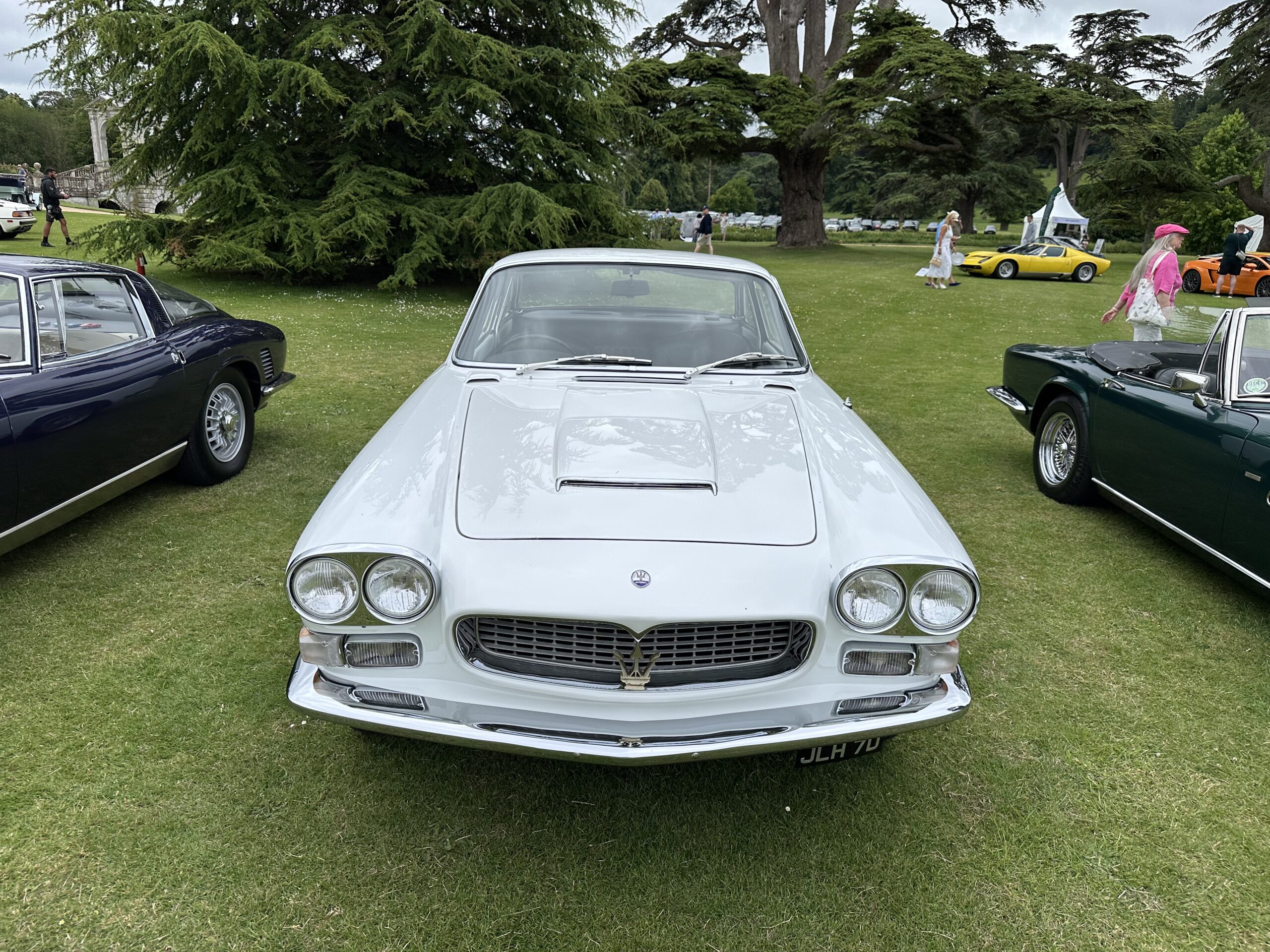
We appreciate his decision, as Maserati’s sleek 2+2 perfectly epitomises Italy’s Dolce Vita. Maserati produced this model from 1962 to 1969. This spectacular grand tourer remains relatively rare in right-hand drive and Bianco Polo Park white. It features black Connolly leather, while a matching-numbers 3.7-litre straight-six engine and the highly desirable ZF 5-speed gearbox power the car.
Of course, Maserati Classiche has fully certified it, and McGrath Maserati has maintained it for the past 25 years.
.
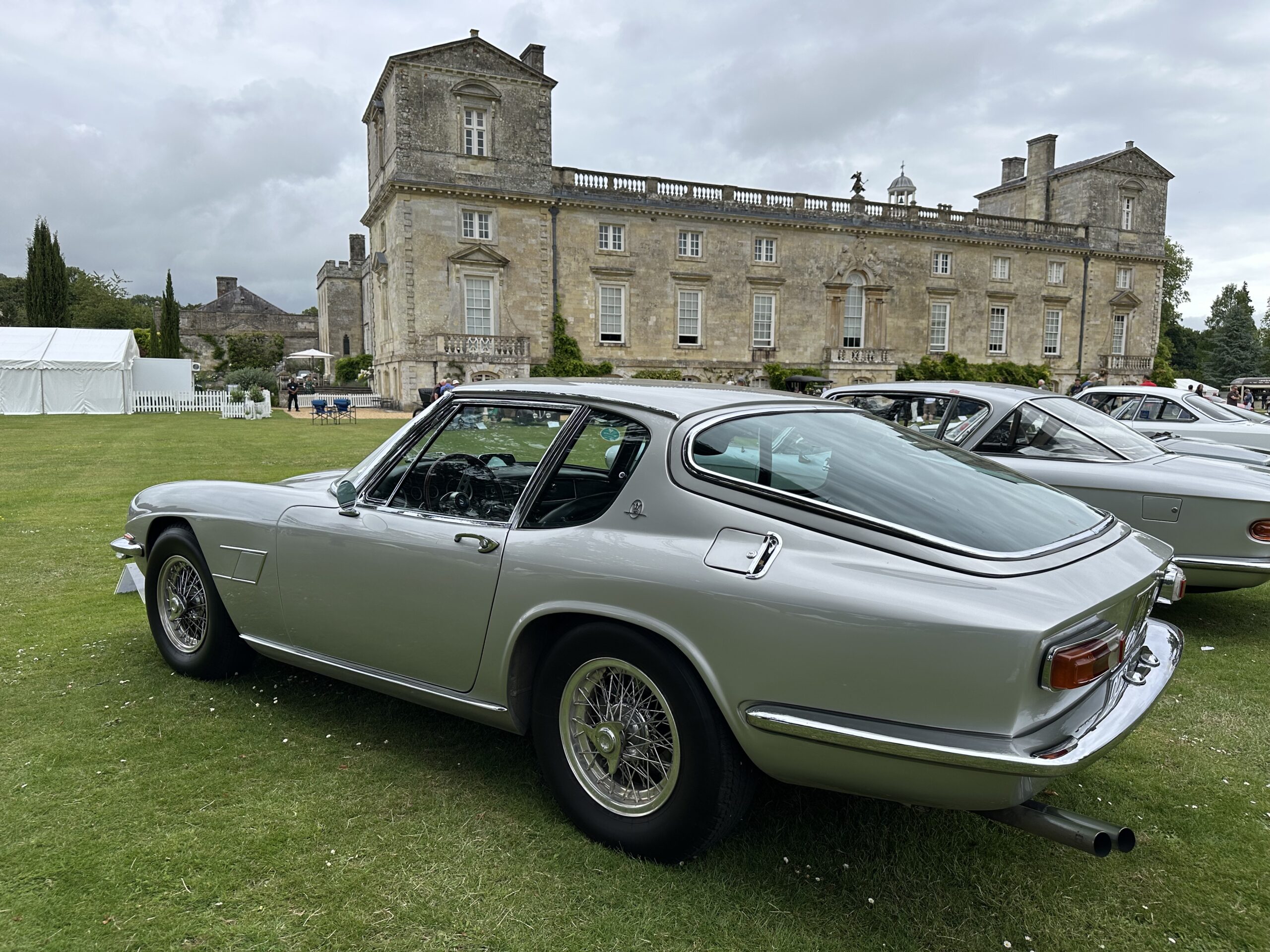
1967 Maserati Mistral Coupé

Maserati produced the Mistral between 1963 and 1970, with styling by Frua and coachwork by Maggiora of Turin. The company named the car after the cold northerly wind that sweeps through southern France, making the Mistral the first in a series of Maseratis to carry the name of a wind.
Signor Amelotti, from a prominent Italian jewellery family, ordered this Mistral Coupé. He specified the car’s original colour. Maserati built it in January 1967, featuring an aluminium body and a 4-litre engine with two spark plugs per cylinder. This powerplant represents the last of Maserati’s six-cylinder engines, tracing its lineage back to the Formula 1 250F and other legendary racing Maseratis of that period.
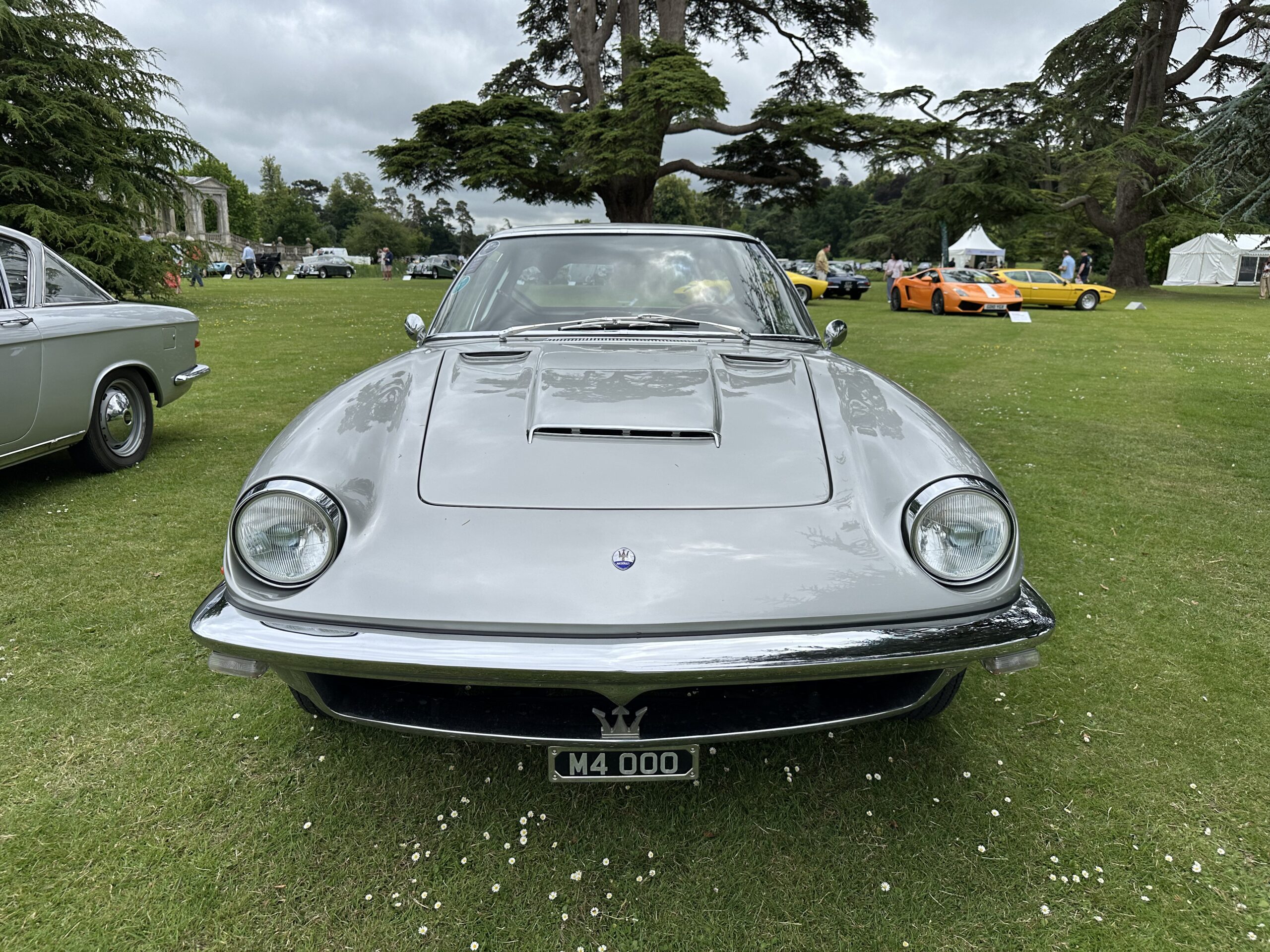

It is believed that about 200 Mistrals were built with the 4.0-litre engine. This one retains its original fuel injection system made by Lucas in the UK. It underwent a full bare metal restoration between 2015 and 2022.
.
THE SUPERCARS
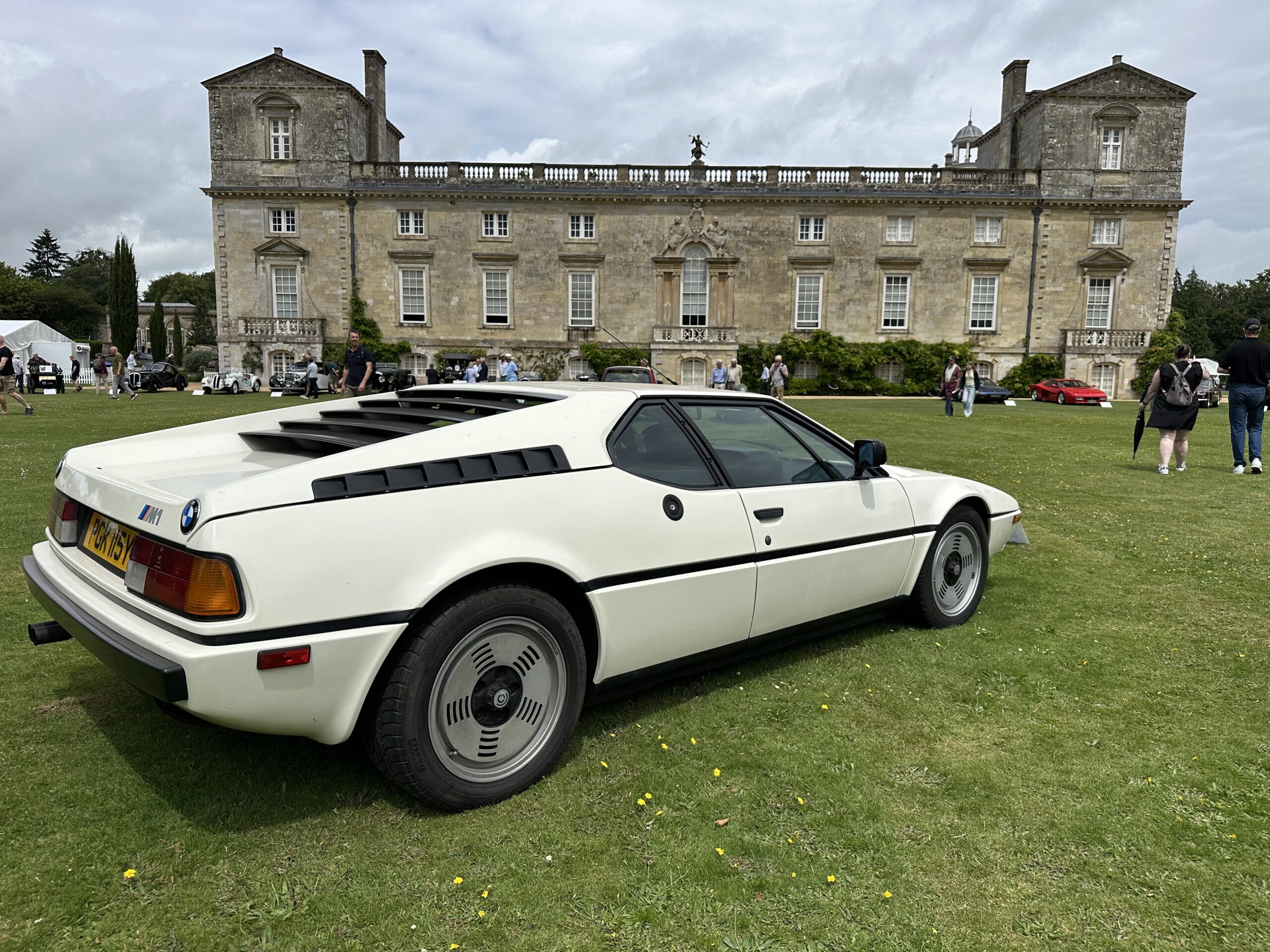
1980 BMW M1
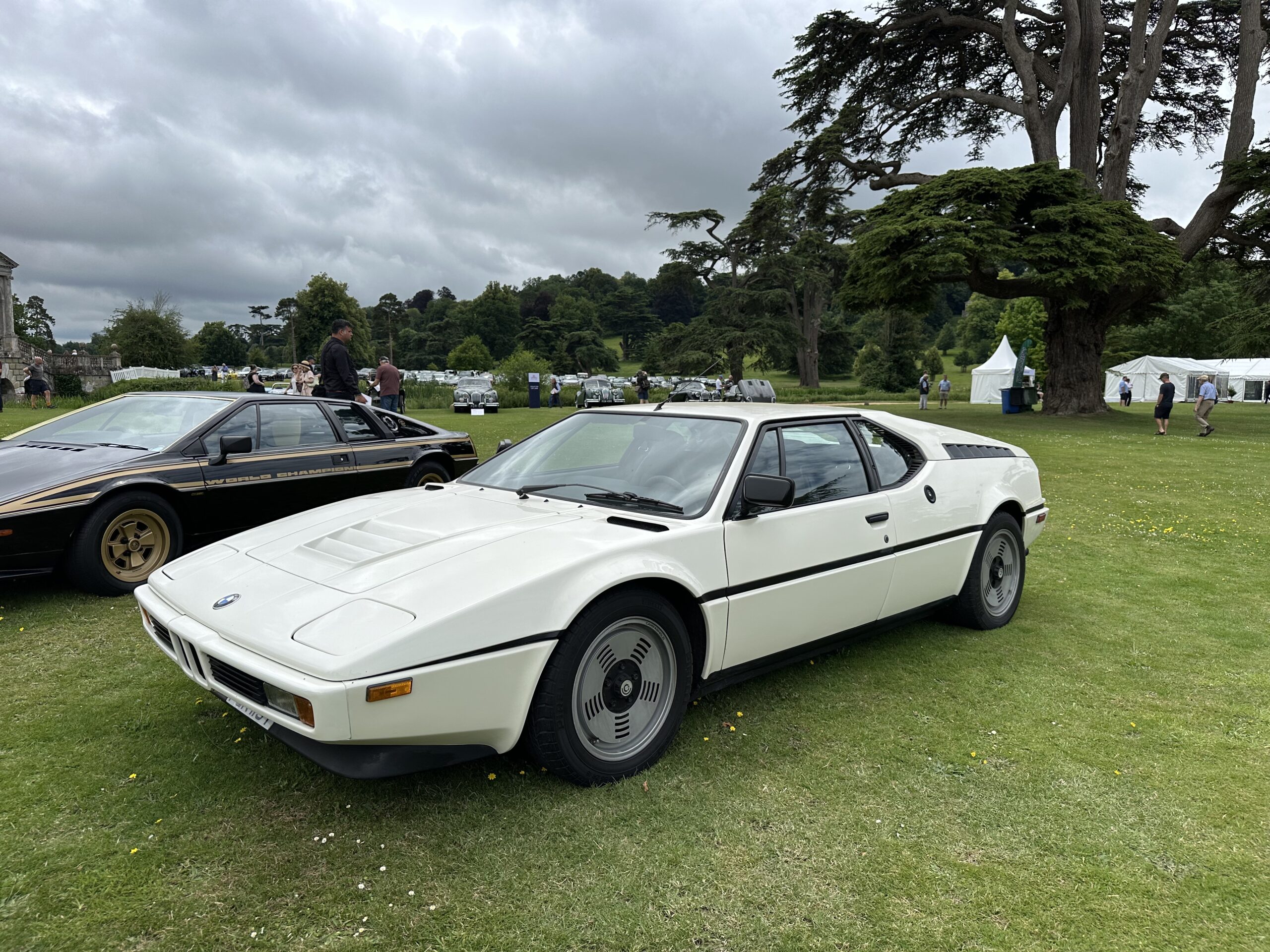
Another amazing car displayed at the Concours des Légendes was the BMW M1. It is a legendary mid-engine supercar born out of BMW Motorsport’s desire to race in Group 4. Hand-built between 1978 and 1981, this Giorgetto Giugiaro-designed icon featured a 277bhp straight-six engine amidships.
Despite its racing ambitions, delayed homologation forced BMW to create the highly successful, support-race Procar series instead, which brought the M1.
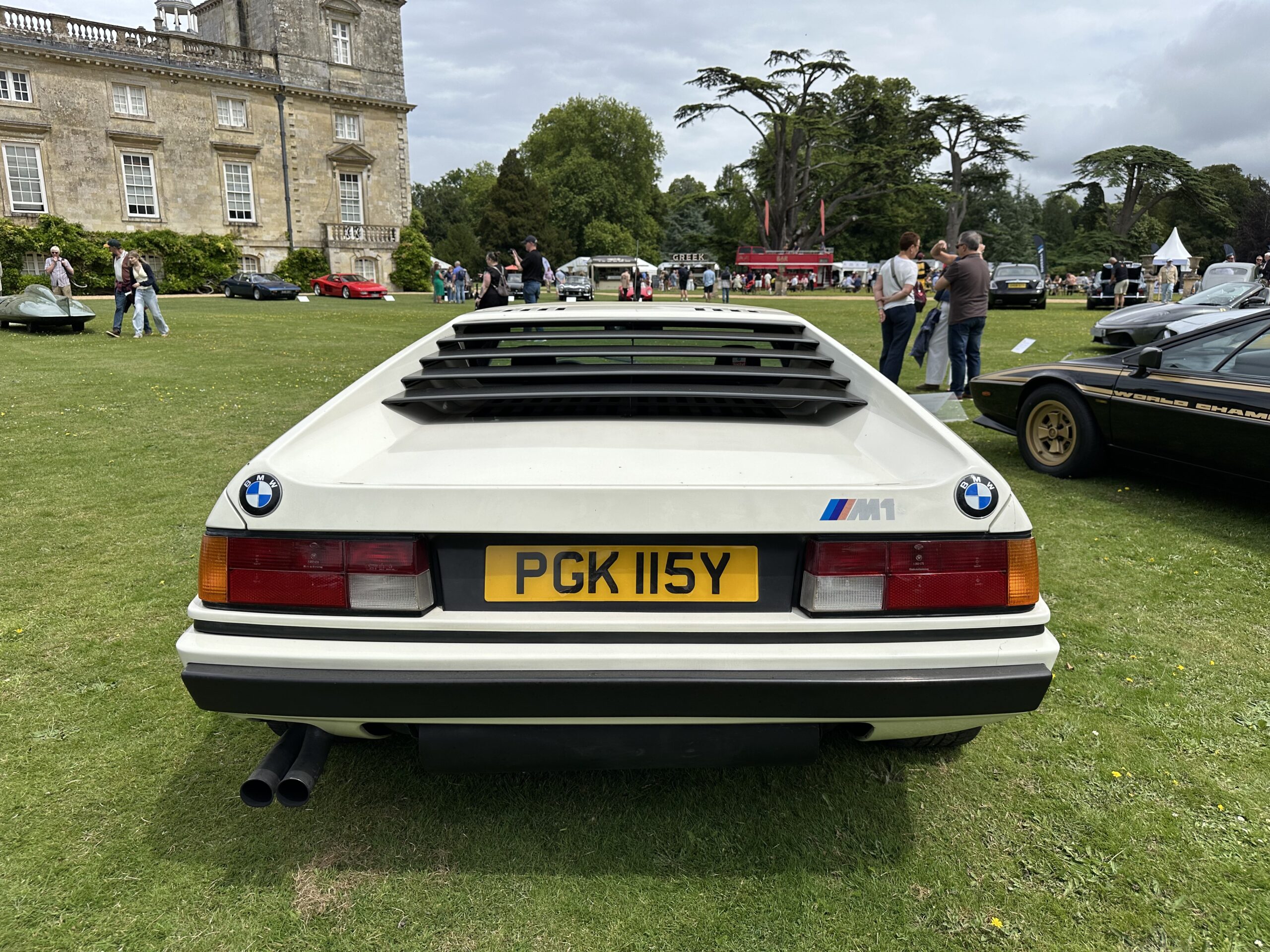
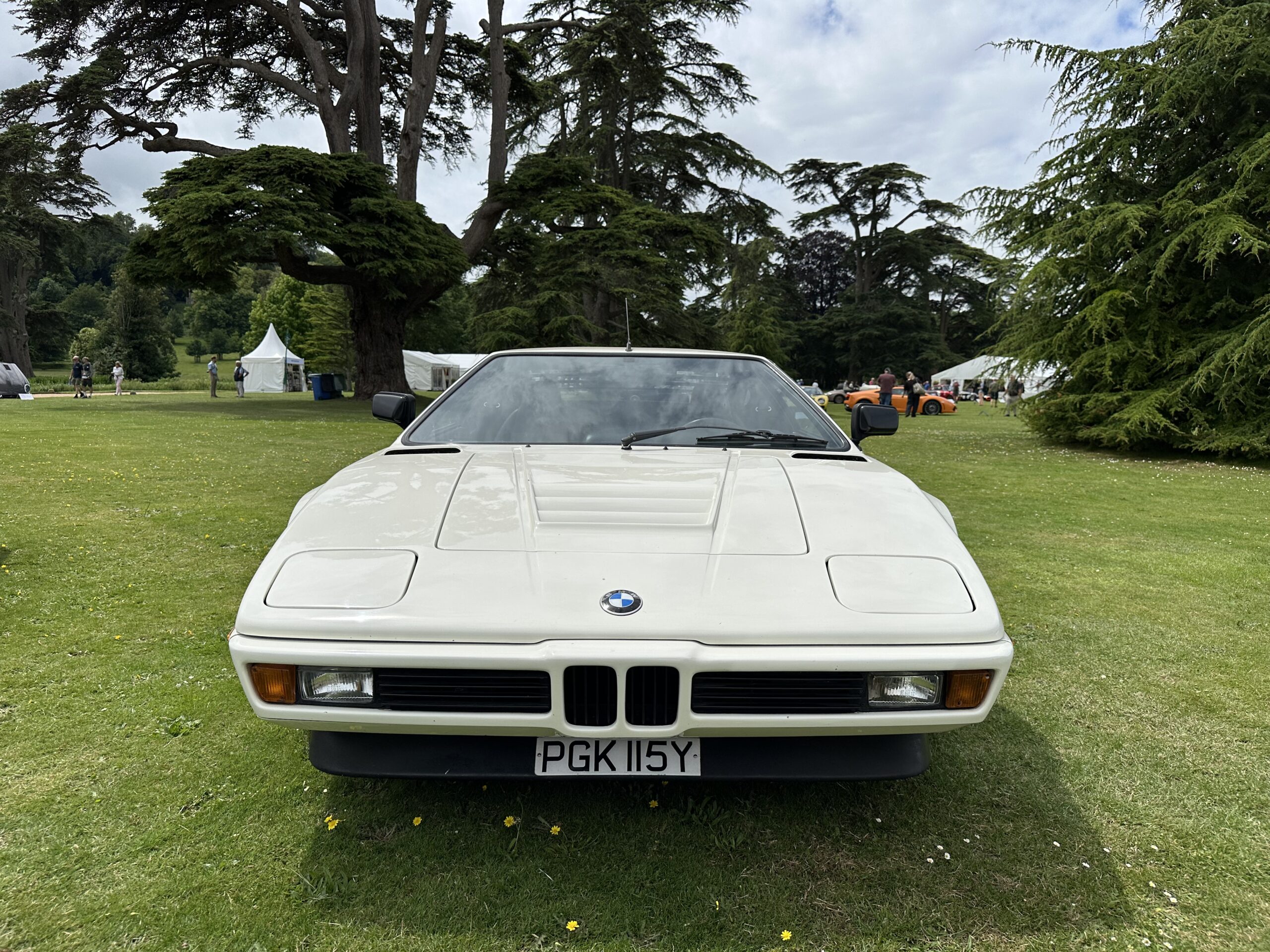
The first official M car, the M1, was originally planned as a joint project with Lamborghini. However, when the Italian manufacturer went bankrupt, BMW took control of the programme and built the car in Germany instead.
As the owner who bought this example way back in 1990 quipped: ‘It is a German car with Italian electrics… unlike a modern Lamborghini which is an Italian car with German electrics.’
.
2010 Mercedes-Benz SLS
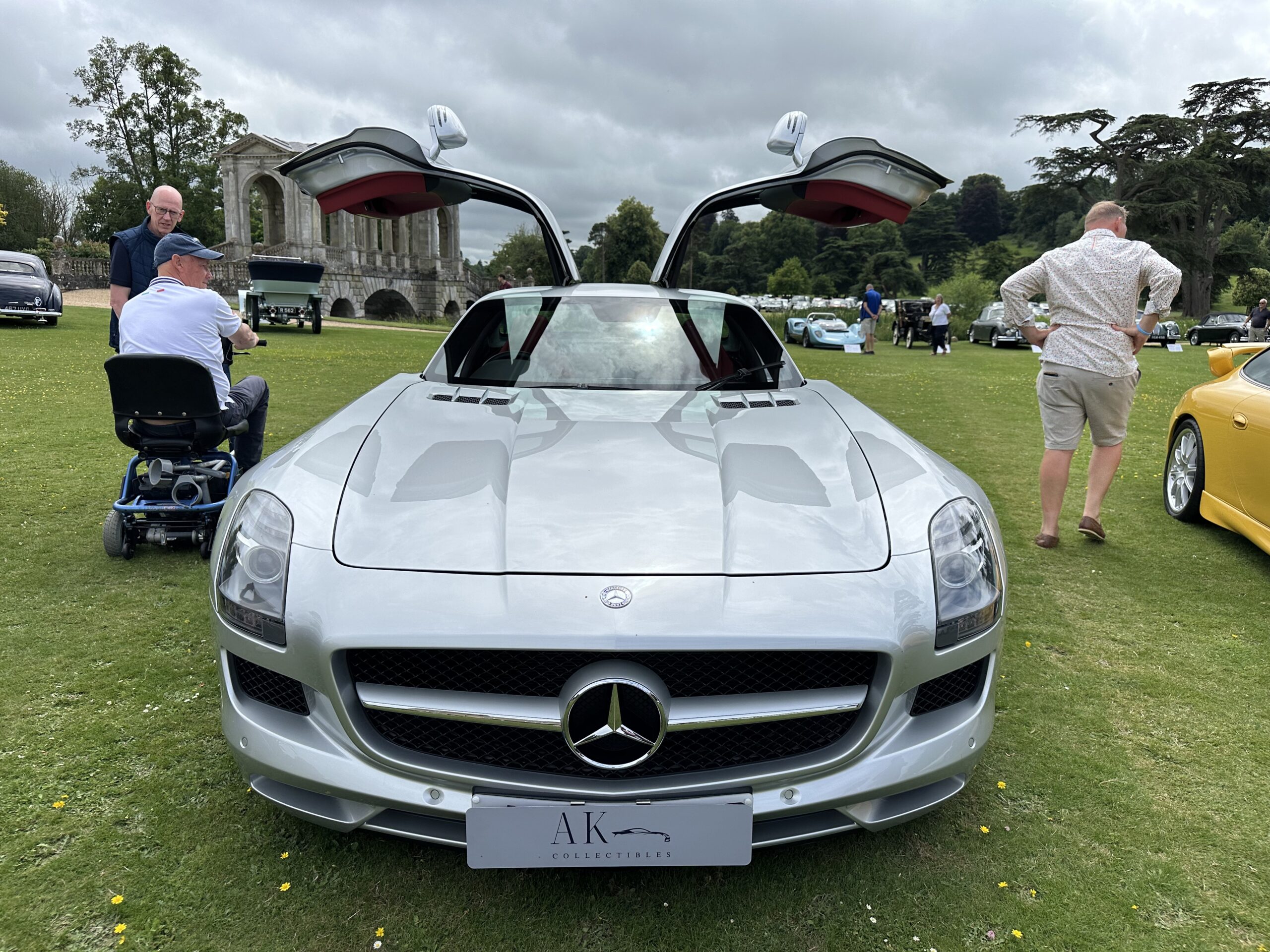
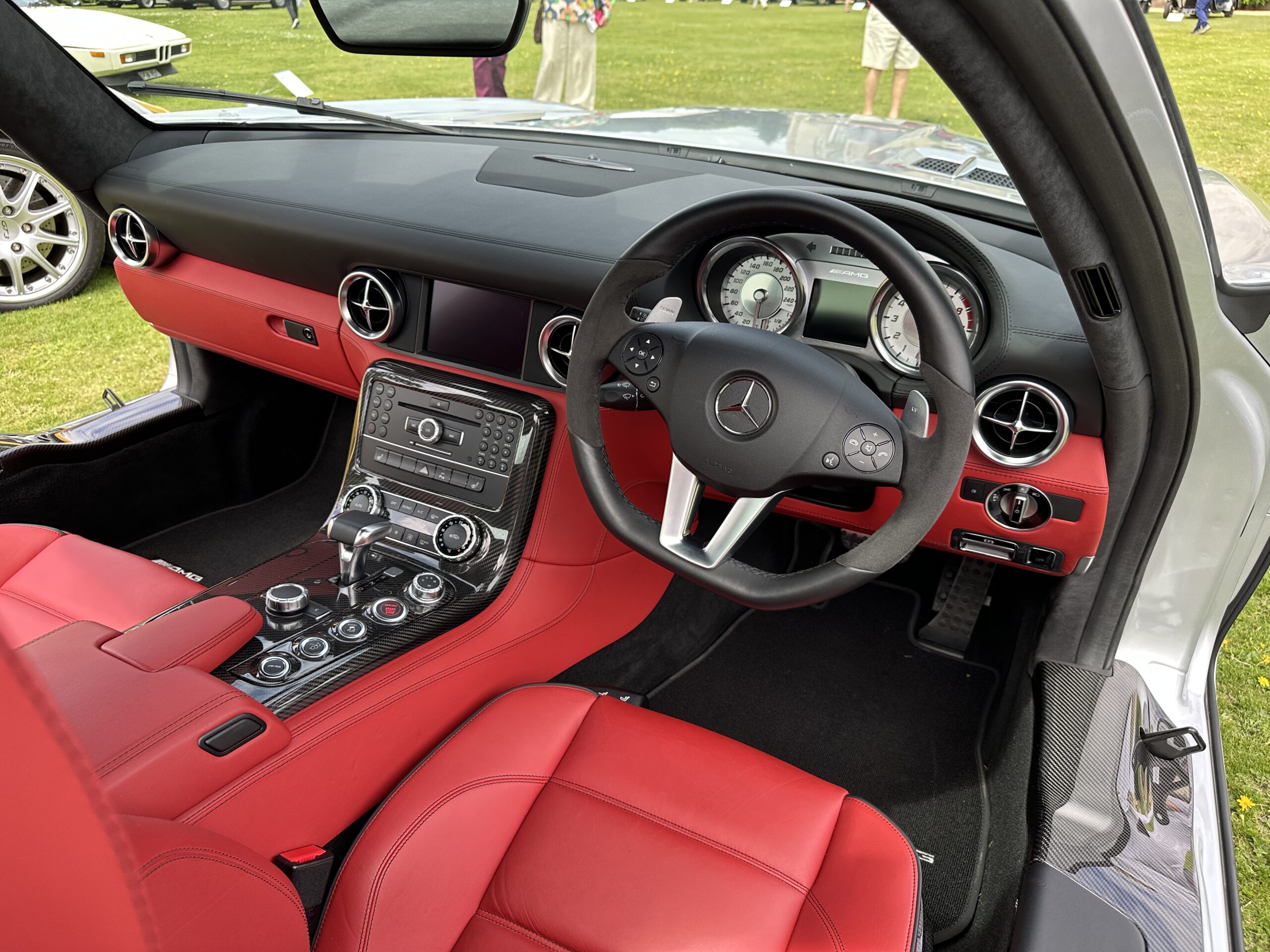
This 2010 Mercedes-Benz SLS with just 1600 miles from new, in Iridium silver car is a fantastic example of one of the most iconic performance cars of the modern era.
With a naturally aspirated V8 power and distinctive gullwing doors echoing the Mercedes-Benz 300 SL of the 1950s that many consider to be the first supercar, the SLS marked a defining moment in the brand’s history, pairing a front-mid-mounted 6.2-litre V8 with a rear transaxle layout.
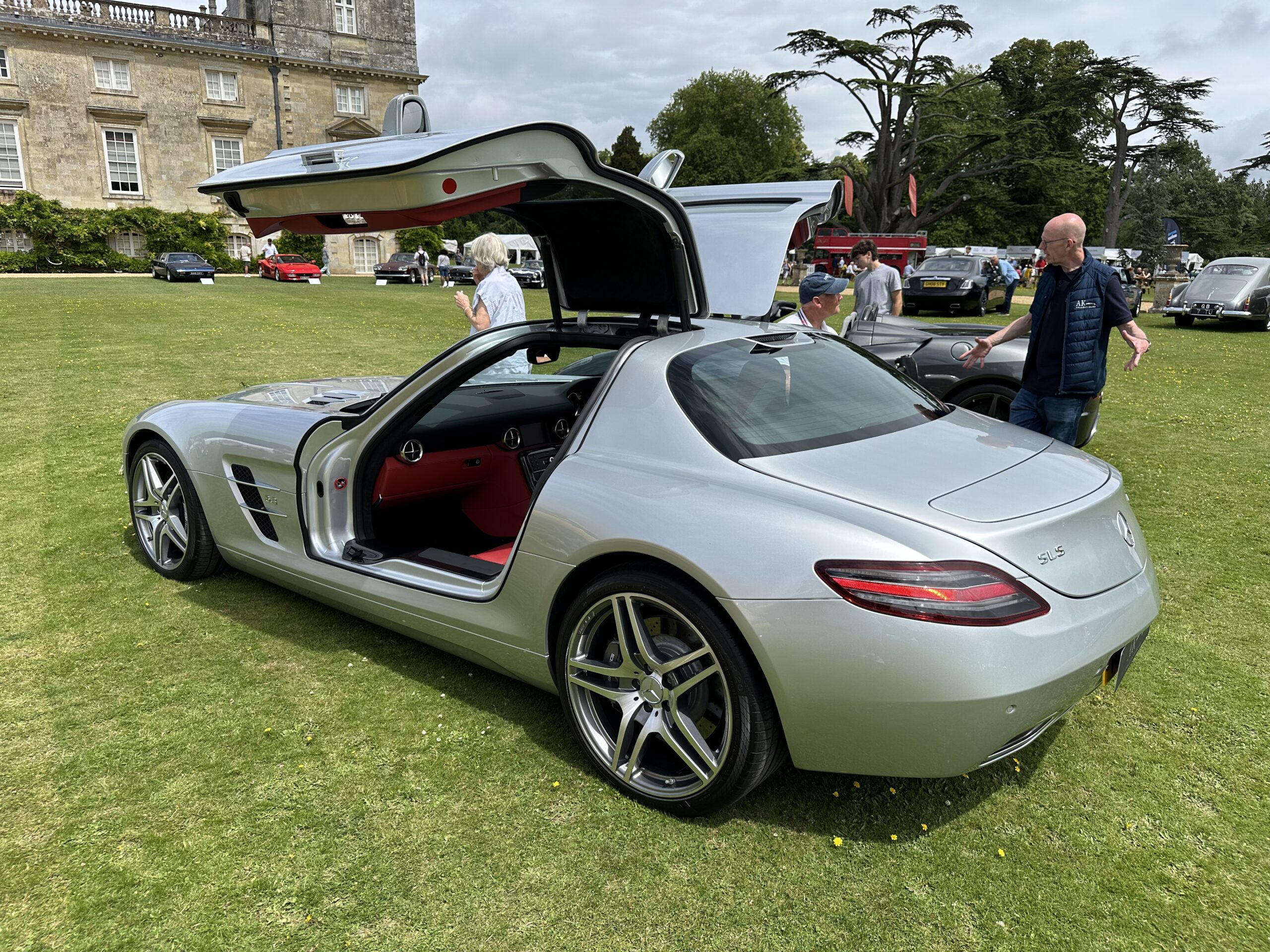

Extremely well received by media and public alike, the SLS has established itself as one of the most desirable and collectable modern Mercedes-Benz AMG models.
.
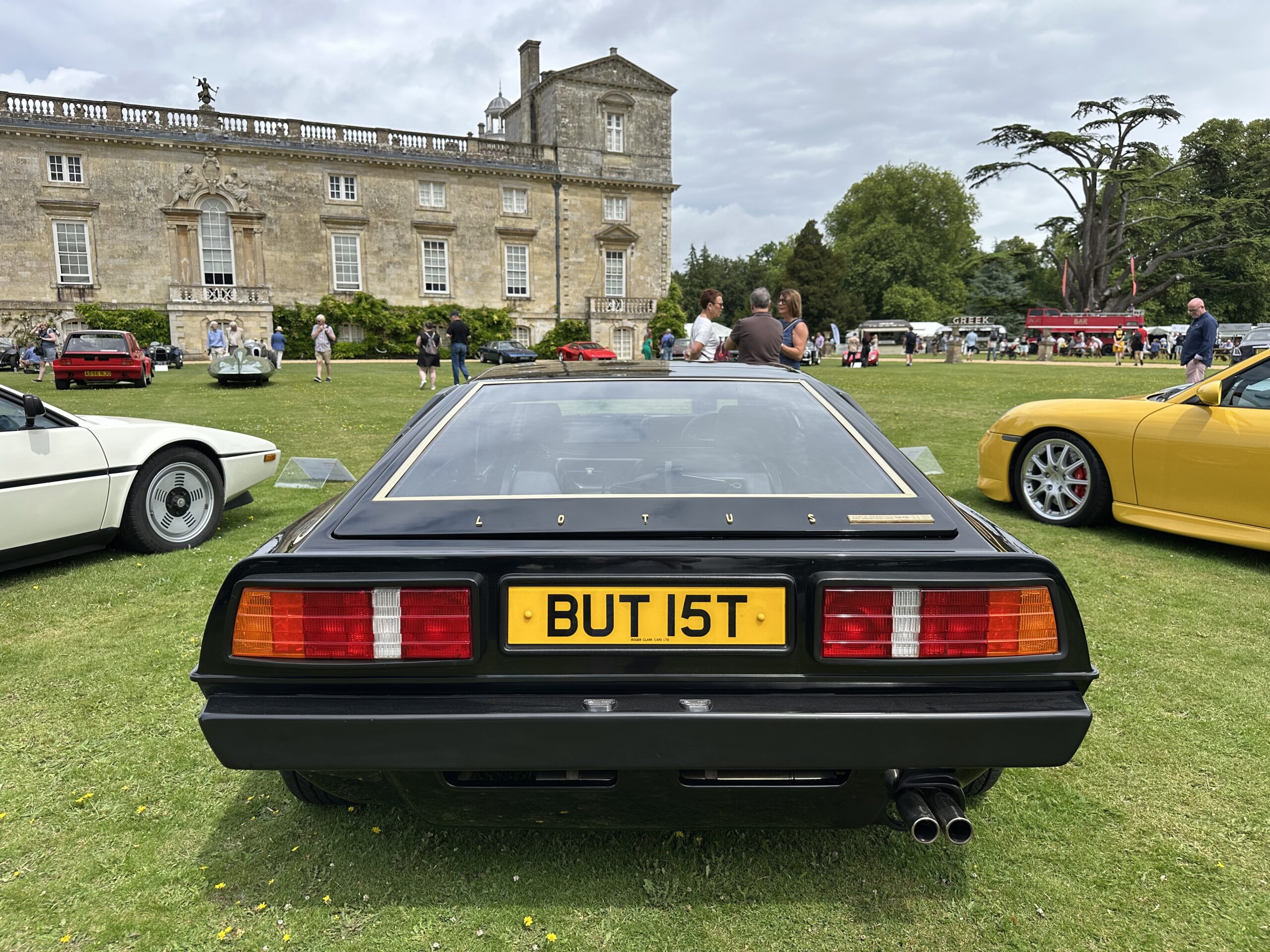
1978 Lotus Esprit World Champion JPS Commemorative Edition
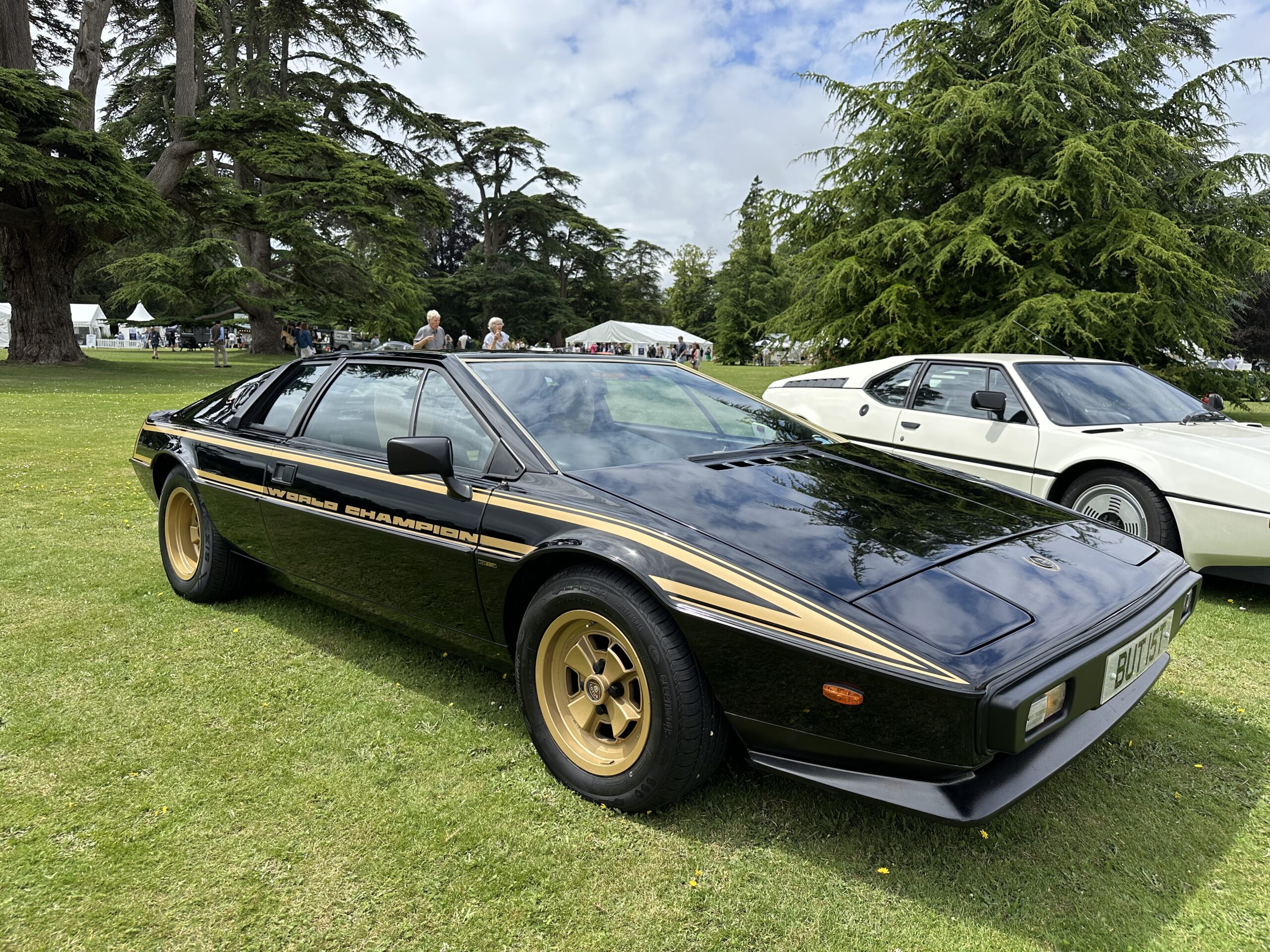
Lotus became almost as famous for its liveries as it did for its world-beating road and race cars, and the Esprit topped even that as James Bond‘s car in For Your Eyes Only and The Spy Who Loved Me.
When Lotus took the F1 world championship in 1978 it made sense to celebrate with a special edition, especially to Lotus boss Colin Chapman who never missed a commercial opportunity. He pioneered cigarette sponsorship in the UK by placing tobacco branding on his racing cars. As a result, when Mario Andretti drove a JPS-liveried car to victory, Lotus carried that iconic black-and-gold scheme over to the commemorative Esprit.
Many enthusiasts consider this example displayed at the Concours des Légendes to be the most original, low-mileage 1978 World Champion Commemorative Edition Lotus Esprit (JPS) in existence. The owner stored the car from 1987 and revived it only last year, preserving its remarkable originality.

.
LUXURY THROUGH THE AGES
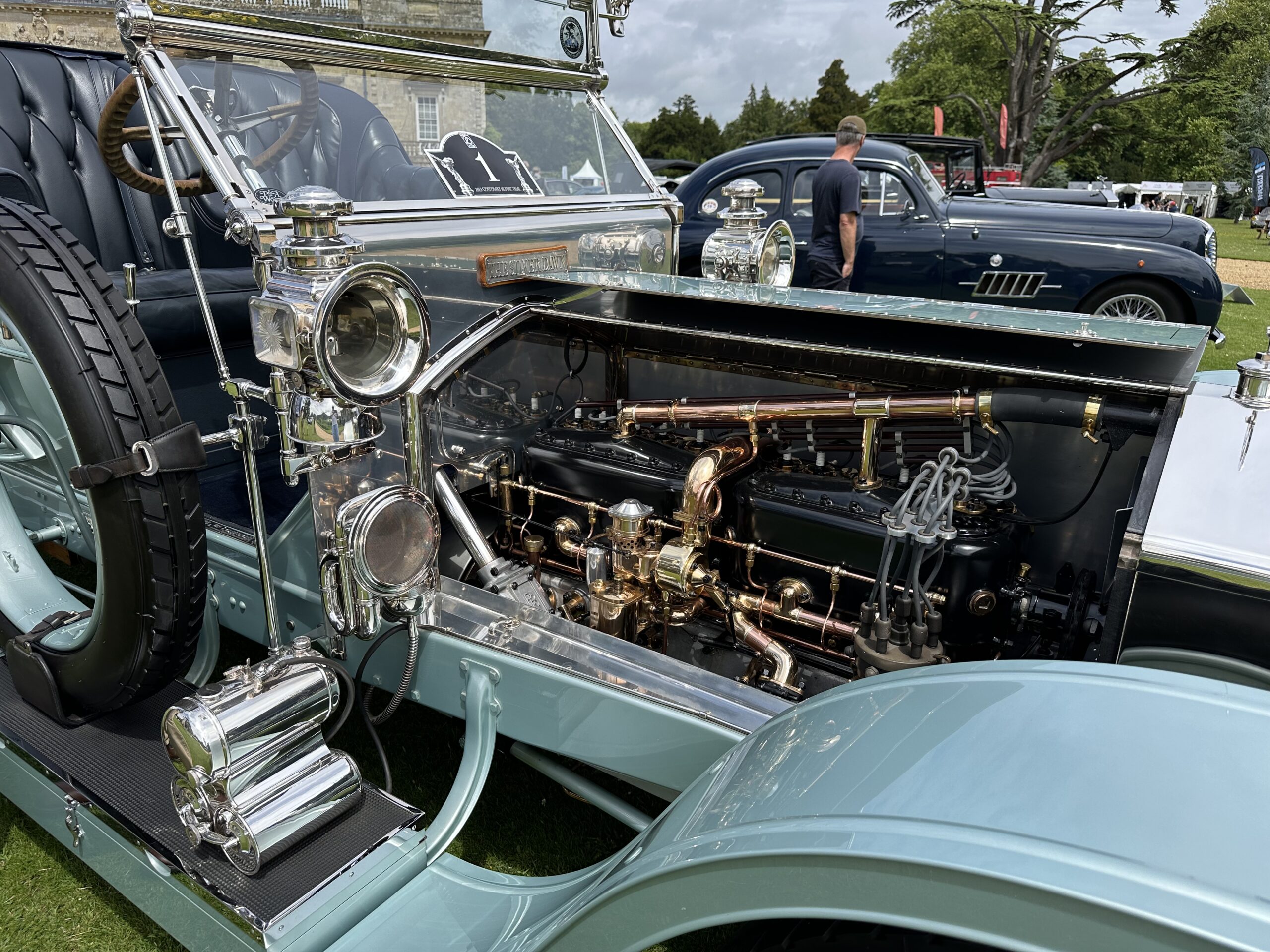
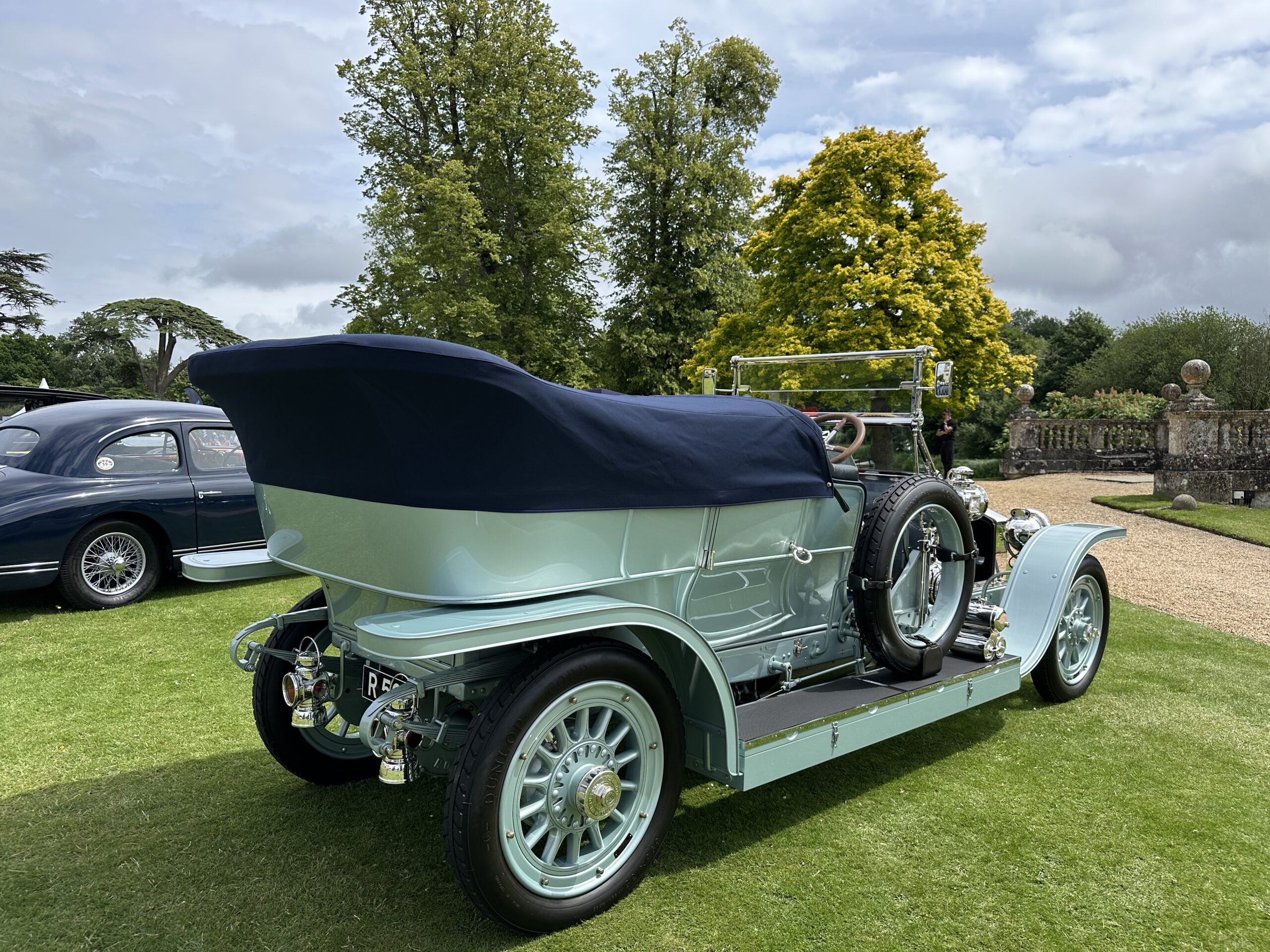
1908 Rolls-Royce Silver Ghost ‘The Silver Dawn’
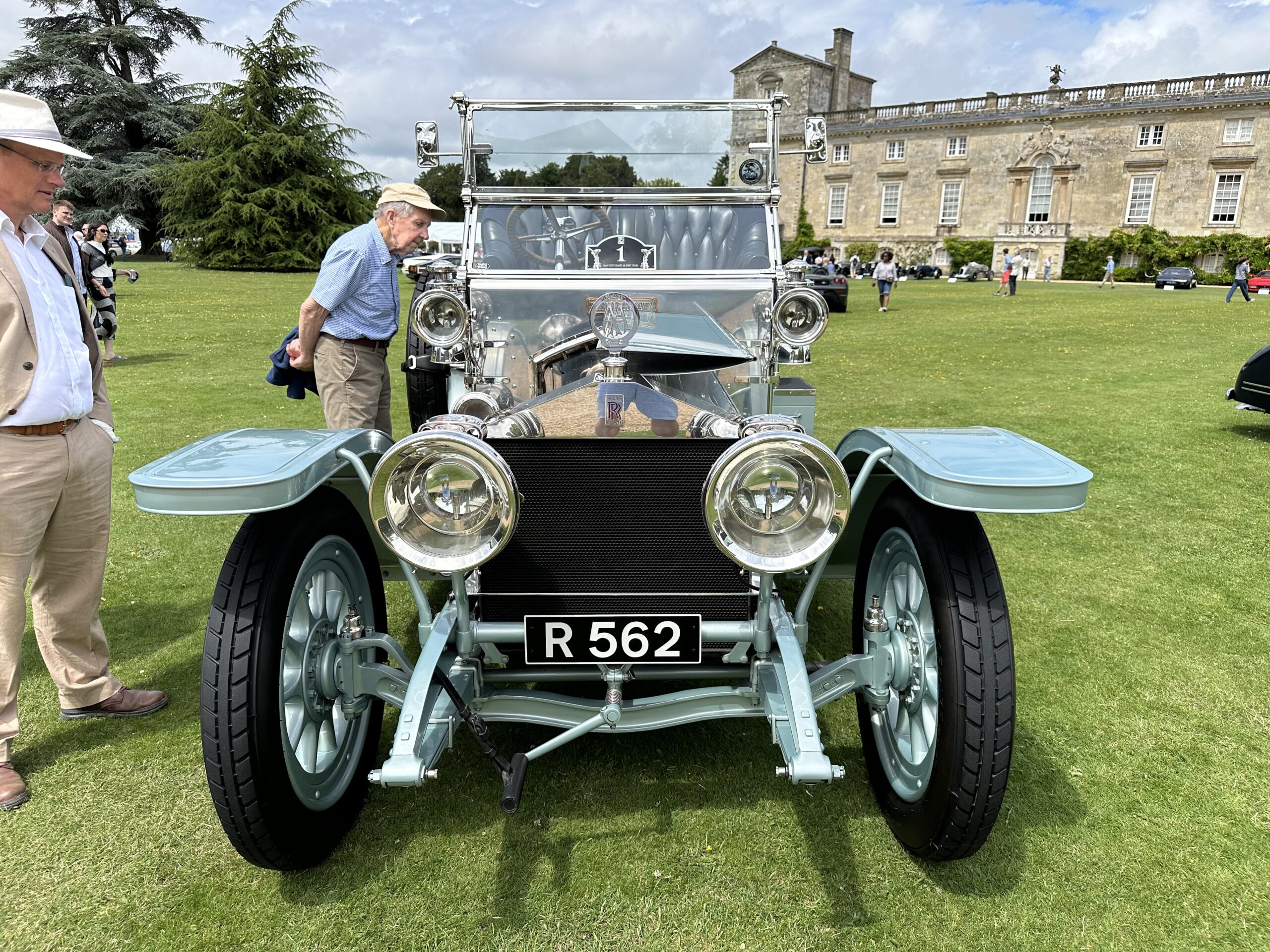
The Rolls-Royce 40/50hp, which became known as the Silver Ghost, was the finest car of its era. This example, a 1908 model named The Silver Dawn, is one of the oldest Silver Ghosts in the world.
The car dates from 1908 and received registration R 562 in March 1909. It retains all original parts, including the chassis, engine, gearbox, and front and rear axles, and all major components carry the “1908” stamp. The car even retains its original cast iron pistons and its original under-seat fuel tank arrangement.
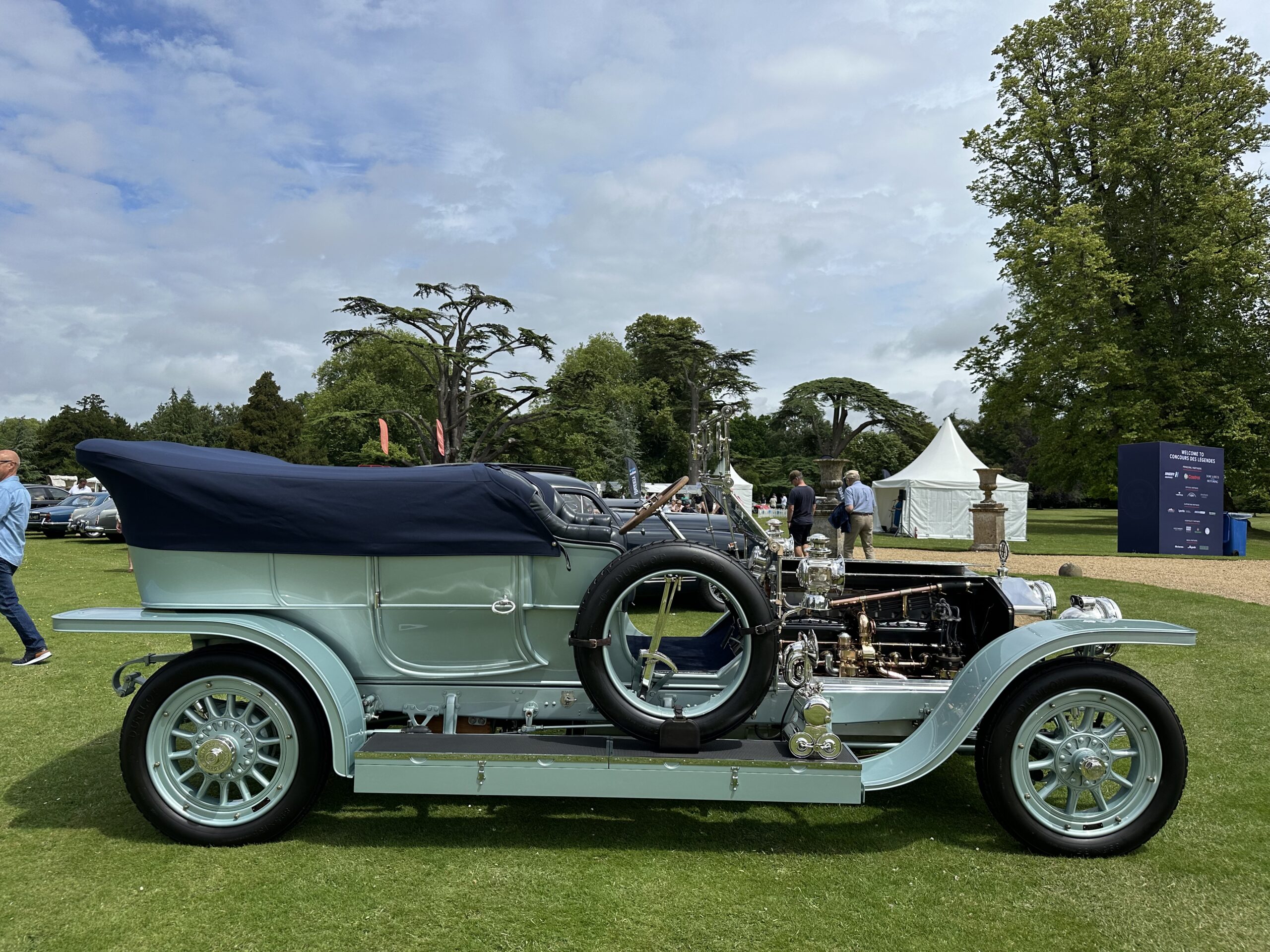
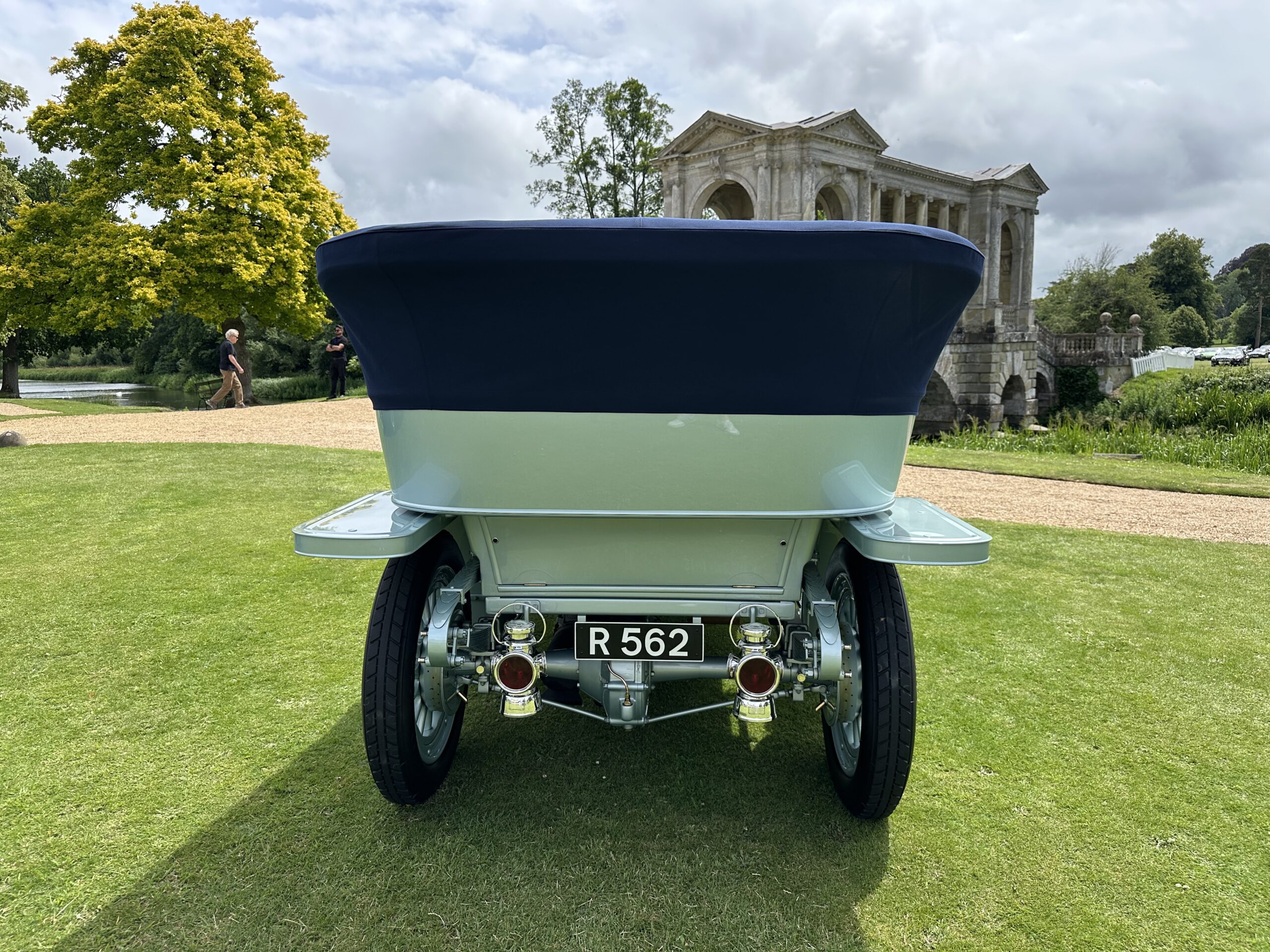
The Silver Dawn has taken part in many rallies including the 1800-mile Centenary Alpine Trial. It was restored by Rolls-Royce’s authorised dealer, P&A Wood, and appears here courtesy of the company and of owner Robert Gaines-Cooper.
A guy I spoke to who works for the company that did all the restoration reckons it would be 8 to 10 million pounds if you could buy it.
.
1954 Bentley Type R Continental
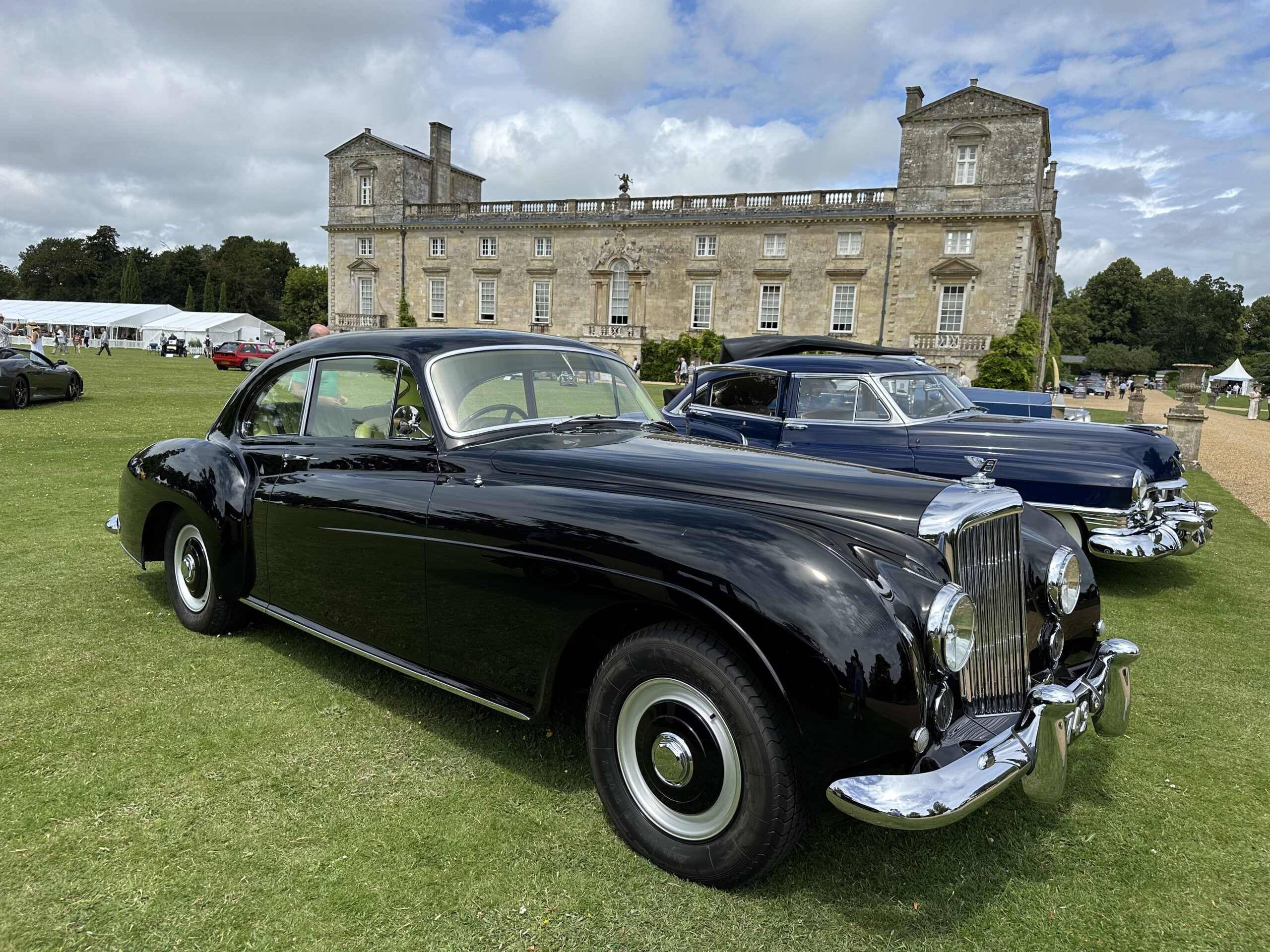
One of the most graceful high-performance cars of all time, this wonderful Bentley, which belongs to Lord Bamford, is chassis BC34D. Its engine is BCD33, because Bentley never used number 13 for chassis, but it did for engines.
Powered by a 4.9-litre straight-six engine and enveloped in beautiful HJ Mulliner coachwork, it was the most luxurious way anyone could travel at speed in the 1950s and was good for a top speed of around 120mph, which was astonishing for a car of its size, weight (over one and a half tonnes), and era.
Its first owner, JY Sangster, was a legend in the world of motorcycles, being both owner of Triumph and chairman of BSA.
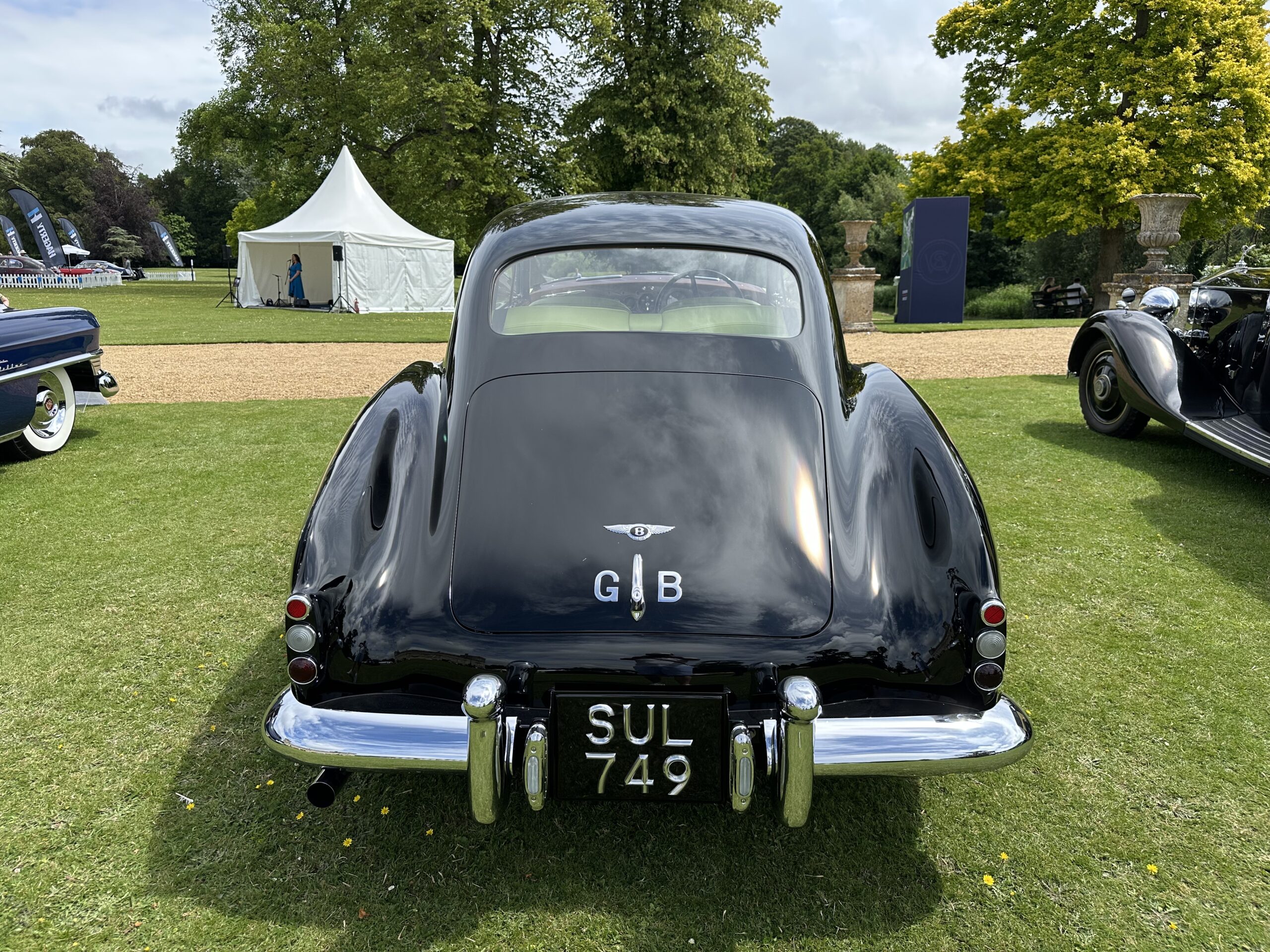
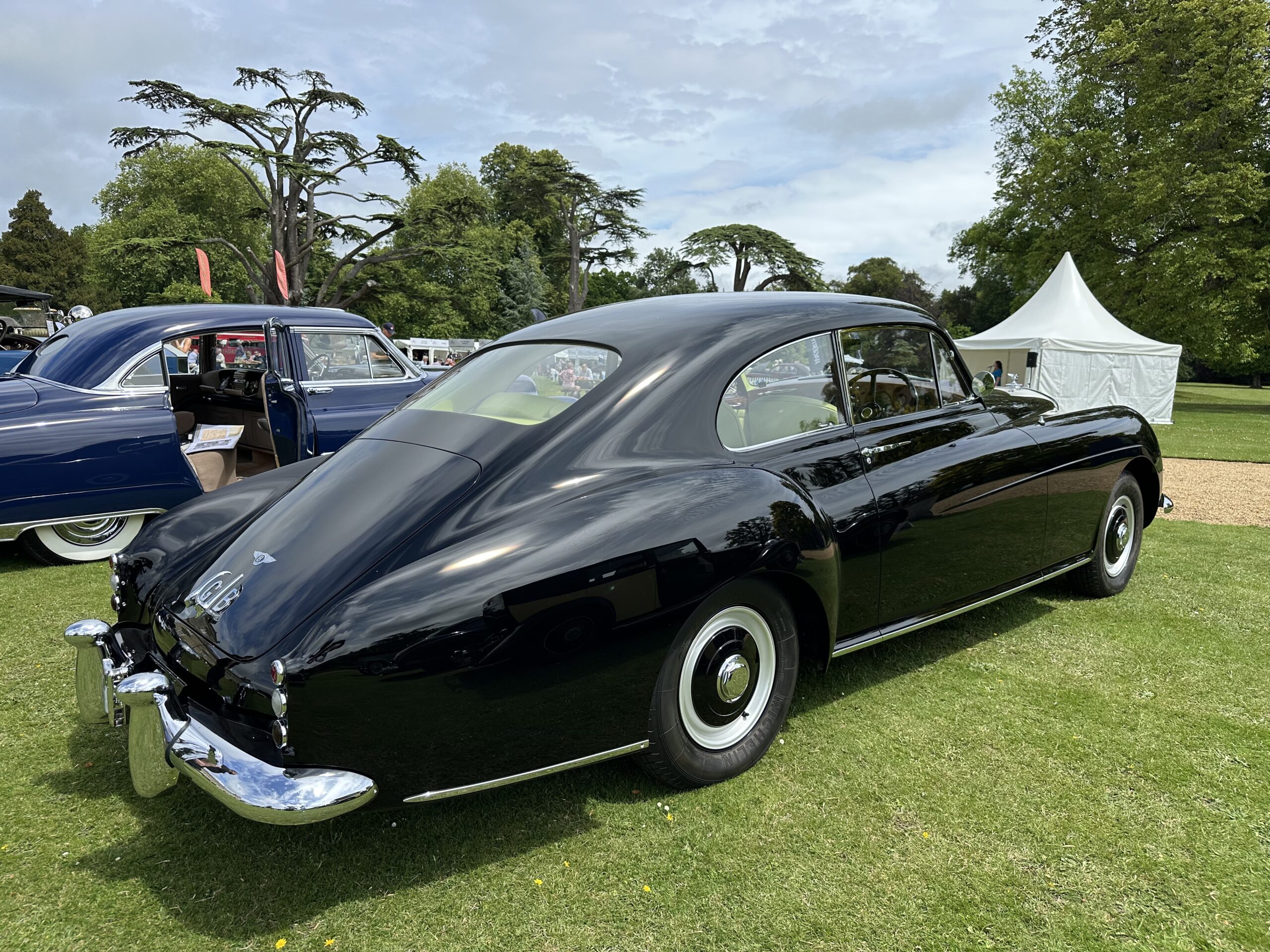
This car displayed at Concours des Légendes stands out as one of only three factory-built examples to feature the sleek C-series bodywork and the powerful D-series engine.
.
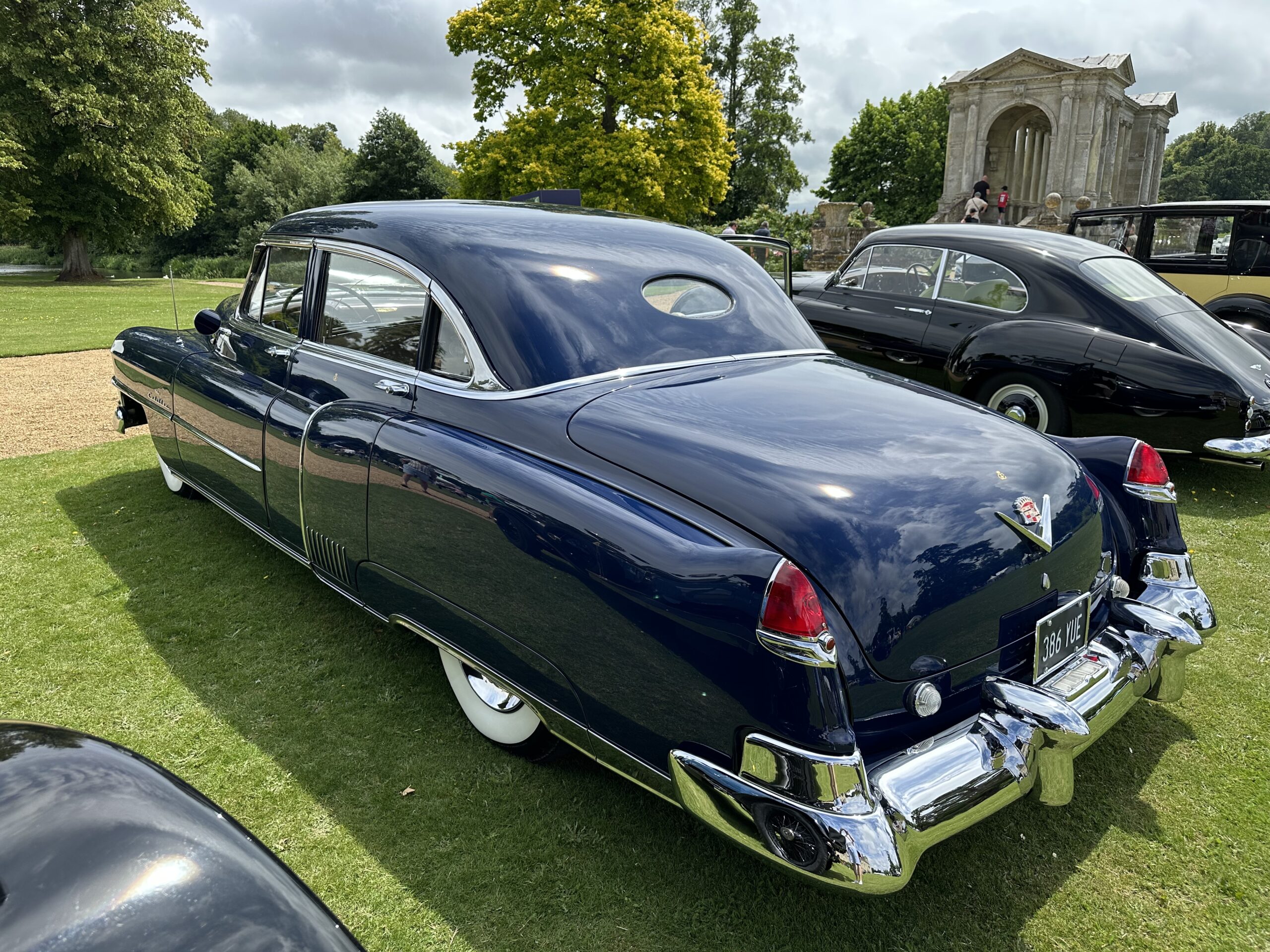
1950 Cadillac 60 Series Special
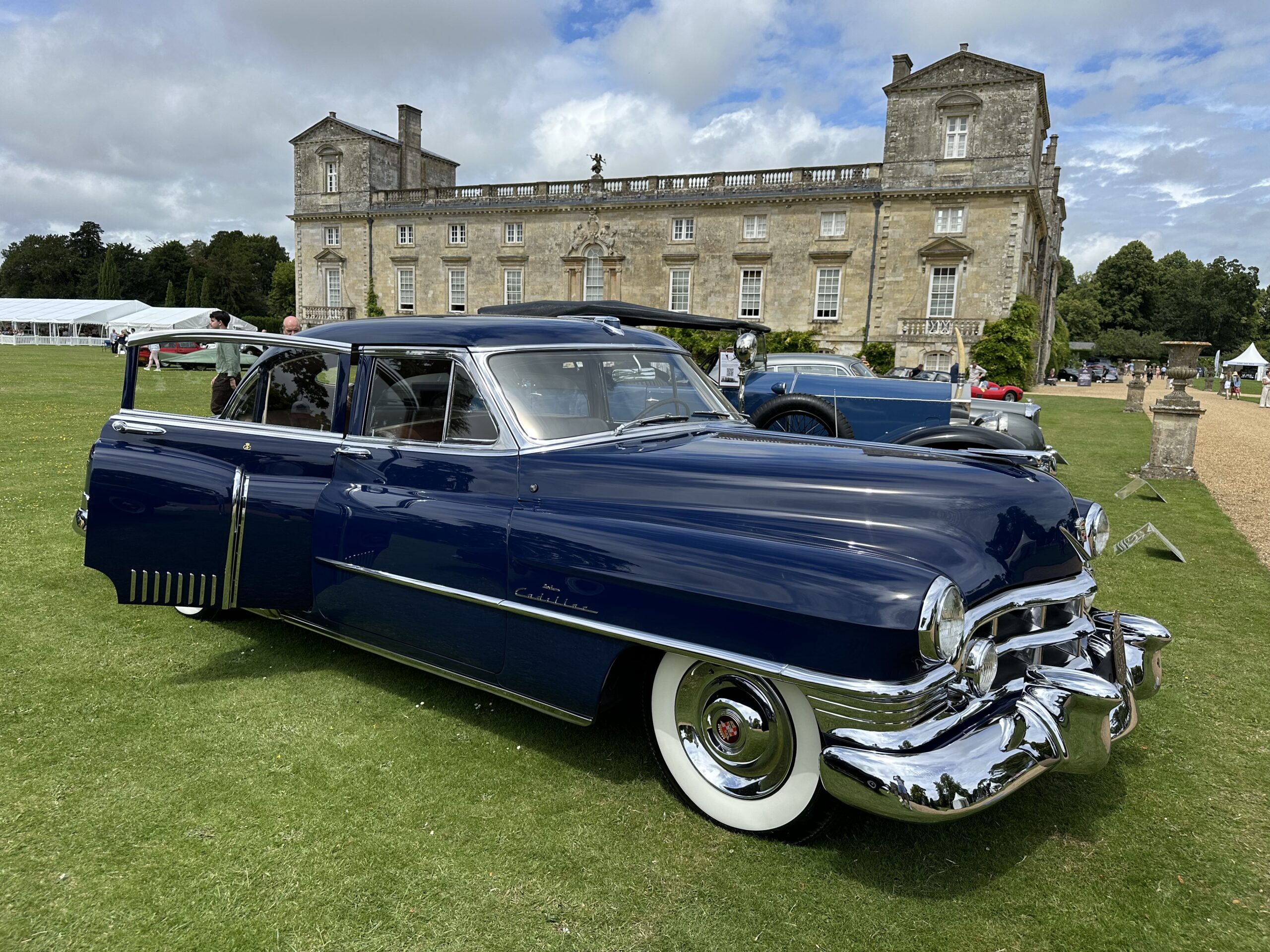
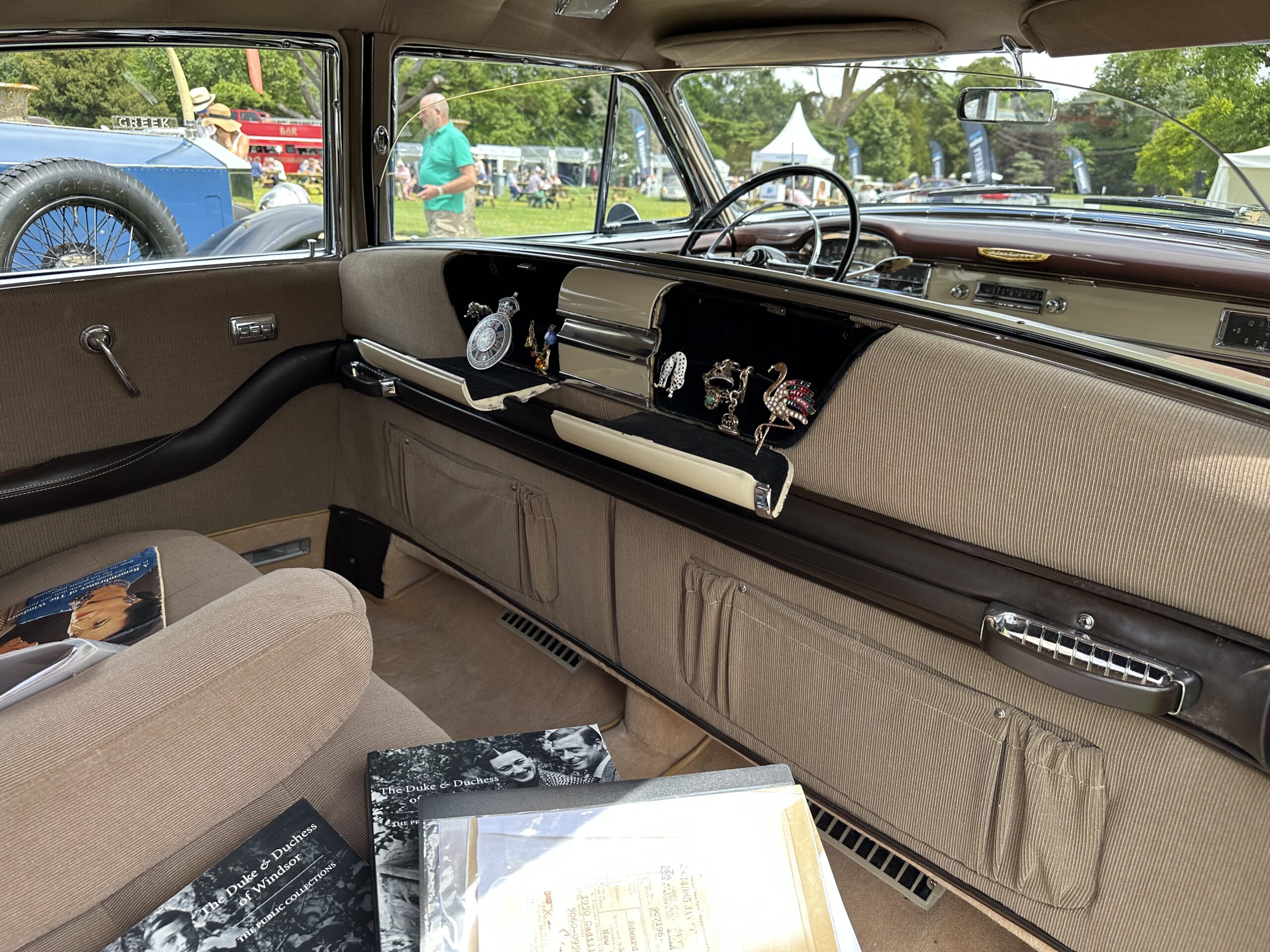
The Duke of Windsor and Wallis Simpson ordered this Cadillac while living at the Waldorf Astoria New York. During production, US coachbuilder Derham modified the car to their specifications. Changes included a small oval rear window for privacy and an electric glass divider to separate the couple from their chauffeur.
They also had a blue light fitted to the roof, as befits British royalty, and special storage compartments for Wallis Simpson’s jewellery. These modifications probably doubled the original cost of what was already the top-of-the-line Cadillac.
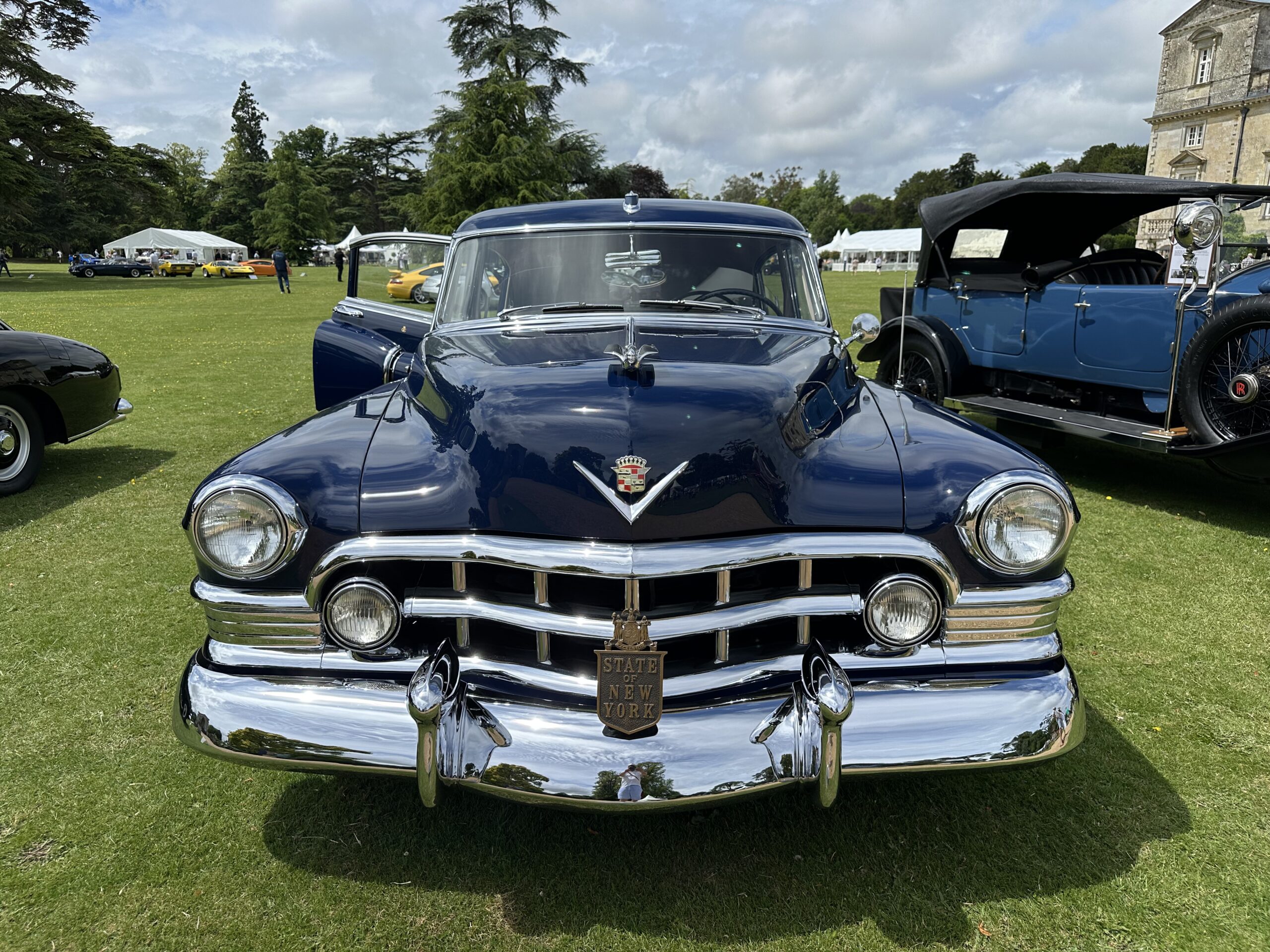
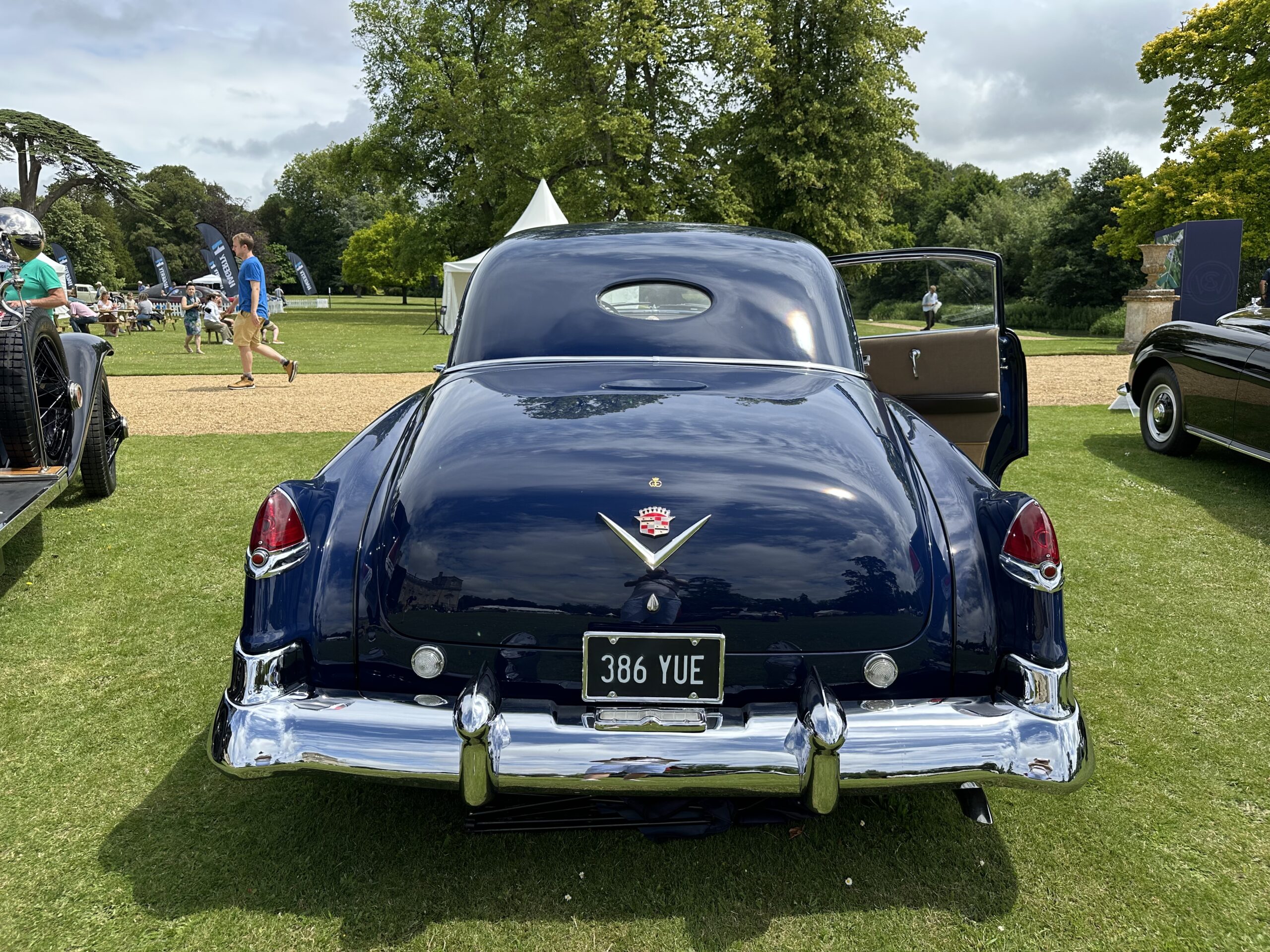
The current owners travelled to America to see the car and meet the owner, who organised three days of visits to private classic car collections in the US. One of them housed hundreds of cars and another was in an old Packard dealership in Indiana and included a Chrysler Turbine Car.
Back in the UK, the hard work began with a total ground-up restoration.
.
AND A LEFT-FIELD CAR OR TWO…
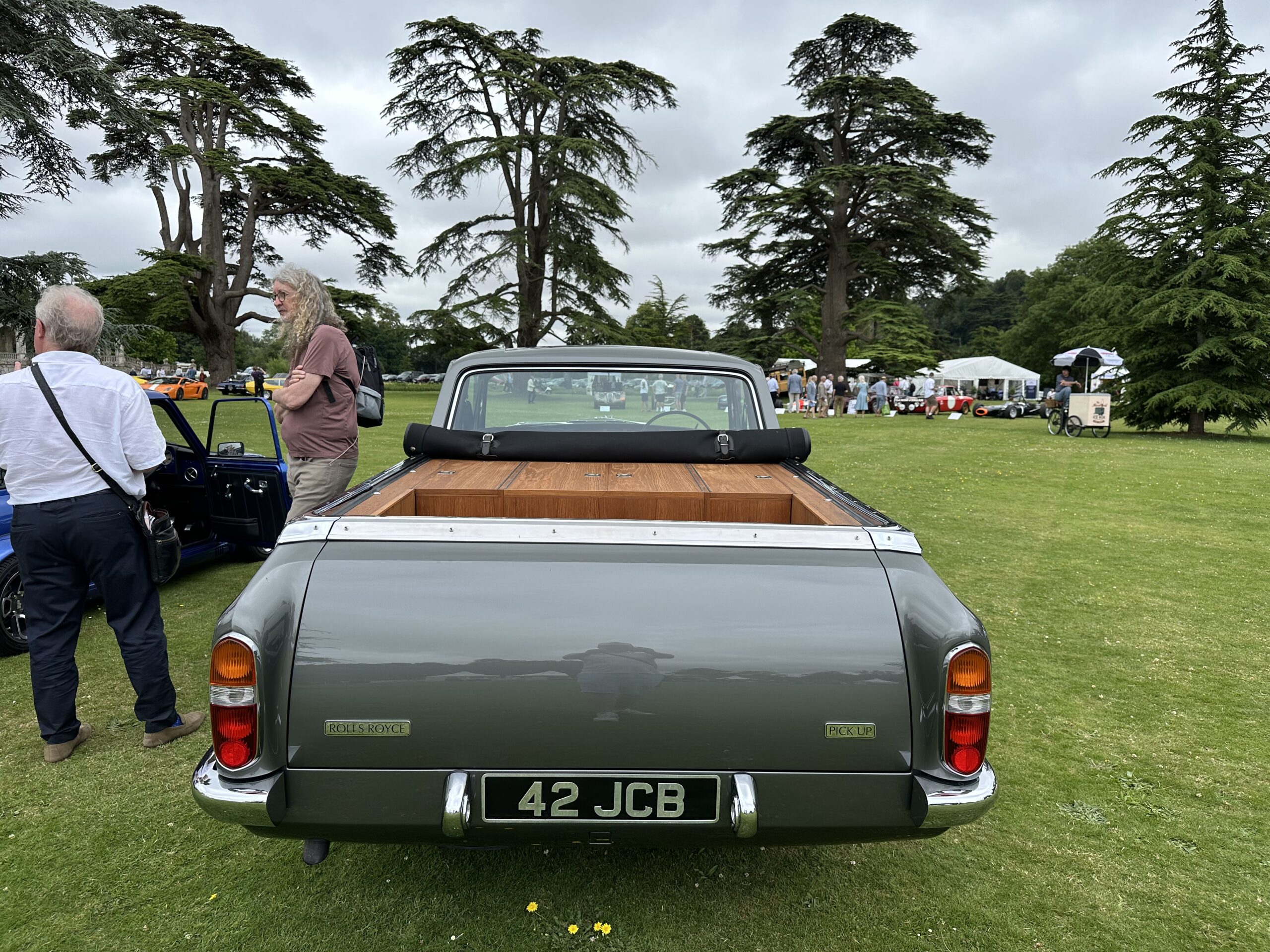
1967 Rolls-Royce Silver Shadow Pick-up
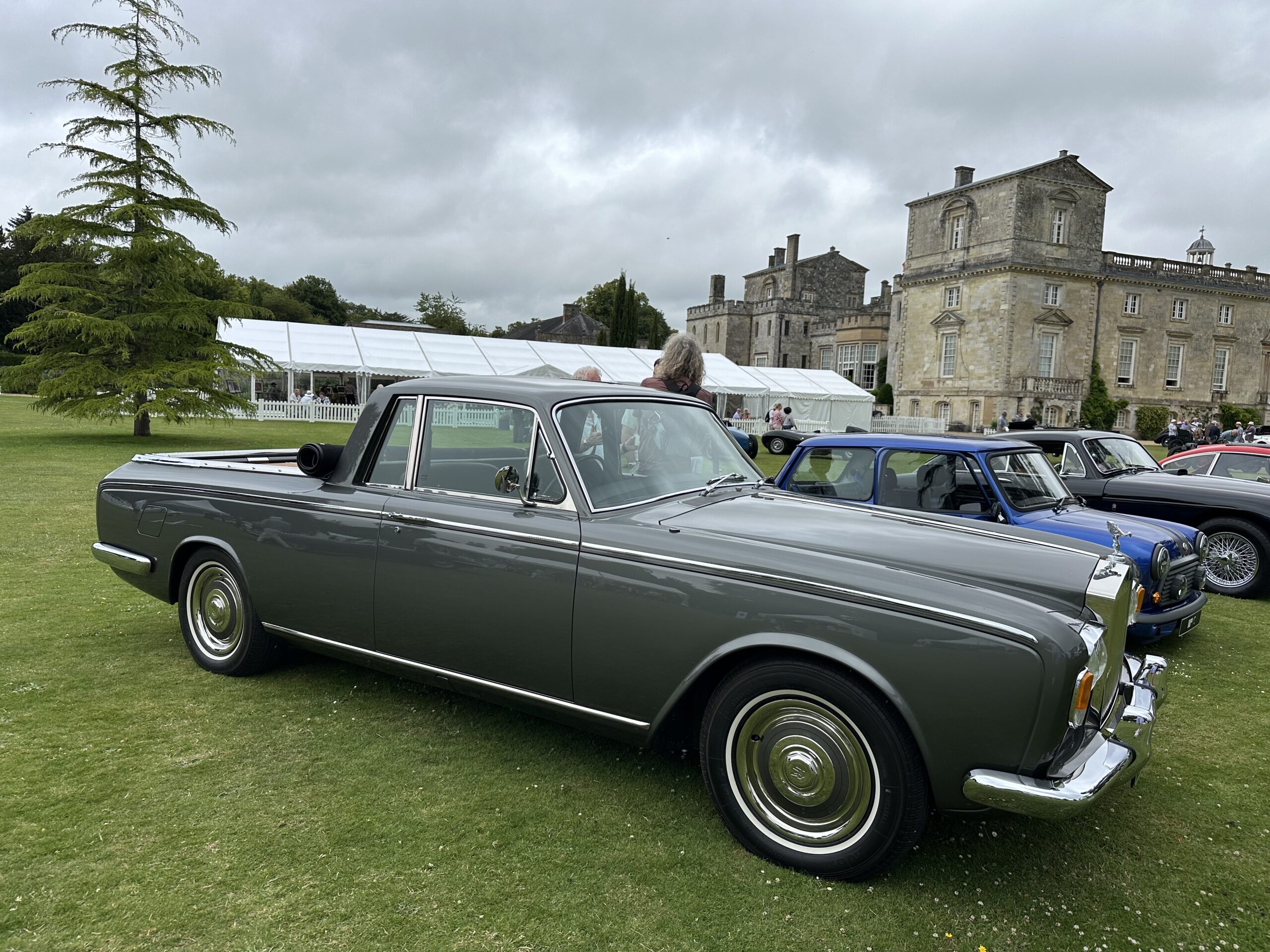
Rolls-Royce’s sublime 6.2-litre monocoque, which boasted arguably the world’s best suspension setup, still serves as a bedraggled white wedding car. Nevertheless, enthusiasts increasingly appreciate the vehicle that inspired every child’s favourite 1:43 model.
There are still lots of Silver Shadows, of course, but not like this one. Lord Bamford bought this Shadow pick-up at a US auction almost on a whim, intending to use it as a fun hack around his estate.
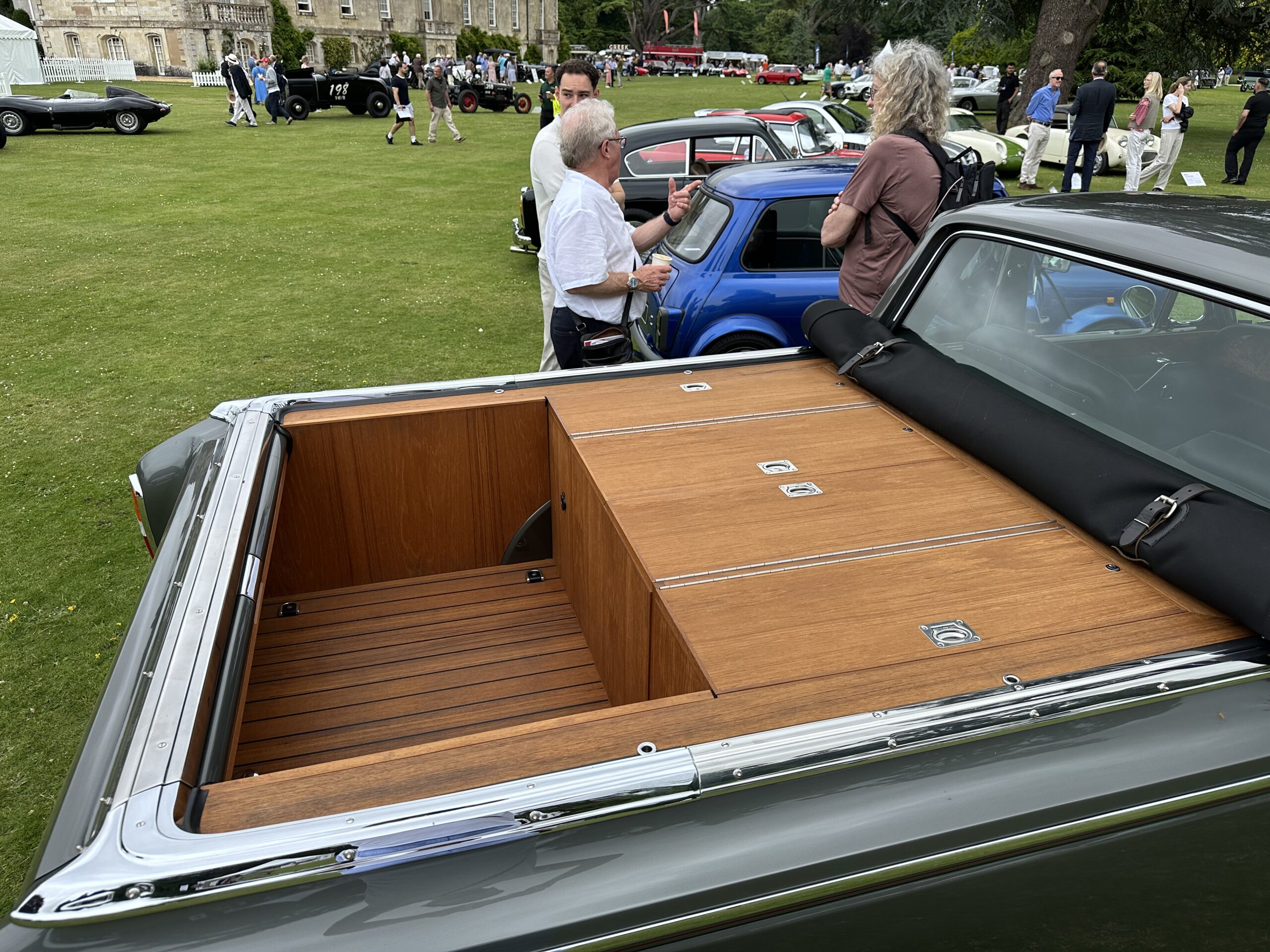
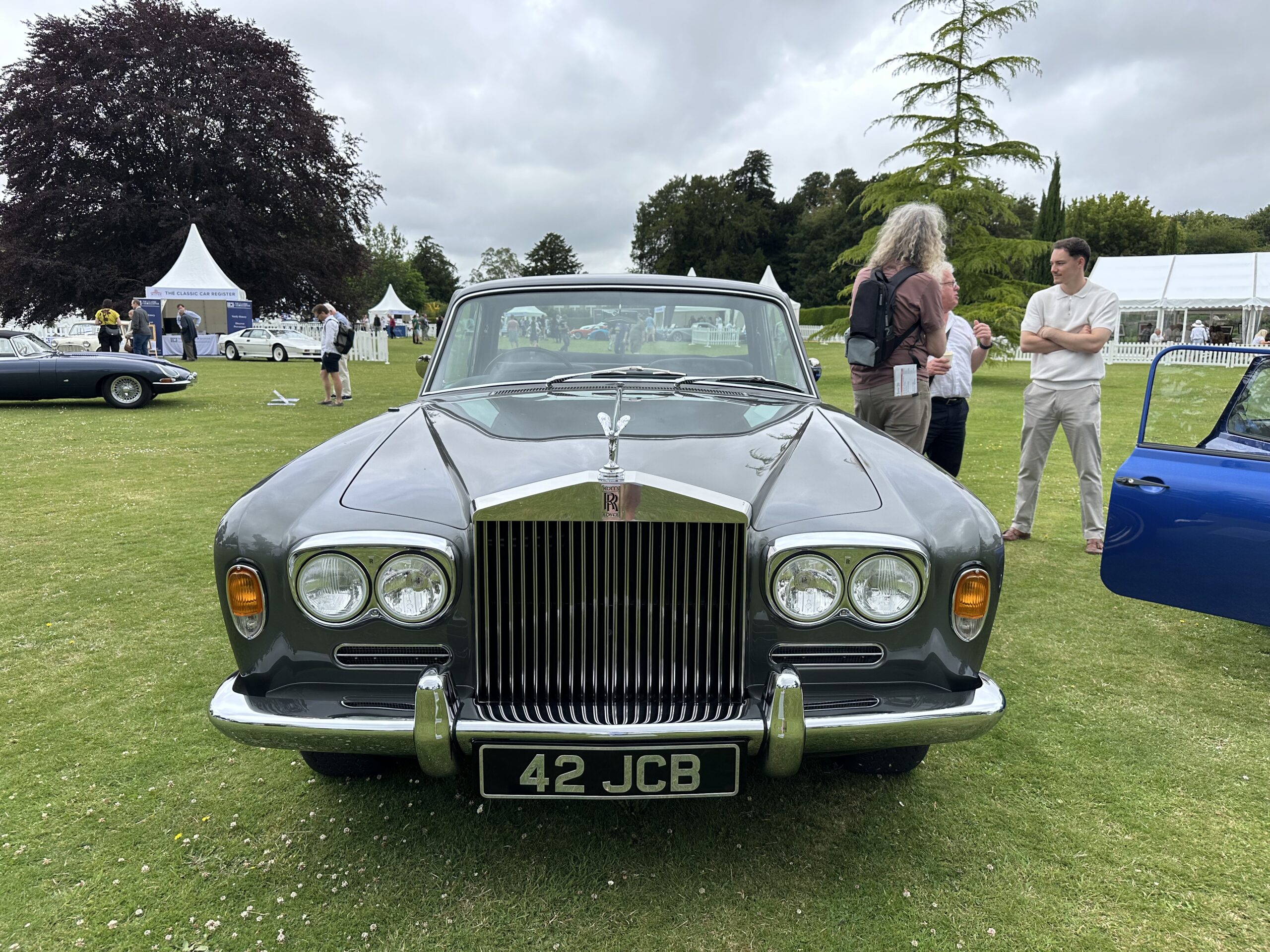
Then it went to Clark & Carter, which found the original conversion to be substandard and reconstructed it from scratch into the magnificent one-off that you see here. It is now testament to the British craftsmanship of 1967 and also the British craftsmanship of today.
.
1958 Abarth 750 DB Zagato
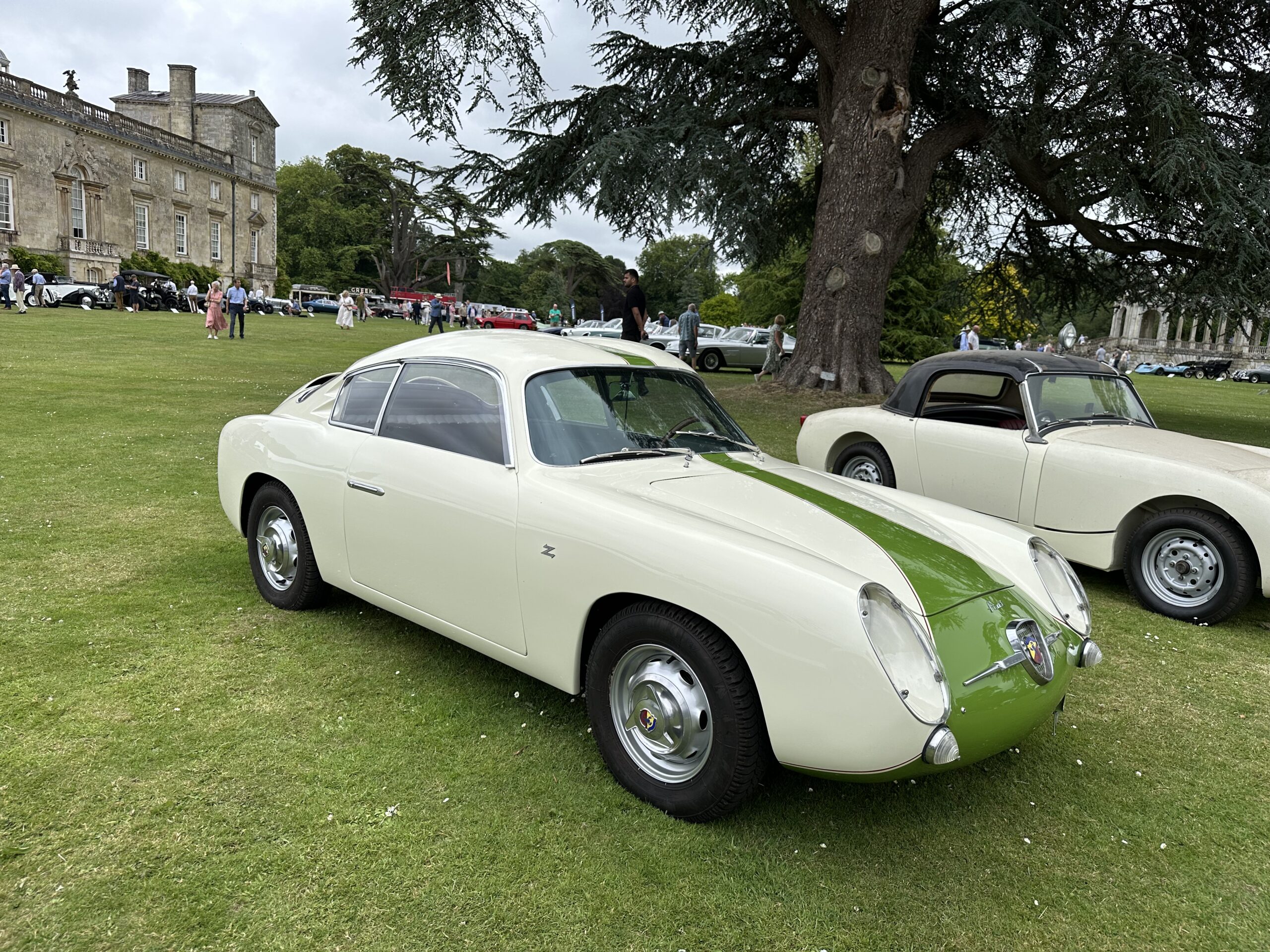
This car was completed in Italy on April 3, 1958 and was first registered in California in July of that year. Its first owner was John Sheets, a director at Desilu Film Studios in Los Angeles noted for his work on the early Tarzan films.
John Sheets kept the car until the late 1980s, when Glen Neyenhuis, a collector of Fiat Automobiles in Scottsdale, Arizona, acquired the non-running vehicle. At that time, the car wore its original Ivory paint and featured a sage green interior. Neyenhuis garaged the car, where it sat untouched until 1989. Then, Mr. Neyenhuis and his son removed the interior and stripped the paint off the car. They undertook no further work, and the car remained in storage until Mr. Neyenhuis passed away in May 2012.
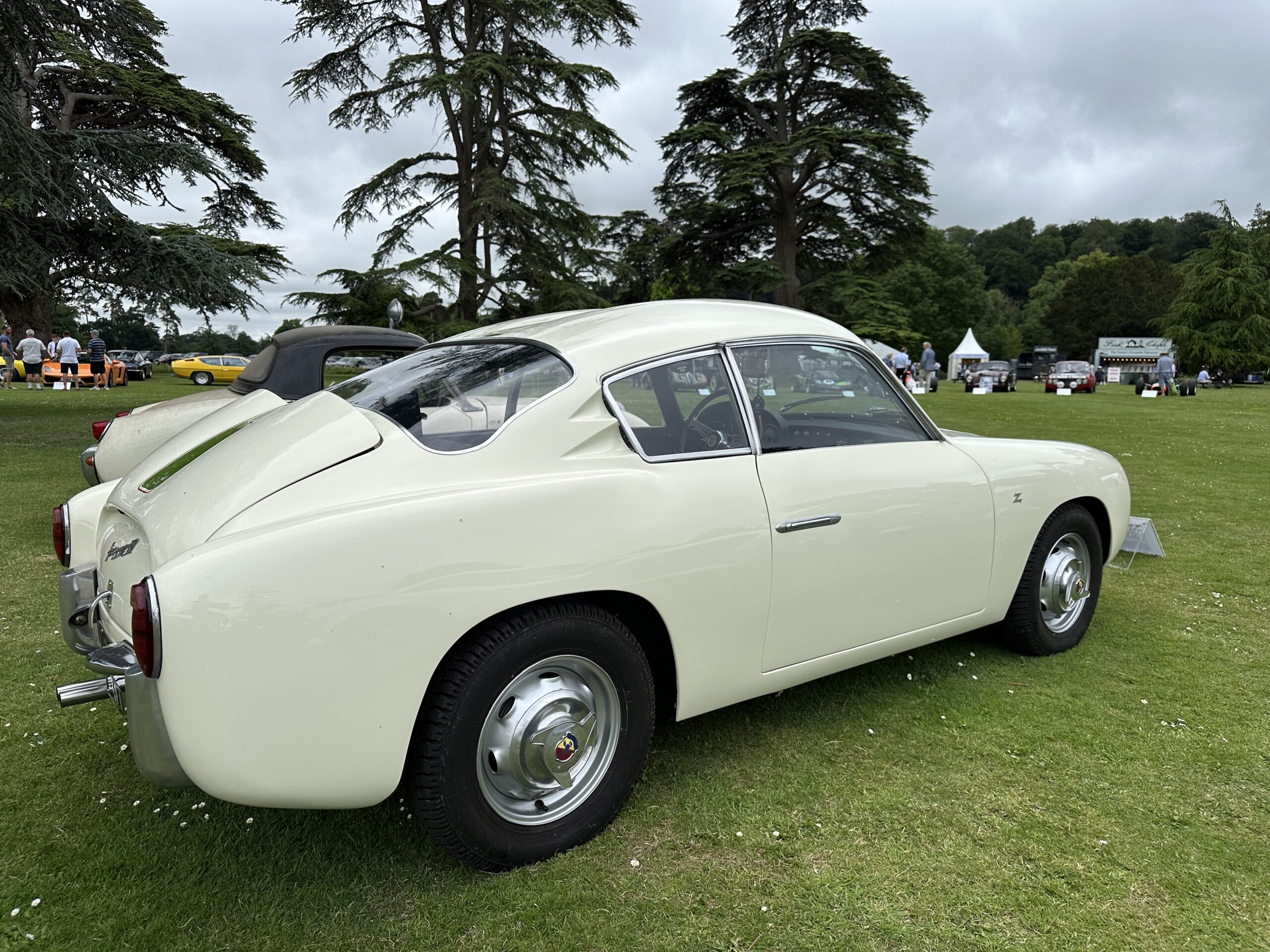
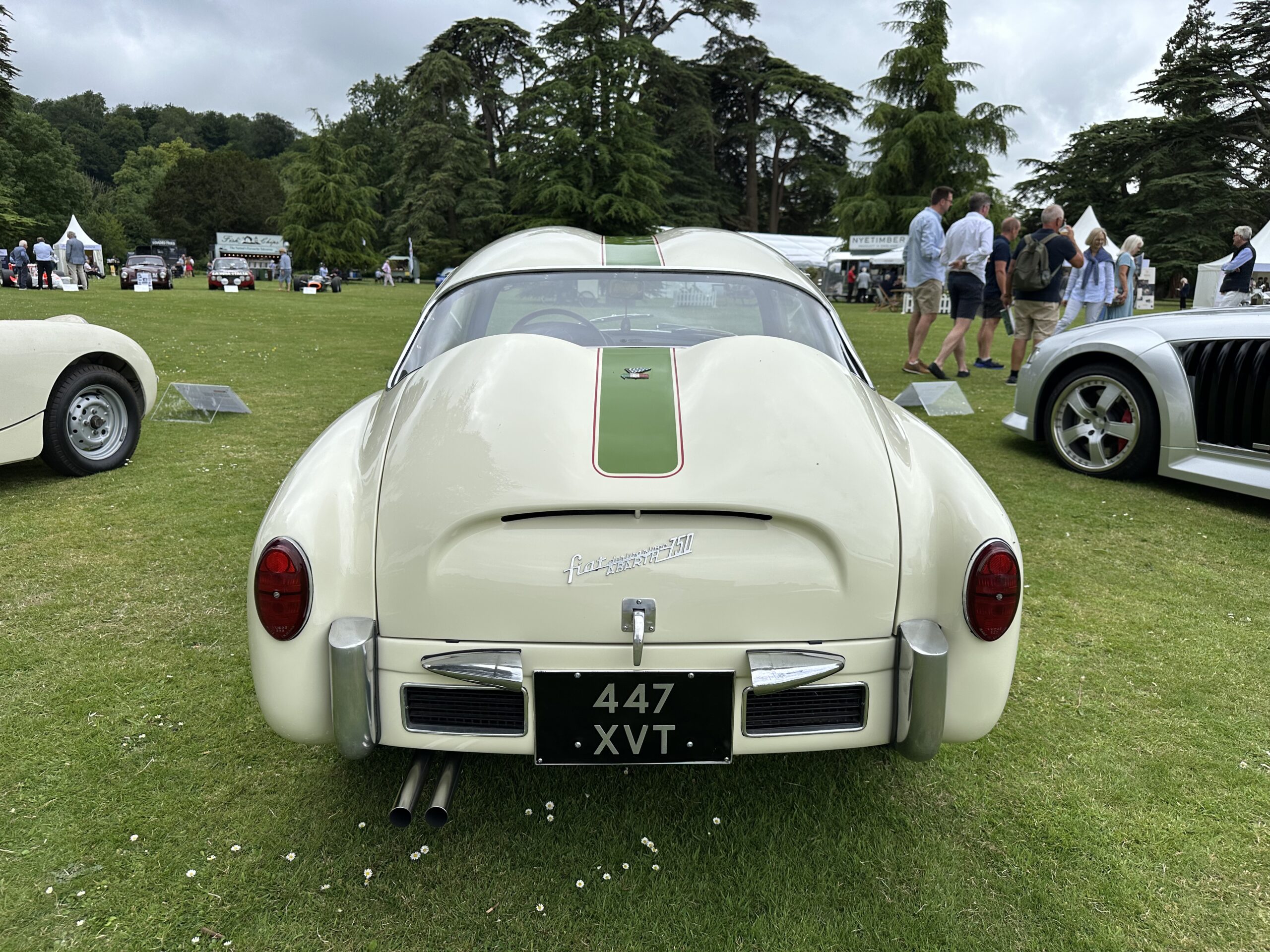
In early 2017, the current owner bought the Abarth and shipped it to the UK. The team carried out a full bare shell restoration, using as many original parts as possible, including the Mille Miglia specification engine.
.
I very much hope that you enjoyed our review of this new car show and some of the cars on display. Concours des Légendes gets a big thumbs up from me. It was a lovely day’s weather which helped, in beautiful surroundings, and a very relaxed atmosphere. Lots of really good talks by people that you wouldn’t normally see close-up and, as you can see above, a lot of very nice cars.
Looking forward to Wilton House Concours des Légendes 2027 already which will take place on the 18-20 June 2027.

Please follow and like us:

