
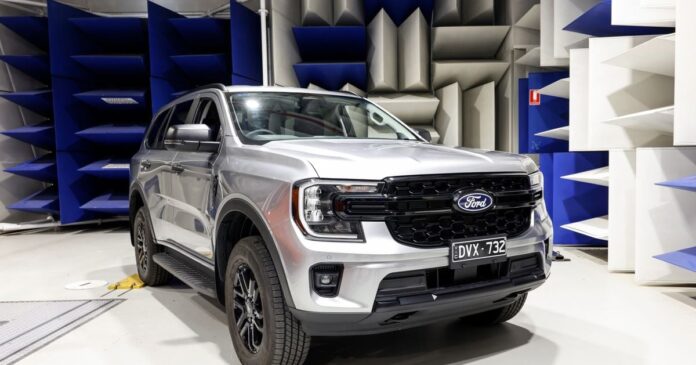
Development of the Ford Ranger – and almost certainly its SUV sister model, the Everest – will continue to take place in Australia for at least another generation.
Although Ford is yet to officially confirm it, that’s the key takeout from several senior Ford product development executives as the Blue Oval launches the MY26.50 Ranger, an upgraded version of Australia’s top-selling model for the past three years.
Ford remains the only automaker with the know-how and facilities required to design, engineer and develop a vehicle from the ground up in this country, and Ford Australia is the global ‘centre of excellence’ for the T6 ladder-frame platform that underpins the Ford Ranger, Everest and Bronco, and the Volkswagen Amarok.
Looking for your next car? We’ll help you research and compare so you choose with confidence.
The past two generations of the Ranger were created in Australia by more than 1000 local designers and engineers, including the PX series of 2011 and the current RA series of 2022, and Ford has invested $5 billion in Australian research and development over the past 10 years, with $500 million being committed each year since Ford ceased local manufacturing in 2016.
But Ford is yet to confirm a new Ranger will be developed Down Under. In fact, in March this year during a flying visit to tour the company’s local facilities, Ford CEO Jim Farley warned that Australian product development could cease unless there are changes to the federal government’s New Vehicle Efficiency Standard (NVES).
These regulations will see auto brands cop financial penalties for selling high-emitting vehicles, such as the diesel-powered Ranger and Everest, if they don’t sufficiently offset them with lower-emitting vehicles such as electric vehicles (EVs).
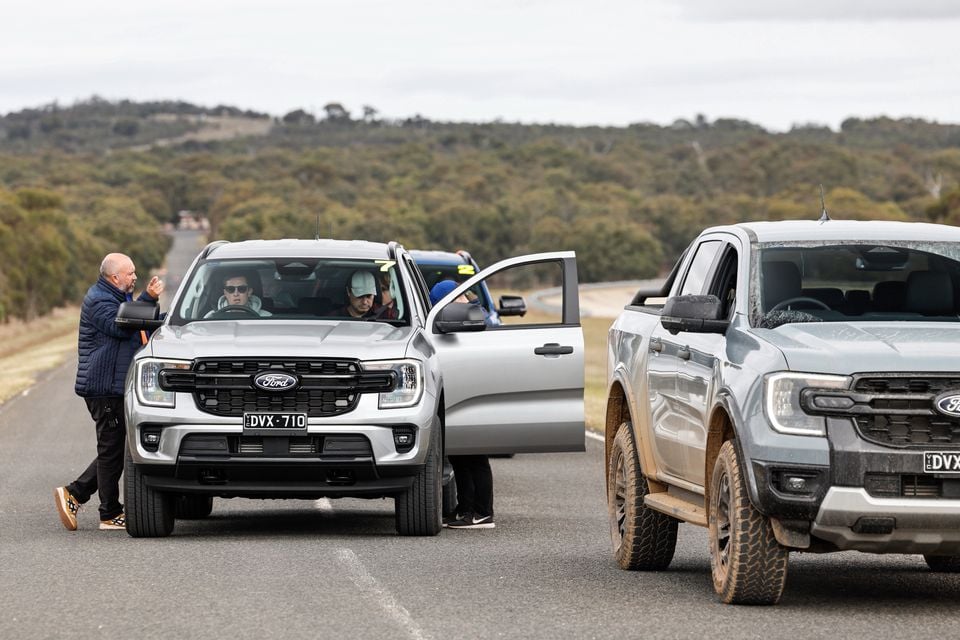
At the recent MY26.50 Ranger launch, however, Ford reiterated it will continue to develop vehicles in Australia “for the foreseeable future”, and indicated it’s already thinking about the next generation of Australia’s and Europe’s favourite ute, which is currently sold in at least 180 markets globally.
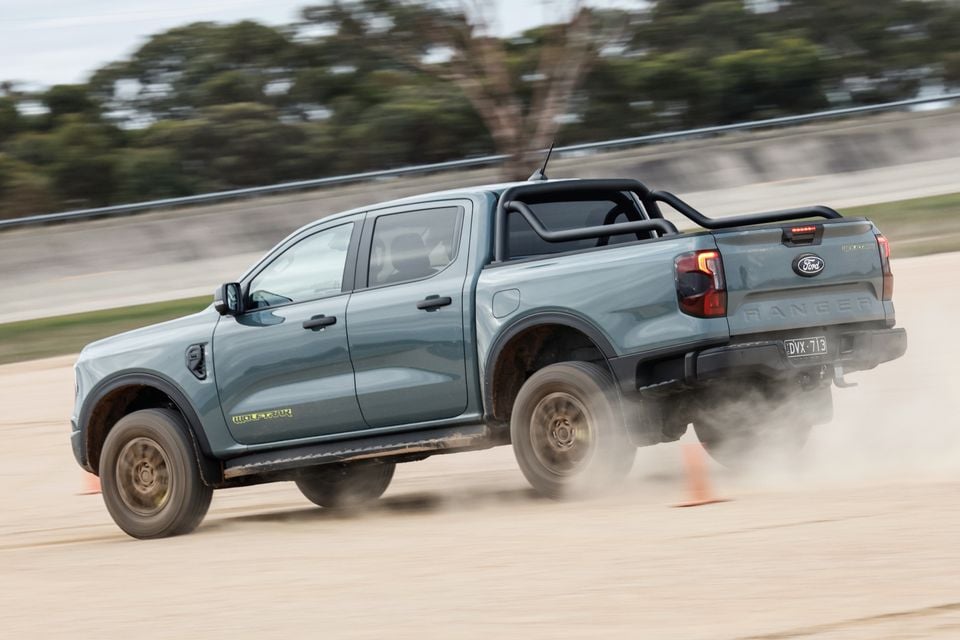
Asked directly whether Ford was developing an all-electric Ranger, Ford Australia’s vehicle program director for the T6 ‘Global Truck’ platform, Mario Brandini, effectively ruled out a Ranger EV in the existing ute’s lifecycle, but said:
“We’re out talking to the customers, working out what we really need, and then looking how technology can help deliver that. So, do you want to jump in fast? Do you want to jump in slow? That’s a pressure that we’ve got, and how we do it.
“But we are looking and, you know, next gen is on our mind. But at the moment, the product we’ve got has got a lot of life in it, and it’s delivering what it needs to deliver.”
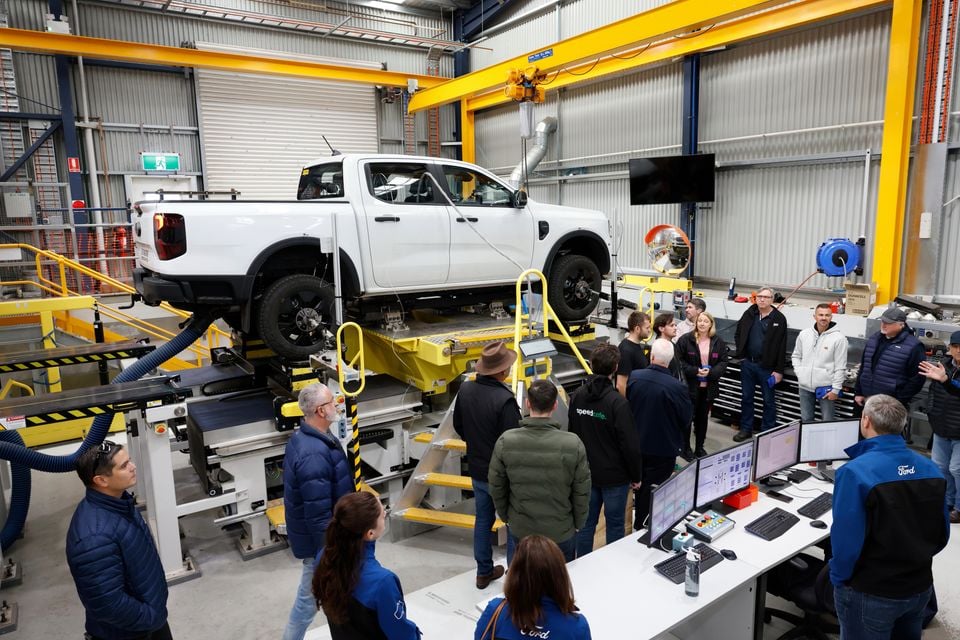
Ford Australia director of marketing Ambrose Henderson reiterated that sentiment, saying: “We have 1500 personnel at Ford Australia, and every day they are innovating, they are investing in the next update, the next generation, the next advancement, to stay at the forefront of these vehicles, both here and around the world.”
The Blue Oval has four main, full-service global Product Development Centers (PDCs) worldwide, and its Australian R&D operations are split across four facilities in Victoria.
These comprise the historic You Yangs Proving Ground which employs 24 per cent of its staff; an R&D facility further south in Geelong (15 per cent); and both Plant #2 (8.0 per cent) and the Ford International Markets Group (IMG) PDC at Broadmeadows in Melbourne’s north, where almost half (47 per cent) of all R&D staff are located.
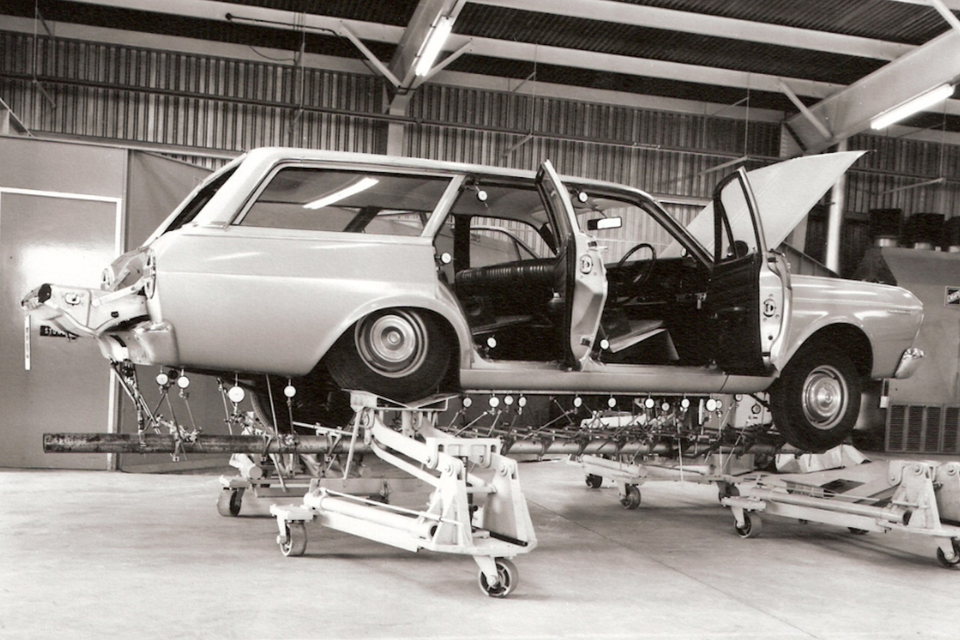
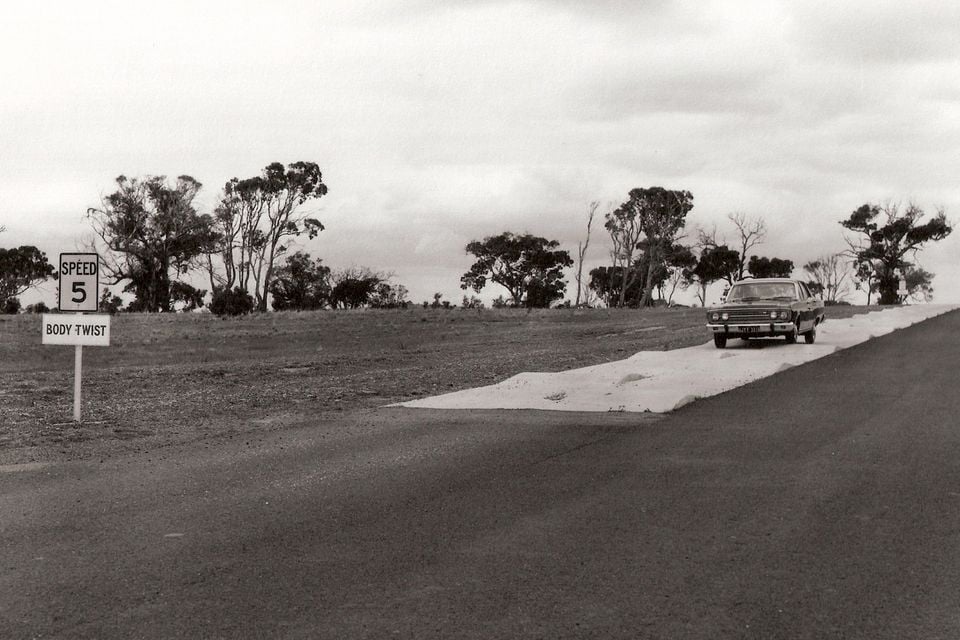
Built to develop a more reliable version of the US-market Falcon sold in Australia from 1960, the You Yangs facility hosted the 70,000-mile Durability Run to promote the then-new XP Falcon in 1965.
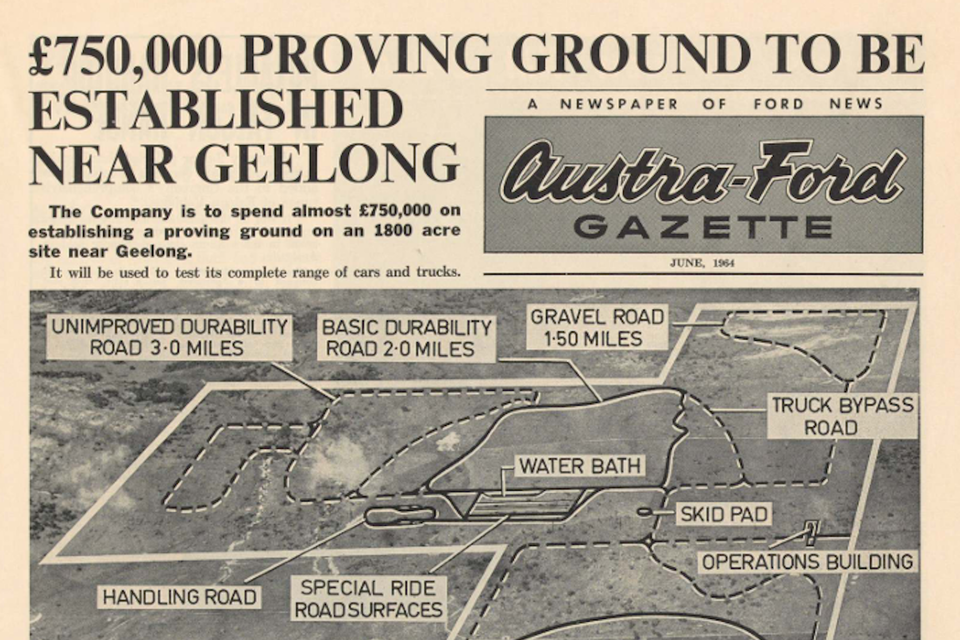
These days the secure facility operates 24 hours a day developing models alongside other Ford R&D teams in Dearborn, Cologne and Nanjing.
In a press release issued to journalists who attended the MY26.50 Ranger launch at the You Yangs, Ford IMG director of product development Steve Crosby said: “Australia is one of Ford’s global product development centres – alongside the US, Europe and China. We employ 1500 people in this country. That includes a 1000-strong product development workforce of highly skilled designers, engineers, tradespeople, and technicians.
“These aren’t people managing a local variant of someone’s else’s vehicle. They’re the people who dream it up after deep customer listening, decide how it will look in Aussie driveways, prioritise safety for your families, and test it to ensure it will last the distance.
“What does it mean to engineer for Australia rather than simply adapt for it? It means solving problems that others don’t see. The Ranger Super Duty is the ultimate expression of this.
“Its genesis was a conversation six years ago; we sat down with our largest fleet customers and asked what they needed. There were clear: they needed a vehicle that could carry a heavy load and tow 4.5 tonnes straight from the factory. Because of our unique local expertise, Ford Australia was the only team that could build the answer.
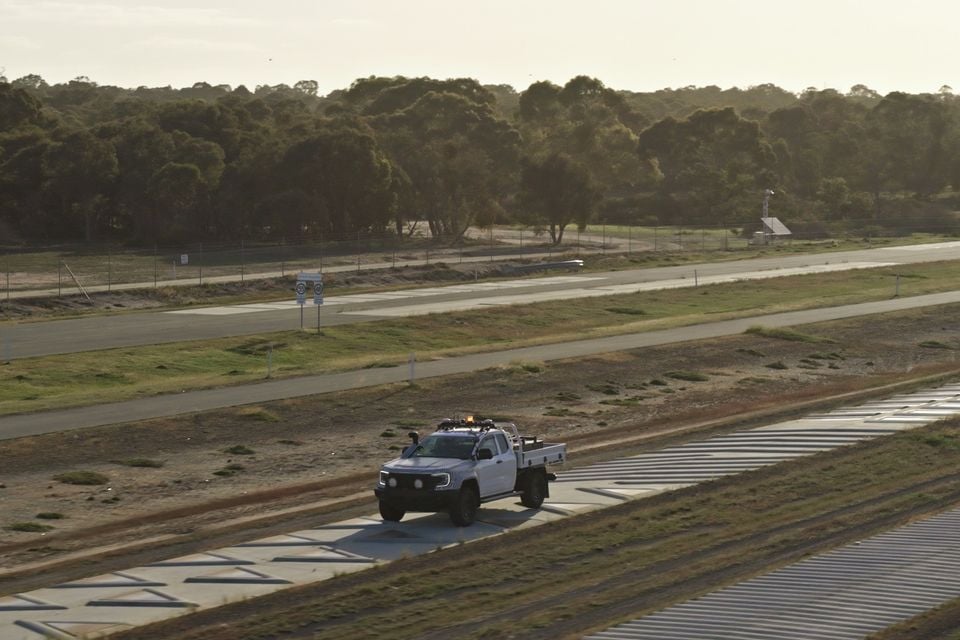
“Engineering a global leader requires more than just a clean-slate design; it requires relentless validation. For over 60 years the You Yangs Proving Ground in Victoria has been the cornerstone of this process.
“Over the past decade, Ford has invested $5 billion in local R&D. That investment isn’t just about better vehicles, it’s about maintaining the sovereign capability – the talent, the facilities and the knowledge – to keep solving Australian problems for Australians.”
Ford’s local outpost also has a long history of fostering local executives who went on to claim top jobs at the Blue Oval, including former Ford Australia chiefs Jac Nasser who became Ford’s global boss and the late Geoff Polites who subsequently headed up Ford of Europe and then Jaguar Land Rover, plus engineer Trevor Worthington who became vice-president of Global Product Development, and designer Todd Willing who is currently the head of Ford Design.
In a recent interview with Wheels magazine, Ford’s former Director of Global Product Planning and Strategy, Jim Baumbick, said Ford’s Australian team was an indispensable part of Ford’s global development team.
“My whole history is developing product. That’s the thing I have the most passion about. We have an incredible team here. We’re a product and service and experience-led company,” the recently appointed chief of Ford’s European operations told Wheels in February.
“We have an incredible asset called our team here in Ford Australia. They have built the business from here. You don’t take that knowledge and not put a huge value on it.
“The truck was born and bred here in Australia. The mission was to build a vehicle that was the F-150 for the rest of the world. The F-150 is not the ideal tool for many countries. It was our original mission.”
Mr Baumbick said Ford Australia continues to develop vehicles for other markets in the Asia Pacific region, beyond the Ranger, Everest, Bronco and Amarok.
“There is work through the region. China and India. I would struggle to give you a percentage,” he said.
“It’s a broader population in the region. But the primary focus is Ranger. Ranger is competing in over 190 markets. It’s a perfect location to develop the truck. A perfect representation. The team here think of a very harsh environment. And how utes are used.
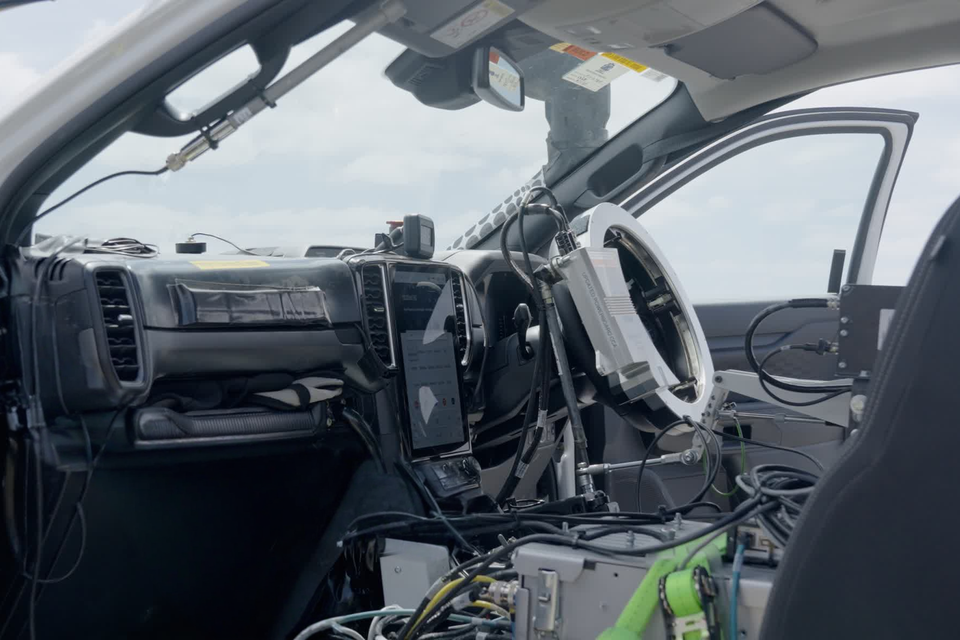
“If you’re off-roading and in rugged environments, you need a truck. And that’s what a Ranger does. That kind of knowledge doesn’t happen overnight.”
And he added that Ford’s goal with the Ranger is for it to become the world’s biggest-selling mid-size pickup.
“We’re now global number two. They (Ford) have to stick with it. Defend it and grow it. The goal is to be number one.
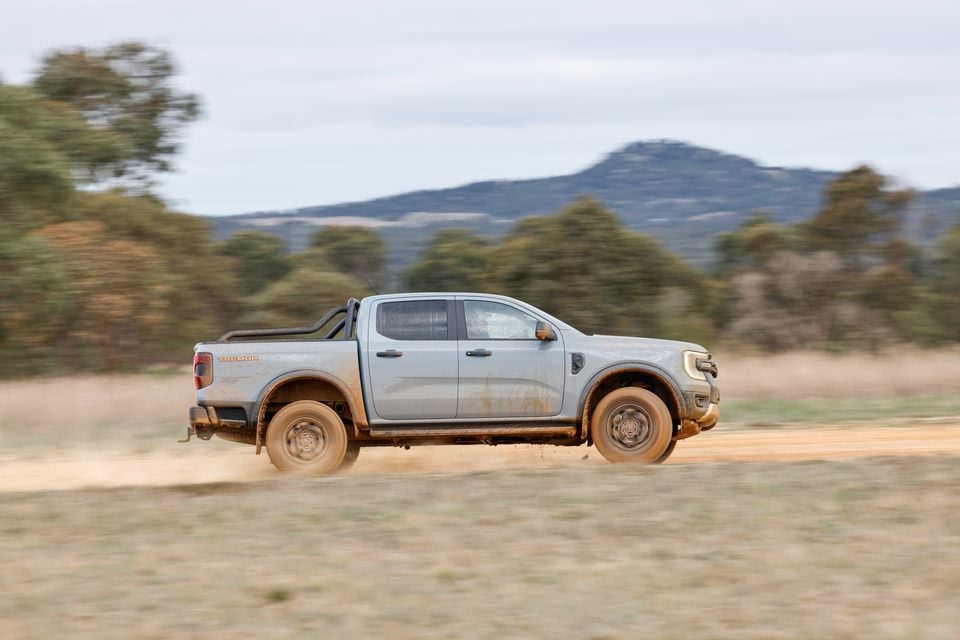
“This is the team. The goal. I want them waking up every day and worrying about Ranger and Everest.
“We’re doing program reviews. And getting [my] replacement up to speed. Every day, every engineer, every manager, wakes up and thinks about Ranger.
“For T6, the Ranger vehicle line, this is the home base. The knowledge base around Ranger starts and finishes here,” said Mr Baumbick.
MORE: Explore the Ford showroom

