
A career in historic vehicles has renewed appeal in a subscription and AI-driven world, industry stakeholders say
Images: Gun Hill Studios
The profile of classic car buyers is undergoing a significant shift with businesses across the sector to rethinking how they operate, according to industry leaders speaking at a recent trade event hosted by the Historic and Classic Vehicles Alliance (HCVA).
At the organisation’s ‘Heritage Matters’ trade insights day, a panel of experts – including Georgina Wood of Rolls-Rove specialist P&A Wood, Mike Harding of Harding Auto Services, Julian Barratt of Jaguar specialist SNG Barratt and James Mitchell of Pendine Historic Cars – outlined how shifting demographics, changing expectations and new technologies are reshaping the market.
A central theme emerged quickly: many of today’s more affluent classic car buyers have moved away from the archetypal oily rag tinkerer – they are seeking a curated experience instead.
“Traditionally, we’ve been selling historic cars,” said Mitchell. “But over the past five years, it’s no longer just transactional. Expectations have shifted dramatically.” He noted that older approaches within the trade – where a car merely needed to be roadworthy – are increasingly out of step with modern buyers. “That is no longer acceptable. There’s definitely been a shift in what people want from the whole car experience.”
One of the most notable changes is how customers engage with their vehicles – many newer entrants to the market lack the knowledge or time to fully immerse themselves in the hobby in the same way their parents did.
“The use factor has changed,” added Mitchell. “Quite often people will go to Goodwood with their tickets, and they are enthusiasts, but they don’t know how to get into racing, or a concours. The generation that are coming into cars now, they know they want to have fun, but unlike their parents, they don’t know how to do that.”
This shift reflects broader lifestyle changes. According to Mitchell, many affluent buyers under 55 are time-poor despite their passion for cars. “They spend a lot of time working and earning their money,” he said. “They want to enjoy cars but don’t have the bandwidth to manage everything that comes with ownership.”
Instead, these customers are increasingly willing to pay for comprehensive, end-to-end services. They are happy to be self-reflective, and answer questions like ‘why are you buying it?’, ‘what do you want if for’ and ‘what does joy look like?’ before a tailored experienced is delivered to them. “It’s a complete service,” Mitchell added. “People don’t have the time anymore to handle entry forms, logistics or even decide which events to attend.”
At the same time, the demographic makeup of the classic car world is broadening. What was once seen as a predominantly male pursuit is becoming less the preserve of just dad, and more inclusive and family-oriented. Mitchell highlighted a growing trend toward multi-generational participation. “It’s expanded from singular to ‘what does the family want?’”
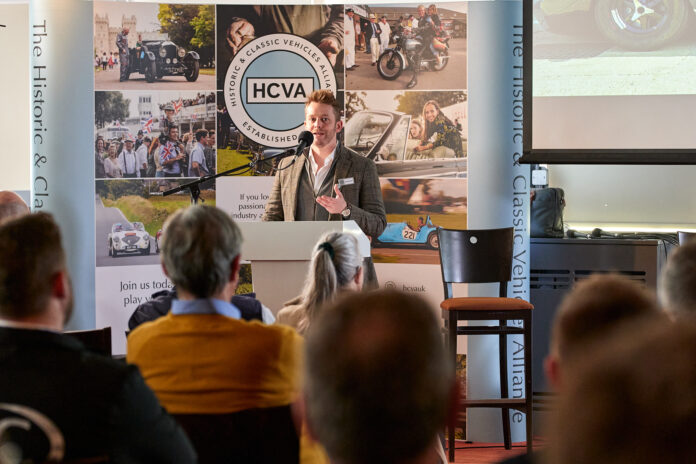
HCVA CEO Dale Keller feels that the march of AI is making heritage skills careers even more appealing
Alongside these cultural shifts, expectations around vehicle performance have also changed. “It’s not that people wanted to break down by the side of the road back in the day, but it was part of the overall experience,” explained Barratt. “Now people want to take their car down to Members’ Meeting or whatever, and they want it to start first time. A lot of people are building incredible cars that are way better than originally came out of the factory in terms of reliability and performance, so ensuring we can provide parts to cater for that is part of what we do.”
Advances in engineering and manufacturing are enabling businesses to meet these demands. “When we reserve engineer a part, we won’t reverse engineer it with the problems it had when it was originally made,” said Harding. “From experience, we know why that part failed and the way it failed. That has led us produce parts that are inherently stronger or better at their job – everything from small brackets to a billet cylinder head for a Riley Nine. It’s a real positive. We live in a world now where it possible to do things that 20 or 30 years ago we could only dream of.”
Barratt pointed to the growing use of 3D printing, both in plastics and metals, as a game-changer for the industry. “It allows us to produce low-volume parts that would previously have been cost-prohibitive,” he said.
There was also much talk of embracing modern classics and how they shouldn’t be seen as a “dirty thing,” with companies also urged to understand their limitations in such areas. “We need to bring in people who understand the language of modern classics and this new generation of enthusiasts,” Mitchell said.
That said, it was also noted how a significant market correction has allowed some to acquire a more traditional dream car that would previously have been out of reach. And with the UK in a privileged position of having the business to cater for a changing breed of buyer and adapt such cars to suit, the hope is that traditional classics will retain their appeal for many years to come.

