
As last week’s relentless heat wave strained power grids, critics feared that the record number of electric vehicles on the push them over the edge. Instead, the opposite happened: EVs helped utilities keep the lights on and the AC running by feeding the electricity stored in their batteries back into the grid.
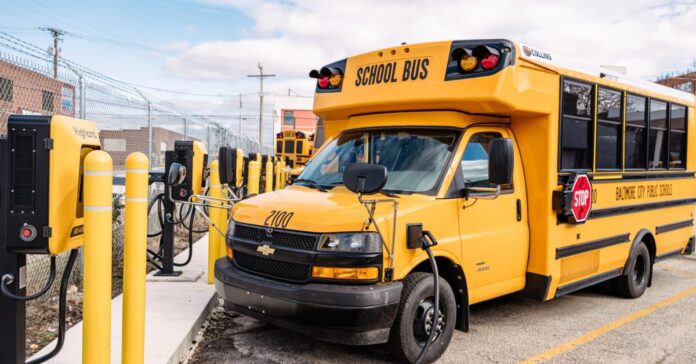
School may be out for summer, but the electric school buses shuttling kids around are still hard at work, shoring up America’s electric grid just as a crippling heat dome threatened to push it to its limits. The World Resources Institute’s (WRI) Electric School Bus Initiative reports that a number of fully deployed vehicle-to-grid (V2G) projects involving some 230 electric school buses are now able to supply 8 MWh of power back to the grid at any given time – enough electricity to power about 1,600 typical US homes for up to four hours and significantly shave peak load demand for the utilities they serve.
“It’s very early days,” says Steve Letendre, senior advisor to the Vehicle Grid Integration Council trade association, “(but) school buses will be a critically important backbone of V2G capacity.”
California currently leads the US in developing and adopting V2G school bus technology, where the state’s largest project at the Oakland Unified School District operates a fleet of 74 buses adding an estimated 2.1 GWh of clean energy back into the state’s grid, annually.
It’s all upside
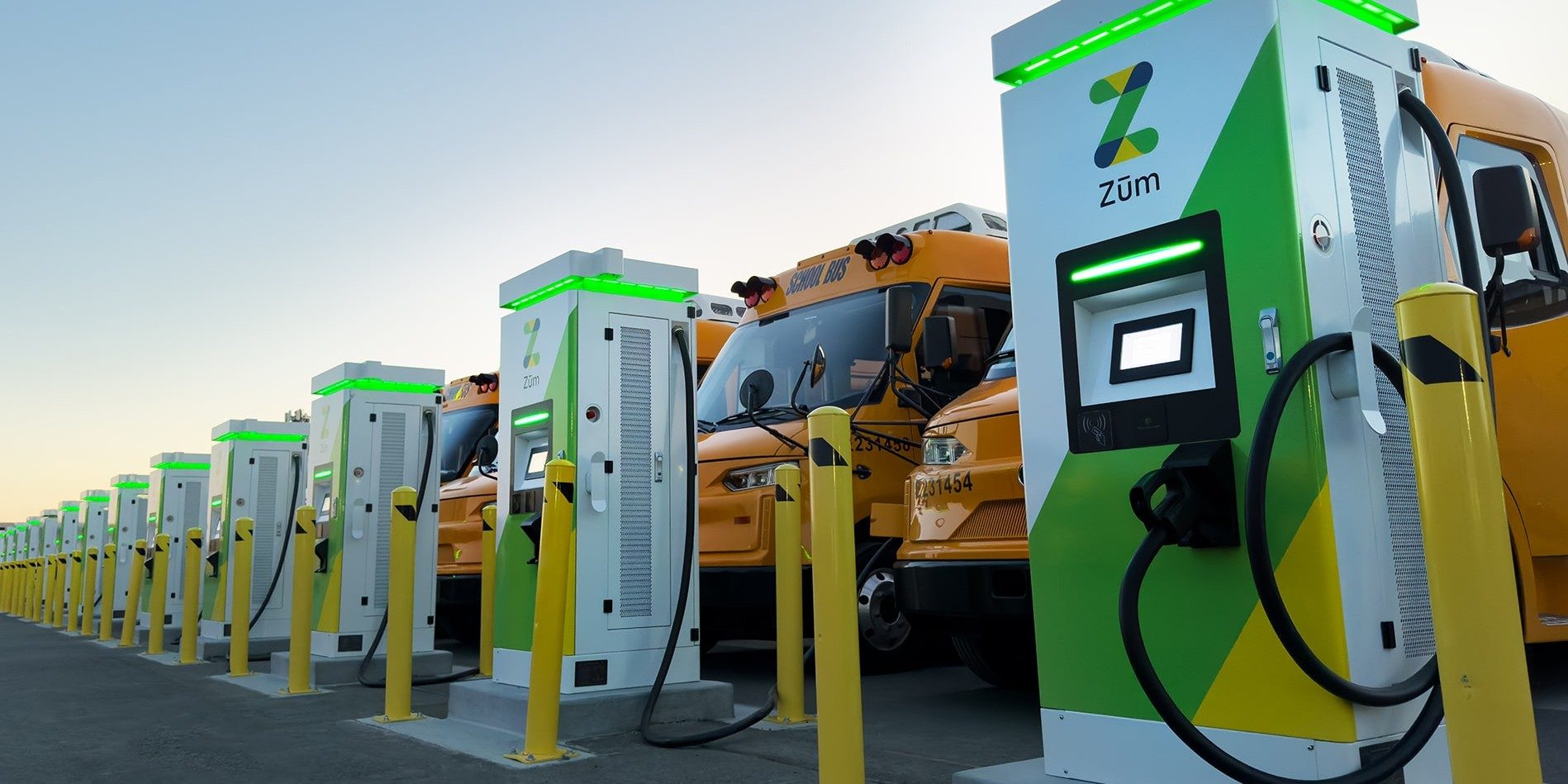
Despite putting up some impressive numbers already, today’s V2G school bus deployments are still just scratching the surface. Consider: if 230 electric school buses can deliver 8 MWh of energy back to the grid, scaling that to just half of the roughly 6,700 electric school buses already in service on US roads would work out to well over 100 MWh of flexible, off-peak energy available during periods of peak demand.
That kind of resource flexibility doesn’t just shore up the existing grid – it can help lower consumer electricity costs by reducing the utilities’ need to buy expensive peak power on the wholesale energy market. Fewer emergency power purchases mean lower transmission and delivery costs for utilities, and those savings can ultimately pass through to rate-payers, and lower energy costs are probably something most of us want.
And, of course, the grid’s ability to tap into all that battery-stored power in an emergency can be a literal lifesaver. “If we have a hurricane, and God forbid we do, but if we do and there’s no power in the community, we can bring our buses to specified locations and the community can charge their phones,” says Angie White-Banda, Transportation supervisor for Florida’s Glades County School District. “They can charge their devices. They can come in with, and sit down for a little while and cool off with cold AC.”
And, as before, this is just scratching the surface. As if to illustrate the point, San Francisco’s Unified School District is set to launch a new electric school bus project next month that’s expected to surpass the Oakland project, with a fleet of 104 buses returning about 3 GWh of energy annually during peak hours and scheduled to double to more than 238 electric buses by 2028.
YOU MIGHT ALSO LIKE:

If you’re considering going solar, it’s always a good idea to get quotes from a few installers. To make sure you find a trusted, reliable solar installer near you that offers competitive pricing, check out EnergySage, a free service that makes it easy for you to go solar. It has hundreds of pre-vetted solar installers competing for your business, ensuring you get high-quality solutions and save 20-30% compared to going it alone. Plus, it’s free to use, and you won’t get sales calls until you select an installer and share your phone number with them.
Your personalized solar quotes are easy to compare online and you’ll get access to unbiased Energy Advisors to help you every step of the way. Get started here.


FTC: We use income earning auto affiliate links. More.

