
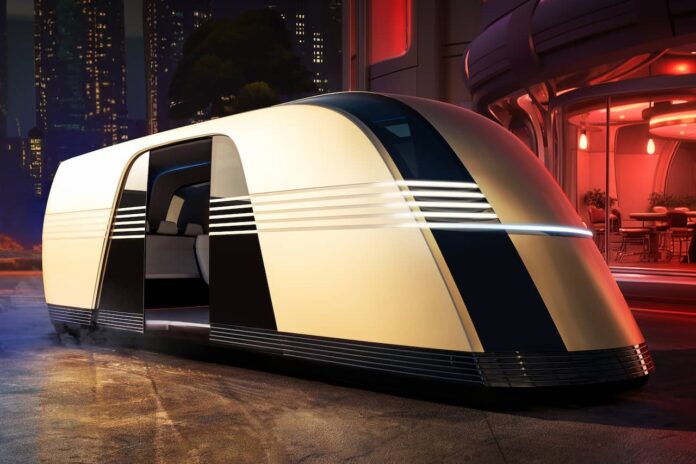
In the one of a kind, “We, Robot” event on October 10, 2024, Elon Musk revealed one of its most radical electric vehicles – the Robovan. Tesla aims to build its position in autonomous vehicles with the electric van, offering Level 5 capability for a driverless experience.
If the company launches the EV with the same vision for autonomy, even if getting there is with gradual steps, it could significantly alter the transport sector. However, it won’t be without unique challenges.
Here’s everything we know about the upcoming electric van:
Robovan becomes Robus
On February 7, 2025, Tesla filed two trademark applications for the mark “Robus” at the USPTO. The first application (#99032880) covered a sub-brand related to transportation and delivery services, including ridesharing, peer-to-peer rentals, and commercial leasing. The second application (#99032883) indicated the use of Robus as a model name.
On September 19, 2025, Tesla chief designer Franz von Holzhausen participated in Bloomberg Hot Pursuit podcast sitting in the Robovan and revealed that the vehicle is now called Robus.
When the show’s co-host Matt Miller asked him about the multi-seat vehicle, he replied, “I’m in the Robus, yes.” Later in the podcast, von Holzhausen confirmed he was referring to the Robovan, saying, “We showed this vehicle almost a year ago now, at our 10/10 event, which is really based around autonomy and the future of transport.”
Design


The Tesla Robus is a driverless EV designed primarily for commercial applications. The exterior is streamlined and influenced by art deco trains of the 1920s and 1930s. It features slim front and rear light bands, sliding doors, and wheels positioned under the body. Cargo storage areas are located at both ends, accessed through top-hinged doors.
The production model should take on a more practical form, with the body panels and ground clearance designed for everyday road and weather conditions.
Interior
The Robus has a large, flat-floor cabin made possible by its autonomous design. Wide, floating seats, ambient lighting, and contoured panels create a lounge-like atmosphere. The layout consists of two forward-facing rows and two rear-facing rows, with open space in the center.
Large screens at the front and rear display information such as time, weather, and stops. Tesla suggests these could also be used for advertising.


The vehicle can seat up to 14 passengers and provide standing room for six more. In total, it can accommodate 20 occupants or be configured for goods transport.
So this can carry up to 20 people, and it can also transport goods. So you can configure it for goods transport within a city or transport up to 20 people at a time.
Elon Musk, co-founder and CEO, Tesla (We, Robot event on October 10, 2024)
Citing Tesla co-founder and CEO Elon Musk, Teslarati reported on September 20, 2025, that the company is developing a wheelchair-accessible vehicle (WAV). It will be equipped with a deployable ramp for wheelchair users and a specially developed seatbelt for their safety.
Specifications


Tesla has not disclosed the specifications of the Robus. Given its size and purpose, the model should use a dual-motor system, with the battery capacity around 200 kWh. Musk has indicated that operating costs in the Robus could be as low as 5–10 cents per mile:
If you want to take a sports team somewhere or you’re looking to really get the cost of travel down to, I don’t know, 5-10 cents a mile, then you can use the Robovan.
Elon Musk, co-founder and CEO, Tesla (We, Robot event on October 10, 2024)
Release Date
Tesla has not announced when the Robus will launch. Based on current information, it is unlikely to arrive before 2028, and local traffic laws and regulations will influence its availability. While nothing is confirmed, a more production-focused design is expected to appear within the next couple of years.
Featured Image Source: Tesla

International Automotive News Editor since 2014, covering global motor shows, industry events, and test-driving various vehicles, with a focus on hybrid and electric cars in recent years.

