
The C-HR grabbed the world’s attention when it premiered in 2016. A blend of a sports coupe, hatchback, and compact crossover, the ‘Coupe High-Rider R’ stood out with its design, making it one of the most appealing models in its segment, especially for young customers.
With only about 12,000 units to its name in 2022, the C-HR’s popularity had receded in the U.S., as customers increasingly preferred larger conventional SUVs like the RAV4 and Corolla Cross. While the C-HR Hybrid is not available in the U.S., it remains one of Toyota’s top sellers in Europe.
We got to spend some time around the second-generation C-HR in the PHEV version in Zurich recently, and here’s what we found.
Design


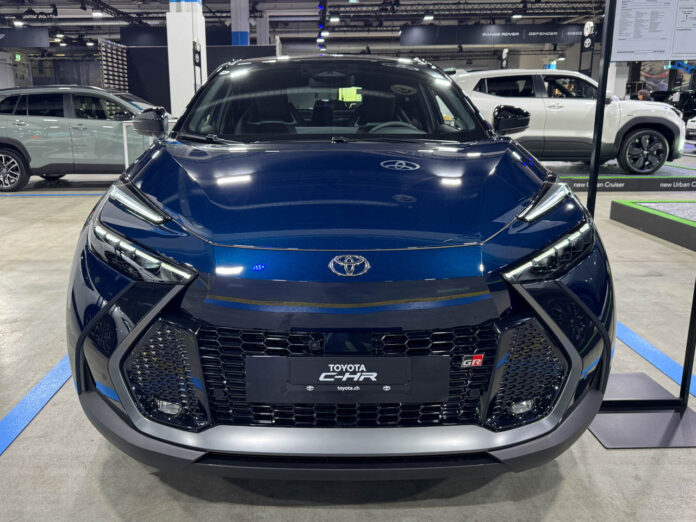
The second-generation Toyota C-HR Plug-in Hybrid follows the “super-coupe” design direction, with the spirit of a concept car. The SUV’s sculpted body features sharp diamond-cut character lines, flush door handles, and a 35 mm wider stance compared to the model sold in the U.S., which lends it a planted appearance.
Short overhangs and alloy wheels up to 20 inches contribute to its athletic proportions. The front adopts Toyota’s well-recognized hammerhead format with slim full LED headlamps and arrow-shaped turn signals, while the model name is illuminated within the full-width rear light bar.
A new bi-tone design extends the contrasting black roof down into the rear bumper, which creates a contrast with lighter body colors. The body integrates cameras, radar, and headlight washers using a “concealed tech” approach, with tighter shut lines and clean surfaces for a sporty look.
Interior


A welcome sequence activates exterior lighting, including the illuminated rear logo, while stored preferences for the seat, instrument display, and multimedia system are automatically applied. The cabin uses Toyota’s first 64-color ambient lighting, which changes tone through the day and turns red to warn occupants of approaching vehicles or cyclists.
A 12.3-inch digital cluster displays key information with adjustable layouts and themes. The Toyota Smart Connect system, offered with an 8- or 12.3-inch touchscreen, includes wireless Apple CarPlay and Android Auto, voice control, and charging information.
Toyota Safety Sense adds Proactive Driving Assist, Acceleration Suppression, and Lane Change Assist, while over-the-air updates keep all safety and driver assistance systems updated.
Experience in the Toyota C-HR Plug-in Hybrid
The deployable door handles work fine, and getting in is easy even with the slightly low roof. I had to set the steering to its highest position to slide in comfortably at six feet tall.


Once seated, the first thing that stood out was how cocooned the cabin feels. The door panels merge seamlessly into the dashboard, giving a sporty, wraparound look. The GR-spec model I sat in has a more aggressive attitude, but the seats themselves are very comfortable with solid back support and decent under-thigh comfort. The headrests aren’t adjustable, though they’re nicely cushioned.
I really like that Toyota has kept physical buttons for key functions. The piano-style keys for HVAC, seat heating, and steering heating all feel great to use. Headroom is good, and while visibility isn’t perfect due to the thick rear pillars and sloping roofline, the small quarter glass panels help minimize blind spots.
Moving to the rear, I was pleasantly surprised. The seat height is low, but knee room is adequate, and I had enough headroom even with the tapered roof. It feels snug and slightly dark in the back, but not uncomfortably so.
The thick C-pillars limit the view, though the small window adds a bit of brightness. The middle seat is tight, and the rear bench doesn’t recline, but the default backrest angle is fine for short to medium drives. The doors don’t open very wide, and you have to watch your head when getting out.
Specifications

The C-HR Plug-in Hybrid pairs a 2.0-liter four-cylinder gasoline engine with a permanent magnet synchronous motor, producing a combined system output of 223 hp (164 kW).
Power is delivered through an e-CVT to the front wheels. The model accelerates from 0-62 mph in 7.4 seconds and reaches a top speed of 112 mph. Fuel consumption is rated at 353.1 mpg (WLTP combined).
Thanks to its 13.6 kWh battery, all-electric WLTP combined range is up to 66 km (41 miles). The suspension uses MacPherson struts in the front and a double-wishbone setup at the rear. Brakes feature 17-inch ventilated front discs with twin-piston calipers, solid rear discs, and an electronic parking brake.
Pricing

The C-HR nameplate returns to the U.S. next year as an all-electric crossover, but I don’t see the partially electrified model coming back. In the UK, the PHEV is priced at £37,840 (OTR), which converts to about USD 49,849.

An automobile engineer by training, I’ve analyzed the global car market since 2005, with a keen focus on EVs since 2008. My journey in online automotive publishing spans 17 years, during which I have reviewed cutting-edge automotive technologies and interviewed leading global CEOs and vehicle developers.

