

Similar to gasoline that comes in regular, the somewhat pointless mid-grade, and additive-rich, Top Tier premium blends, diesel fuel comes in different types and grades. Regular diesel (also referred to as high-sulfur diesel or HSD) has been the go-to juice of older diesel engines, some off-road machines, and some marine diesel powerplants. Regular diesel has a higher sulfur content (up to 5,000 ppm or parts per million), which means it produces more particulate matter and has higher emissions overall.
On the other hand, ultra-low sulfur diesel (ULSD) is exactly what it sounds like, with a formula that contains no more than 15 ppm of sulfur. That’s not a typo: ULSD has 4,985 ppm less sulfur than HSD, and it means it’s better for the environment and your health, with less harmful emissions. In 2006, the EPA mandated a reduction in the sulfur limit of diesel fuel from the previous 500 ppm (low-sulfur diesel or LSD) to 15 ppm, essentially giving birth to ultra-low sulfur diesel or ULSD.
ULSD has a few key advantages over high-sulfur diesel, apart from spewing less damaging nitrogen oxides (NOx), sulfur dioxides (SO2), and soot. It has a higher cetane rating and helps improve performance, while its cleaner-burning properties help improve fuel economy and reduce operating costs. If you have an on-road diesel vehicle or truck manufactured after 2007, it most likely requires a diet of ULSD.
On the other hand, regular diesel is for older diesel motors made before 2006, or for diesel generators utilized in farms, heating systems, construction sites, and off-road applications. It’s currently sold as off-road diesel, or red diesel, and it’s illegal on public roads, because it’s tax-exempt. And to make sure the authorities know one diesel from the other, off-road diesel has a reddish hue, while ULSD has a somewhat clear and greenish color and is taxed for on-road use.
What happens if I get confused between ULSD and regular diesel?
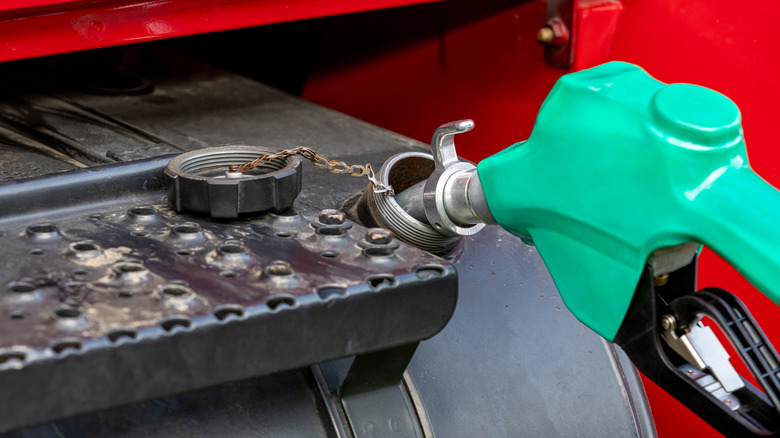
Bad things will happen if you accidentally fill a newer diesel engine that requires ULSD with regular high-sulfur diesel. Modern diesels have emission devices, like diesel particulate filters (DPF) and catalytic reduction systems, to curb emissions. Too much sulfur in the fuel can clog and damage the DPF and catalysts. Although sulfur in diesel fuel helps in lubricating internal parts during combustion, too much of it delivers the opposite effect and causes more friction and wear.
Moreover, too much sulfur can cause back-pressure and engine damage. In short, do not feed a newer diesel engine with high-sulfur or regular diesel, since it will only lead to catastrophic damage and wallet-busting repair costs. If you need more motivation not to mistake ULSD for regular diesel, using the wrong diesel is illegal and will void your vehicle’s warranty.
Surprisingly, ULSD is backwards compatible with older diesel motors, so it’s safe to feed them with cleaner ultra-low-sulfur diesel fuel. The only downside is that some machines may require new gaskets to prevent leaks, since ULSD tends to further shrink old and deteriorated seals.
It also helps to select the right diesel grade
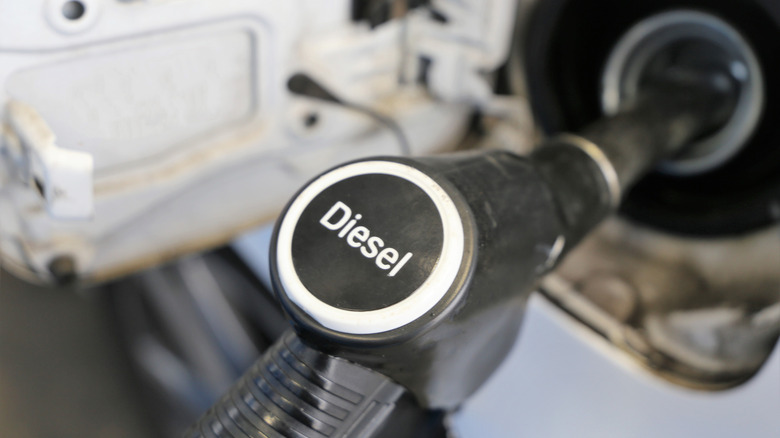
Ultra-low sulfur diesel is available in 1-D (Diesel #1), 2-D (Diesel #2), and 4-D grades. Diesel #1 has a 45 to 55 cetane rating and has a low-sulfur, low-paraffin, and low-wax formula. It has a lower viscosity and a lower pour point, which means it will continue to flow even when exposed to freezing weather. Those reasons make Diesel #1 ideal for winter use or cold-weather applications.
Meanwhile, Diesel #2 is what you’ll typically find at the pumps. It has a higher viscosity, a higher energy content, and it burns more slowly than Diesel #1 to improve fuel economy. However, 2-D diesel can gel when the mercury drops to 10 degrees Fahrenheit, making it somewhat unsuitable for cold-weather use.
Diesel #4, Grade 4-D, or marine diesel has a lower cetane and viscosity rating, making it the perfect fuel for marine vessels, boilers, furnaces, and stationary pumps. Regular high-sulfur diesel is commonly available in 2-D and 4-D grades only. It’s always best to refer to the owner’s manual to know the recommended diesel fuel type of your engine, but the general rule is to only fill up with ULSD if you have a machine from 2007 or later.

