
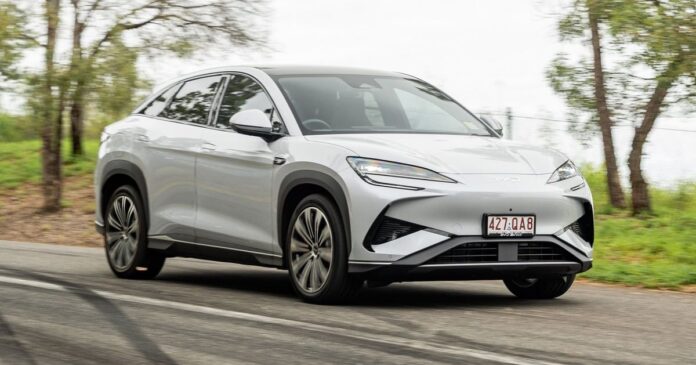
BYD is one of the most impressive success stories in recent Australian automotive history, going from a single model imported by a third-party distributor to a top-five brand with a sprawling lineup of vehicles in record time.
While everybody seems to be talking about the Shark 6 plug-in hybrid (PHEV) ute that has pioneered a new niche here, it’s not actually BYD’s best seller. That title goes to the BYD Sealion 7, which sells in even greater volumes despite vying for contention in an even more competitive segment.
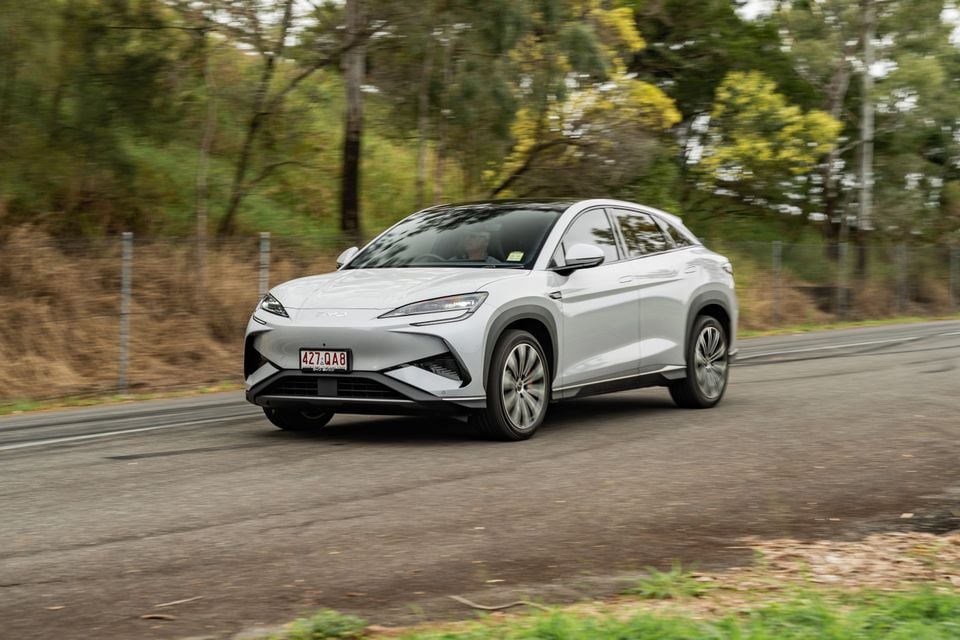
Launched here in 2025, it’s a coupe-style mid-size SUV that is coming closest to unseating the Tesla Model Y as Australia’s favourite electric vehicle (EV).
It’s one of three mid-size SUVs that BYD sells here but it’s the only electric Sealion-badged model, positioned above the Atto 3 small/medium SUV in BYD’s lineup of EVs.
In China, BYD splits its namesake brand into Dynasty and Ocean lines, and the Sealion 7 – as its aquatic name would suggest – comes from the latter.
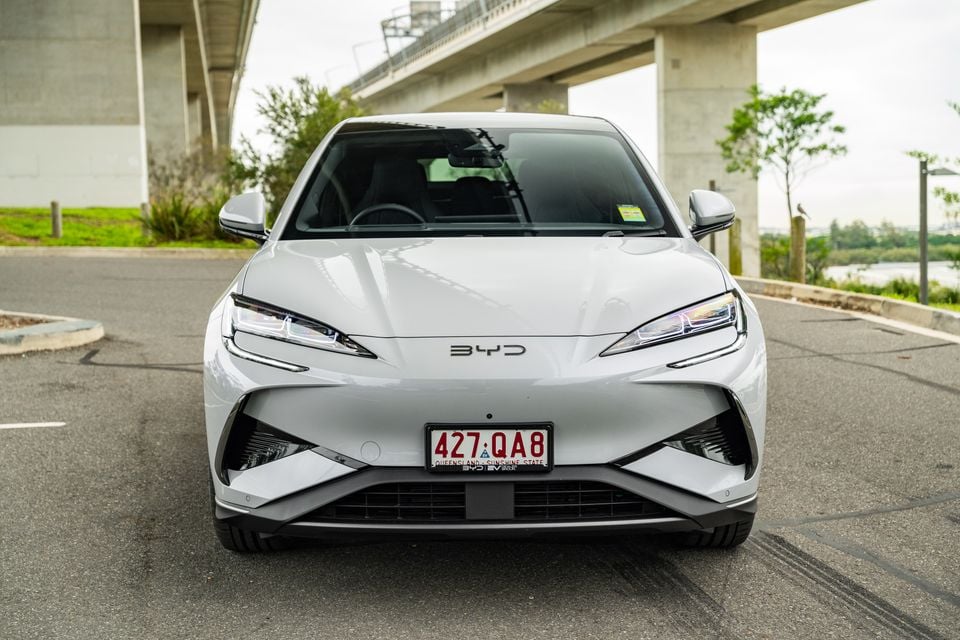
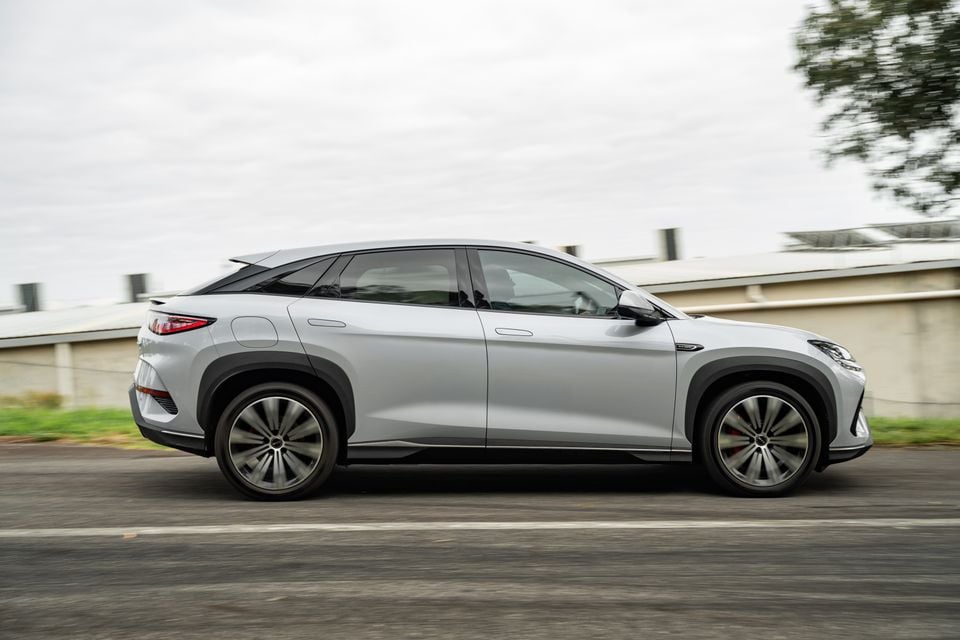
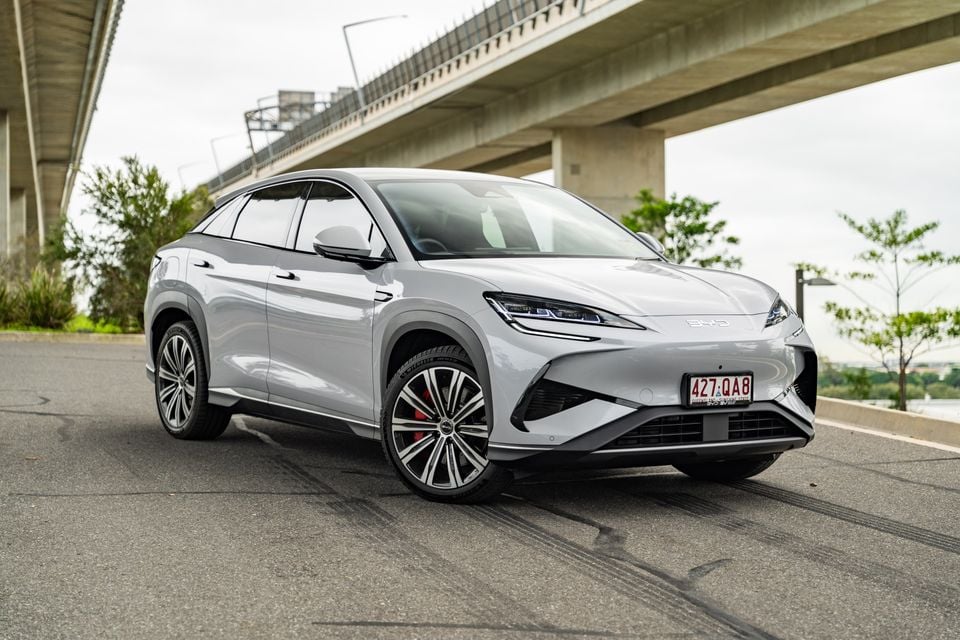
Under ex-Alfa Romeo and ex-Audi design boss Wolfgang Egger, BYD has developed a strong visual identity for both of its families of vehicles, and the Sealion 7 wears its Ocean design language well.
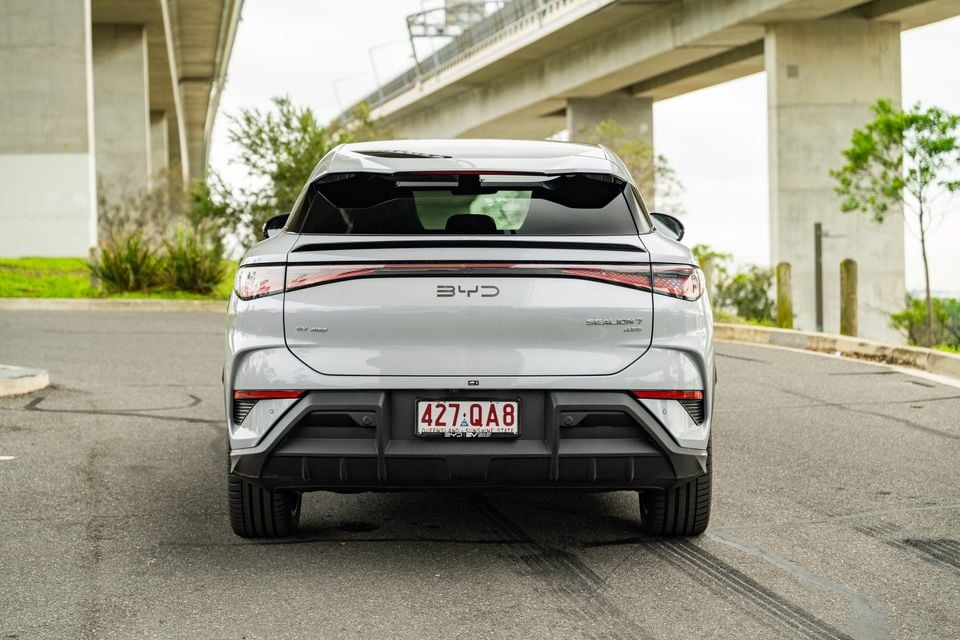
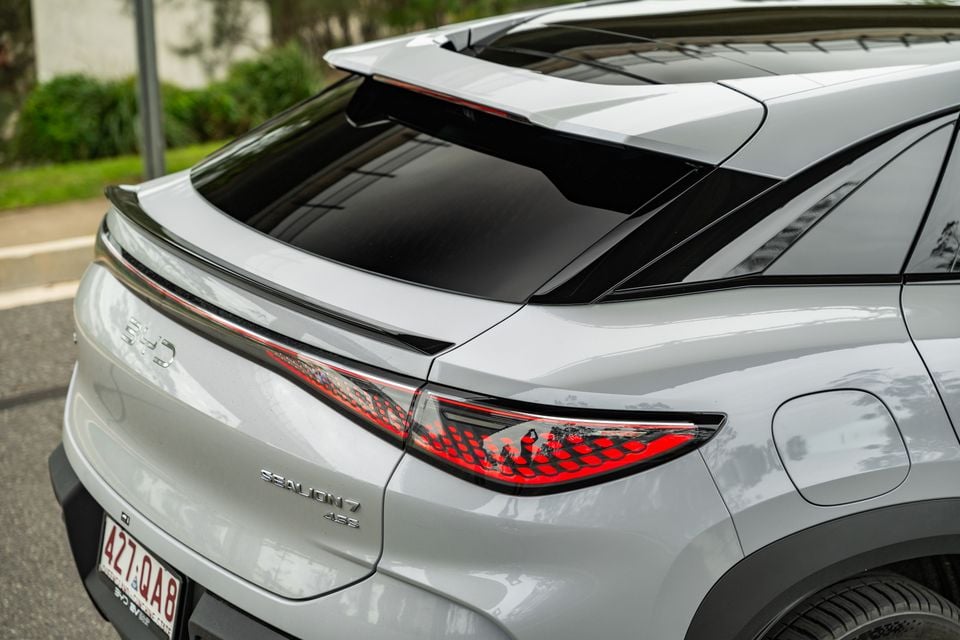
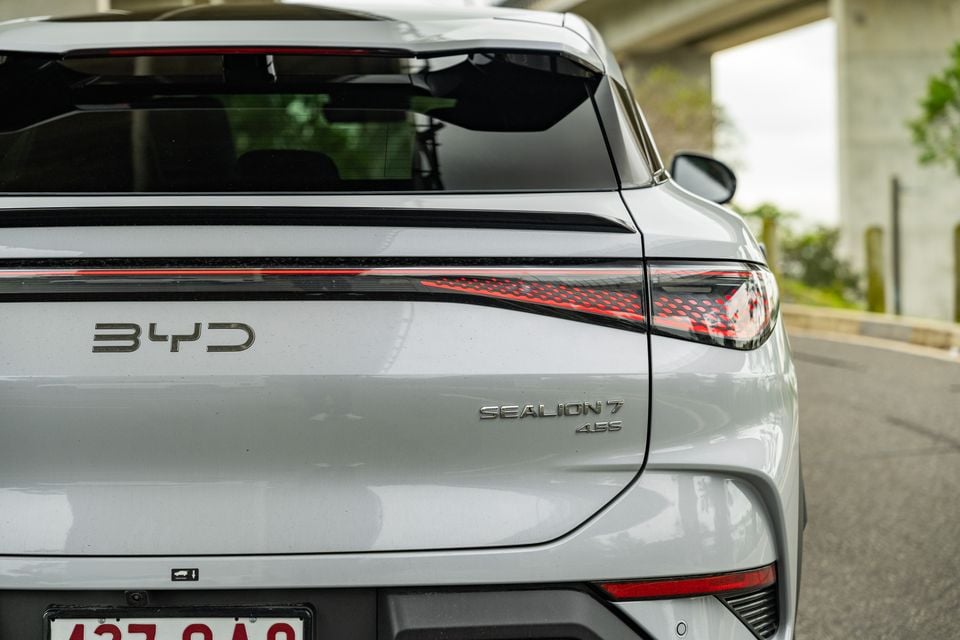
That includes its distinctive full-width tail-lights that make the Sealion 7 unmistakable at night, though there’s also no missing that big booty. Still, it’s a pretty handsome SUV.
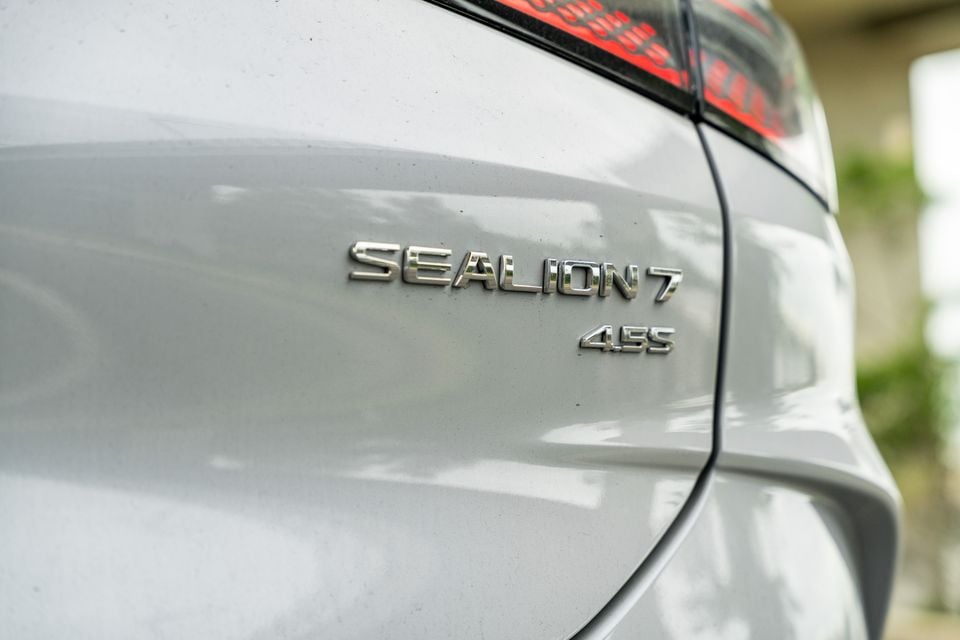
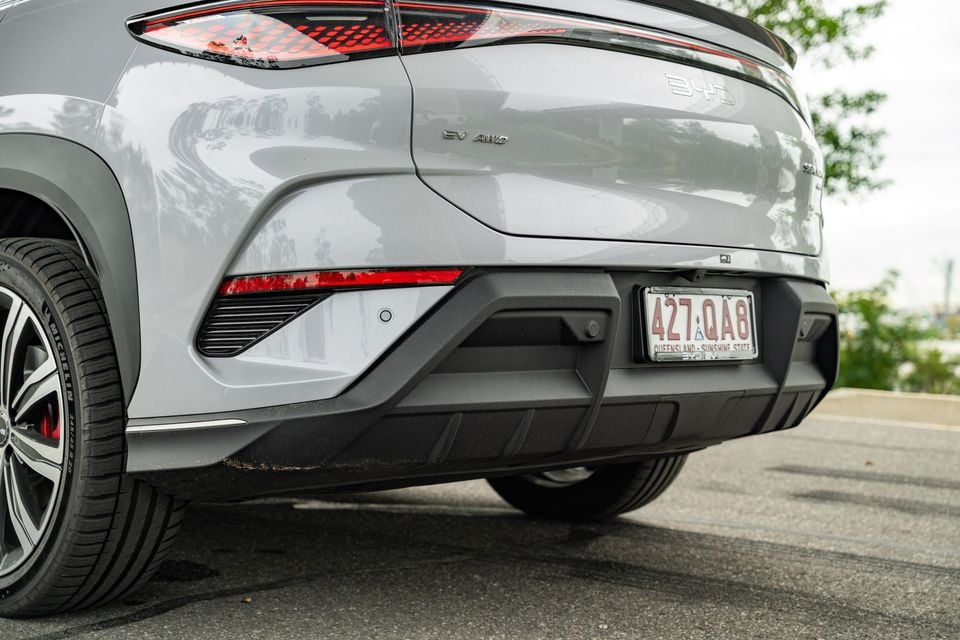
In Performance trim, as tested here, you’ll be seeing those tail-lights plenty. That’s because, as that little badge below them says, it has a claimed 0-100km/h time of just 4.5 seconds. It’s not the quickest electric SUV out there, but it’s among the most rapid.
How much does the BYD Sealion 7 cost?
BYD offers just two Sealion 7 variants in Australia: the single-motor rear-wheel drive Premium, and the dual-motor all-wheel drive Performance tested here.
| Model | Price before on-road costs |
|---|---|
|
2026 BYD Sealion 7 Premium |
$54,990 |
|
2026 BYD Sealion 7 Performance |
$63,990 |
At least among the Chinese brands, the mid-size electric SUV segment has split into two tiers.
Find your perfect new car with CarExpert
There are the slightly smaller, more affordable models, like BYD’s Atto 3 (classified as a medium SUV but actually smaller than some ‘small’ SUVs), as well as the Geely EX5 and Leapmotor C10.
Above these sit the likes of the Sealion 7 and the Zeekr 7X, as well as the Chinese-built Model Y and non-Chinese models like the Hyundai Ioniq 5, Kia EV6, and Ford Mustang Mach-E.
The Sealion 7 Performance is a rapid dual-motor all-wheel drive variant, but doesn’t have the extra performance hardware or mechanical tweaks offered by the likes of the Model Y Performance, 7X Performance, and Ioniq 5 N. It’s anywhere between $9000 and $51,000 cheaper than those models, however.
BYD’s flagship Sealion 7 still has some tough competition at its lower price point, however.
Similarly priced dual-motor all-wheel drive mid-size SUVs with either comparable power and torque outputs or similar claimed 0-100km/h times – or both – include the Model Y Premium Long Range ($68,900 plus on-road costs), Subaru Trailseeker ($63,990 to $69,990 plus ORCs), Toyota bZ4X Touring ($69,990 plus ORCs), and Volkswagen ID.4 GTX ($69,990 plus ORCs).
To see how the BYD Sealion 7 stacks up against the competition, use our comparison tool
What is the BYD Sealion 7 like on the inside?
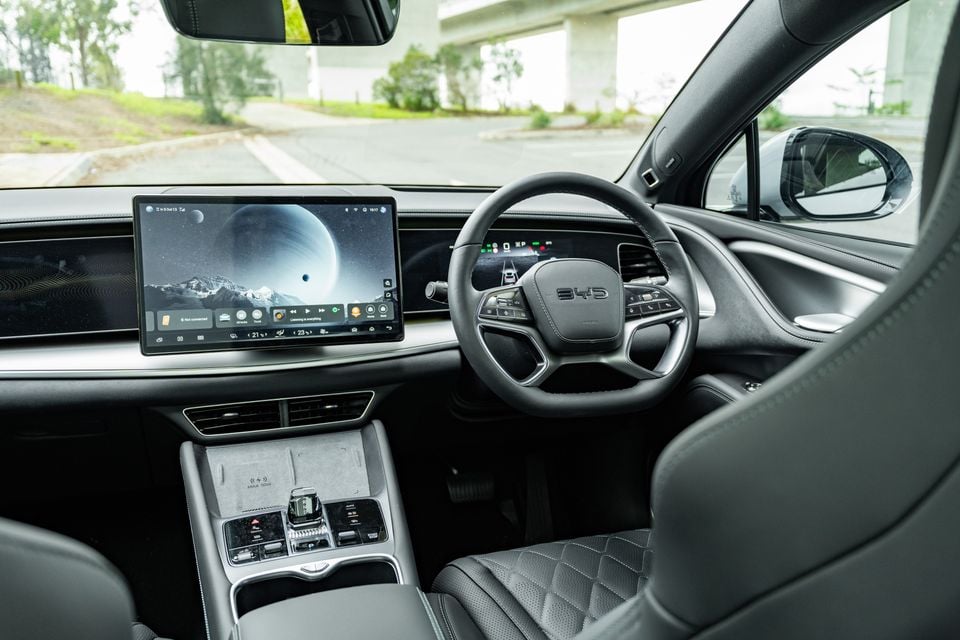
The Sealion 7 follows the same basic template so many Chinese SUVs do: a large central touchscreen and as few buttons as possible. And yet, a key difference between this and, say, something from Leapmotor, is that BYD has remembered to style it. The result is an interior that’s surprisingly distinctive.
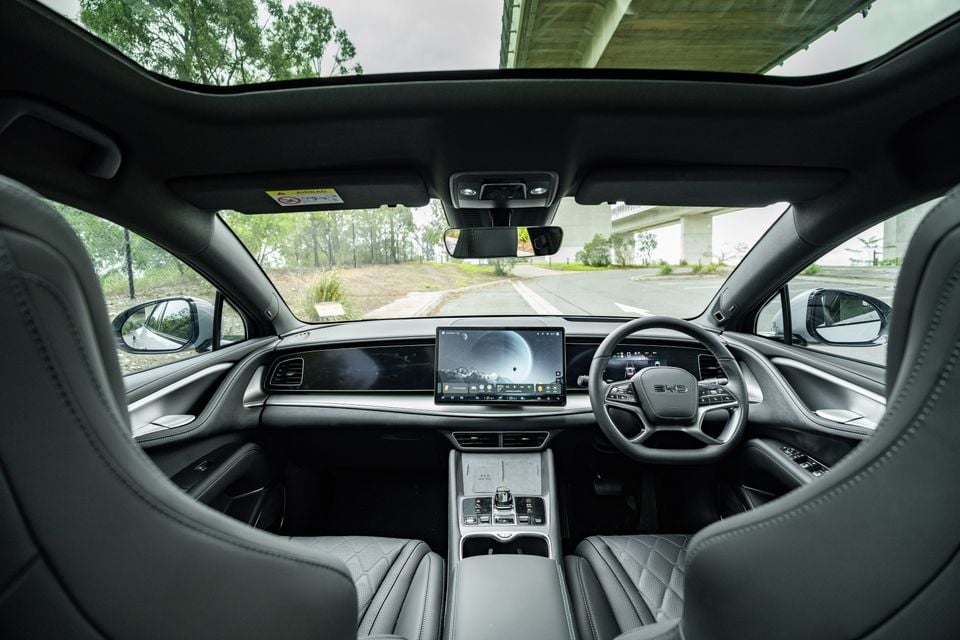
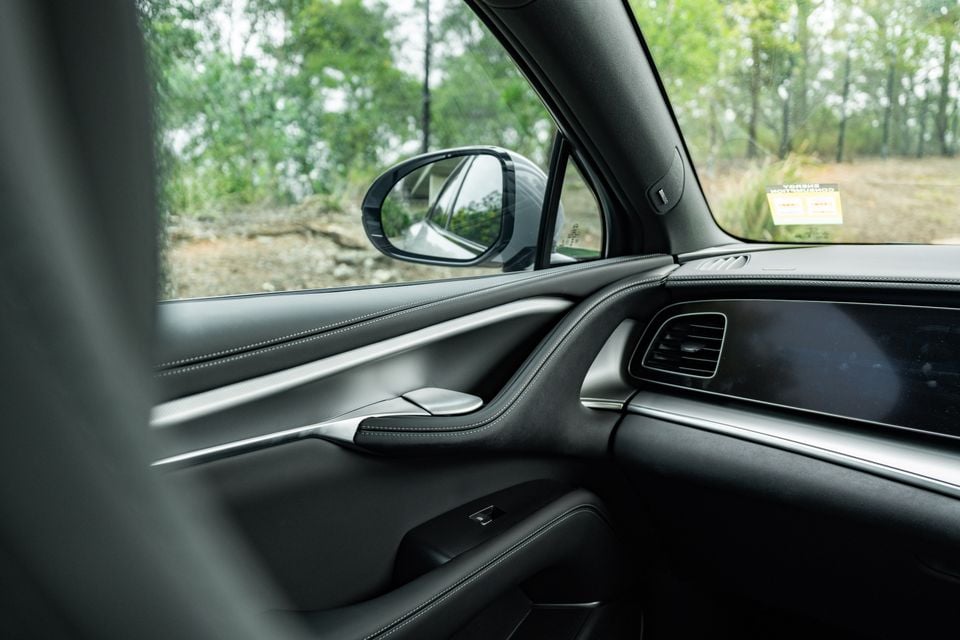
Curved, leatherette-wrapped arcs on the doors not only house the door handles but connect neatly with the dashboard, while metal-look inserts on the dashboard and doors provide welcome contrast.
At night time, the cabin is aglow with colour-changing ambient lighting, and you can have it effectively perform a continuous light show. This colourful lighting accents the dashboard and doors – we particularly love how the instrument cluster and an illuminated panel on the passenger side (no, it’s not another screen) form a continuous block of black behind which ambient lighting pours at night.
Where the BYD most impresses inside, however, is actually in its feeling of quality, which you first experience with the solid thunk heard when closing the doors.
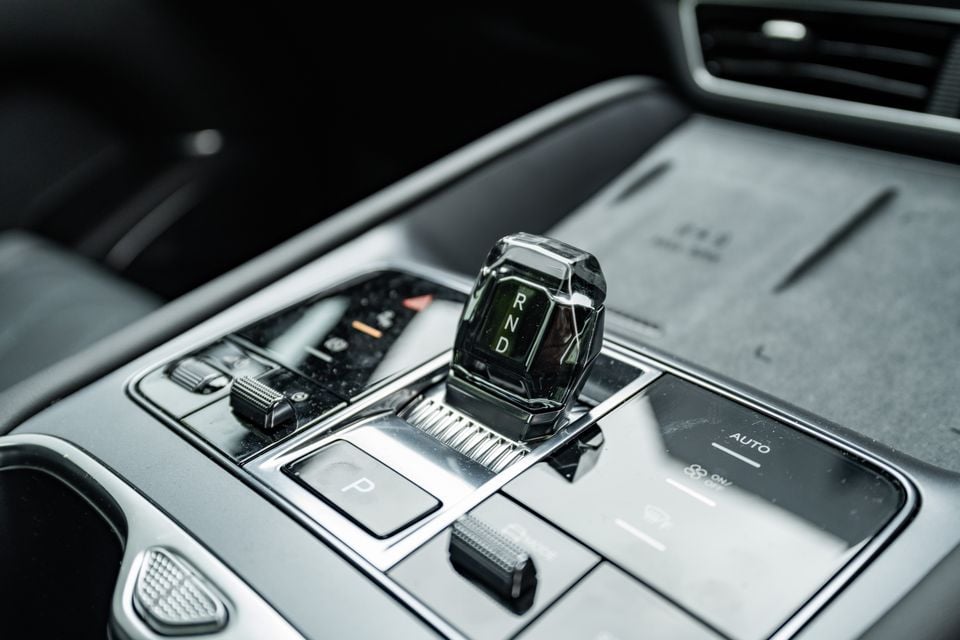
Fit and finish is excellent, and we love the nicely damped, metal-look rocker switches on the centre console for the drive mode and regenerative braking selection, and the crystal-look gear shifter, all of which fall neatly to hand.
The steering wheel switchgear is lovely too, and is finished with a metallic silver material that complements the other metallic trim used on the leather-wrapped tiller.
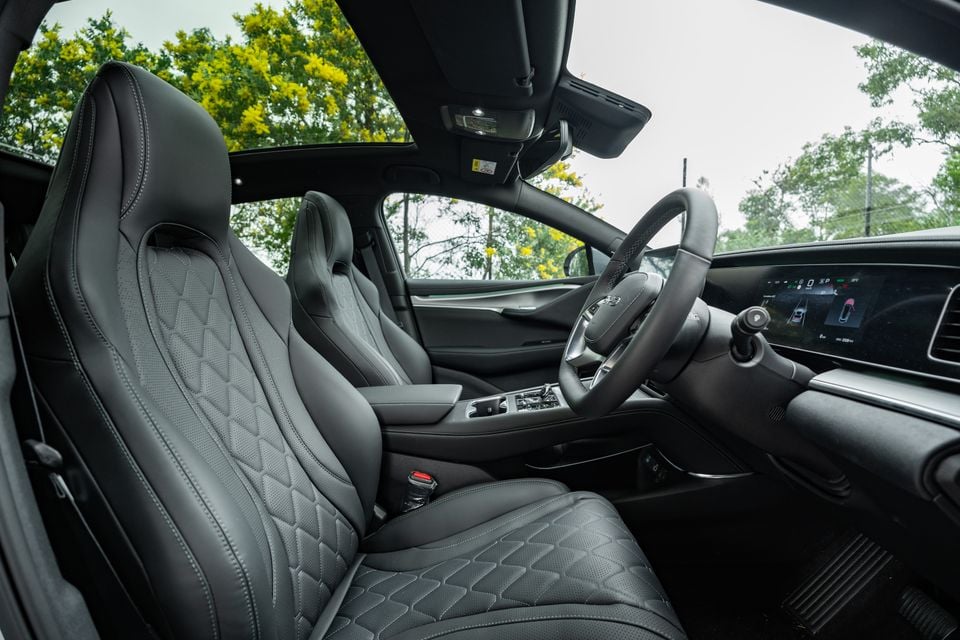
Indeed, material selection in the Sealion 7’s cabin is excellent. The headliner is a handsome black-knit affair, the seats are finished in quilted leather with pale stitching, and almost every other surface is covered in a type of leatherette or soft-touch plastic trim, even the glovebox lid.
All of this makes the Model Y’s cabin look positively dour.
And unlike the Model Y, there’s both a head-up display and a digital instrument cluster. The latter displays various information beyond vehicle speed, including your energy consumption (cumulative and last 50km), and you can toggle a projection of your Google Maps to appear here, but only if you have a destination programmed in.
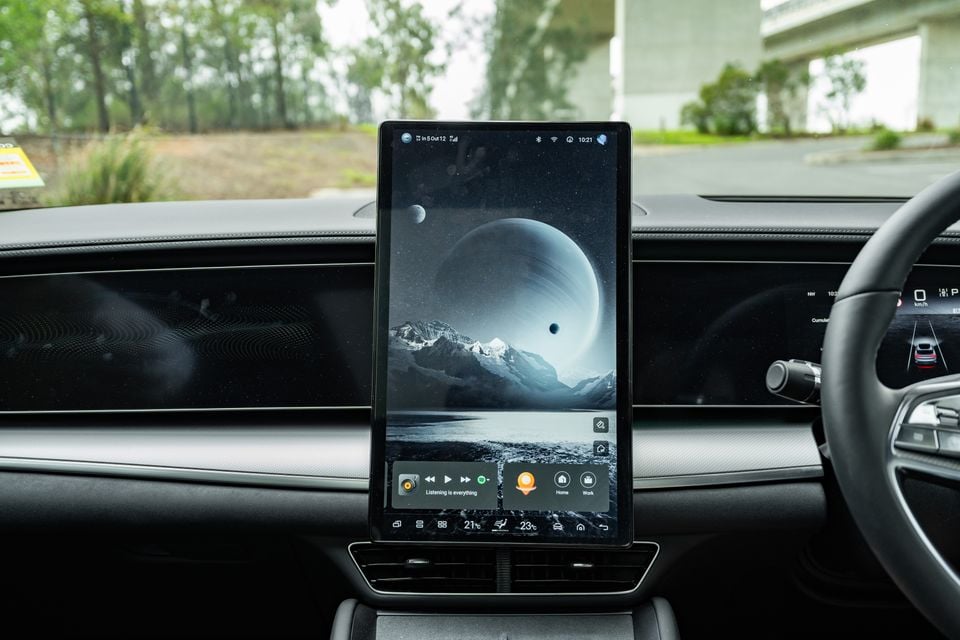
The central touchscreen is a large 15.6-inch unit and, though BYD is moving away from this functionality, it still can be rotated from landscape to portrait orientation. However, you can’t have the latter while using Apple CarPlay or Android Auto.
There are anchored shortcut bars at both the top and bottom of the screen, so while we miss physical climate controls, it’s easy enough to touch the screen to adjust things like the cabin temperature. There’s also an easy shortcut to return to smartphone mirroring.
If you’re inclined to use a voice assistant to control vehicle functions, the Sealion 7’s works quite well.
While it doesn’t feature Google Built-in like the Sealion 8, there is an app store you can use, as well as an embedded karaoke app and the owner’s manual.
Smartphone mirroring is wireless, and Android Auto loads almost instantaneously upon starting the car. We had no issues with it maintaining a connection either.
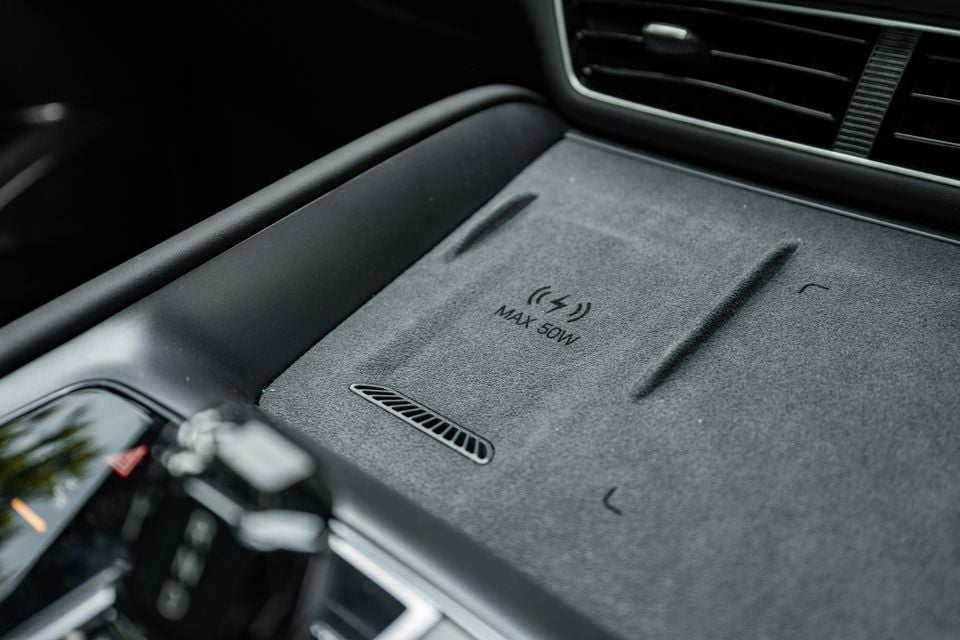
Wireless mirroring connections can sometimes cause your phone to get hot, but BYD has helpfully installed a ventilated wireless phone charger. It sits on the centre console, which unlike the dashboard has a handful of physical buttons and switches, as well as a cavernous storage bin and a pair of cupholders.
Under the centre console is a flock-lined shelf with space for a small purse, plus USB-A, USB-C and 12V outlets located down here. Bottle holders in the doors will accommodate larger bottles.
While some BYDs use a column-mounted gear shifter, the Sealion 7 has one situated on the centre console. That also means the indicator stalk is on the correct (right-hand) side of the steering wheel.
The front seats are comfortable and supportive, and feature heating, ventilation and power adjustment. We do wish you didn’t have to dive through touchscreen menus or use the voice assistant to turn on the heating and ventilation, however.
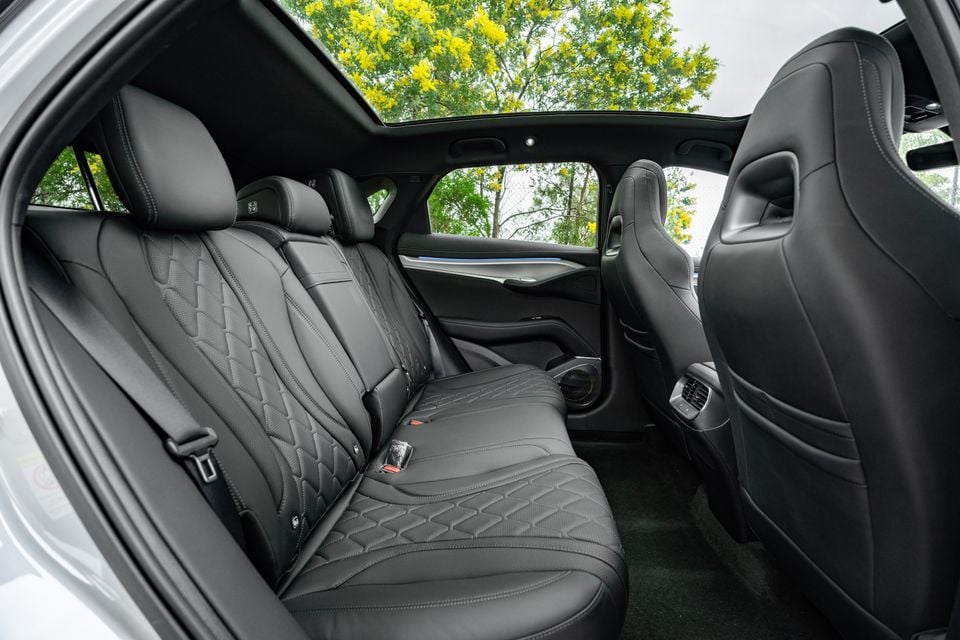
Despite the coupe-esque roof line, the Sealion 7 has plenty of headroom for someone 180cm tall in all three of the second-row seats. Plus you can adjust the angle of the backrest.
The centre seat is a little flatter and firmer than the outboard ones and lacks their heating, but we sat three grown adult males back here with few complaints – and they were family members, so they didn’t feel the need to be polite.
Legroom is aided by the completely flat floor, something enabled by the Sealion 7’s use of a dedicated EV platform.
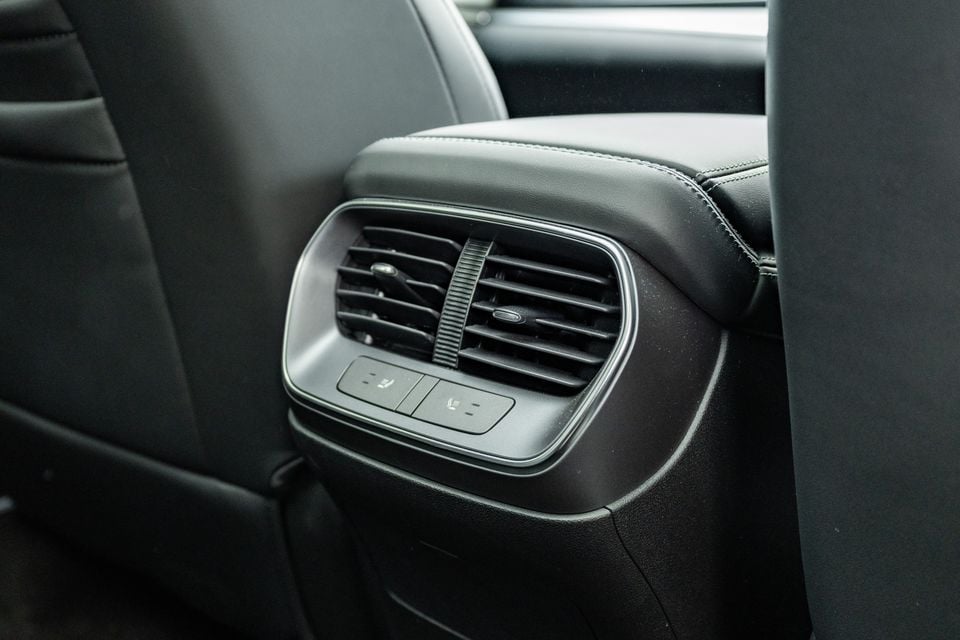
The front seatbacks are soft, and the lovely materials at the front of the cabin carry through to the rear, where amenities include a USB-C outlet and USB-A outlet, plus air vents, heated outboard seats, and a fold-down centre armrest with cupholders.
A panoramic glass roof bathes the cabin with light, and features a thick power sunshade. This automatically closes when you turn off the car.
The Sealion 7 features a child presence detection feature, which caught me out one night at a charging station when I decided to sit in the front passenger seat as the vehicle charged, only to be greeted by a cacophony of honks just minutes after getting settled.
Open the boot and you’ll find a spacious cargo area, with another storage compartment under the boot floor, but there’s no no spare tyre.
| Dimensions | BYD Sealion 7 |
|---|---|
| Length |
4830mm |
| Width |
1925mm |
| Height |
1620mm |
| Wheelbase |
2930mm |
| Cargo capacity |
500L (rear) 58L (under bonnet) |
To see how the BYD Sealion 7 stacks up against the competition, use our comparison tool
What’s under the bonnet?
The Performance variant sits atop the two-grade Sealion 7 lineup in Australia.
| Specifications | BYD Sealion 7 |
|---|---|
| Drivetrain |
Dual-motor electric |
| Battery |
82.56kWh lithium iron phosphate (LFP) |
| Power |
390kW (160kW front, 230kW rear) |
| Torque |
690Nm (310Nm, 380Nm rear) |
| Drive type |
All-wheel drive |
| Weight |
2340kg |
| 0-100km/h (claimed) |
4.5 seconds |
| Energy consumption (as tested) |
19kWh/100km (inner-city, suburban and highway loop) 19.7kWh/100km (total) |
| Claimed range |
456km (WLTP) |
| Max AC charge rate |
11kW |
| Max DC charge rate |
150kW |
The Australian-market Sealion 7 has a maximum DC fast-charge rate of 150kW, despite the Chinese-market model being able to be charged at up to 240kW. That’s because it employs an older 400V electrical architecture, unlike the Chinese-market model which is offered with an 800V system.
The rival Zeekr 7X, in contrast, has an 800V electrical architecture and can be charged at up to 420kW in its dual-motor all-wheel drive configuration. It also features standard 22kW AC charging, while the Sealion 7 offers only 11kW charging.
Australian-market Sealion 7s may charge slower than their Chinese-market counterparts, but they have the same power and torque outputs. Despite this, BYD quotes a 4.2-second 0-100km/h time for its flagship Sealion 7 in China, against a 4.5-second time in Australia.
While the Sealion 7 can be had in China with DiSus-C adaptive dampers, all Australian-market models use passive Frequency Selective Damping (FSD) shock absorbers. Regardless of the market, the Sealion 7 rides on double-wishbone front and multi-link rear suspension.
Our energy consumption was somewhat high in the Performance. If efficiency is your chief concern, it’s probably best to stick with the Premium.
To see how the BYD Sealion 7 stacks up against the competition, use our comparison tool
How does the BYD Sealion 7 drive?
We often notice with combustion-powered and hybrid Chinese SUVs that no matter how far they’ve come, they never seem to quite measure up dynamically to the best that Japan, Korea and Europe have to offer.
From expert reviews to the right deal
CarExpert brings together reviews, research tools and trusted buying support, guiding you from research to delivery with confidence.
That’s not the case with the BYD Sealion 7, which can easily be mentioned in the same breath as class-leading mid-size electric SUVs.
You don’t need to step up to the Performance to get a dynamically well-rounded electric SUV, but the flagship Sealion 7 will give you some extra giggles.
As the badge on the tailgate indicates, it has a claimed 0-100km/h time of 4.5 seconds – 1.2 seconds quicker than the Premium – and if you activate Sport mode or push that right pedal just a little more than you need to, you can feel the sheer thrust.
In the daily commute, however, you might not realise just how quick the Sealion 7 is. It’s an extremely easy vehicle to drive, though we’re a bit surprised there’s no true one-pedal drive mode. Instead, there’s a choice of two regenerative braking settings, though even the strongest won’t bring the vehicle to a complete halt.
You can adjust these with one of the lovely metallic rocker switches on the centre console, and you can use another to toggle between the various drive modes.
There are no adaptive dampers, so you can’t tailor the ride to your liking; the Sealion 7 Premium and Performance in Australia both have frequency selective damping (FSD) shock absorbers with no adjustable modes.
There’s no need for adaptive dampers, however, as the Sealion 7 rides comfortably over jagged surfaces, and yet does without the float you sometimes encounter in Chinese SUVs without local chassis tuning.
As an example, one regional road I take cars on features various bridges where the road surface drops down. On a vehicle with poor body control, this drop – taken at 70-80km/h – will see it take a while to settle. The Sealion 7, in contrast, was unflappable.
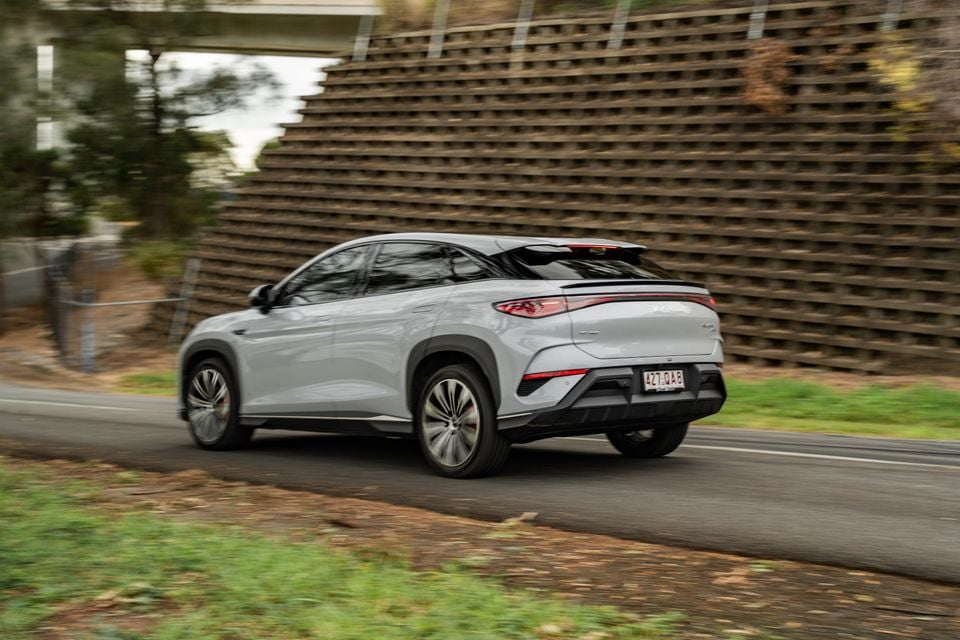
You may not be able to adjust the suspension, but you can select between two levels of steering feel. The standard mode feels a bit light and disconnected, while Sport adds some welcome heft without making the Sealion 7 feel unwieldy in, say, a multi-storey parking lot.
The steering mightn’t have an abundance of road feel, but in its Sport setting it helped make the Sealion 7 a fun steer on a winding mountain road.
The Sealion 7 caught me by surprise, with eager turn-in, excellent body control, and the aforementioned well-weighted steering making it feel balanced, composed and, yes, fun on a blast through the mountains.
It’s not just because of the performance offered by the, ahem, Performance, though it is satisfying to give it a squirt. The chassis also feels like it can easily handle this power.
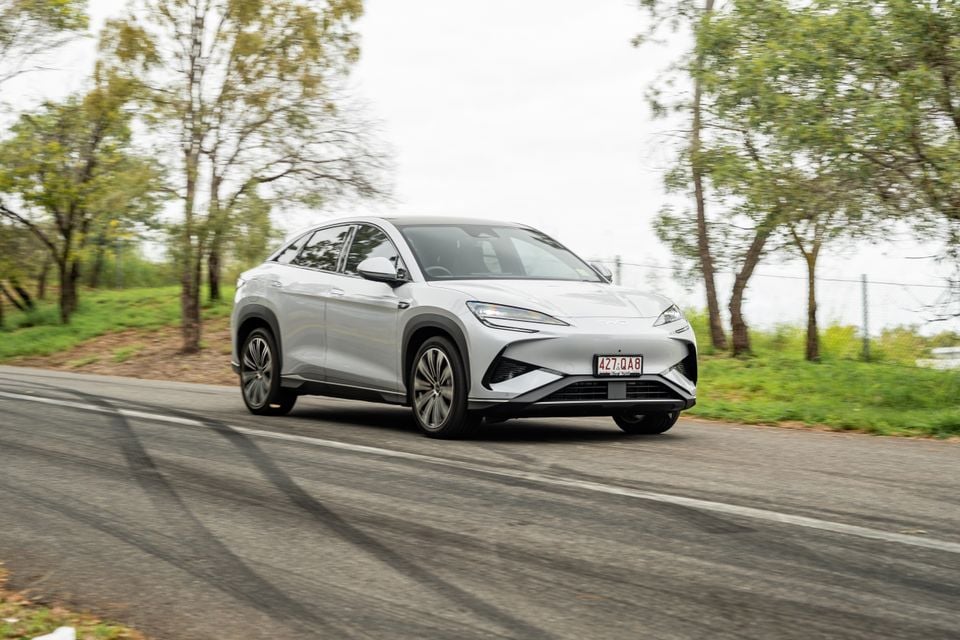
The Sealion 7 feels solid, and refinement is excellent. Very little noise gets into the cabin, even at highway speeds or on coarse-chip roads.
The cameras are superb in the Sealion 7, but there’s no digital rear-view mirror – and given the letterbox slot that is the rear window, that’s a missed opportunity.
One area where Chinese vehicles often fall down is in the calibration of their active safety and driver-assist functions. Fortunately, the Sealion 7’s all work well.
Yes, the lane-keep assist system is assertive, but it works well and we only found it a touch intrusive on a couple of tight, winding roads – and, surprisingly, not during our blast through the mountains where it was left on with no issues. The lane-centring also works confidently on the highway.
The driver attention monitor will nag you if you yawn or blatantly look away from the road ahead, but it doesn’t throw up any false positives. Even the chimes the various systems make manage not to annoy too much.
To see how the BYD Sealion 7 stacks up against the competition, use our comparison tool
What do you get?
The Sealion 7 is available in two variants in Australia.
2026 BYD Sealion 7 Premium equipment highlights:
- 19-inch alloy wheels
- Tyre repair kit
- Automatic LED headlights
- Rain-sensing wipers
- Proximity entry and start
- NFC card key
- BYD digital key
- Panoramic glass roof
- Power tailgate with power sunshade
- Head-up display
- 10.25-inch digital instrument cluster
- 15.6-inch rotating infotainment touchscreen
- Wireless Apple CarPlay and Android Auto
- FM radio
- Satellite navigation
- Over-the-air software updates
- Complimentary two-year 2GB/month data plan
- 12-speaker Dynaudio sound system
- 2 x USB-C outlets (front + rear)
- 2 x USB-A outlets (front + rear)
- Wireless phone charger
- Heated and ventilated front seats
- 8-way power driver’s seat with memory, power legrest
- 6-way power passenger seat
- Leather upholstery
- Leather-wrapped steering wheel
- Dual-zone climate control with rear air vents
- Colour-adjustable ambient lighting
The Performance adds:
- 20-inch alloy wheels
- Heated steering wheel
- Heated rear seats
Is the BYD Sealion 7 safe?
The BYD Sealion 7 received a five-star rating from independent safety authority ANCAP in 2025.
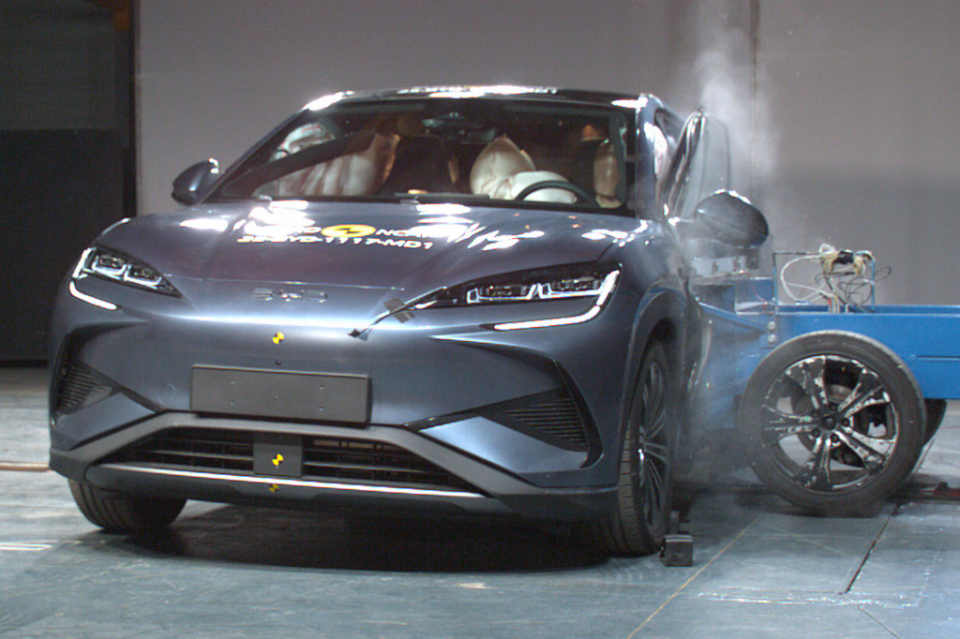
| Category | BYD Sealion 7 |
|---|---|
| Adult occupant protection |
87 per cent |
| Child occupant protection |
93 per cent |
| Vulnerable road user protection |
76 per cent |
| Safety assist |
78 per cent |
Standard safety equipment across the Sealion 7 range includes:
- Adaptive cruise control
- Autonomous emergency braking
- Blind-spot monitoring
- Child presence detection
- Front cross-traffic assist
- Intelligent Speed Limit Control
- Lane-keep assist
- Rear cross-traffic assist
- Safe exit warning
- Traffic sign recognition
- Surround-view camera
- Front and rear parking sensors
- Front, side and curtain airbags, and driver’s far-side airbag
How much does the BYD Sealion 7 cost to run?
You’ll need to service the Sealion 7 every 12 months or 20,000km, whichever comes first. Odd-numbered services are priced at $165 each, with even-numbered services costing between $583 and $799 depending on the year.
| Servicing and Warranty | BYD Sealion 7 |
|---|---|
| Warranty |
6 years, 150,000km (vehicle) 8 years, 160,000km (battery) |
| Roadside assistance |
12 months |
| Service intervals |
12 months/20,000km |
| Capped-price servicing |
8 years |
| Total capped-price service cost |
$3440 |
To see how the BYD Sealion 7 stacks up against the competition, use our comparison tool
CarExpert’s Take on the BYD Sealion 7
Leave your preconceptions about Chinese cars at the door.
The BYD Sealion 7 stands tall among the best models in this extremely competitive segment.
It feels solidly built, with a high-quality interior that’s comfortable and spacious, and which features well-calibrated tech.
The Performance is wickedly quick, making the nicely balanced Sealion 7 even more enjoyable to drive. It commands a $9000 premium over the entry-level Sealion 7, however, and while it has a handful of extra features to go with its extra grunt, we think many buyers would be well-served by the base Premium.
It’s also hard to ignore just how brutally competitive this segment has become, particularly with new entrants like the Zeekr 7X.
Nevertheless, it’s not at all surprising to see the Sealion 7 sell in large volumes. It might have quickly been usurped as the newest, freshest challenger from China, but it should still be on your shortlist.
Interested in buying a BYD Sealion 7? Let CarExpert find you the best deal here
Click the images for the full gallery
MORE: Explore the BYD Sealion 7 showroom

