
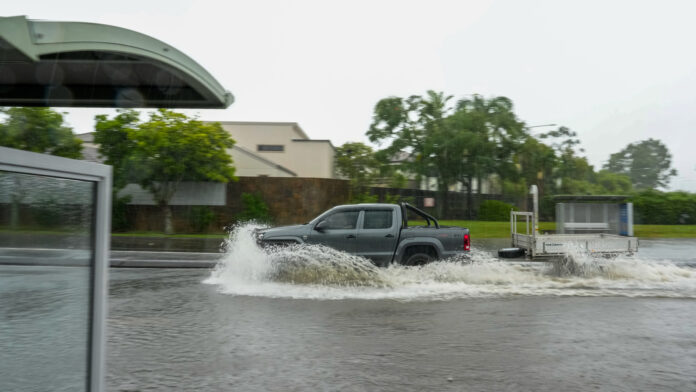
Once-in-100-year storms are becoming more and more common as the climate heats up, which means more and more people are going to face fleeing their homes in adverse conditions. You might know your neighborhood or local freeway corridors like the back of your hand, but things can change very fast in an disaster environment. While some sources online might give you recommendations on how to tell if a flooded road is safe to drive through, I’m here to tell you that it never is.
You might think you know the depth of the water, but the road could be washed out as well, causing a higher water level than you might be familiar with on that stretch of road. There’s no telling how deep or fast water covering a road is, and you risk being swept away even in larger vehicles. A foot of water is enough to float most passenger vehicles and two feet will sweep away even pickups and SUVs, according to the National Weather Service. The force of nature does not care about your giant SUV. Even if you keep all tires to the ground, you risk flooding your vehicle’s engine, leaving you now stranded in a disaster in the middle of fast moving water. Or you could drive over debris that could pop your tires or damage components on the underside of the vehicle, like axles and oil pans.
What you should do when facing a flooding road

