
For years, Hyundai has been flirting with the idea of a real truck. While the unibody Santa Cruz carved out a niche for urban adventurers, the brand has lacked a true body-on-frame contender to take on heavyweights like the Toyota Tacoma. That is officially about to change.
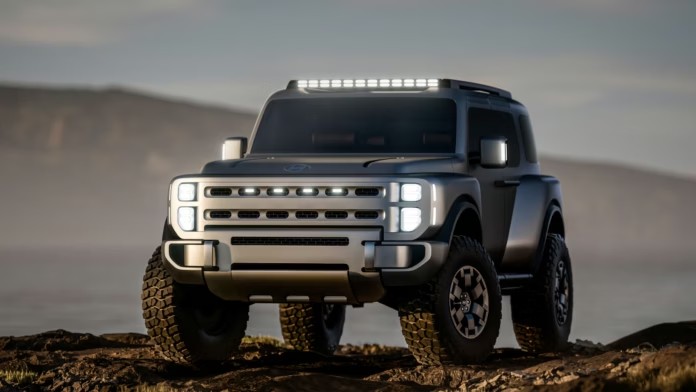
At the 2026 New York Auto Show, the South Korean automaker pulled the curtain back on the Boulder Concept. More than just a styling exercise, this boxy SUV serves as a rolling laboratory for Hyundai’s first-ever body-on-frame platform. It’s a chassis designed to handle the rigors of serious off-roading and heavy towing.
The Art of Steel Design Philosophy
The Boulder is a sharp departure from the fluid, aerodynamic lines we’ve seen on Hyundai’s recent Ioniq EVs. Instead, it utilizes the new “Art of Steel” design language, characterized by sharp vertical edges and a two-box silhouette that boasts the idea of utility. Designed right here in the United States, the concept signals a move toward a more industrial-chic aesthetic for the brand’s future truck and SUV lineup.
Hyundai isn’t just playing dress-up, either. The Boulder is spec’d for the trail, sitting on massive 37-inch mud-terrain tires with a full-size spare hanging off a clever double-hinged tailgate. This rear door setup allows for multi-directional opening, paired with a power-sliding rear window that would make 4Runner fans jealous.
A Truck is Coming by 2030
The real story lies beneath the sheet metal. Hyundai has confirmed that this new ladder-frame architecture will underpin a midsize pickup truck slated to arrive by 2030. Because the platform is being built from the ground up during the energy transition, the automaker expects it to accommodate internal combustion, hybrid, and fully electric powertrains.
This flexibility is key. While many manufacturers are focussing their futures on EVs, Hyundai recognizes that the midsize truck segment still relies heavily on the range of traditional engines, especially for those venturing far off the beaten path.
The Interior: A Win for Physical Controls

Perhaps the most refreshing part of the Boulder Concept is the cabin. Hyundai appears to be listening to the growing chorus of drivers who are tired of massive, distracting touchscreens. Instead of a giant iPad glued to the dash, the Boulder features a “retro-futuristic” setup with four smaller, specialized displays and plenty of tactile physical knobs.
There isn’t even a traditional gauge cluster. Instead, vital data like speed and pitch-and-roll are projected onto the lower section of the windshield via a full-width head-up display. It’s a clean, functional approach that keeps the driver’s eyes on the trail ahead.
While the Boulder itself might remain a concept, it’s clear that Hyundai is coming for the dirt, and they aren’t bringing a crossover this time.

