

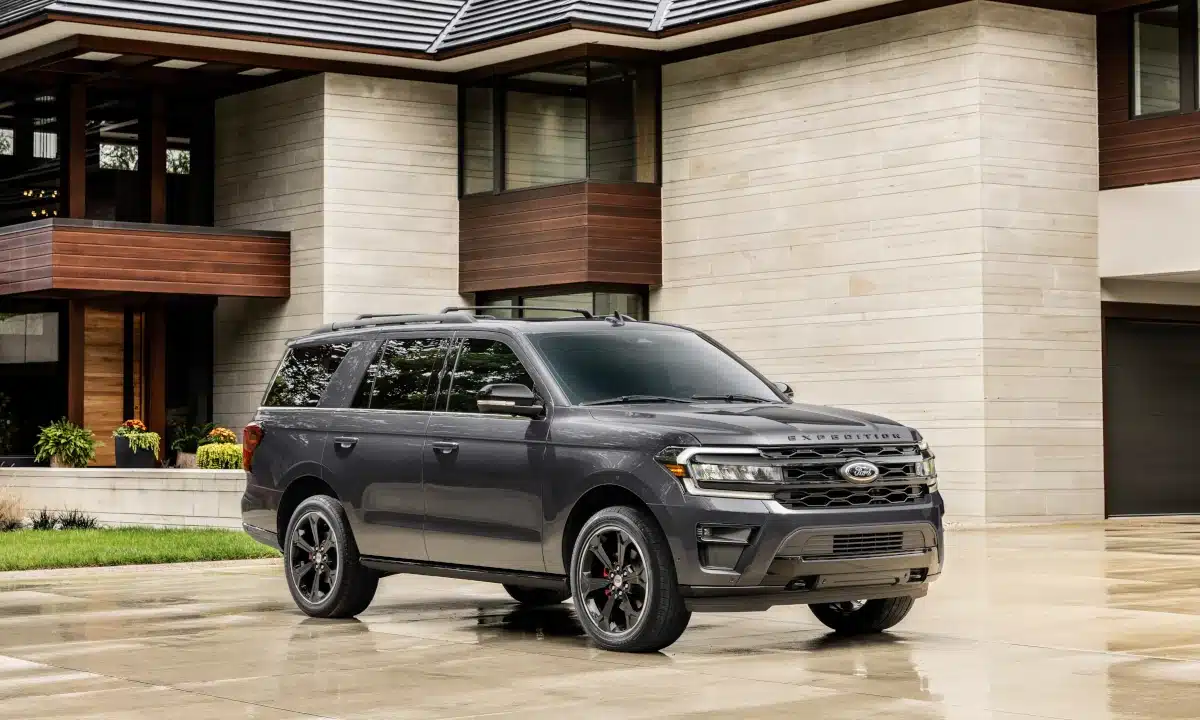
2018-2022 Ford Expedition and Lincoln Navigator recall of 419,967 vehicles for an issue that prevents the front seat belts from operating
Ford Motor Company (Ford) is recalling certain 2018-2022 Ford Expedition and Lincoln Navigator vehicles. The seat belt pre-tensioner in the driver and/or front passenger seat may inadvertently lock the seat belt, which will not allow the belt to retract or extend.
Affected VINs should be searchable now at the NHTSA website.
Here is the relevant information from the NHTSA Recall notice:
NHTSA ID Number: 26V344
Manufacturer: Ford Motor Company
Components: SEAT BELTS
Potential Number of Units Affected: 419,967
Estimated percentage with defect: 3%
Descriptive Information
Affected vehicles are equipped with front seatbelt retractor pretensioners that may inadvertently deploy. This action will supersede the existing Safety Recalls 24S06 (NHTSA Recall 24V099) and 25S31 (NHTSA Recall 25V197).
These vehicles are not produced in VIN order. Information as to the applicability of this action to specific vehicles can best be obtained by either calling Ford’s toll-free line (1-866-436-7332) or by contacting a local Ford or Lincoln dealer who can obtain specific information regarding the vehicles from the Ford On-line Automotive Service Information System (OASIS) database.
64,874 2018 model year Ford Expedition vehicles are affected.
83,488 2019 model year Ford Expedition vehicles are affected.
89,610 2020 model year Ford Expedition vehicles are affected.
81,437 2021 model year Ford Expedition vehicles are affected.
22,874 2022 model year Ford Expedition vehicles are affected.
17,647 2018 model year Lincoln Navigator vehicles are affected.
21,113 2019 model year Lincoln Navigator vehicles are affected.
18,368 2020 model year Lincoln Navigator vehicles are affected.
15,030 2021 model year Lincoln Navigator vehicles are affected.
5,526 2022 model year Lincoln Navigator vehicles are affected.
Description of defect or noncompliance:
On some of the affected vehicles, the driver and/or front passenger seatbelt retractor pretensioners may deploy inadvertently. The primary seatbelt locking functions continue to function properly
Description of the safety risk, including crash, fire, death, injury:
Inadvertent deployment of the retractor pretensioner will result in the seatbelt being locked in position and not able to retract or extend, which is noticeable to the occupant. A seatbelt that does not retract or extend may result in injury in the event of a crash. In some cases, inadvertent retractor pretensioner deployment can cause occupant injury due to rapid seatbelt retraction.
Description of the cause:
The propellant in the retractor pretensioner may degrade in high-heat environments. Degrading propellant by-products can result in oxidation of internal components and, over time, lead to inadvertent pretensioner deployment.
Identification of any warning that can occur:
An airbag malfunction light illuminates on the cluster preceding an inadvertent deployment of the seatbelt retractor pretensioner.
Chronology
On January 8, 2026, Ford’s Critical Concern Review Group (CCRG) initiated an investigation to evaluate inadvertent pretensioner deployments outside of the recall populations for safety recalls 24S06 (NHTSA Recall 24V099) and 25S31 (NHTSA Recall 25V197). The safety recalls addressed potentially corroded squib pins in the seat belt pretensioners, which could result in high electrical resistance or an open circuit. This condition may lead to the inadvertent deployment (IAD) of the pretensioner. When safety recalls 24S06 and 25S31 were approved, Ford had not identified a root cause for the corroded squib pins that led to pretensioner IAD.
In February 2026, CCRG observed that the IADs appeared to occur only in retractor pretensioners that used a specific combination of propellant and stabilizer. Additional investigation determined that in February 2022, the Tier 2 supplier implemented a new micro gas generator (MGG) propellant and stabilizer combination for Expedition and Navigator pretensioners.
During February and March 2026, Ford’s Restraints Engineering team conducted an extensive study to understand the behavior and properties of the legacy propellant. Based on review of available data, the team hypothesized that the original propellant may become unstable when exposed to high-temperature
environments. Over time, the propellant can potentially degrade, yielding corrosive by-products and leading to corrosion of the isolated squib pin and bridgewire. This corrosion creates high resistance or an open circuit, which can trigger an IAD of the seat belt pretensioner.
On March 27, 2026, Ford completed chemical stability testing on a first batch MGGs containing the legacy propellant. The tested units showed minimal internal corrosion and remained chemically stable.
On April 23, 2026, Ford completed testing on a second batch of legacy-propellant MGGs that exhibited high electrical resistance suggestive of corrosion. Physical analysis confirmed internal corrosion on the bridgewire and isolated pin, validating the link between propellant degradation and electrical high- resistance.
On May 6, 2026, Ford completed testing on a third batch of warranty-returned MGGs containing the newer propellant and stabilizer combination (implemented in production in early 2022). These units demonstrated significantly higher chemical stability and minimal degradation compared to the legacy design, confirming the root cause hypothesis.
The recall population includes all vehicles produced with the legacy propellant and stabilizer combination and includes the population of vehicles affected by previous safety recalls 24S06 and 25S31.
As of May 6, 2026, Ford is aware of two warranty claims and two field reports related to this concern for the vehicle population outside of previous recall 24S06 and 25S31 windows and were received on July 18, 2024, October 7, 2024, October 21, 2024, and September 23, 2025.
Ford is aware of one injury for this condition globally that was not identified under Safety Recalls 24S06 or 25S31.
On May 19, 2026, Ford’s Field Review Committee reviewed this topic and approved a field service action.
Remedy
Description of Remedy
Remedy Type: Inspect, Repair
Description of remedy program:
Owners will be notified by mail and instructed to take their vehicle to a Ford or Lincoln dealer to have both front seat belt retractors inspected and to replace retractors that fall within the suspect production date range. The date range is comprised of pretensioners that may have been produced with the legacy propellant/stabilizer combination. There will be no charge for this service.
How remedy component differs from recalled component:
Replacement pretensioners are produced with a propellant and stabilizer combination with enhanced chemical stability.
Description of recall schedule:
Notification to dealers is expected to occur on May 29, 2026. Mailing of interim owner notification letters is expected to begin June 8, 2026, and is expected to be completed by June 12, 2026. Mailing of remedy owner notification letters is expected to begin August 31, 2026 and is expected to be completed by September 4, 2026. The date VINs are planned to be searchable is May 29, 2026.
The post 2018-2022 Ford Expedition, Lincoln Navigator Recall: 419K Seat Belt Issue appeared first on Pickup Truck +SUV Talk.
