
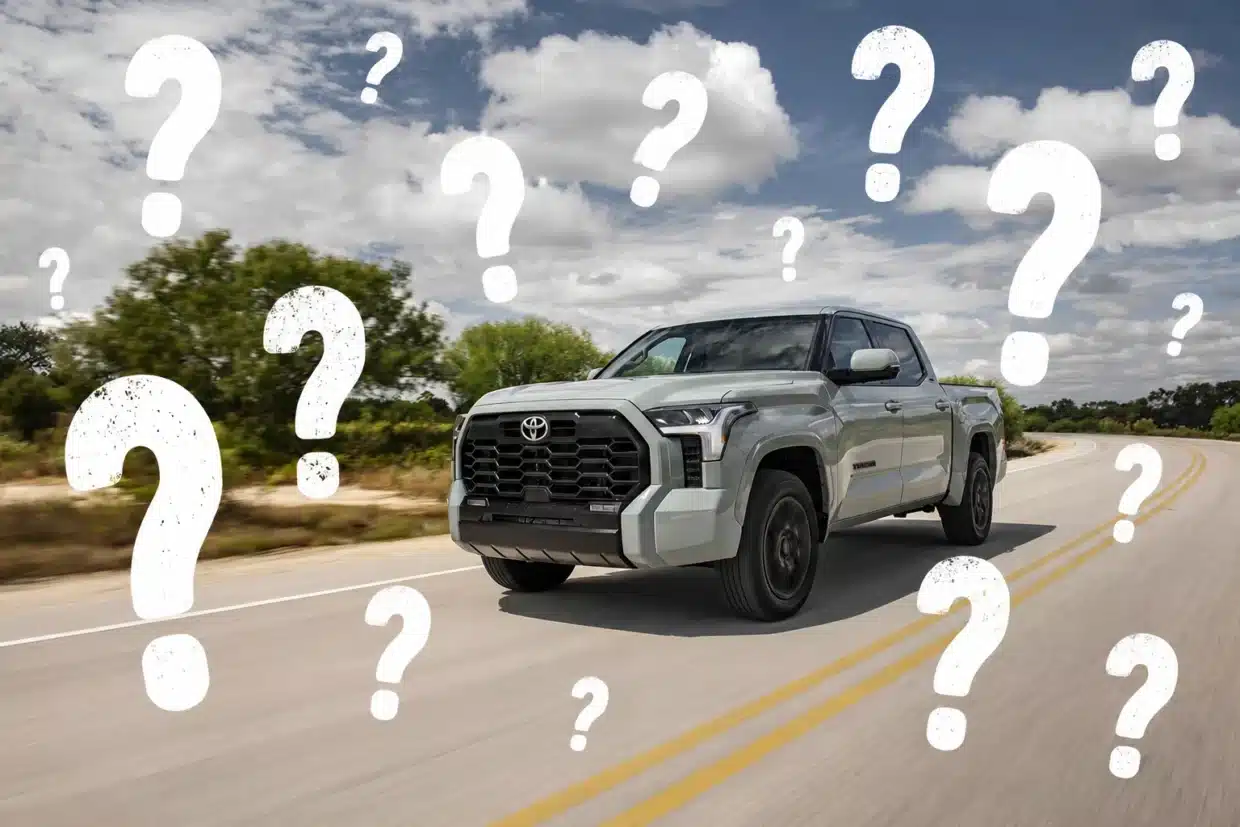
Toyota Tundra reliable? It’s a question I’ve been answering for more than 15 years as a journalist covering every generation of the truck, a two-time Tundra owner and the reporter behind the famous Million Mile Tundra story that helped cement Toyota’s reputation for durability. That’s why the recent engine recalls involving the third-generation Toyota Tundra have been so surprising.
After reviewing Toyota’s recall filings, engineering reports and new comments from company officials, a clearer picture is emerging of what caused the failures, what changes Toyota made to fix them and whether owners of 2022-2026 trucks should still be concerned. Here’s what the facts actually show.
Why Toyota’s Engine Problem Shocked Me
Before Pickup Truck Plus SUV Talk existed, I was the editor of TundraHeadquarters.com. I’ve covered the Toyota Tundra through multiple generations, major product launches, recalls, industry changes and countless owner stories.
I was also the journalist who helped broke the story of the Million Mile Tundra. Later, I tracked down and interviewed the owner of the second Million Mile Tundra, Aaron Morvant, at his home. Years later, I interviewed Victor Sheppard again when he reached one million miles for a third time.
If you watch my videos on YouTube, sometimes you can spot the framed photos above my head. Those are from TruckTrend magazine (RIP) of the Million Mile Tundra’s engine tear down story when I visited the Toyota Huntsville, Alabama engine plant.
I’ve interviewed countless engineers and mechanics. Plus, I’ve also personally bought two Toyota Tundra trucks.
Criticize me all you like, but I know the Tundra. Period.
Toyota’s reputation for durability wasn’t created by marketing. It was created by stories like those that I have personally told over the years with exclusive reporting at times.
Which is exactly why the current engine recall situation matters.
When owners started reporting failures in the twin-turbocharged 3.4-liter V6 engine, it wasn’t just another recall story. It struck at the heart of Toyota’s reputation.
The question quickly became simple: Did Toyota build a bad engine, or was something else happening?
The answer, according to Toyota’s own documents, is far more complicated than many social media posts or YouTube tear down videos would have you believe.
What Toyota Actually Found
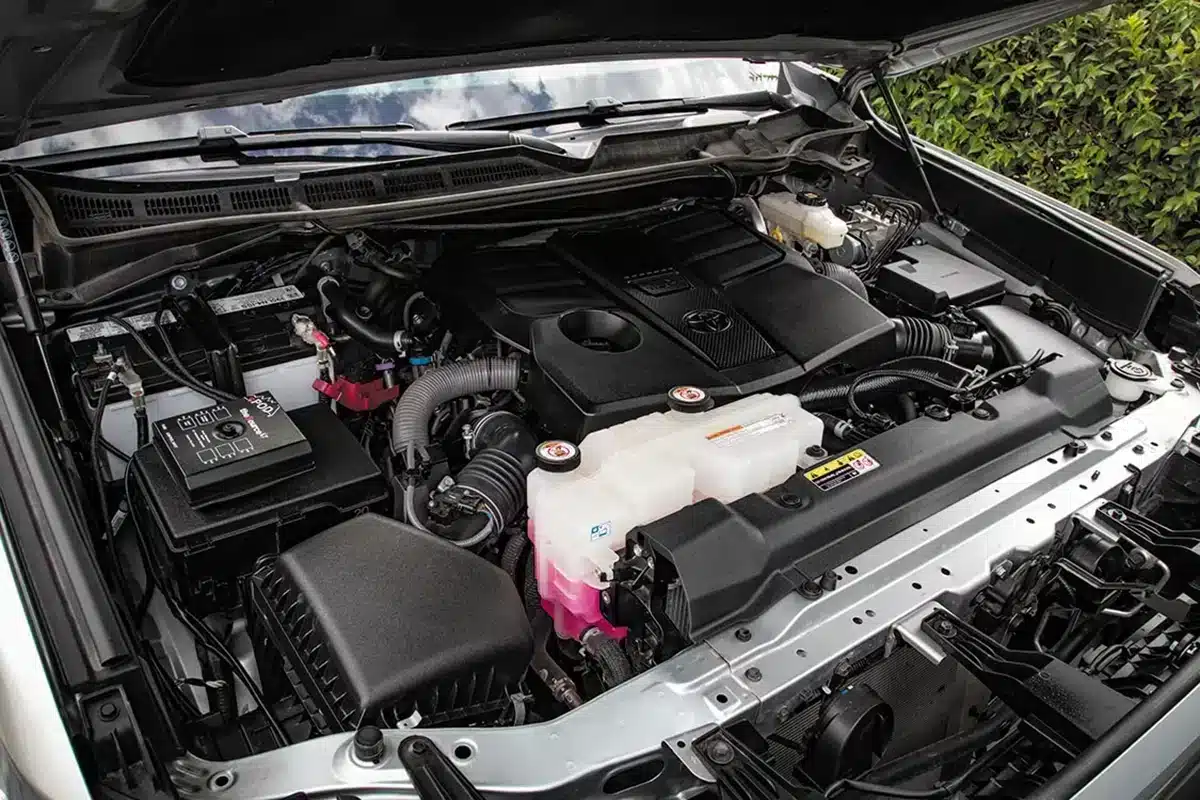
The first major recall, NHTSA recall 24V-381, covered certain 2022-2023 Toyota Tundra and Lexus LX600 vehicles equipped with the V35A engine.
Toyota identified 102,092 vehicles as potentially affected:
Toyota Tundra: 98,568
Lexus LX600: 3,524
Toyota stated:
“During a specific production period, there is a possibility that engine machining debris of a particular size and amount may not have been cleared from the engine during manufacturing and subsequently contaminated the engine assembly during the production process.”
According to Toyota, debris aka swarf, a VERY common and natural thing for ALL engines to contain, could adhere to the engine bearings and, under load over time, cause bearing failure. The result could be engine knocking, rough running, no-start conditions or complete engine failure.
As of May 2024, Toyota reported 166 field technical reports and 824 warranty claims potentially related to the issue.
The investigation continued.
Then came recall NHTSA recall 25V-767, which expanded the population to 126,691 vehicles, including certain 2022-2024 Toyota Tundra, Lexus LX and Lexus GX models.
Toyota noted something important in that filing:
“The same engines, including some service parts, produced prior to this period were recalled under 24V-381. Some of the same engines produced after this period were produced with improved manufacturing processes and remain under investigation. Others were produced with an improved main bearing.”
At this point, the story was no longer simply about manufacturing debris.
Toyota had begun making engineering changes.
The #1 Main Bearing Changed Everything
The latest recall documents reveal the focus eventually shifted toward the engine’s #1 main bearing.
Toyota says it continued investigating engines produced after manufacturing cleanliness improvements had already been implemented.
According to the recall chronology, engineers studied a cam housing clearance change and its effect on bearing pressure. Toyota and its supplier also analyzed bearing wear from engines in the field.
The company eventually performed bench testing on #1 main bearings using debris representative of material found in affected engines.
The latest recall report states:
“Others were produced with an improved main bearing, and Toyota continues to monitor the effectiveness of this improvement.”
The report further explains:
“Based on the results of the above investigation, Toyota determined that, during a specific production period after the 24V-381 and 25V-767 recalls but before implementation of certain improvement to the #1 main bearing, there is a possibility that engine machining debris of a particular size and amount may not have been cleared from the engine during manufacturing and can cause the issue described in Section 5 to occur.”
That language matters.
Toyota is essentially saying there was a production period after the earlier recalls but before the improved bearing was introduced where debris could still lead to failures.
The company’s latest public statement reinforces that conclusion.
Toyota stated:
“The engines involved in this new recall were produced using additional controls for removing manufacturing debris. We have found that, even after these additional controls, the remaining debris could be sufficient to cause damage to the #1 main bearing and lead to this issue. Engines produced after those included in this recall were manufactured with an improved #1 main bearing to help resist certain debris that might remain.”
That brings us to the question every owner wants answered.
When did the improved bearing actually enter production?
When Did Toyota Introduce the New Bearing?
I asked Toyota directly.
Jacob Brown, Mobility Communications Manager for Toyota Motor North America, provided this response:
“The engines and vehicles put into production had a design change that was implemented to the number one main bearing starting July 2024.”
That means Toyota says engines and vehicles put into production beginning in July 2024 received the revised #1 main bearing.
Based on Toyota’s own statements, later-production 2024 trucks, along with 2025 and 2026 models, should have the improved bearing design. The changeover for 2024 to 2025 started the second week of September, 2024.
It also means replacement engines installed after that point should contain the revised bearing as well.
What About 2025 and 2026 Trucks With Engines Blowing Up?
If you’ve spent any time on Facebook groups, forums or YouTube comments, you’ve probably seen the argument already.
“Toyota says they fixed it, but 2025s are still blowing up.”
“Replacement engines are failing too.”
“Toyota is lying.”
Let’s slow down for a minute.
Like I said above, I’ve covered the Toyota Tundra for 15 years and I’ve been covering all things automotive during that time as well.
During all those years, I’ve learned one simple truth: Every engine can and will failure.
Even Toyota’s legendary 5.7-liter V8.
I know that’s not a popular thing to say on the internet, but it’s true.
The 5.7-liter V8 wasn’t a magical engine that never broke. It had failures. It had warranty claims. It had owners who needed repairs. The million mile Tundra? Only one of those three I mentioned was a 5.7-liter V8. And yup, I’ve seen the same comments, the same used car sales guys do videos saying, “buy this truck, the engine is BULLETPROOF!”
The difference is that those failures never reached a level that damaged Toyota’s reputation for reliability.
The same thing is true today.
Yes, I know of a handful of 2025 Toyota Tundras that have experienced engine failures. I’ve also heard of at least one 2026 model with an engine issue.
And you know what?
I fully expect to hear about more.
I also expect to hear about failed 2027s, 2028s and 2029s someday.
That’s how mechanical equipment works.
The real question isn’t whether an engine ever fails.
The real question is volume.
Right now, we simply are not seeing the same volume of failures in 2025 and 2026 trucks that led Toyota to recall earlier production engines.
Could that change as more miles accumulate?
Absolutely.
But based on the data available today, Toyota’s improved manufacturing processes, the changes to the engine design (cam housing clearance) and revised #1 main bearing appear to be reducing the problem.
Time will ultimately be the judge.
My expectation is that Toyota will continue doing what it has historically done: stand behind the product, repair trucks that experience legitimate failures and keep owners on the road.
Owners may be frustrated during the process. That’s understandable.
But that’s a very different story than claiming every third-generation Toyota Tundra is destined to blow an engine.
So, Is the Third-Gen Toyota Tundra Reliable?
If you asked me today whether I’d buy a 2025 or 2026 Toyota Tundra, the answer is yes.
If you asked me whether Toyota completely escaped this engine controversy, the answer is no.
What Toyota’s own documents show is that the company identified a problem, improved manufacturing processes, redesigned the #1 main bearing and continues to monitor the results.
That’s not a company pretending a problem doesn’t exist.
That’s a company trying to solve one.
The third-generation Toyota Tundra will probably carry this engine controversy for years. Critics will continue pointing to failures. Owners will continue debating whether the truck is as durable as the legendary models that came before it.
But if there’s one thing I’ve learned after 15 years covering the Toyota Tundra, it’s that reliability isn’t determined by a handful of viral social media posts or YouTube videos from critics who don’t have all the facts.
It’s determined by millions of miles, hundreds of thousands of trucks and how an automaker responds when something goes wrong.
The next few years will ultimately decide how history remembers the third-generation Toyota Tundra.
For now, the evidence suggests Toyota found the problem, made changes and is working to ensure the fix works.
The post Is the Third-Gen Toyota Tundra Reliable? What I Learned After 15 Years Covering the Truck appeared first on Pickup Truck +SUV Talk.
