
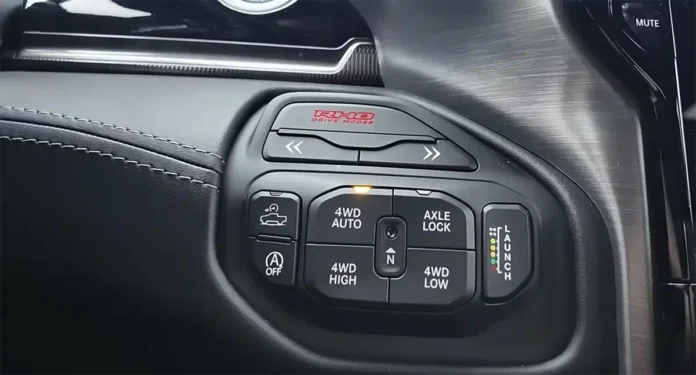
If you’ve ever wondered how 4WD Auto works, you’re not alone. Modern trucks from Ram, Chevrolet, GMC and Ford all offer some version of an automatic four-wheel-drive system, but many owners still aren’t sure when it engages, whether it’s always sending power to the front wheels or how it differs from 4WD High.
Instead of relying on internet forums and conflicting opinions, I asked Ram Chief Vehicle Synthesis Manager Doug Killian to explain exactly how the system works in a video interview. Although we discussed the Ram 1500 RHO, the engineering concepts behind modern 4WD Auto systems are remarkably similar across today’s full-size pickups.
4WD Auto Is Always Ready, But It Isn’t Locked Like 4WD High
According to Killian, Ram’s transfer case uses an electronically controlled clutch pack that continuously manages how much torque reaches the front axle.
In a truck equipped with a selectable 2WD mode, those clutches completely disengage and all power goes to the rear wheels. In the RHO, however, the truck stays in 4WD Auto all the time.
That doesn’t mean it’s permanently locked in four-wheel drive.
Instead, the system lightly engages the front drivetrain and constantly monitors steering angle, throttle input, wheel speed and the selected drive mode. If additional traction is needed, the clutch pack tightens within milliseconds to send more torque to the front axle.
Drive modes also change the torque split. For example:
- Rock mode locks the system into a 50/50 torque split.
- Baja mode favors the rear axle with roughly a 75/25 split to improve drifting and high-speed off-road handling.
- During normal driving, the system backs off clutch engagement to reduce drag while remaining ready for instant traction when needed.
No, Running 4WD Auto Won’t Wear Out Your Truck

Another concern owners often have is whether constantly using 4WD Auto shortens the life of the transfer case.
Killian says Ram designed the wet clutch system specifically for continuous operation.
The clutches run in oil and are engineered to handle hundreds of thousands of miles. While aggressive off-road driving can generate heat, the truck continuously estimates clutch temperature through software. If the system predicts overheating, it will warn the driver and reduce torque before any damage occurs.
For owners of trucks equipped with both 2WD and 4WD Auto, Killian says leaving the truck in Auto during winter is perfectly acceptable.
“I pretty much just put it in four-wheel-drive Auto and kind of forget about it,” he said, noting he does the same with his own truck during Michigan winters.
How 4WD Auto Works Isn’t the Same as 4WD High
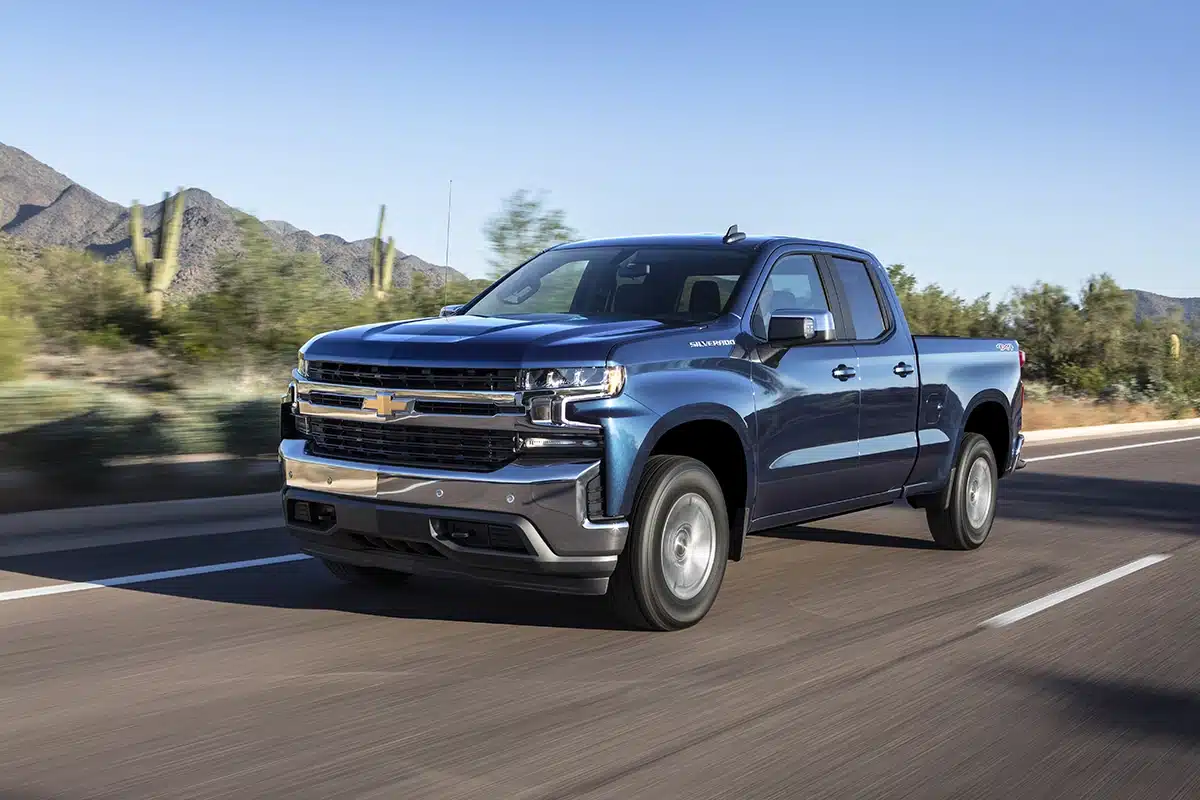
Killian also explained the biggest misconception surrounding Ram’s four-wheel-drive system.
In 4WD Auto, the transfer case actively adjusts torque and allows clutch slip while turning to prevent the binding and hopping drivers associate with traditional four-wheel drive.
In 4WD High, those clutches lock completely.
Power is split evenly between the front and rear axles, making it ideal for deep snow, mud and serious off-road conditions. Because the system stays mechanically locked, it should only be used on loose surfaces where tire slip can relieve drivetrain stress.
He also offered one unexpected tip for RHO owners.
If you want the truck to slide around in a controlled environment, Baja mode sends more torque to the rear axle. Combine that with the stability control’s reduced intervention mode and you’ll have the truck’s best setup for drifting.
Finally, Killian offered a simple way to distinguish Ram’s system from all-wheel drive.
An all-wheel-drive system generally sends torque forward only after wheel slip occurs. Ram’s 4WD Auto system is already sending torque to the front axle and is simply adjusting how much torque is available based on driving conditions.
When Should You Use 4WD Auto vs. 4WD High?
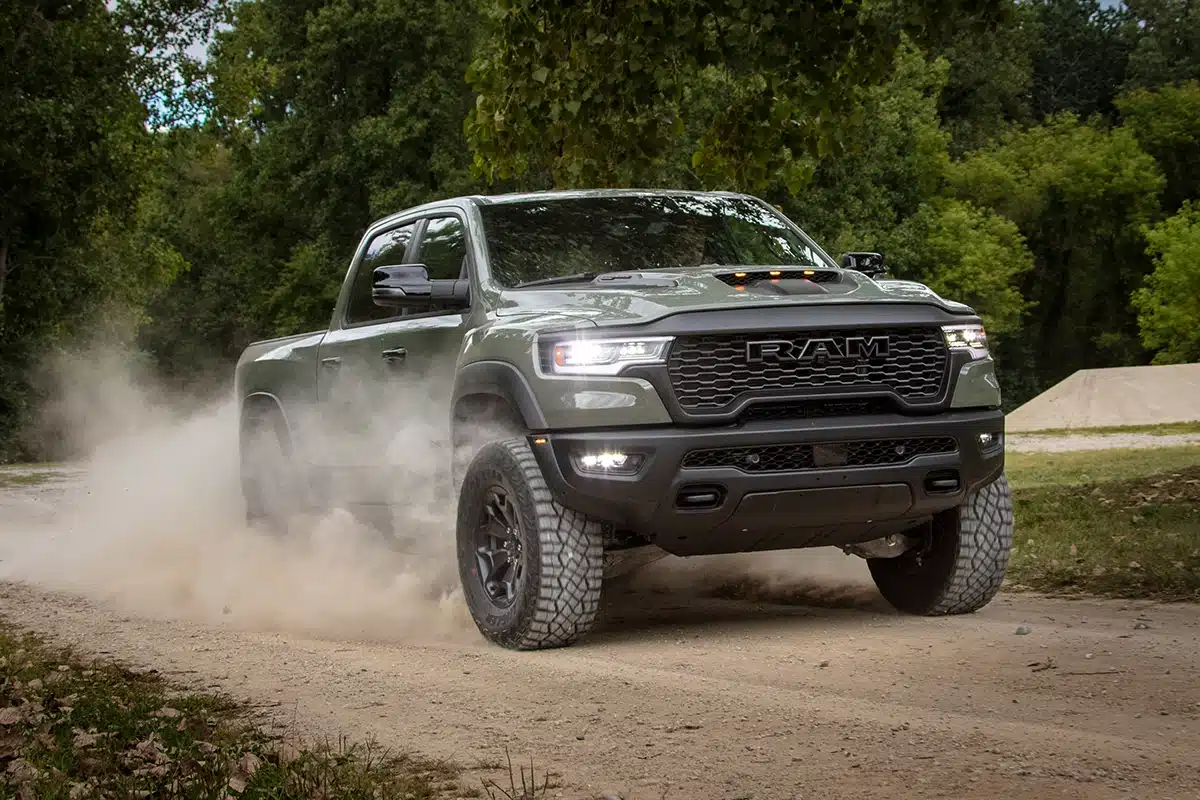
One of the biggest takeaways from my conversation with Killian is that many truck owners are overthinking when to use each four-wheel-drive setting.
If your truck has 2WD, 4WD Auto and 4WD High, each mode serves a different purpose.
2WD is still the best choice for dry pavement when maximum fuel economy is the priority. The front drivetrain is disengaged, reducing drag and improving efficiency.
4WD Auto is the mode most owners should use whenever road conditions are questionable. Rain, snow, icy overpasses, gravel roads and changing traction are exactly what it was designed for. The system continuously monitors wheel slip and sends more torque to the front axle in milliseconds when additional traction is needed. According to Killian, there’s no durability concern with leaving the truck in 4WD Auto all day, even throughout the winter.
4WD High is different. Instead of allowing the clutch pack to vary torque distribution, it locks the front and rear axles together for maximum traction. That’s ideal for deep snow, mud, sand and more serious off-road driving, but it also means the system can bind when turning on dry pavement. That’s why manufacturers recommend using 4WD High only on loose or slippery surfaces.
For most truck owners, the answer is simple. If you’re driving on pavement with changing weather or occasional slick spots, leave the truck in 4WD Auto. Save 4WD High for conditions where you know you’ll need maximum traction from the moment you start moving.

Tim Esterdahl
All author posts

