
While Car and Driver will tell you a full-size SUV is a large vehicle with three-row seating, lots of cargo space, and strong towing capabilities, there must be more to it than that. That definition could just as easily apply to certain midsize SUVs as well, especially if you consider the fairly large and spacious Chevy Traverse and its many corporate siblings. By the same token, you might argue that full-size SUVs are truck-based and feature a body-on-frame construction, which is perfectly valid until you realize the new Range Rover — a full-size luxury SUV — is a unibody. Maybe it’s about the engines, then.
While the vast majority of midsize offerings on sale today don’t offer a V8, exceptions like the Land Rover Defender and Hemi-powered Dodge Durangos only add to the confusion. Then Dodge furthers the midsize/full-size ambiguity by calling the Durango a full-size SUV when most publications consider it a midsize offering. So how can you properly define a modern full-size SUV?
Though Car and Driver’s definition isn’t entirely incorrect, it sort of lacks a little nuance. For me, the answer lies in considering its actual dimensions and price/market position, and tying those together with cargo space, seating, and towing abilities.
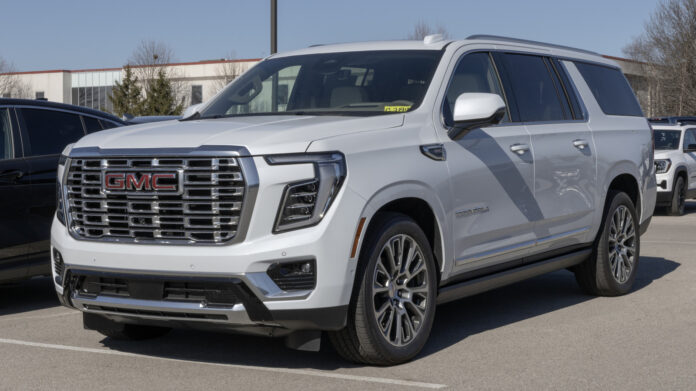
One thing that’s common to full-size SUVs like the Chevy Tahoe and Cadillac Escalade is their enormous size relative to their midsize brethren. Especially if you throw in the ESV and Suburban into the mix, which are basically extended versions of the Escalade and Tahoe. These behemoths translate the size difference into more available interior volume (especially cargo), while simultaneously positioning themselves as a more expensive proposition.
Bringing clarity
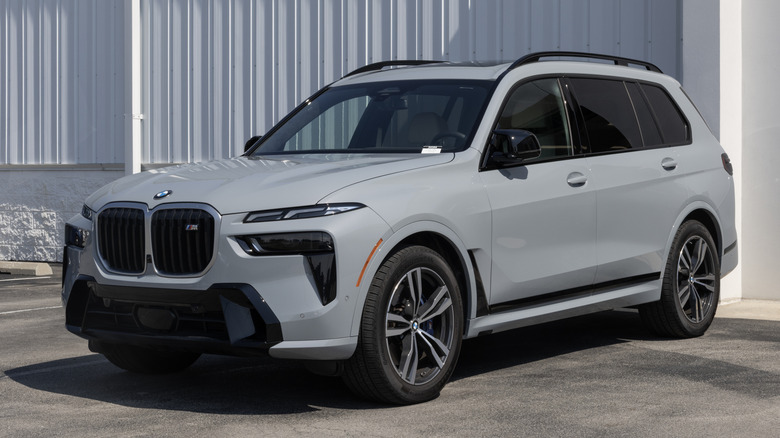
Using Edmunds’ comparison tool, we can see that a full-size Tahoe is 211.3 inches long, while the Suburban is a touch over 226 inches in overall length. Both versions grow slightly longer when there’s a Cadillac badge up front. Other popular full-size SUVs that measure well over 200 inches in length include the Jeep Grand Wagoneer and Lincoln Navigator. But the Chevy Traverse — a car usually considered midsize — is 204.5 inches long, you’ll notice that the full-size BMW X7, at 203.6 inches, is shorter. So even if we consider 200 inches or longer as the sort of full-size benchmark, it’s still not quite definitive.
But when we pair dimensions with cargo space, towing, and pricing, the distinction starts to take shape. For example, the cargo volume of a Traverse is relatively small when compared to the Tahoe and Suburban. That said, its 22.9 cubic feet of space behind the third row seems better than the X7’s 12.8 cubic feet.
However, the towing limits for the Tahoe, Suburban, and X7 are considerably higher than that of the 2026 Traverse, which can haul up to 5,000 pounds. The full-size Chevy twins can tow well over 8,000 pounds, while the BMW is rated up to 7,500 pounds. Add pricing to the mix, and things become even clearer. The difference between an entry-level Traverse and a lightly-equipped Tahoe is around $20,000, with the luxurious X7 costing more than twice as much as a base Traverse.
Of course, there are no dictionary definitions here, and as a result, no right and wrong answers. But in short, defining a full-size SUV requires looking at a combination of its size, towing limits, space, and price.

