
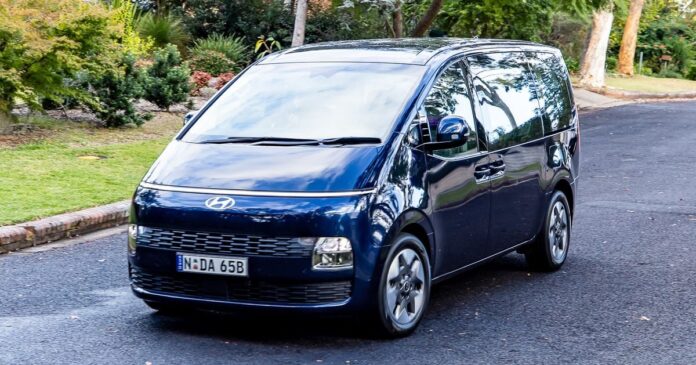
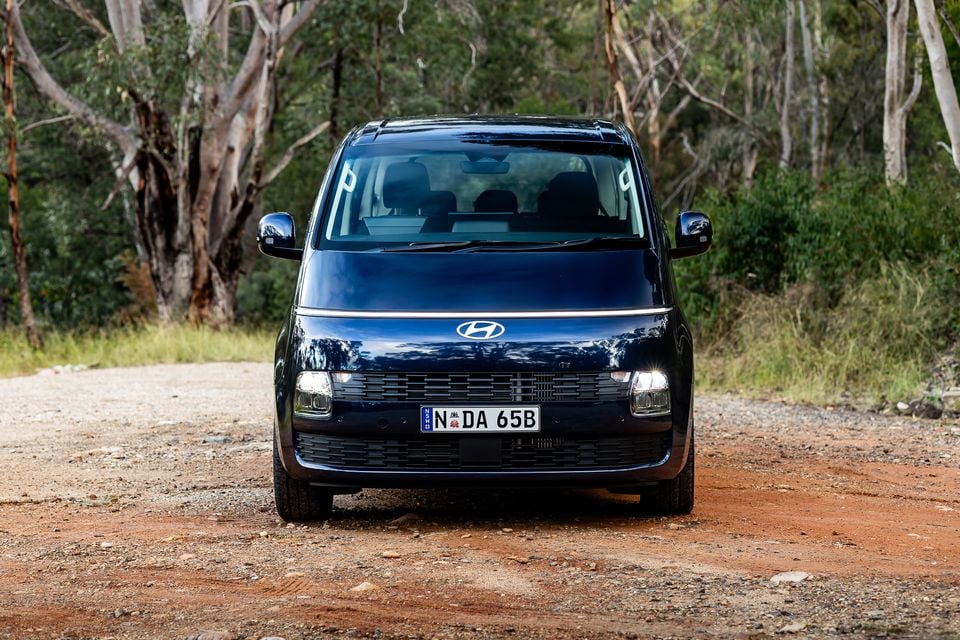
Hyundai has made some big changes to its Staria people mover range. And no, we’re not talking about the very modest facelift that’s been applied to this polarising three-row van.
The Korean brand’s Aussie arm has moved to simplify the lineup with a strategy that sees the entry-level diesel and petrol versions start below $55,000, while a new range-topping petrol-electric hybrid Lounge variant is coming soon for almost $20,000 more.
It’s the base grades we’re focusing on here, the diesel in particular. And it has seen a big change, too, with its all-wheel drive system downgraded to front-drive, and there have been plenty of other spec adjustments, including some welcome ones…
But others? I’d say they’ve made this a worse car than before. I’ll explain why as we go along.
How much does the Hyundai Staria cost?
With just two variants in the ‘regular’ Staria range to choose from, and a new hybrid flagship on the way, the updated version of this people mover still argues a strong case when it comes to pricing.
|
Model |
Price before on-road costs |
|---|---|
|
2026 Hyundai Staria 3.5L V6 FWD |
$54,300 |
|
2026 Hyundai Staria 2.2L diesel FWD |
$54,300 |
|
2026 Hyundai Staria Lounge HEV FWD |
$73,740 |
However, it isn’t as cheap as it used to be, and while some of the standard equipment has been improved, there have been some questionable decisions on the spec sheet. You’ll see a deep rundown if you scroll down.
We will review the Staria Lounge hybrid model at a later date, but that near-$20k price jump makes it a hard pill to swallow – especially considering it has seven seats, while the lower grades get the more generous eight-seat layout.
Rivals you could consider include the best-selling Kia Carnival, or the Ford Tourneo. More expensive three-row van options include the plug-in hybrid GAC M8 and the all-electric Denza D9.
To see how the Hyundai Staria lines up against the competition, check out our comparison tool
What is the Hyundai Staria like on the inside?
There have been a few changes to the Staria’s cabin for this update, including a new leather-appointed steering wheel with Hyundai’s four-dot Morse code motif and, honestly, it feels much nicer in the hand than the previous tiller.
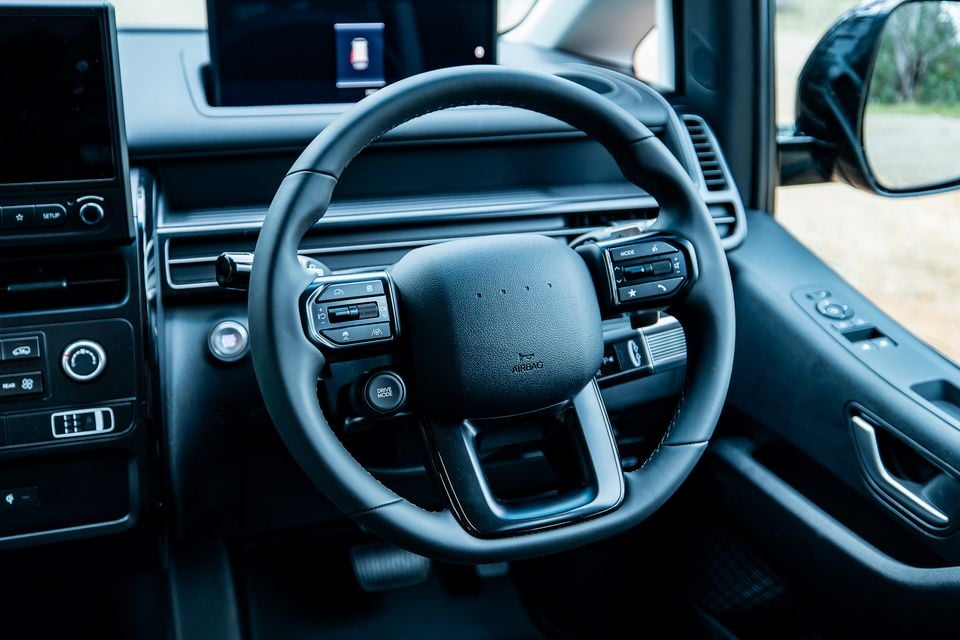
There’s also a larger 12.3-inch infotainment touchscreen replacing the old 10.25-inch unit. It doesn’t have built-in satellite navigation, but wireless Apple CarPlay and Android Auto are standard, and that’s probably what most owners will use anyway.
Find your perfect new car with CarExpert
The system itself is easy enough to navigate, with plenty of menus and configurability. There’s even a dedicated ‘Carrier Mode’, which can disable certain driver assistance features if you’re carrying something attached to the car.
The usual customisation options for the instrument cluster and vehicle settings is possible via the on-screen menus, including the driver-assist systems. But importantly, Hyundai has resisted the temptation to bury everything inside the touchscreen.
There are physical shortcut buttons beneath the display, rotary dials for audio volume and tuning, and a proper air-conditioning panel with actual buttons and knobs.
This base Staria grade misses out on climate control despite some previous Staria variants having it. Instead, it has a manual air-conditioning setup, which works perfectly well. Rear passengers get their own temperature and fan-speed controls, too, with a panel mounted above the second-row driver-side seat.
Other handy touches include a six-seat seatbelt indicator panel, a quick-access camera button (despite the fact it’s just linked to a reversing camera these days!) and an Auto Hold function.
The diesel now gets engine idle-stop technology, too. If you don’t like it, you can disable it, but you’ll need to do so every time you drive the car.
The column-mounted gear selector takes some getting used to, particularly if you’ve got long legs, but once you get used to its operation it’s straightforward enough.
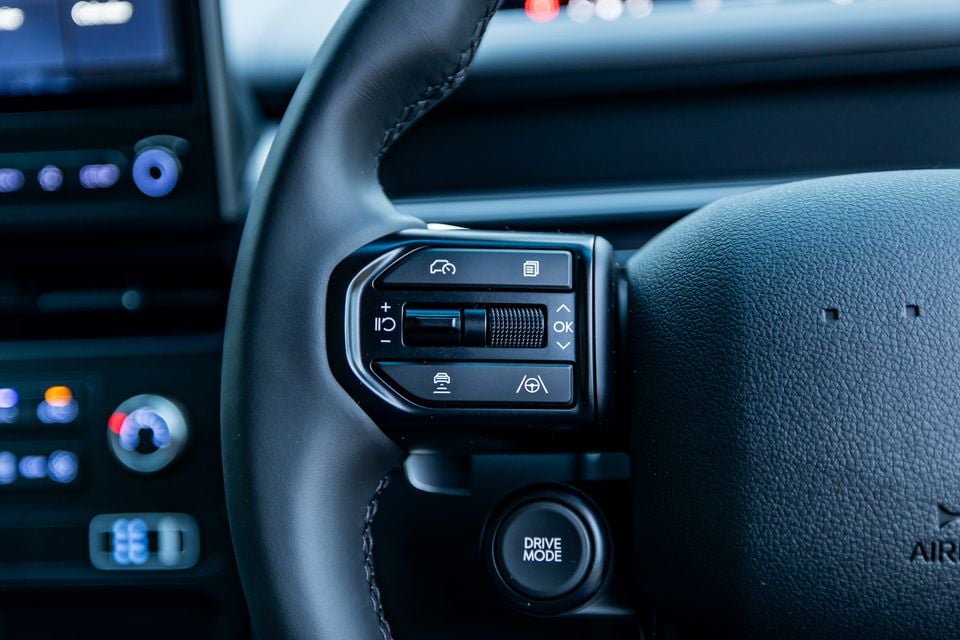
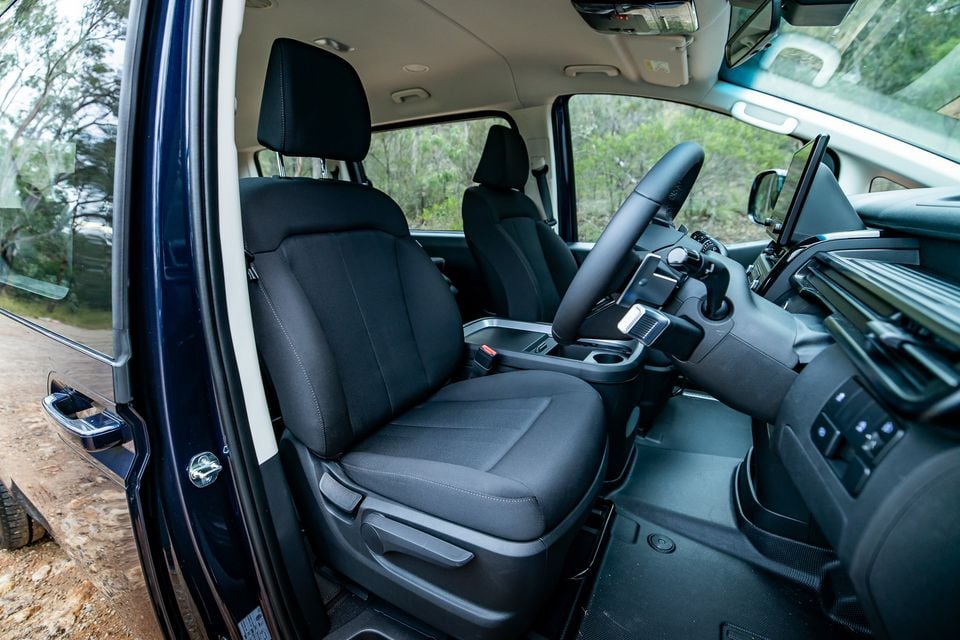
The steering wheel controls are familiar, with adaptive cruise control, lane-centring assistance and media controls all quickly learnable.
Storage is one of the Staria’s strongest suits.
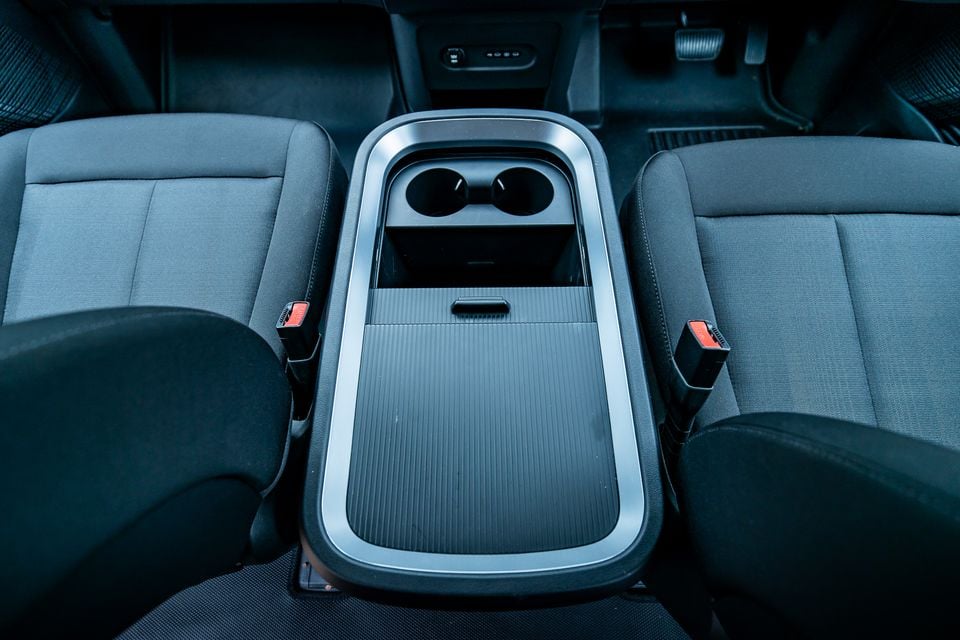
There’s a shelf ahead of the driver, another shelf in front of the passenger, a sizable glovebox, wireless phone charging dock, USB-C ports and a hidden storage area beneath the floating centre console. The removable cupholder arrangement between the front seats also allows for more storage underneath if required, too.
Curiously, only the driver gets a dash-mounted cupholder. The front passenger misses out, which seems a strange omission in a vehicle that’s otherwise very practical.
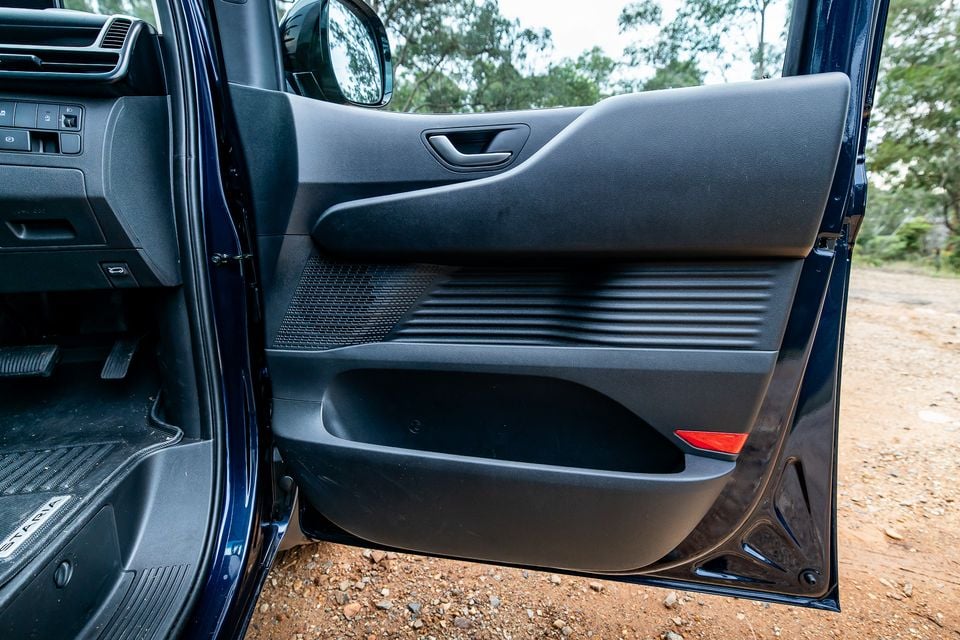
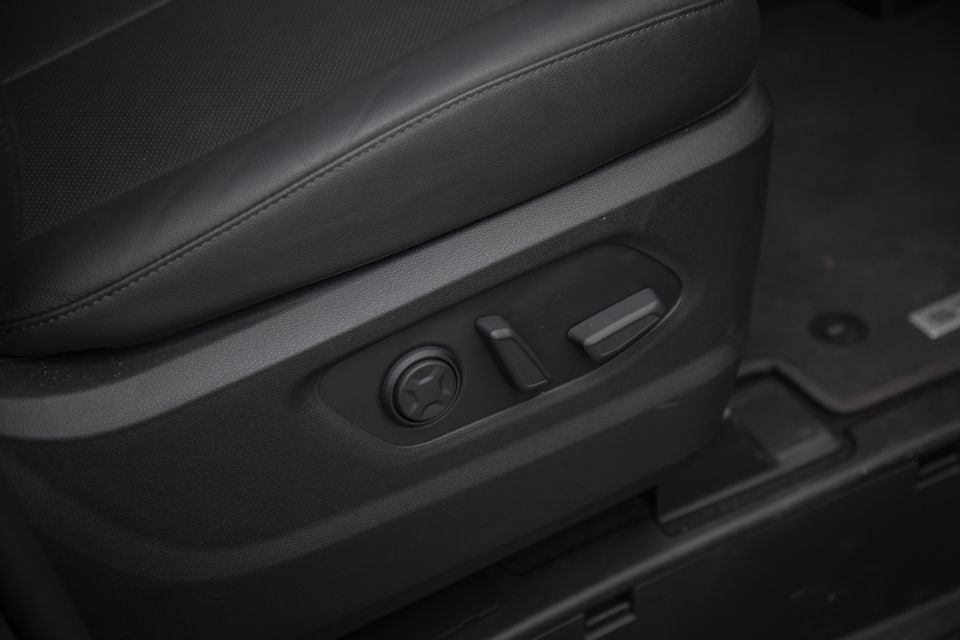
There are bottle holders in the doors, but the materials themselves are decidedly utilitarian. Hard plastics abound and the cloth seats are manually adjustable, with no heating or ventilation, and no electric adjustment nor memory functions.
Compared to some previous versions, this one feels downright fleet-focused.
But there are illuminated vanity mirrors and extendable sun visors – something you’ll appreciate if you’re driving during twilight hours.
But a few other things are absent. There’s no sunglasses holder, and no auto-dimming rear-view mirror either.
In the middle row with the driver’s seat set for my 6’0” (182cm) frame, there’s plenty of room; kneeroom is generous, shoulder room is excellent, and headroom is almost limitless.
Rear passengers get overhead air vents, those fan and temperature controls, map pockets, device pockets, bag hooks, USB-C charging ports and pop-out cupholders. There’s even a storage drawer beneath the seat, which is handy, though parents should probably check it occasionally for forgotten food scraps.
Second-row window seats include ISOFIX anchors and there are three top-tether points, too.
But this brings me to one of my biggest frustrations: there are no child-seat anchor points in the third row.
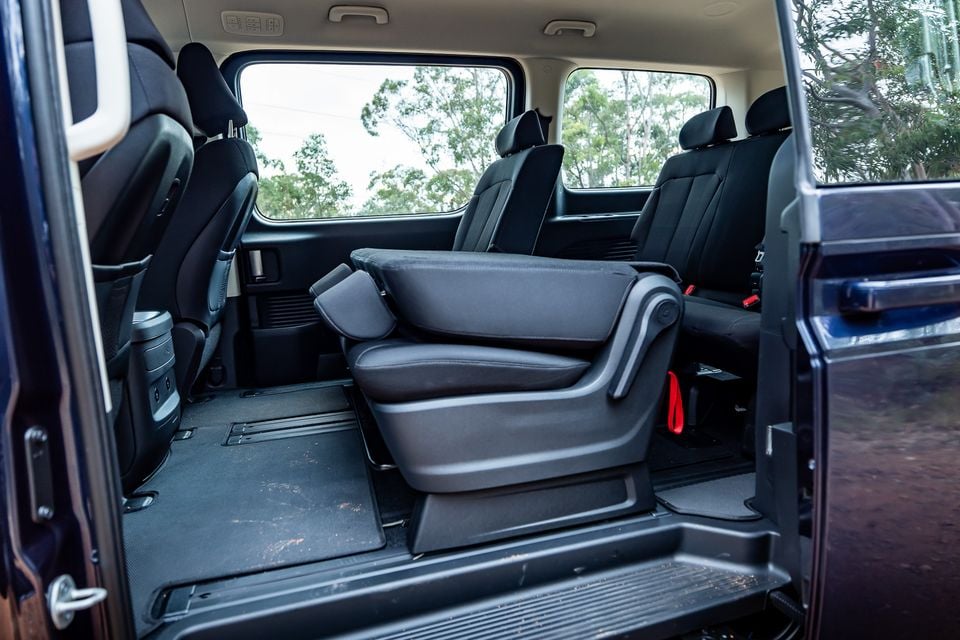
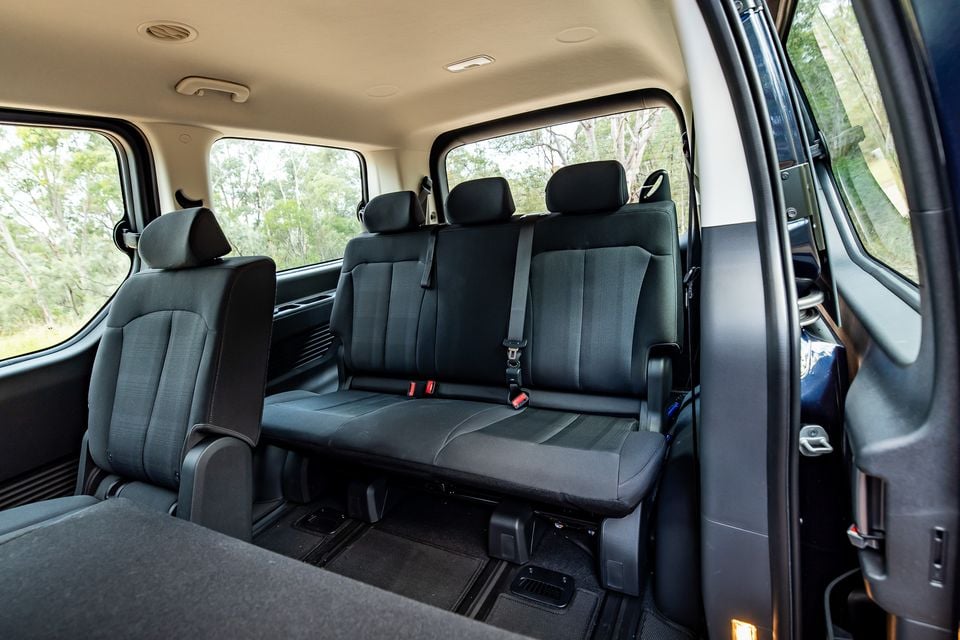
Honestly, I think that’s a massive miss. Not only does the Kia Carnival offer them, but even the Hyundai Santa Fe and Palisade SUVs give you third-row top-tethers. In a people mover like this, it’s a problem not to have them.
However, access to the third row is reasonably straightforward. You can slide and tumble the second-row seats, but there are a couple of different mechanisms involved and it takes a little more fiddling than with some rivals.
And once you’re in the back row, you’ll find it pretty accommodating.
Even with the second-row seats set back, I had enough legroom and foot space to fit. Headroom, again, is outstanding. Rear occupants also get overhead vents, USB-C charge ports, cupholders, storage pockets, grab handles and coat hooks.
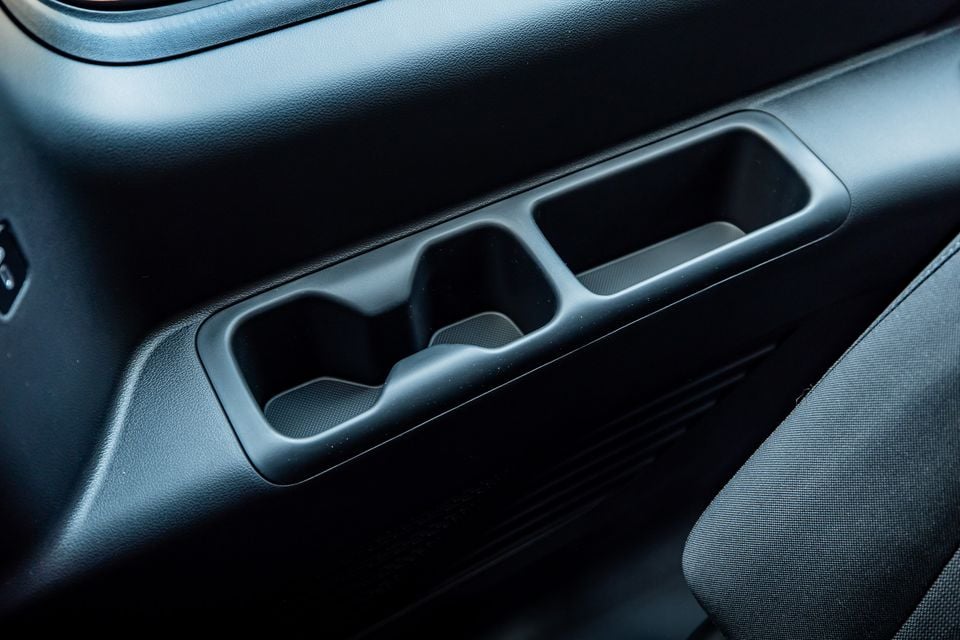
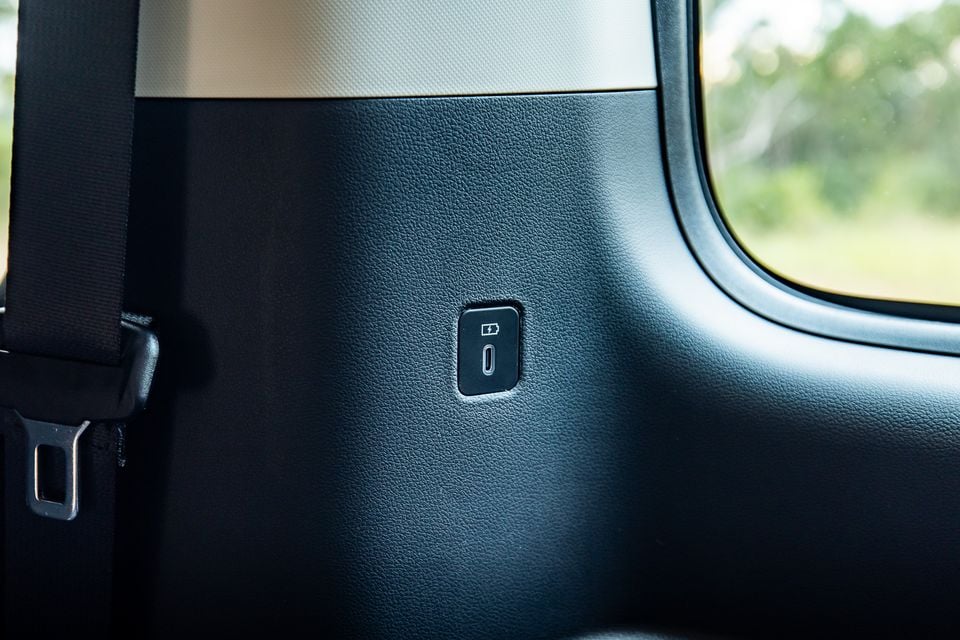
The seats slide fore and aft to help balance passenger and luggage space, but adjusting them from the third-row position isn’t easy.
Really, it’s quite clear that space isn’t the issue. Usability is.
In the boot, too, there are some differences to the class-leaders when it comes to capacity and usefulness.
The tailgate itself is heavy and shorter people will struggle to reach it when closing the boot. An electric tailgate (previously offered with the Elite grade, along with the electric sliding side doors that this car misses out on!) would solve that.
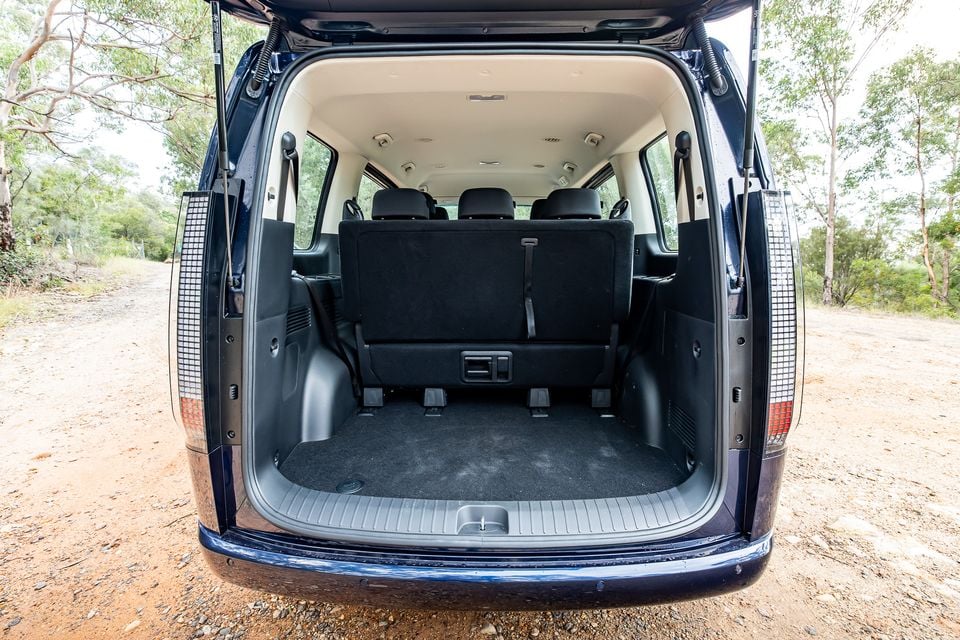
But with all eight seats in place, there’s still a huge amount of luggage space behind the third row. You can slide the seats forward, fold the backrest flat or, if you need maximum practicality, flip up the seat bases and create something approaching a cargo van.
There are shopping bag hooks everywhere, and the Staria is undoubtedly versatile, but it doesn’t quite match the Carnival’s cleverness with its underfloor storage solutions and hideable third-row seats.
Instead, under the floor of this vehicle there’s an underslung full-size spare wheel.
|
Dimensions |
Hyundai Staria |
|---|---|
|
Length |
5253mm |
|
Width |
1997mm |
|
Height |
1990mm |
|
Wheelbase |
3273mm |
|
Cargo capacity |
831L (behind the third row) 1303 (third row folded) |
To see how the Hyundai Staria lines up against the competition, check out our comparison tool
What’s under the bonnet?
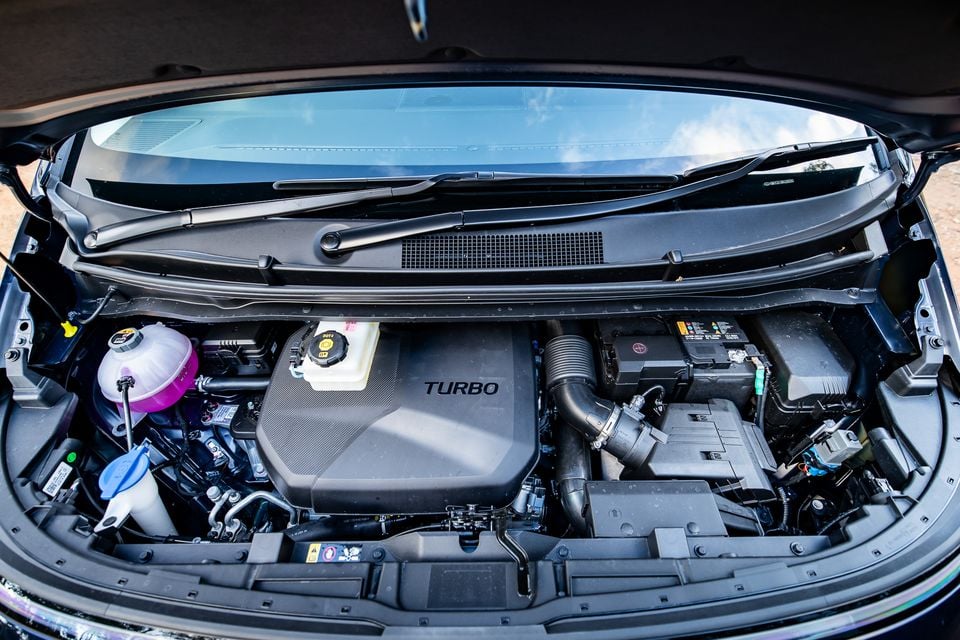
The big news here is that Hyundai has axed the beneficial inclusion of all-wheel drive for the diesel Staria, which is now front-drive like the petrol V6 variant.
|
Specifications |
Hyundai Staria diesel |
|---|---|
|
Engine |
2.2L 4cyl turbo-diesel |
|
Power |
130kW |
|
Torque |
430Nm |
|
Transmission |
8-speed auto |
|
Drive type |
Front-wheel drive |
|
Fuel economy (claimed) |
7.2L/100km |
|
Fuel economy (as tested) |
9.3L/100km |
|
CO2 emissions (claimed) |
191g/km |
|
Fuel tank |
75L |
|
Weight |
2352kg (tare) |
|
Payload |
688kg |
|
Braked towing capacity |
2500kg |
|
Gross vehicle mass (GVM) |
3210kg |
I think this is a mistake. I mean, it wasn’t an off-roader, but it did deliver an added level of composure and traction on wet or loose surfaces that isn’t there anymore.
There are some improvements to fuel economy by removing the AWD system, but the diesel now has an engine idle-stop system that might annoy some people.
I didn’t mind it, and I was impressed that my fuel consumption was sub-10L/100km over a mix of open-road highway and low-speed urban driving. Keep in mind, though, that I didn’t load up all eight seats. If you do, it’ll be more of a guts.
To see how the Hyundai Staria lines up against the competition, check out our comparison tool
How does the Hyundai Staria drive?
Honestly, I reckon the diesel is the pick if you can’t stretch to the hybrid.
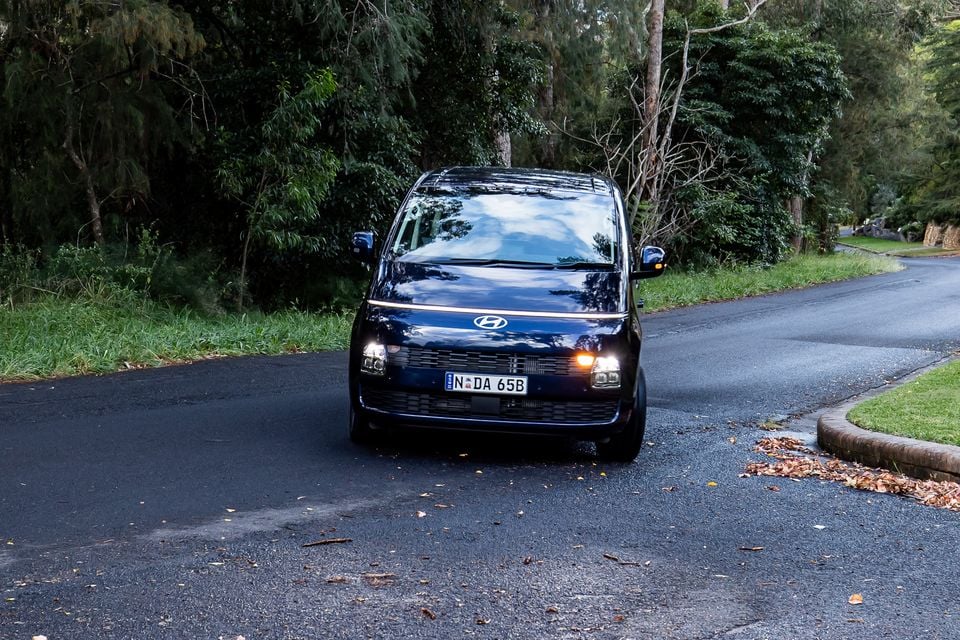
I haven’t driven the hybrid yet, but based on what we know about that powertrain, I suspect it’ll be the sweetest spot but for a price…
But with all-wheel drive no longer part of the standard equation for this diesel, I would argue it’s not as compelling as before.
There’s a healthy amount of torque being sent to the front wheels and you can occasionally overwhelm them if you’re heavy-footed. Thankfully, the way it delivers its grunt is pretty measured, so in most situations that’s not an issue, even if the standard tyres aren’t exactly the last word in grip.
Otherwise, this is just a really pleasant thing to drive. And that’s important, because this is a big family bus.
From expert reviews to the right deal
CarExpert brings together reviews, research tools and trusted buying support, guiding you from research to delivery with confidence.
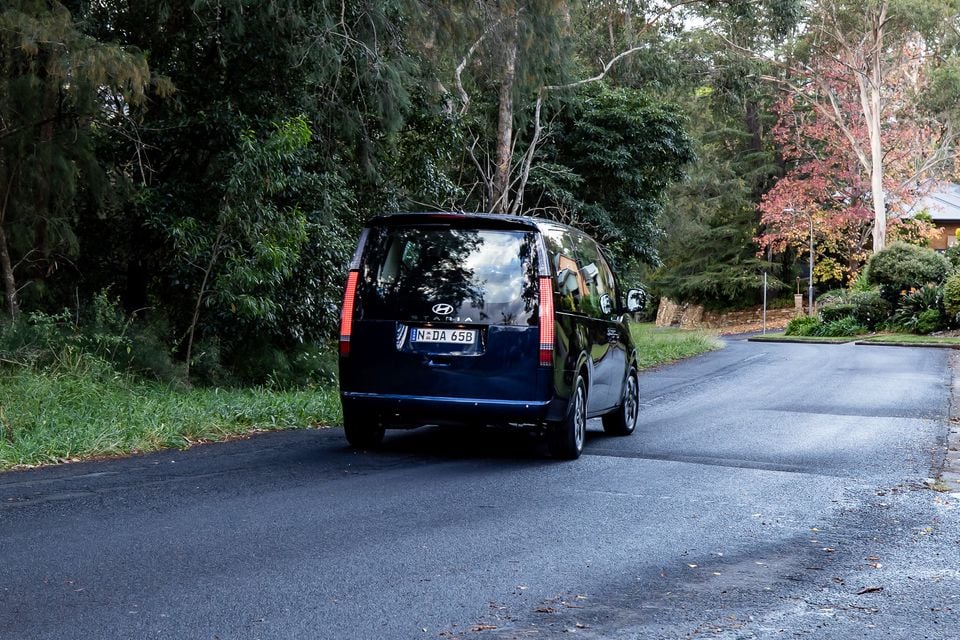
Visibility is excellent, helped by the high-ish seating position and the huge glasshouse, and it really does feel like a fishbowl when you’re on the move. However, I really think deleting the surround-view camera from this updated model was a massive mistake.
Sure, it’s easy enough to place when parking, but having that extra visibility during driveway and shopping centre manoeuvres is something owners will miss compared to the old model. It’s the wrong kind of cost-cutting.
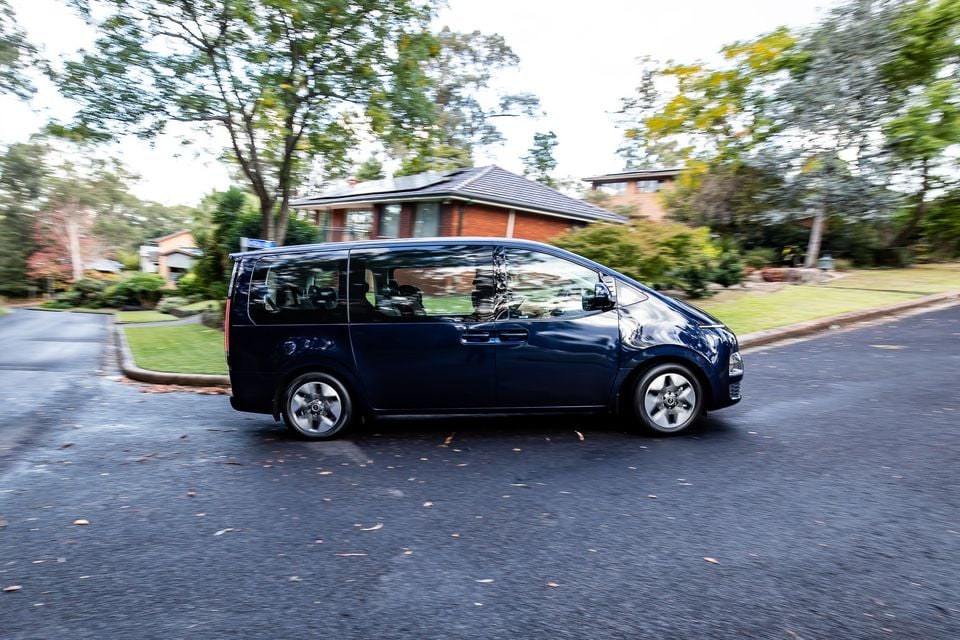
But despite its sheer size, it never feels cumbersome to drive, with beautifully light steering around town and surprisingly direct response at pace. That makes it easier to drive than you’d think.
The turning circle is surprisingly agreeable, and the ride comfort is great, too.
Its long wheelbase helps hold things together over bumps and lumps, allowing the suspension to smooth out imperfections with composure. It’s a very comfortable family cruiser.
But the speed sign recognition system can be a bit chirpy, though you can silence it with a long press of the mute button each time you drive. There’s also a button to disable the lane-keeping assistance if you don’t like it.
To see how the Hyundai Staria lines up against the competition, check out our comparison tool
What do you get?
I’ve already made it clear that there are some significant spec changes here, so let’s run through the model range inclusions.
2026 Hyundai Staria equipment highlights:
- 18-inch alloy wheels with full-size spare
- Rear spoiler
- LED tail-lights
- LED headlights
- LED daytime-running lights
- Heated power-adjustable side mirrors
- 4.2-inch instrument display with digitised speed, RPM readouts
- 12.3-inch infotainment touchscreen (new, up from 10.25-inch)
- Wireless Apple CarPlay and Android Auto
- Bluelink connected-car technology
- Over-the-air software updates (new)
- Cloth seat upholstery
- Leather steering wheel
- Electronic park brake
It’s not a bad list of standard kit, but it is certainly a base-spec experience, and the price is up almost $4000 compared to the pre-update model.
Previously if you were spending about this much on your Staria, you’d end up in the Elite grade, which included:
- Power sliding side doors
- Power tailgate with auto-close
- Leather-appointed interior
- Automatic climate control – front, rear
- 12-way power driver’s seat
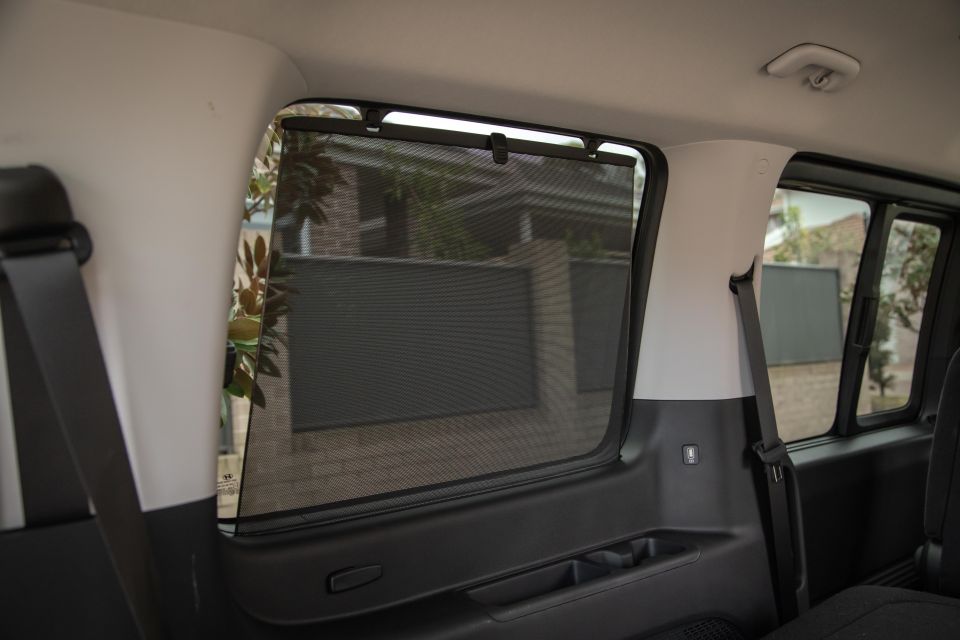
- Curtain shades for 2nd and 3rd rows
So, it’s fair to say, you’re paying more and not getting as much.
That point is especially poignant when it comes to the safety gear, because the Staria was previously sold as standard with a surround-view camera system, arguably the most important feature for a family car of this size.
But now it’s gone. Instead, you get a reversing camera in these grades, and the 360-degree camera is offered exclusively in the top-spec Staria.
To see how the Hyundai Staria lines up against the competition, check out our comparison tool
Is the Hyundai Staria safe?
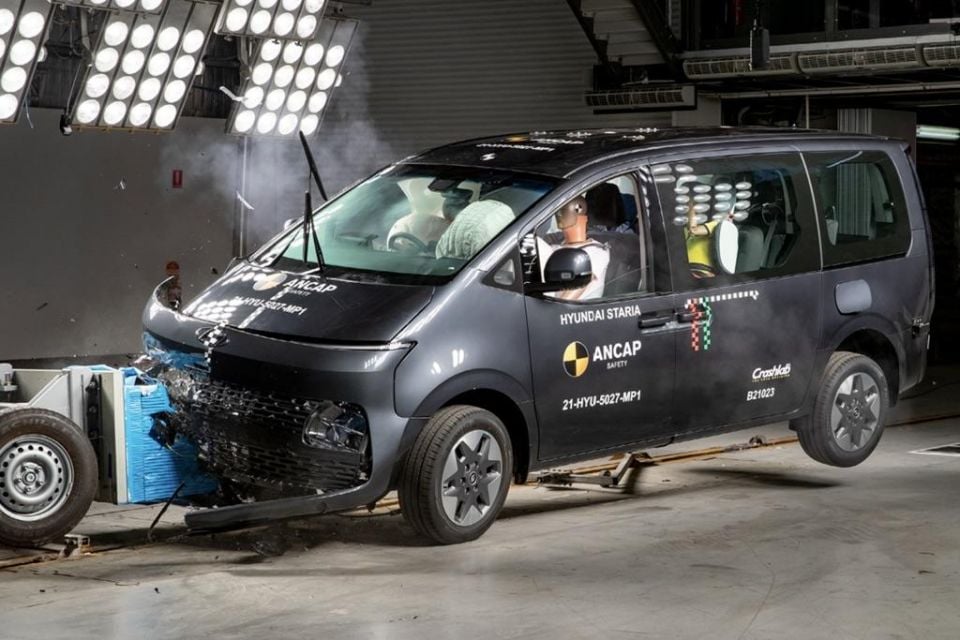
The Hyundai Staria has a five-star ANCAP safety rating following crash-testing in 2021.
|
Category |
Hyundai Staria |
|---|---|
|
Adult occupant protection |
85 per cent |
|
Child occupant protection |
86 per cent |
|
Vulnerable road user protection |
65 per cent |
|
Safety assist |
74 per cent |
Standard safety features include:
- 7 airbags – dual front, front centre, front side, and curtain coverage for all three rows of seats
- Autonomous emergency braking with multi-collision brake
- Blind-spot monitoring
- Driver attention monitoring
- Lane-keep assist
- Lane Following Assist (lane-centring)
- Rear cross-traffic assist
- Safe exit warning
- Front and rear parking sensors
- Reversing camera
As mentioned, the existing Staria offered buyers much more, including the standard-fit surround-view camera, which has been removed.
And previously in mid-spec variants you could also get a 3D view for the surround-view camera, and premium grades had the clever Blind-Spot View Monitor that displayed camera footage of the vehicle’s blind spot in the instrument cluster.
If you want all that, you’ll have to fork out $20k more for the Lounge hybrid.
Hyundai’s Bluelink connectivity, which includes automatic collision notification, an emergency call (SOS) function, and remote services including geo-fencing, valet, speed and time alerts.
To see how the Hyundai Staria lines up against the competition, check out our comparison tool
How much does the Hyundai Staria cost to run?
Hyundai has a pretty strong ownership promise for the Staria, and the combustion-only versions – unlike the hybrid – have lengthy service intervals.
|
Servicing and Warranty |
Hyundai Staria diesel |
|---|---|
|
Warranty |
5 years, unlimited kilometres – standard 7 years, unlimited kilometres – service-activated |
|
Roadside assistance |
12 months – standard Lifetime – service-activated |
|
Service intervals |
12 months or 15,000km |
|
Capped-price servicing |
Lifetime |
|
Average annual service cost (5 years) |
$532 |
|
Total capped-price service cost (5 years) |
$2659 |
To see how the Hyundai Staria lines up against the competition, check out our comparison tool
CarExpert’s Take on the Hyundai Staria
Honestly, it feels like Hyundai has taken what was a good people mover and made it less good.
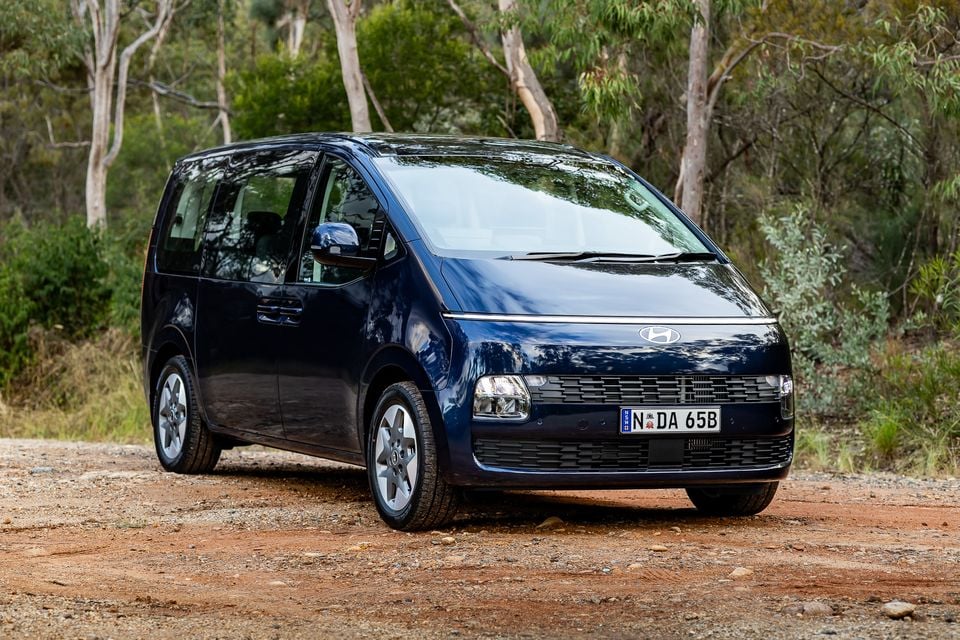
The brand could have pushed prices a little higher and kept the stuff that used to be standard, like the surround-view camera system. Heck, make it $59,990 and put fake leather trim, electric side doors, an electric boot, and an auto-dimming mirror in, too.
I think Hyundai has pared the range back too much for the entry-level Staria variant.
It might appease fleet customers, but it is a less recommendable family vehicle as a result of the changes in this update.
CarExpert can save you thousands on a new Hyundai Staria. Click here to get a great deal.
Click the images for the full gallery
MORE: Explore the Hyundai Staria showroom

