
Photos by Maclaine Morgan
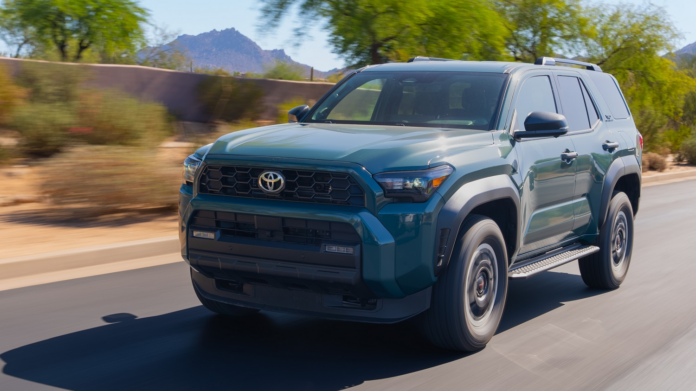
It’s been nearly a year since we last drove a sixth-generation Toyota 4Runner (click here to read our review of the 2025 Limited 4×4). Nothing major has changed for the 2026 model year, but the TRD Off-Road Premium model we test here brought certain things about the 4Runner into sharper focus.
Even though the sixth-generation 4Runner has been out for a while, it’s hard to ignore just how much a departure it is from the previous version of the off-roader. After a production run of 15 years, everything — the platform and bodywork, engine and transmission, and interior tech and trim levels — has (finally!) been updated.
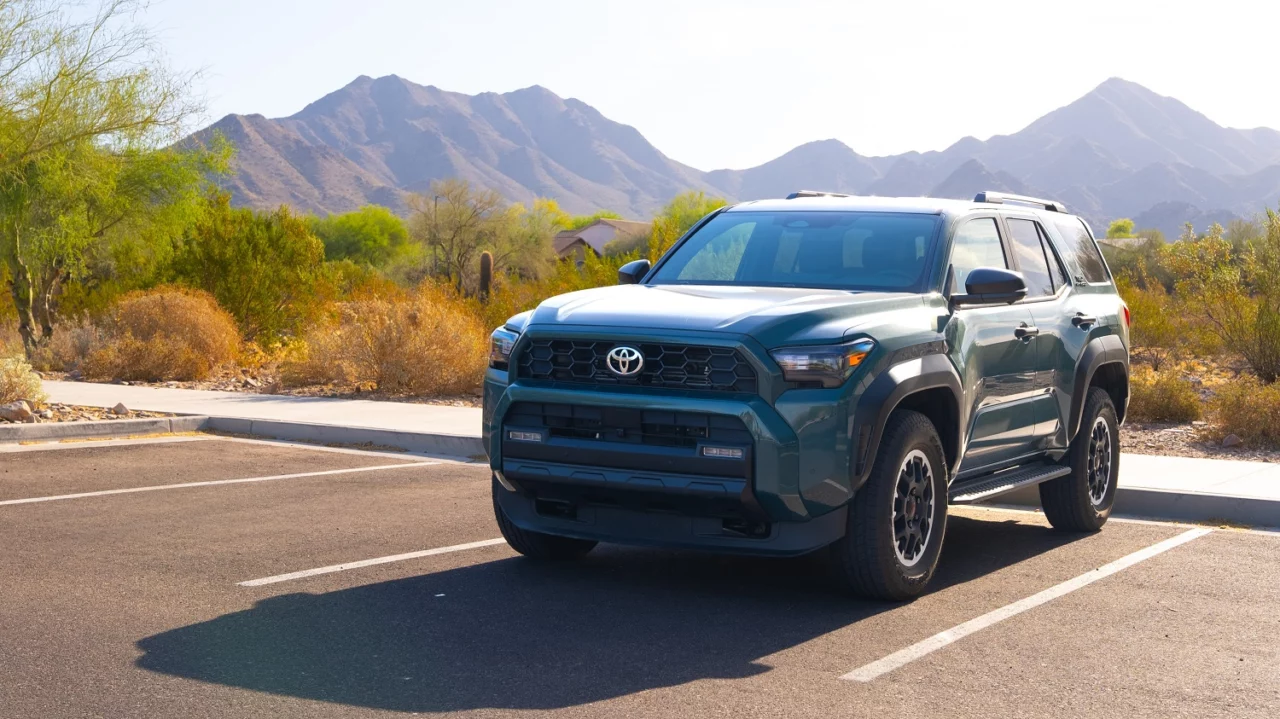
Toyota offers the 4Runner in four overtly wheeling-focused trim levels: TRD Off-Road, TRD Off-Road Premium, Trailhunter, and TRD Pro. Our TRD Off-Road Premium test vehicle had a starting price of $55,770, which includes a 14-inch infotainment touchscreen with wireless Apple CarPlay and Android Auto, Toyota Safety Sense 3.0 suite of safety and driver assistance features, heated leather-trimmed steering wheel, SofTex upholstery, heated and ventilated front seats, and 14-speaker JBL audio system. Adventure hardware includes a specially tuned suspension with Bilstein shocks, locking rear differential, Multi-Terrain Select, Crawl Control with Downhill Ascent Control, and the Multi Terrain Monitor for showing what’s around the 4Runner and what it’s about to encounter on trails. Our media loaner came with several optional extras, including a powder-coated TRD front skid plate, retractable cargo shade, and all-weather cargo tray, which increased the as-tested price to $58,828.
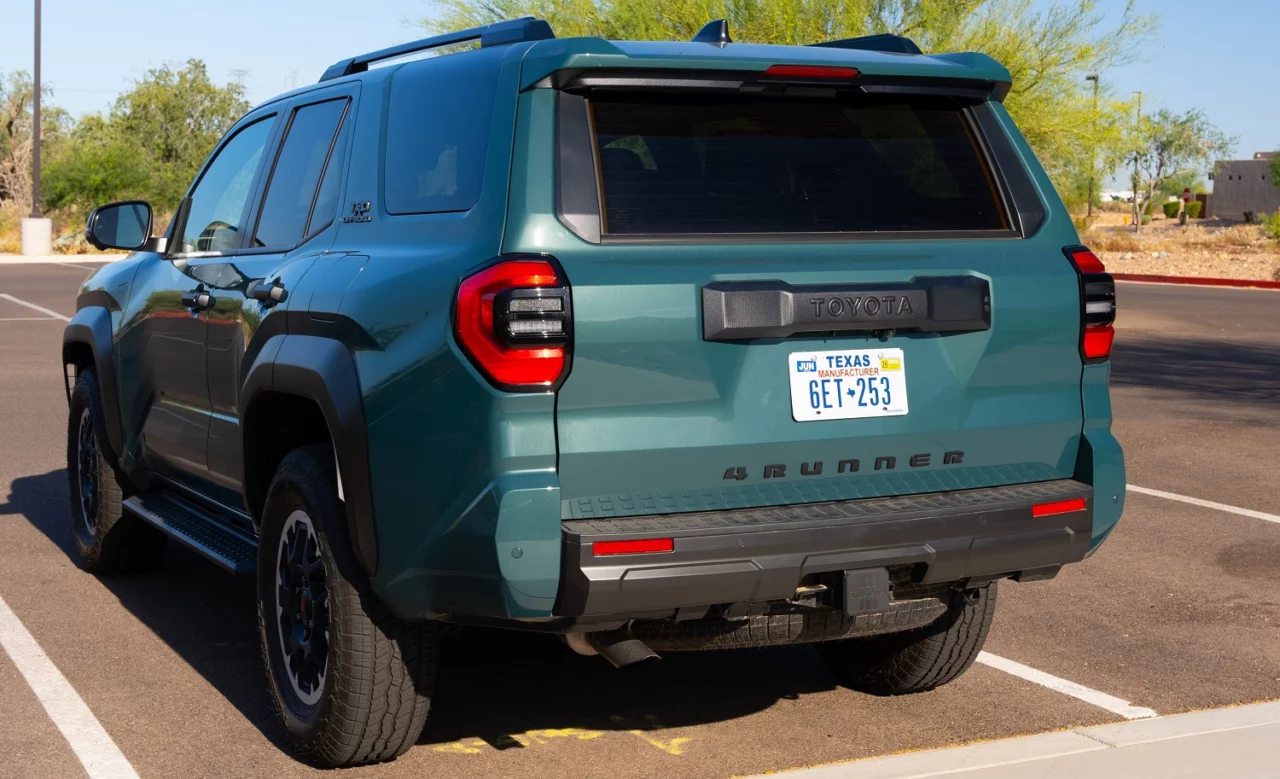
Despite being a clean-sheet redesign, the 4Runner looks as if it’s an evolution of its predecessor. Both rigs have similar blockish styling, chunky proportions, and taillights that appear to be giant gemstones emerging through their sheet metal surroundings. However, there is a major difference: Aside from the Limited models, the previous-gen 4Runners appeared to have randomly styled front ends with an odd mix of straight lines, curves, and slashes. The current model’s face looks far more intentional, cohesive, and handsome. Spec’ed with a greenish blue (or is that blueish green?) that Toyota calls “Everest,” and equipped with black plastic cladding and gear-like 18-inch wheels wrapped with Falken Wildpeak all-terrain rubber, our test vehicle also seemed to fit the whole outdoorsy lifestyle image perfectly. It looked like the ultimate fashion accessory for people who want to go tearing down trails, splashing through streams, and crawling over rocks to get to breathtaking views of the horizon and their campsites. Toyota could offer an entire line of paracord bracelets, puffer vests, boot socks, water bottles, parkas, and rucksacks in the same color scheme. Want to be truly decked out and geared up? Get the matching 4Runner TRD Off-Road Premium.
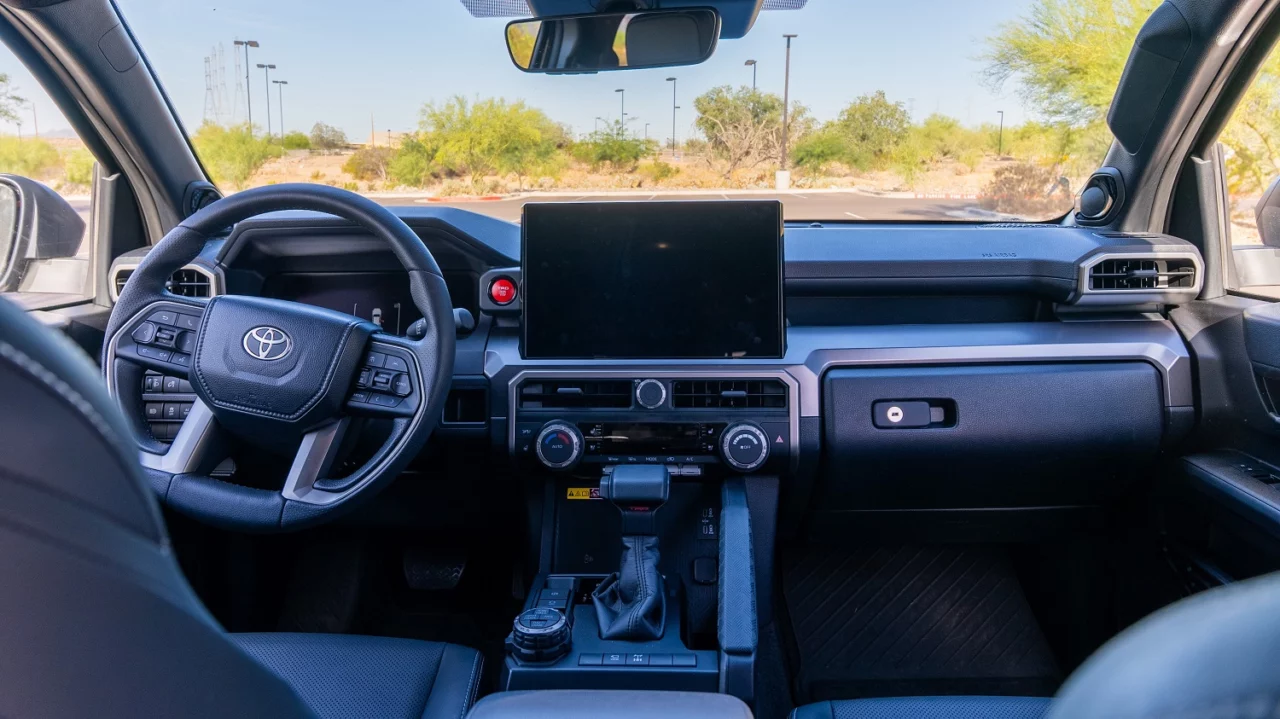
The interior had that same rugged, fun personality. In certain vehicles, subtlety is important, but the 4Runner’s thick steering wheel rim, oversized HVAC dials, bulky shifter, and brick-like patterned seat inserts were just right for a vehicle that’s meant to conquer obstacles and survive harsh conditions. However, Toyota did go a little too far with the rough-and-tough treatment. Many vehicles these days have soft-touch materials for areas such as the window sills and dashboard, but the 4Runner TRD Off-Road Premium isn’t one of them; both of those were made out of cheap, hard plastic. On the plus side, the wireless Apple CarPlay connection (which frequently dropped in other Toyota press vehicles I’ve driven recently) was strong and consistent. The second row had dedicated HVAC vents, and plenty of legroom and headroom to fit my 5-foot-10-inch frame, plus it reclined to make riding back there even more comfortable.
Not only did the 4Runner look evolved, it felt evolved out on the road. Given its off-road focus and body-on-frame construction, there was no mistaking it for a unibody crossover. The steering was slow and relaxed. When I pressed the brake pedal, it felt as if I had to compact a giant block of densely packed steel wool with it. The suspension was never shy about letting me know that there was a bump in the road, but it did that without being harsh. Interestingly, it never exhibited the pronounced brake dive I remember feeling in the fith-gen 4Runner TRD Off-Road Premium I reviewed several years ago.
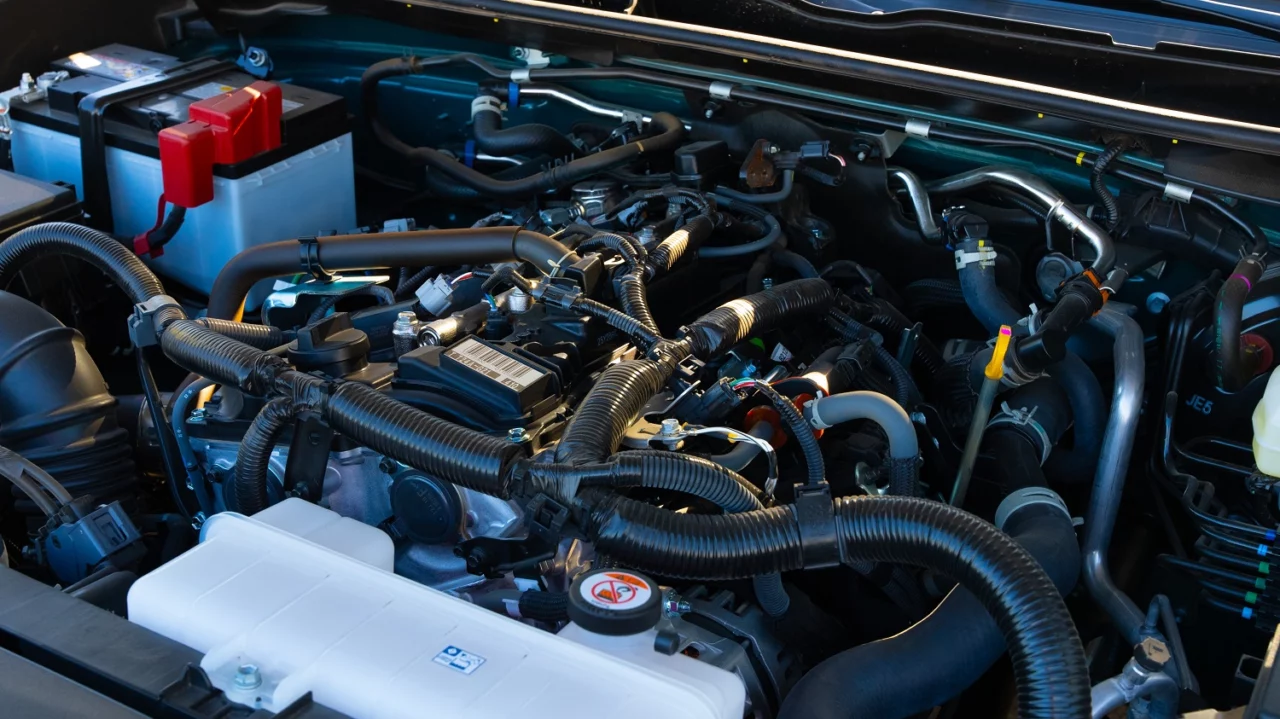
Of course, the 4Runner’s turbocharged 2.4-liter I-4 also makes a huge difference in how it drives. Unlike the last 4Runner’s sluggish, underpowered 4.0-liter V-6, the i-Force engine is lively and responsive. It’s also connected to a much more modern eight-speed automatic instead of an archaic five-speed box. Dipping into the 4Runner’s 278 horsepower and 317 lb-ft of torque, I was reminded that although many people do buy 4Runners to go off-road on the weekends, many of those same vehicles are also used for Monday-Friday commuting and errands. Within the past decade, I’ve driven several fifth-gen 4Runners and I’ve always felt their engine — as reliable as it may be — was the biggest downside to their driving experience. The new turbo four makes the 2026 4Runner more enjoyable and engaging on boring, flat pavement. Plus, it gets better gas mileage. The EPA rated the four-wheel-drive 2024 model for 16 mpg in the city, 19 on the highway, and 17 combined. Our media vehicle was capable of getting 19, 25, and 21, respectively; I averaged 19.5 mpg over 104.8 miles. Time will tell if the current engine is as trusty as the old V-6 but, for now, it makes the 4Runner a well-rounded vehicle that you don’t have to drive miles away from civilization to start enjoying.
My colleague Luke Lamendola also spent time behind the wheel of the 2026 Toyota 4Runner TRD Off-Road Premium. Watch his video review below to see what he thought of its on-road performance.
Click above and watch our full video review on YouTube!

